
HOW TO PLAN A TRIP TO THE PHILIPPINES
Starting to plan a trip to the Philippines? We’re happy to tell you that you’ve come to the right place to organize your next adventure! We’re Claudia and Jairo, two people who are truly in love with this country, and at Travel Around the Philippines we share tons of information that we hope will inspire you to share our passion and help you make the most of your trip.
Since we know that having so many islands to choose from can make things a little complicated, we’ve decided to explain how to organize a trip to the Philippines step by step.
Let those butterflies in your stomach take flight with us—it’s time to plan a trip to the Philippines that lives up to your expectations!
How to Plan a Trip to the Philippines
- When is the best time to travel to the Philippines, and how many days do you need?
- Flights to the Philippines.
- Itinerary. What to see in the Philippines and how to make the (difficult) choice.
- Transportation. How to get around without losing your mind.
- Accommodation. Where to stay in the Philippines.
- Documents. Which documents you need.
- Vaccinations. Recommended vaccinations for traveling to the Philippines.
- Luggage. Suitcase or backpack, and what to pack.
- Cards and currency exchange. Where to exchange money and how to withdraw cash from ATMs.
- Internet in the Philippines.
- Eating and drinking in the Philippines.
- Other basic tips for traveling to the Philippines.
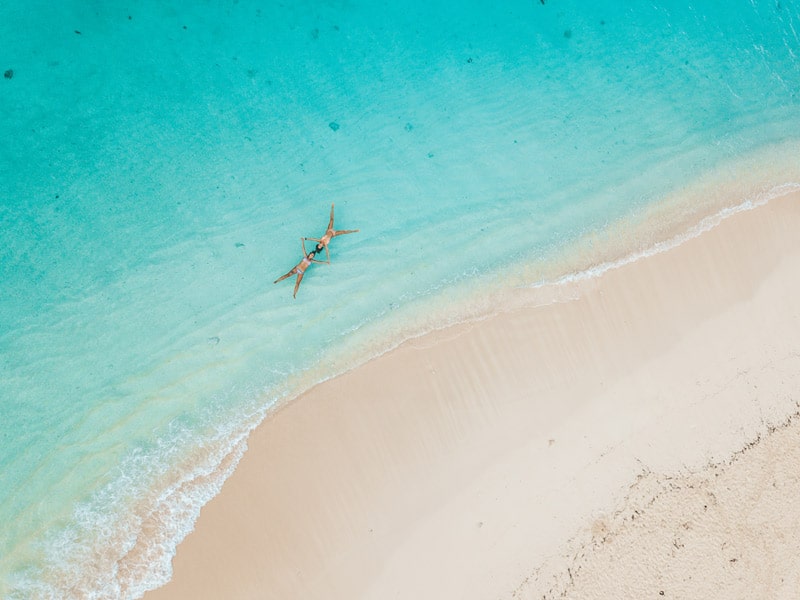
1. Decide When to Travel to the Philippines and How Many Days to Spend There
We’re starting with the big ones—the two million-dollar questions!
How many days do you need to travel around the Philippines?
We know that deciding how many days you’ll spend traveling around the Philippines isn’t always up to you—it depends on how much vacation time you have available.
We’ve been designing trips to the Philippines for years, and we can assure you that it’s possible to take a trip lasting anything from one week to several months. However, those who spend only a short time on this adventure are sometimes left wanting more. That’s perfectly normal—you have more than 7,000 islands to choose from!
You can read more in How Many Days to Travel Around the Philippines, but, traveler to traveler, we recommend organizing a trip to the Philippines lasting at least 20 days. This will give you around 18 full days, not counting international travel, and some of that time will then be taken up by domestic transfers.
As a general rule, whenever you move from one destination to another within the Philippines, you should allow one full travel day.
Do you have less time? Don’t worry! You can put together a decent Philippines itinerary with 15 days, although in that case we recommend narrowing your focus considerably.
When should you travel to the Philippines? The weather question
It’s only natural to be worried about the rain. So, if you have a choice, the best time to travel to the Philippines is from December to May. In When to Travel to the Philippines, we explain what the weather is like month by month.
This is the dry season in most of the archipelago, so there’s a good chance of brilliant sunshine and no storms. Even so, keep in mind that the Philippines is a tropical country and there can always be a sudden downpour. This can also happen if you want to spend Christmas in the Philippines.
Can you only take vacation in July and August? Don’t worry—you can also travel to the Philippines during these months and, in fact, the vast majority of travelers visit the country at this time of year. Although you’ll be right in the middle of the rainy season, that doesn’t mean it will rain all day. The monsoon usually brings a few hours of rain, normally in the afternoon, but the weather on the islands is extremely changeable. You may experience blazing sunshine and rain several times in the same day. Is it possible to travel to the Philippines in July? What about August? You’ll soon see that it is.

2. Book Your Flights to the Philippines
Once you have your dates for traveling to the Philippines, it’s time to book your flights.
Depending on where you’re traveling from, you may find direct flights to Manila or Cebu; otherwise, you’ll need at least one connection. Total travel time will depend on your departure city and layover.
Some good airlines that fly to the Philippines are Emirates, KLM, Etihad, Qatar Airways, Cathay Pacific… At the moment, Air China, China Eastern, Saudia, Kuwait Airways, and Etihad are offering the best deals.
The price of flights to the Philippines depends greatly on your departure country, how far in advance you book, and the season in which you want to fly. Prices are often higher around major holiday periods such as Christmas and Easter, so compare different dates and departure airports to find the best fare.
If you can’t find a good price, there’s another option: check nearby destinations such as Hong Kong, Singapore, Kuala Lumpur, or Bangkok. Low-cost airlines such as Air Asia, Cebu Pacific Air, and Scoot operate from there. In any case, our recommendation is to use the Skyscanner search engine—the one we always use—and compare the different combinations. You can even set up a price alert and keep checking.
DO YOU LIKE OUR CONTENT? Help us keep the website alive.
Keeping this website up to date—researching routes, trying out accommodations, writing each guide,
and answering hundreds of questions from you every day—takes time, energy, and more coffee than we’ll admit.
If you find any of our tips useful and are thinking about purchasing discounted travel insurance,
booking a hotel, booking your flights, using Remitly, etc., we’d appreciate it if you did so through our links.
- You pay exactly the same price—and sometimes even less thanks to our discounts.
- We receive a small commission, which we reinvest so that we can keep working,
researching, and publishing free guides. - You get the same price; we can continue creating independent content;
and everyone wins.
Thank you for supporting this project and joining us in every corner of the Philippines.
3. Plan Your Philippines Itinerary
Take a deep breath—we know that your route through the Philippines is what worries you most. We’re going to try to help.
What do you expect from your trip?
The first thing you need to accept is that there are as many different trips to the Philippines as there are travelers. There are countless islands to see, and each one offers something different. So, before organizing your trip, the first question you need to ask yourself is: what do you expect from your trip to the Philippines?
At Travel Around the Philippines, we have information about a huge number of destinations, and it pains us a little to categorize them so rigidly, but this will help you make an initial shortlist:
- Spectacular scenery: El Nido, Coron, Legazpi, Banaue/Batad.
- Scuba diving: Malapascua, Bohol, Coron, Moalboal, Apo Island, Apo Reef, Anilao, Padre Burgos.
- Snorkeling: Moalboal, Apo Island, Camiguin, Donsol, Pintuyan, Padre Burgos.
- Epic beaches: Boracay, Port Barton, Bantayan, Malapascua, Romblon, Siargao, the Coron-to-El Nido Expedition, Dinagat, Balabac.
- A variety of motorcycle routes: Siargao, Siquijor, Camiguin, Bohol, Camotes.
- Hiking: Banaue/Batad, Sagada, Camiguin.
- Surfing: Siargao, La Union, Baler.
- Waterfalls: Moalboal, Bohol, Siquijor, Camiguin.
- Remote places: Romblon, Cuatro Islas, Kinatarcan, Islas de Gigantes, Carabao, Darocotan, San Vicente, Dinagat, Balabac, Pandan, and Apo Reef…
- Places with history or a strong cultural character: Vigan, Intramuros (Manila), Cebu, Baler, Banaue.
Read about them and make a list of the ones you like best with a map in front of you. Our lists of things to do in the Philippines, the best beaches in the Philippines, the best islands in the Philippines, off-the-beaten-path islands in the Philippines, the best dives in the Philippines, the volcanoes of the Philippines, surfing in the Philippines, the festivals in the Philippines, and the best waterfalls in the Philippines can also help.
How many days do you have?
The second important factor is how much time you have. As we mentioned, traveling between destinations in the Philippines can be exhausting, so one of the keys to making the most of your trip is choosing destinations by region.

These are the most popular destinations in each region of the Philippines:
- Palawan: Coron, El Nido, Port Barton, and Puerto Princesa—and, increasingly, Balabac.
- Visayas: Cebu, Bohol, Siquijor, Moalboal, Malapascua, Bantayan, and Boracay.
- Mindanao: Siargao and Camiguin.
- Luzon: Banaue/Batad, Sagada, and Donsol.
As a general rule, if you have fewer than 10 days to travel around the Philippines, our advice is to stick to just one region. Palawan is usually the most popular choice.
If you have between 10 and 15 days, you could combine a couple of destinations in Palawan or one destination in the Visayas with another in Palawan. In other words, focus on exploring a couple of corners of Palawan or a couple of islands in the Visayas. You’ll enjoy it more and won’t feel as though you’re spending all day on one bus after another—or on a tricycle, jeepney, bangka, plane, ferry…
With 15 days or more, you could cover two regions and add another destination in Mindanao or Luzon. Even so, the important thing is to plan your trip day by day around your international flights and choose destinations with good connections so that you don’t lose too much time in transit.
I need help
We hope we’ve helped make things a little clearer. If you’re still feeling lost and have questions about organizing your trip to the Philippines:
- Take a look at these Philippines travel itineraries.
- Once you’ve worked on your route, you can send us a brief outline at info@travelaroundthephilippines.com and we’ll take a look at it.
4. Research How to Travel Between the Islands You Want to Visit
The next important step when organizing your trip to the Philippines is working out how to travel between the destinations you’ve chosen and checking whether the route is still feasible within the time you have.
Although the distances may look short on Google Maps, do your research and find out how much time you will REALLY spend traveling. For example, even though Malapascua and Cebu may appear to be nearby tourist destinations, this journey can take around six hours. That’s a lot in a country where it gets dark at 6:00 p.m. all year round.
It’s perfectly normal to need as many as three or four different forms of transportation to get from one place to another in the Philippines. When traveling around the Philippines, you’ll use taxis, buses, jeepneys, tricycles—and all their variations: multicabs, pedicabs, motorelas…—habal-habal, bangkas, ferries in the Philippines, and domestic flights. You can read more about them in Getting Around the Philippines: What Is Transportation Like?
At Travel Around the Philippines, we create useful guides explaining how to travel between the main tourist destinations, and we update them constantly. For example:
5. Book Accommodation
As we explain in our Philippines guide, you’ll find plenty of guesthouses, resorts, backpacker hostels—have you read our Philippines backpacking guide yet?—and luxury hotels throughout the country.
When deciding whether to book accommodation from home or as you go in the Philippines, you need to consider the following factors:
- The type of trip you’re taking: low-cost, backpacking, comfortable, or “all-out.”
- When you’re visiting the Philippines: is it peak season?
- The length of your trip: searching for accommodation after you arrive takes time that you could spend on other activities.
If you’re looking for good-value hotels or guesthouses, especially in heavily visited places such as El Nido, Coron, Bohol, or Siargao, our advice is to book as soon as possible. Seriously, take our word for it, because in 2026 we’re having a hard time finding places that aren’t extremely shabby or insanely expensive throughout Palawan and on islands that used to be peaceful, such as Siquijor.
If you’re traveling to the Philippines during Christmas, Easter, Chinese New Year, or major Philippine public holidays, we also recommend booking one or two months in advance. The same applies if you’re planning to attend one of the festivals in the Philippines, when prices go through the roof.
To save you from wasting time wandering around, we’ve created this PHILIPPINES ACCOMMODATION GUIDE, featuring all the hotels recommended both by us and by our readers. You’ll also find a selection of recommended accommodations for every budget on each destination page on our website.
If you feel like treating yourself, don’t miss this selection of the best resorts in the Philippines or the best overwater bungalows in the Philippines.
The best platforms for finding accommodation in the Philippines are:
One VERY IMPORTANT thing to keep in mind when booking flights and hotels in the Philippines: make sure you pay with a card that doesn’t charge fees for payments in Philippine pesos. Traditional banks will charge you between 3% and 5%. That’s why we recommend opening a Revolut account, which will let you pay at a highly competitive exchange rate and, as we’ll explain later, withdraw cash without paying as much in fees. As soon as you open the account, you’ll have a virtual card that you can start using for payments. Plus, if you sign up through THIS LINK, you’ll receive a $10 welcome bonus.
6. Documents for Traveling to the Philippines
Even if you’ve finished all the previous trip preparations, you could be prevented from traveling or run into problems if you don’t have the documents required to travel to the Philippines…
Which documents do you need to travel to the Philippines?
- A passport valid for at least six months. Visa requirements depend on your nationality. Check the current visa requirements for traveling to the Philippines for your passport.
- Driver’s license. Check whether your national license is valid in the Philippines and whether you need an international driving permit, as the rules depend on the country that issued your license and the length of your stay. Find more information in Driving and Renting a Motorcycle in the Philippines.
- Vaccination record. Yellow fever requirements depend on your recent travel history, so check whether you need proof of vaccination if you’re arriving from a country where the disease is endemic.
- Travel insurance. It isn’t mandatory, but we strongly recommend it because healthcare isn’t particularly cheap. As a member of this Philippines-loving community, you can purchase yours here with a 5% discount.
- A ticket showing that you’ll leave the country within 30 days of entry. If you’re unsure when you want to return, you can rent one on websites like this one.
- eTravel, which must be completed within the 72 hours before arrival. We explain it here: eTravel for the Philippines.
You’ll find all of them explained in great detail in Requirements for Traveling to the Philippines.
Do you need medical insurance?
Without a shadow of a doubt, yes.
Having insurance for the Philippines has saved us from several major financial scares, which we describe in this article about the best travel insurance. In addition, as we explain in Is It Safe to Travel to the Philippines?, official travel guidance from your own government may also recommend comprehensive travel insurance. Seeing a doctor in the Philippines isn’t particularly expensive, but a hospital stay or transfer to a hospital with decent facilities can be VERY costly—having insurance saved us a staggering total of over $30,000 in Manila in February 2019. That’s why we consider purchasing insurance an essential part of organizing a trip to the Philippines.


7. Check the Recommended Vaccinations for Traveling to the Philippines
There are no mandatory vaccinations for traveling to the Philippines, with the exception of yellow fever if you’re arriving from a country where it is endemic. However, it’s advisable to be protected against at least typhoid fever, hepatitis A, and tetanus. Many doctors now also recommend the dengue vaccine. The best thing to do is visit an international vaccination center so that a professional can advise you—your health is no laughing matter!
There is a small risk of contracting malaria in the southern part of Palawan Island, although it isn’t a tourist area. In Vaccinations for the Philippines, we share all the latest information.
8. Start Organizing Your Luggage
We’re like you—we almost always leave packing until the last minute. But since you’re here, why not start thinking about what you should bring?
Backpack or suitcase?
We’re advocates of using a backpack in the Philippines, since you’ll often be walking along dirt roads or beaches. However, it’s not the end of the world if you prefer a wheeled suitcase. In tourist destinations in the Philippines, you’ll see travelers with all kinds of luggage.
Whether you choose a backpack or a suitcase, the key to packing for the Philippines is keeping it light. Forget the “just in case” items and bring only what you need.
What should you pack for the Philippines?
Although it’s no big deal if you leave something at home—you’ll always find somewhere to buy it in the Philippines—these are our essentials:
- Dry bag. You’ll need one on boat tours to protect your gadgets.
- Even if you’re visiting right in the middle of the dry season, it doesn’t hurt to bring a rain jacket.
- Water shoes or sandals with secure straps. They’re extremely useful for island hopping or getting onto rocky beaches.
- Universal plug adapter. Type A plugs are used in the Philippines.
- Waterproof backpack covers. Essential in the rain and for preventing your backpacks from getting wet during boat trips.
Take a look at this extremely detailed article about what to pack in your backpack for the Philippines, where we share all our essentials.
9. Learn How to Manage Your Money in the Philippines
The official currency of the Philippines is the peso (PHP). You’ll therefore need to think about how to handle money in the Philippines without being hit with excessive fees when exchanging cash or withdrawing money from ATMs.

$1 = 62.3 PHP
(August 2026)
The best cards for traveling to the Philippines
We recommend checking which cards are best for traveling to the Philippines well in advance. You’ll find everything explained in detail in Money in the Philippines, but here’s a spoiler: bring plenty of cash and exchange it at Manila Airport—yes, the exchange rate is excellent! When you run out, use the handy little trick we always rely on here: REMITLY. This service lets you instantly send yourself large amounts of money—or small amounts, if you prefer—to any pawnshop at an excellent exchange rate. You’ll find pawnshops throughout the country, even in tiny villages. Plus, if you use OUR LINK, you’ll receive a $10 welcome bonus. You can read more in Remitly in the Philippines.
Also bring at least a couple of cards so that you can use them to pay whenever possible—which, we should warn you, won’t be very often. Our favorites are Revolut and N26. You’ll find even more information in Best Card for Traveling to the Philippines, but if you create your Revolut account through THIS LINK, you’ll receive a $10 welcome bonus.
As we mentioned, having cards that don’t charge fees for payments in a currency other than your home currency—such as the Philippine peso—will save you a substantial amount in fees while you’re preparing your trip and booking hotels and flights, since almost all your reservations will be charged in pesos. That’s why it’s so important to bring a card available in your country that doesn’t charge foreign transaction fees.
You’ll rarely pay by card in stores or hotels. Outside Manila or Cebu, you’ll almost always use cash. KEEP IN MIND: ATMs aren’t always available, and the ones you do find sometimes don’t work for various reasons. It’s a good idea to always carry plenty of cash.
How much money should I take to the Philippines?
This is a very personal question that depends greatly on the type of trip you’re taking. On a trip to the Philippines, you can spend the equivalent of $30 to $150—or more—per day. This depends not only on the kinds of places where you eat or stay, but also on the activities you plan to do, which are usually what drive up the cost the most.
Our article Budget for Traveling to the Philippines has all the information you need to make your own calculations.
Our experience tells us that you should bring the equivalent of around $480 per person in cash. If you need more, the best option is to use Remitly, as we explained earlier.
10. Learn How to Get Internet Access in the Philippines
Although you won’t be able to sort this out until you’ve arrived in the country, we want to put your mind at ease.
Wi-Fi at most hotels and resorts in the Philippines is terrible, except at those in major cities. Even so, many parts of the Philippines now have 4G/5G coverage, and some hotels even have Starlink, so we strongly recommend buying a local SIM and using mobile data.
We buy local Philippine SIM cards at the international airports in Manila or Cebu, where you’ll find little stands operated by the two phone companies: Globe and Smart. Although Globe’s coverage isn’t always the best—it depends on the area—we can tell you that it has worked best for us.
They’ll recommend different data and call plans. Compare them based on your needs.
To help you decide which company to choose, we’ve prepared this Philippines Internet Guide, with details of the best data plans based on how long you’ll be traveling in the Philippines and how you plan to use them. We also recommend eSIMs.

If you want to save money on phone service, the best option is to find a convenience store—7-ELEVEN, UNCLE JOHN…—or visit a Globe or Smart store and buy a SIM card. You can then add whichever plan offers you the best value. However, keep in mind that registering the SIM can be a little complicated, so you’ll need to be patient.
11. Where to Eat in the Philippines
You’ll be surprised to discover that Filipino and Spanish cuisines have quite a few similarities. In carinderias—local eateries—you’ll find small pots filled with stews such as adobo or menudo, served with generous portions of rice, the cornerstone of the Filipino diet.
We love eating in these little restaurants and have never had any gastrointestinal problems. Plus, they’re incredibly inexpensive! However, if you get tired of eating so much rice or pancit—Filipino noodles—you’ll find restaurants serving all kinds of Western food at very reasonable prices.
For breakfast, stop by a bakery. You’ll find all kinds of small bread rolls, such as pandesal, which cost only a couple of pesos each.
Discover what you can eat in the Philippines, including typical dishes, desserts, and drinks, in What to Eat in the Philippines.
Is it possible to be vegetarian or vegan in the Philippines?
From personal experience, we can tell you that it is—you won’t starve as a vegetarian in the Philippines. We even tend to gain weight as vegans!
The options are more limited, but in carinderias you can always find a dish made with string beans, munggo, or talong—eggplant. If you have no other choice, you can always order pancit canton walang karne or walang isda—noodles without meat or fish.
In the most touristy parts of the Philippines, you can now find vegetarian restaurants or restaurants with vegetarian and vegan options. After some exhaustive research, we’ve rounded up the best ones for you in Best Vegan and Vegetarian Restaurants in the Philippines.
12. Tips for Traveling to the Philippines
Unexpected things happen
It may sound silly, but unexpected things happen in the Philippines too, and it’s best to leave yourself some flexibility. We often make the mistake of trying to cover too many places on our trips around the Philippines, but planning everything down to the last detail and cramming our itineraries with transfers and sightseeing can be a mistake. Relax. A trip to the Philippines isn’t better just because you see more places—the important thing is to enjoy them.
Don’t obsess over the weather
Do as the Filipinos do and practice bahala na!, which means something like “God will provide.”
That doesn’t mean you shouldn’t check the weather—just don’t stress about it. It’s extremely common for the forecast to say that it’s going to rain alllllll the time, but trust us, that’s only true about 5% of the time.
The weather in the Philippines is extremely changeable. It could be raining now and sunny an hour later. There’s absolutely no way to know what it will be doing two weeks from now.
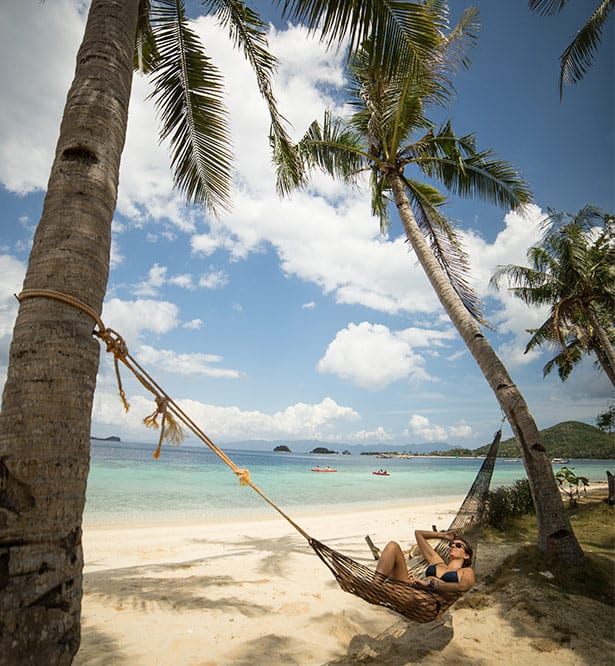
English Is Widely Spoken in the Philippines
Although the Philippines was a Spanish colony for more than 300 years—don’t miss our article about the history of the Philippines—very few Filipinos speak Spanish today. That said, many people speak Bisaya, a language with many words that are extremely similar to their Spanish equivalents.
However, the two official languages are Filipino and English. Most importantly, the people are so helpful that they’ll have no problem assisting you. You can read much more in Languages of the Philippines.
Bargain respectfully
Filipinos, in general, couldn’t be nicer. Seriously, their kindness is genuine, and it’s rare to see them angry. Although bargaining isn’t as common as it is in other countries, if you need to take private transportation—usually a taxi for a long journey or a tricycle—it’s normal to be quoted a higher-than-usual price. We all want to save money, and it isn’t good for tourists to drive up prices to the point that drivers stop offering the service to Filipinos themselves, but you shouldn’t be unreasonable or rude.
If you’d like to take home a souvenir and feel a little lost, we have a shopping guide to the Philippines where you’ll find plenty of information on the subject.
There are laundromats in the Philippines
Don’t pack too many clothes—there are lots of laundry services in the Philippines. Most charge the equivalent of around $1 to $2 per kilogram and will have your clothes ready the following day. Many hotels also offer this service, although at a slightly higher price.
If you’re traveling on a one-way ticket, you need to show proof of onward travel
Most airlines require you to show a ticket proving that you’ll leave the country when you check in or board. This will cause problems if you haven’t decided when you plan to leave the Philippines. To solve this, you can:
- Buy a cheap ticket to somewhere such as Hong Kong, Taipei, Singapore, or Kuala Lumpur.
- Use websites like this one, which offer REAL cancelable reservations for a small fee.
- Take your chances by creating a fake ticket, which we don’t recommend.
Don’t get angry about the fees, and always carry some small change to pay them
On your trip around the Philippines, it’s common to have to pay fees for almost everything: at ports, at attractions, to enter certain islands… Stay calm! Keep in mind that in your country these fees are included in the price of services or covered by your taxes; in the Philippines, they’re simply paid separately.
Enjoy!
We already know you will, but there’s no harm in reminding you. Experience this one-of-a-kind journey with all your senses.
Let yourself be captivated by the magic of the Philippines. Ingat sa byahe!
There’s even more to discover in Recommendations and Tips for Traveling to the Philippines. We sincerely hope we’ve helped you prepare for your trip around the Philippines. If you have any questions, leave us a comment and we’ll be delighted to help.
0 Comments