“Diving, Philippines” are inseparable words for us. We find it hard to imagine a trip around the Philippines without diving in the Philippines. Not for nothing, the first tanks we ever emptied were there, and many of our favorite dive sites in the world are scattered across the archipelago.
Jacques Cousteau said, after an intense stretch of diving in the Philippines: “it is the most beautiful place I have ever explored,” and we are in no position to contradict him.
The Philippine archipelago sits right in the heart of the Coral Triangle, the area with the greatest marine biodiversity on Earth. With that in mind, you can already picture the wealth of its seabeds, which have been captivating both beginner and seasoned divers for decades.
Since you have probably landed here because you want to get started with diving in the Philippines and need details, or because you are already a tank addict looking for the best places to dive in the Philippines, we are going to share all the information we have gathered over the years.
If you only want to go snorkeling, take a look at our article on the best places to snorkel in the Philippines.
Keep reading and discover everything about diving in the Philippines.
Best time to go diving in the Philippines
You are in luck: we can tell you that almost any time is good for diving in the Philippines. Water temperature usually hovers around 25ºC-27ºC, and visibility can exceed 20 meters, depending on the dive site.
Even so, if your main goal for the trip is diving, the best time to dive in the Philippines is March, April, and May. These months are part of the dry season, which we already talked about in Best time to travel to the Philippines. The lack of rain means better visibility and calmer seas, making it easier to access all the dive sites.
From December to March, the Amihan wind blows stronger, which can make certain coasts of the country choppier or murkier. It is around mid/late March when the sea turns flat as a plate and usually stays that way until the end of May. On the other hand, although June to October are peak typhoon months—and the occasional heavy rains can reduce visibility—keep in mind that many dive sites are in sheltered areas and it is still absolutely possible to dive in the Philippines.
⛵ If you are thinking about doing a liveaboard in the Philippines, bear in mind that they rarely operate between July and October due to sea conditions. The best-known one (also because it is among the most impressive), Tubbataha, is usually done only between March and June.

Diving courses in the Philippines
If you have never dived and want to start in the Philippines, we think you have made a fantastic choice. We cannot think of a better place.
Warm, calm waters are ideal; you can “study” with sea views and enjoy the beaches during course breaks and, above all, you will find plenty of professionals ready to teach you the best techniques and the confidence you need.
If you do not feel comfortable getting your Open Water Diver course—which is the license for becoming an autonomous diver—in English, don’t worry! There are plenty of instructors who can offer diving courses in the Philippines in Spanish.
In our opinion, the two best places to get your Open Water are Malapascua and Bohol/Panglao.
- Malapascua has our hearts for its tranquility, its healthy diving vibe, the large number of professionals, and its commitment to protecting marine life. It also lets you explore its beaches and relax between classes. Not to mention that, if you are here to do an Advanced Open Water Diver course, you can crown it with one of the star dives in the Philippines: the thresher shark dive.
- Panglao, the island next to Bohol, is also one of the diving meccas in the Philippines. Although far more touristy than Malapascua, Bohol ensures that from your very first dive you can see marine life and corals. If you dream of topping it off at Balicasag—one of the most beautiful marine sanctuaries in the Philippines—keep in mind you will already need to be a certified diver. Add 1 extra dive day, secure your slot (since there are quotas), and meet Balicasag’s lovely turtles. Find everything about your diving course in Bohol in Spanish and about diving in Panglao
If you are looking for a trusted place with Spanish-speaking instructors and solid gear, leave us a comment and we will send you all the info

Prices and duration of diving courses in the Philippines
Diving courses in the Philippines are around 18.000-22.000 pesos (300-350€) for Open Water Diver and 16.000 pesos (250€) for Advanced Open Water Diver. These prices usually include equipment rental and vary by dive school or shop.
Traveler to traveler: before choosing a dive school in the Philippines based on price, we recommend visiting several, checking the condition of the dive gear, and getting to know the instructors. For us, safety, comfort, and professionalism come before price. Let us remember that diving is, after all, an extreme sport.
A diving course in the Philippines usually lasts 3.5 to 4 days. During that time, you will spend one day almost exclusively on theory, another day on classes and practice in a pool or confined water, and two more days doing the 4 mandatory dives to earn the certification. Still, you can do the theory online and arrive in the Philippines ready to finish everything in 2–2.5 days.
For the Advanced, the course is reduced to 2 or 2.5 days.
Discover Scuba Diving in the Philippines
If you want to test whether diving is for you, you can do a dive without holding a certification. This is called a Discover Scuba Diving experience. An instructor will accompany you at all times, and you will only be able to reach depths shallower than 12 meters.
Prices for a try-dive in the Philippines are around 3,000–3,500 pesos.
How much does it cost to dive in the Philippines
If you already have your certification and want to do a few dives, you should know that dive prices in the Philippines are quite affordable.
Although it is not the cheapest country in Southeast Asia, diving in the Philippines costs between 1.200 and 1.800 pesos (between 20€ and 30€) per dive, including equipment.
If you are thinking of diving in places with more complex access or with higher environmental fees, such as Apo Reef or Tubbataha, you should consider that prices will be a bit higher.
In the list of the best places to dive in the Philippines below, we will give you price guidance for diving there. Still, keep in mind that prices also depend a lot on the dive operator you choose. Please remember that diving is, after all, an extreme sport. Prioritize safety over price when choosing who you dive with.

What can you see when diving in the Philippines
Philippine waters host more than 21,000 marine species. Among them are stars for every kind of diver: those who love macro or muck diving, those happy with turtles and pretty corals, and those who go looking for “big animals.” Not for nothing, the Philippines is one of the few countries in the world where you can almost certainly see the spectacular thresher shark.
In addition, in places like Apo Reef or Tubbataha—two musts for diving in the Philippines—you can see schools of hammerheads, mantas, and the gorgeous whale shark, which we will talk about next.
If you do technical diving, you will have no trouble finding this kind of dive throughout the country. Good examples are the wrecks of Coron or Subic Bay, as well as the underwater caves near Coron or El Nido. There are operators specialized in this.
Diving with whale sharks in the Philippines
You have surely seen tons of photos of travelers swimming with whale sharks in the Philippines. The largest fish in the world passes through the archipelago’s waters, and several viewing spots have been established.
We want to be clear with you here: 99% of those photos you have seen take place in Oslob, a place we consider a true aberration. As people committed to responsible tourism and, above all, animal lovers, we can do nothing but NOT recommend that you go to Oslob.
In this town in the south of Cebu Island, whale sharks have been fed for decades—with disastrous consequences. Besides the fact that the food they are given is not nutritious, this keeps them captive, prevents migration, and therefore contributes to the disappearance of an endangered species. The fact that hundreds of people go to Oslob every day to swim with whale sharks means they are struck by boats, bumped by people, stressed, and get diseases from contact with sunscreen and other substances.
Here you can find all the information about swimming with whale sharks in the Philippines, and in this specific article we tell you about the whale shark in Oslob. Please, do not contribute to their extinction.
On the other hand, quite recently, a new site has emerged where they are mistreated in the same way. This is Lila, in Bohol. Keep it in mind.
In places where they are truly protected, diving with whale sharks is prohibited. In other words, you can do snorkeling in designated areas and try a dive nearby in case you are lucky enough to have one pass by. You can swim with whale sharks in the Philippines in:
- Padre Burgos / Pintuyan: our favorite and the least known. Both times we went there was a single boat with 6–8 travelers. Interaction rules are followed 100%. Sighting season in Pintuyan: November to April.
- Donsol: the longest-running one and the subject of a WWF project. We are aware that higher visitor numbers can stress the animals, but whale sharks have been coming to Donsol Bay for decades to feed naturally on plankton. Season: November to April.
- Puerto Princesa: for the past few years, whale sharks have been sighted a couple of hours from Palawan’s capital. Season: May to October, with higher probability a week before and after the full moon.
In addition, on dives around Panglao, Balicasag, and Moalboal, it is occasionally possible to see whale sharks while you are diving or snorkeling.

The best diving spots in the Philippines
Now that you know everything about diving in the Philippines, it is time to show you the best places to enjoy it.
A) Diving in the Visayas
The Visayas region keeps plenty of treasures under the sea. In fact, it is quite rare not to find at least one dive school on each island. Want to know the best places to dive? We will tell you here.
1. Diving in Malapascua
The star of diving on this island is one of the most beautiful sharks in the world: the thresher shark.
In very few places on the planet can you spot it almost daily. As we explain in our article about the Thresher shark in Malapascua, this wonderful creature goes to Kimud Shoal every day at dawn to be cleaned by other fish—to the delight of divers.
Plus, from Malapascua you can do other equally spectacular dives such as those at Gato Island. If you want to greet the famous mandarin fish, try a night dive at Lighthouse.
You can read much more in our detailed article Diving in Malapascua.
Approximate cost of a dive with equipment included: 1,700 pesos.
You can leave us a comment below and we will send you our trusted Spanish-speaking dive center. As well as guaranteeing safety, good gear, and a great vibe, you will dive knowing you are not interfering with the life of such an incredible species.

2. Diving in Bohol and Balicasag
Balicasag is one of the best places for diving in the Philippines. This marine sanctuary is about 30 minutes from the beaches of Panglao (Bohol) and is known for its spectacular coral walls and incredible marine life, including hundreds of green turtles and huge schools of fish.
Visibility in Balicasag can reach up to 40 meters, and it is an ideal spot for both beginner and advanced divers. Our favorite dive sites are Black Forest and Marine Sanctuary.
Remember that to dive in Balicasag you need to book in advance, as numbers are capped. Leave us a comment and we will send you all the info about our trusted dive center in Bohol.
In addition, if you have more time to dive in Bohol, around Panglao, Pamilacan, and Cabilao you can enjoy very complete dives where, from time to time, a whale shark shows up.
Find all the information about diving in Balicasag, diving in Panglao , and the diving courses in Bohol
Lastly, lovers of macro life and muck diving will find paradise in the little-known area of Anda. In its seabeds you can see all kinds of seahorses and the elusive blue-ringed octopus, among many other wonders.
Approximate cost of a dive in Balicasag and Pamilacan with equipment included: 1,700 pesos.
Approximate cost of a dive in Panglao with equipment included: 1,500 pesos.

3. Diving in Dauin and Apo Island, Negros
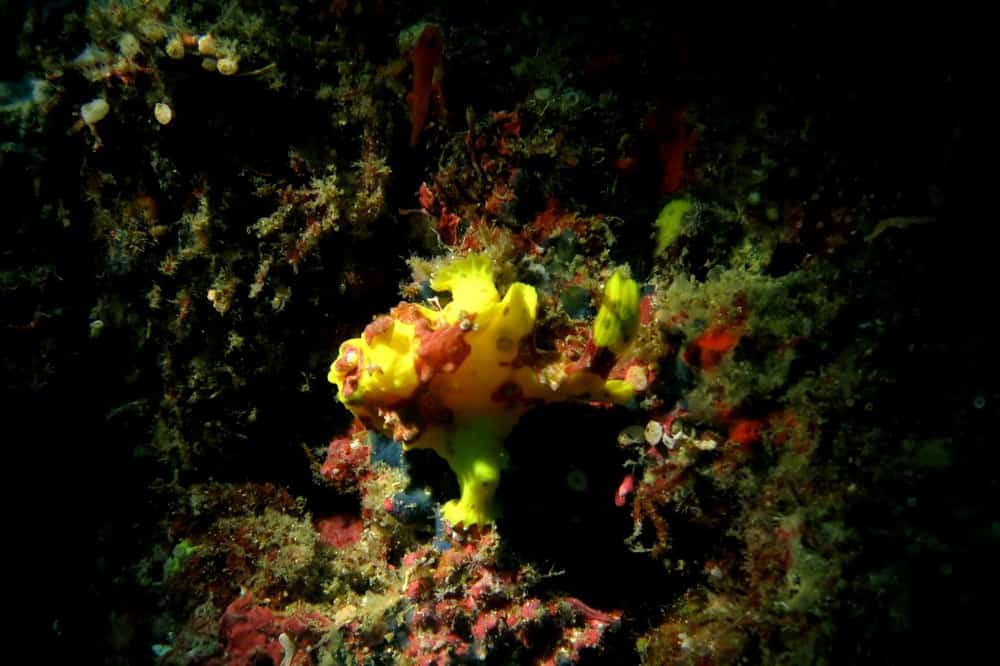
Dauin is an area located south of Dumaguete, on the coast of Negros. It is a place visited almost exclusively by divers, since its black-sand beaches cannot be compared to those on other islands such as its neighbor Siquijor. Its underwater charm lies in the richness of its macro life and muck diving. Mimic octopuses, ghost pipefish, frogfish, or seahorses—hard to spot in other places on the planet—are seen in Dauin with relative ease.
Just 40 minutes off the coast of Dauin lies Apo Island, one of the best diving spots in the Philippines. You can visit Apo from Dauin and Siquijor or go spend a couple of nights there, departing from Malatapay port. We have been to the island 3 times and think it is absolutely worth it.
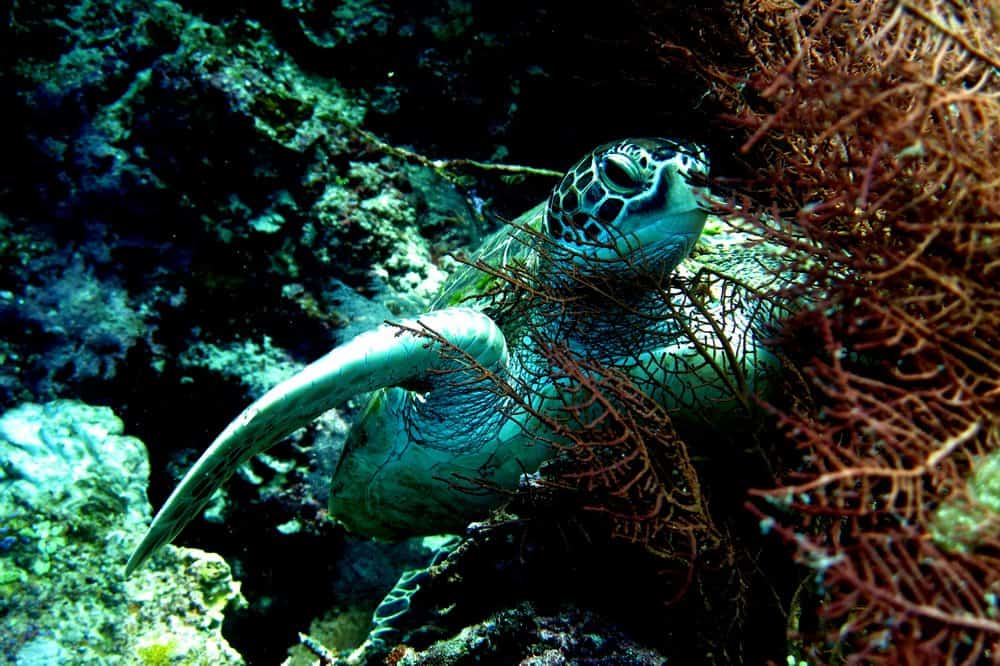
Apo is famous for its huge turtle population. Most travelers who come on a day trip usually do a couple of dives in the Chapel area. However, we are big fans of other dives such as Cogon, where the currents make it more common to find large fish like groupers.
You can read about diving there and more in our Apo Island Guide and our Dauin Guide.
Approximate cost of a dive with equipment included: 1.400 pesos.
If you need a dive center recommendation in this corner of the Philippines, we can give you the contact for a great Spanish-run school where, besides seeing tons of marine life, you will have an awesome time. You can leave us a comment below.
4. Diving in Moalboal, Cebu
Three hours south of Cebu City lies this spectacular diving spot in the Philippines. Moalboal is not a very pretty town, nor are its beaches the best, but the compelling reason to come here is its enormous sardine school, with millions of fish right off the coast.
In addition to the sardine run dive, we fell in love with Pescador Island in Moalboal. You typically do a couple of dives there to discover its colossal coral walls. It is said that more than 70% of the marine species in the Philippines live on them. Still, keep in mind that a significant portion of the reef was damaged by the December 2021 typhoon, as were some reefs along Moalboal’s nearby coasts.
If you do not yet have a diving certification, Moalboal seems to us one of the best places for snorkeling in the Philippines. Just put on your mask and swim along the shore to swim with the sardines and enjoy the dozens of turtles that live in the area.
Approximate cost of a dive with equipment included: 1.200 pesos.
5. Diving in Padre Burgos, Leyte
As we told you above, Padre Burgos is, for us, the most respectful place to swim with the whale shark. Although diving with tanks is prohibited in the sanctuary, it is possible to do dives in the surrounding areas to see if you get lucky. That was not our case, but it was worth a try.
Beyond this powerful reason, Padre Burgos also seems to us one of the best places to dive in the Philippines for other reasons. The Napantao marine sanctuary holds some of the best coral walls we have seen in the archipelago, and the star dive is the night dive at Padre Burgos pier (pier).
We spent more than 80 minutes there contemplating marine life that looked like it was from another planet. If you like “weird stuff” and want to do a dive completely different from others you have done, Padre Burgos is your place.
Approximate cost of a dive with equipment included: 1.600 pesos.
Approximate cost of the whale shark snorkeling trip in Pintuyan: 2.250 pesos.
6. Diving in Romblon
Although we stayed in Romblon for more than 10 days, we did not know that there are first-rate dive sites around this group of islands. So we have no doubt that the next time we return to Romblon we will do more than one dive. We are told it is an ideal place for lovers of macro life. In addition, one of the most famous dives in the archipelago is the Blue Hole, inside an extinct volcano.
Approximate cost of a dive with equipment included: 1.600 pesos.
7. Diving in Siquijor
On our last visit to this island we adore, we decided to explore its seabeds with a tank on our backs and came away very surprised. Although they cannot be compared to those of Balicasag, for example, Siquijor has several sanctuaries with beautiful coral scenery where it is very easy to see turtles (we counted 11 in 2 dives) and also great macro. The dives are so easy (many from shore, with no currents and at shallow depth) and so affordable that it is truly a joy to dive there.
We also dived with a Spanish couple who have taken over a dive center and made everything so easy that we left delighted. If you want their contact, we will be happy to share it.
Approximate cost of a dive with equipment included: 1.300 pesos.
B) Diving in Palawan
Although El Nido is the star of tourist spots in the Philippines, when it comes to diving in this region, the balance tips toward Coron. Let us tell you a bit more.
1. Diving in Coron
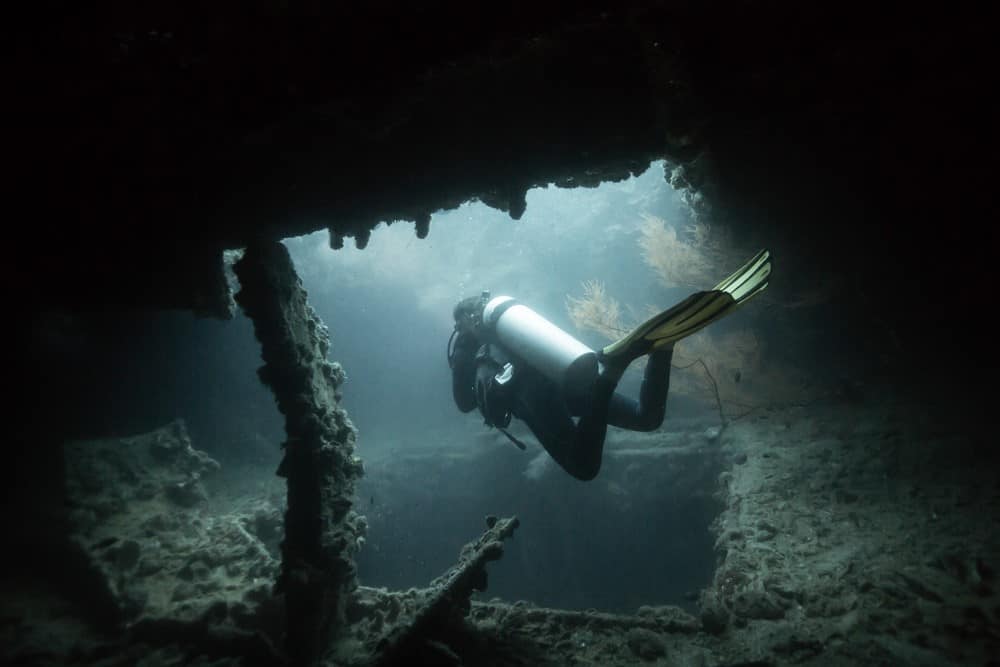
Around Busuanga Island (where Coron Town is located), in Coron Bay, a complete Japanese fleet sank during World War II. Now you can dive the 12 wrecks sunk in 1944 and enjoy their engine rooms, cargo holds, or anti-aircraft guns, which are now home to marine flora and fauna.
As we already noted in our article on what to do in Coron, penetrating a sunken ship is a thrilling experience, but it is also dangerous. Visibility in Coron is usually much lower than in other places in the Philippines and, above all, you must have exemplary buoyancy to feel calm and not kick up sand, hindering visibility inside the wreck. Truly, many people have died there. That is why it is important to dive with a center that provides safety, groups divers by level, keeps groups small, and takes them to the wrecks that best suit them.
Dive outings in Coron usually include 3 dives a day: 2 of them on wrecks and 1 at Barracuda Lake, which is peculiar for its thermoclines.
By the way, in Coron you sometimes see dugongs or sea cows. Ask at dive shops about the dive sites to increase your chances, and you can read more on this topic in How to see dugongs in Coron. On the other hand, diving boats also depart from Coron to Apo Reef, since it is not that far. These trips are usually 2 nights/3 days or 3 nights/4 days. Further below, in Liveaboards in the Philippines, we recommend some boats.
Approximate cost of a dive with equipment included: 1.600 pesos.
Again, having dived in Coron many times, we also have trusted centers in the area. You can ask us in the comments.
2. Diving in Tubbataha
If you have come to dive in the Philippines between March and June and budget is not an issue, your place should be Tubbataha. This reef in the middle of the Sulu Sea was declared a UNESCO World Heritage Site in 1993 and is the best place in the Philippines to see large pelagics.
Since it is far from the coast, about 12 hours from Puerto Princesa, you can imagine that the only way to dive it is via a liveaboard.
Approximate cost of a 6-night cruise without equipment: 2.500 dólares.
3. Diving in Sibaltan
Not long ago, several manta cleaning stations were discovered on the coasts near Sibaltan, the opposite coast to El Nido in Palawan. Located at around 15 meters deep, it is a unique opportunity to enjoy these majestic animals comfortably, because the current is not too strong and you do not have to travel as far as in the case of Ticao.
On the other hand, Sibaltan is a very cool, less-developed part of Palawan, with some lovely island hopping and other interesting dives. If you want, we can pass you the contact for the dive school we went with. Plus, you can read all about it in What to do in Sibaltan.
Approximate cost of a dive: 2.000 pesos.
C) Diving in Luzon and Mindoro
Around Luzon, the island where the capital of the Philippines is located, you can find several dive spots. Here we recommend the best ones, although there are others like Subic Bay you can explore, where you will find an impressive wreck, the USS New York.
1. Diving in Anilao
Claudia started diving in Anilao, the closest diving area to Manila (3 hours by car), the city where she lived. Far from being a pretty beach area, its waters offer dive sites with macro life, muck diving, some wrecks, and those of spectacular Verde Island. This is where Claudia earned her Open Water Diver and Advanced Open Water Diver certifications back in 2010—quite some time ago!
Anilao’s best-known dive sites are Cathedral Rock, a marine sanctuary a few meters from the coast, Sombrero Island, and Mainit Point. In the latter two you have chances to see pelagics such as whitetip and blacktip reef sharks or gray reef sharks.
If you can, avoid weekends or local holidays, since it is a spot well known to Manila divers and can get quite crowded.
Approximate cost of a dive with equipment included: 1.700 pesos.
We have returned to dive in Anilao several times. If you need recommendations, feel free to ask us in the comments.

2. Diving in Puerto Galera
Puerto Galera is “Manila’s beach.” Although getting there is a bit of a slog (it will rarely take you less than 4 hours), it is a good place for a getaway—especially Monday to Friday, when there is hardly anyone.
Talipanan Beach is an ideal place to base yourself and get to know Puerto Galera’s seabeds. The area is located in the so-called Verde Island Passage, which usually has currents. Thanks to them, you will have dive sites where you can see whitetip sharks and eagle rays among the Canyons. If you are a diver with little experience, do not worry—there are also easier dives.
You can read all about this destination in our Puerto Galera Guide.
Approximate cost of a dive with equipment included: 1.300 pesos.
3. Diving in Ticao/Donsol
Southeastern Luzon offers two special corners: Donsol and Ticao. In the former, roughly November to April, you have a good chance to swim with the whale shark in an area where they are not fed. We emphasize swimming because diving is not allowed where the snorkeling interaction takes place. Therefore, dive operators in this area look for other nearby spots—usually with strong currents—where you may, with some luck, see them.
Meanwhile, Ticao Island is a small island separated from Luzon by the so-called Ticao Pass. This is an area with strong currents and, therefore, it is very common to see huge mantas at the so-called Manta Bowl. There are also chances for a manta + whale shark combo. Although they can be seen almost all year, the best time is from December to May. Most dive centers in Donsol also run trips to Manta Bowl if you want to try from there.
Approximate cost of a dive with equipment included: 2.000 pesos.
4. Diving in Apo Reef and Pandan Island
On one of our latest trips to the Philippines, we finally scratched the itch to dive one of the country’s best sites, Apo Reef. Often confused with Apo Island, this reef is a couple of hours off the coast of Mindoro.
We based ourselves in Sablayan and from there dove the world’s second-largest reef, 34 kilometers long. They say it is the second dive spot with the most marine life after Tubbataha. The truth is we saw a huge number of whitetip, blacktip, and reef sharks, turtles, mantas, and large schools of fish. The same day, another group of divers saw… Hammerheads!
To dive Apo Reef you have 2 options: try a liveaboard from Coron (caretes) or invest time in getting to Sablayan, from where excursions to the reef depart almost daily. You can go for a day or spend the night on the island—which has very beautiful beaches—and spend 2 days diving.
In addition, around nearby Pandan Island there are several interesting dive sites. It is also a great option for sleeping and heading to Apo Reef, but you need to book in advance because rooms fly.
You can read much more in our Apo Reef Guide.
Approximate cost of a diving excursion with equipment included: 8.500 pesos for 3 dives.
Approximate cost of the 2-day excursion with 6 dives: 12.000 pesos.

D) Diving in Mindanao
Mindanao is not the richest diving region in the Philippines, but it does have a few points of interest.
1. Diving in Camiguin
As we already mention in what to do in Camiguin, there is the possibility of diving off its coasts (mainly on the northwest) and those of its neighboring islands. Being a volcanic island, you will find interesting dive sites where you can feel the earth’s inner workings.
Mantigue has a sanctuary with tons of marine life (dozens of turtles!) and coral in good condition. Other dives of interest are Old Volcano and Sunken Cemetery.
Approximate cost of a dive with equipment: 1.100 pesos, 1.800 if it is in Mantigue.
2. Diving in Siargao
While we would not go to Siargao exclusively to dive, if you are going to enjoy the charms of this wonderful island (which, by the way, is very trendy), you could also do a couple of interesting dives. The most attractive is Blue Cathedral, although at Shark Point—as the name suggests—you have the chance to find large pelagics. Since there are not many dive centers, keep in mind that dive prices tend to be higher.
Approximate cost of a dive with equipment: 1.500 pesos, 2.500 if it is at Blue Cathedral.
Diving cruises in the Philippines / Live aboard or liveaboard in the Philippines
If what you like is making the most of your days and spending them entirely diving without worrying about anything, an alternative is liveaboard diving cruises in the Philippines. Thanks to them you can reach remote places or combine the best-known ones without long transfers in a week or 10 days. In the archipelago you will find large converted fishing boats, yachts, and sailboats.
As we mentioned above, most liveaboard operators in the Philippines focus on the peak of the dry season—that is, between March and June. This is especially important if you want to go to Tubbataha, since the marine park only opens at this time of year.
Prices range between 1.200€ and 2.500€ for cruises longer than a week. However, there are shorter expeditions, such as the dugong trips in Coron or those to Apo Reef, which are more affordable because they are usually 3 nights and 4 days. Different boats cover different routes depending on the season, so you will need to check when booking.
What kinds of routes are the most popular and recommended for a liveaboard in the Philippines?
Here’s a summary and recommended boats:
- Tubbataha: the jewel of diving in the Philippines. It can only be done on a liveaboard, so do not hesitate. Boats: Philippine Siren, Discovery Adventure, Narayana, Discovery Palawan and Stella Maris Explorer.
- Visayas sharks: they form a kind of triangle and visit Malapascua for the thresher shark, Southern Leyte for the whale shark, and Bohol and Apo Island for other reef sharks. Boats: Seadoors e Infiniti.
- Visayas in general: most try to include Malapascua, Bohol, Apo Island, and Dauin. You will see the very best of the area. Boats: Philippine Siren e Infiniti.
- Apo Reef: most depart from Coron because they also combine outings to the bay’s wrecks and dugong sightings. Boats: Liberation, Atlantis Azores, Azalea, Agos and Resolute.
In the links we have left you can also see the prices and the opinions of other divers like you.
Map of the areas with the best places to dive in the Philippines
Here you can find a map where we show you the best corners for diving in the Philippines so you can fit them into your itinerary:
Not only that, you can follow one of the diving trips around the Philippines that we have designed. You have plenty of alternatives depending on your tastes, but there you will find some interesting routes.
Frequently asked questions about diving in the Philippines
When to dive in the Philippines?
The archipelago is very large and is affected mainly by two seasonal winds. Therefore, you will always find a place to go. If you want a trip very focused on diving, we recommend choosing March, April, and May, when the sea tends to be calmer and visibility is better. Water temperature is usually above 25ºC.
Do I need to bring my own dive gear?
In the Philippines you will find everything you need to rent if you prefer not to carry it. That said, if you are planning pretty much a full-on diving trip around the Philippines, it will be much more economical and you will feel safer bringing your own equipment. Keep in mind that if you plan to take domestic flights, you will have to categorize it as sports equipment and pay the corresponding fees.
What are the country’s best dives?
We discuss them in detail in Best dives in the Philippines, but to summarize: Best reef dives: Tubbataha, Apo Island, and Padre Burgos. Best wall dives: Moalboal, Balicasag (Bohol), and Verde Island (Puerto Galera). Sharks: Apo Reef, Malapascua, and Tubbataha. For beginners: Panglao, El Nido, and Moalboal. Best macro dives: Padre Burgos, Anilao, and Dauin.
Now that you know which are the best places to dive, you are surely eager not to miss the best dive sites. Read our article Best dives in the Philippines and enjoy the crème de la crème.
Would you recommend any other places to dive in the Philippines? Do you have any questions left? We look forward to your comments!