The main thing to do in Banaue is to enjoy the wonderful rice terraces that surround this small town in the north of the Philippines, but here we’re going to tell you how to make the most of it. The Ifugao rice terraces are more than 2,000 years old and, for now, are a treasure that not many venture to visit. However, we believe that a detour to the Cordillera region will make your Philippines itinerary much more complete and varied.
In Banaue itself there are some rice fields that can be contemplated from the viewpoints along the road. Still, they’re neither the only ones nor the prettiest; therefore, so you can enjoy the best, here you’ll find the main places to see in Banaue, some interesting hiking routes and other activities that might suit you, as well as practical information to organize your route.
We were amazed by this Filipino corner more than 13 years ago, so we’ve returned several times to tell you everything and so that you’ll leave just as in love with it. We don’t tire of the “hard” mission of sharing the wonders of this archipelago in a close and simple way!
Where is Banaue, location
Banaue is a small town located on the island of Luzon, the same one where Manila is. More specifically, it is approximately 400 kilometers north of the capital of the Philippines, in the Cordillera region and the province of Ifugao.
Although we talk in more detail about its location in How to get to Banaue, keep in mind that unless you find yourself somewhere nearby like Baguio, Bontoc or Sagada, the best way to come here is from Manila by bus. These leave at night (between 20:00 and 22:00) and arrive at dawn in Banaue, where its beautiful rice terraces await you.
Why go to Banaue, what to expect
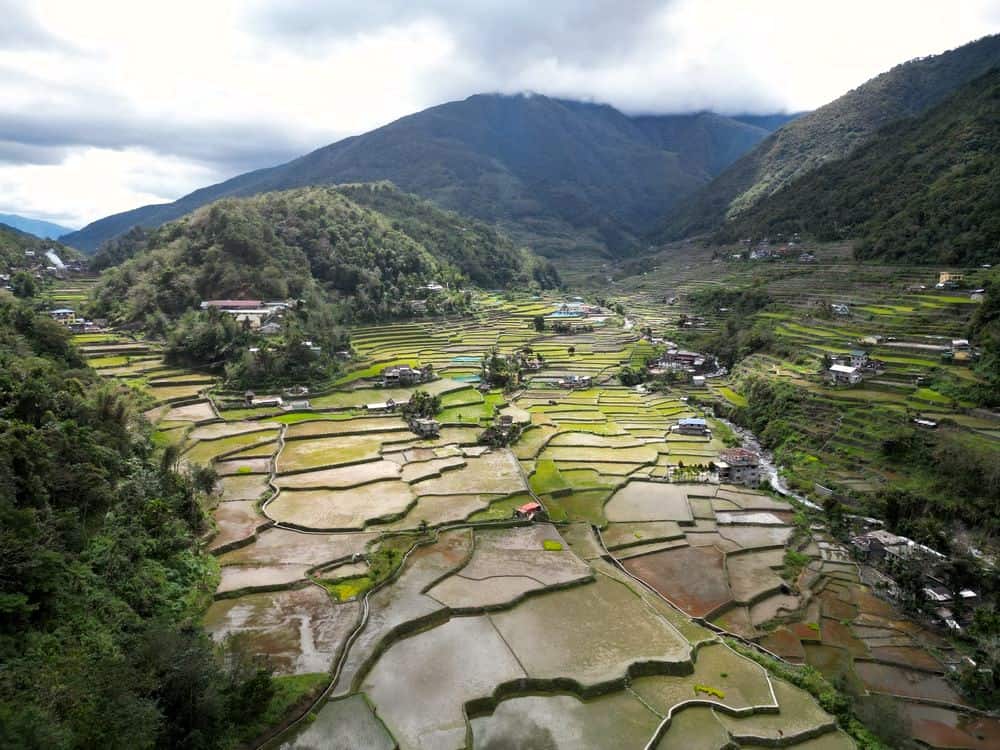
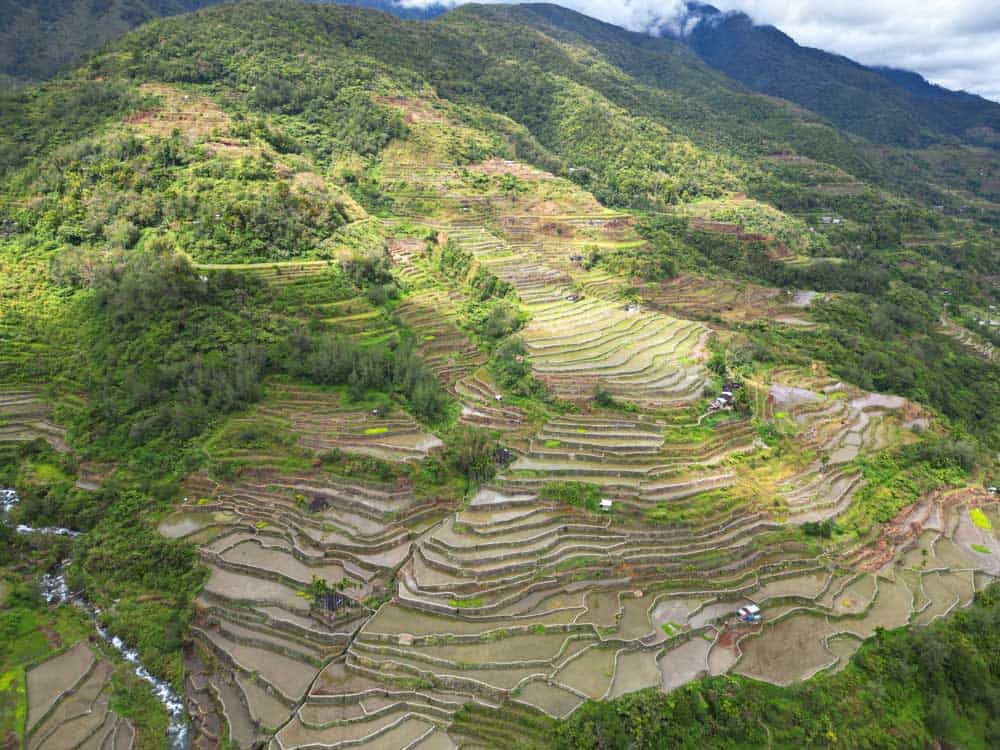
The main reason to visit Banaue is its rice‑terrace landscapes. A vivid green (except at harvest time), the terraces spread across the mountains, in some cases resembling a spectacular amphitheater that’s unique and special in the Philippines.
Banaue is also home to the ethnic group of the Ifugao, who can boast one of the purest cultures in the archipelago. Due to its remote location, the “conquest” by Europeans, Americans and Japanese didn’t take place until the end of the 19th century, so although it’s now hard to see them wearing traditional clothing (except those who do so for tourists to take photos or during festivals), they still preserve many of their own traditions and celebrations that we can experience.
In our opinion, in Banaue and its surroundings you’ll find the most impressive rice terraces in the entire country, with Batad as the prime example. Contemplating them makes the effort to get here more than worth it, and we believe it’s an essential stop for those who want to take a trip around the Philippines that goes far beyond the beaches.
If you look at the map we’ll leave for you below, Banaue is quite a long town and, to be honest, not very charming. Therefore, the main thing to do in Banaue is to discover the terraces around it, either with some form of transport or by doing a multi‑day hiking route, spending the night in different villages. Don’t worry, we’ll tell you everything here so you can show up prepared and enjoy the essentials without being taken for a ride.
A brief history of the Banaue rice terraces
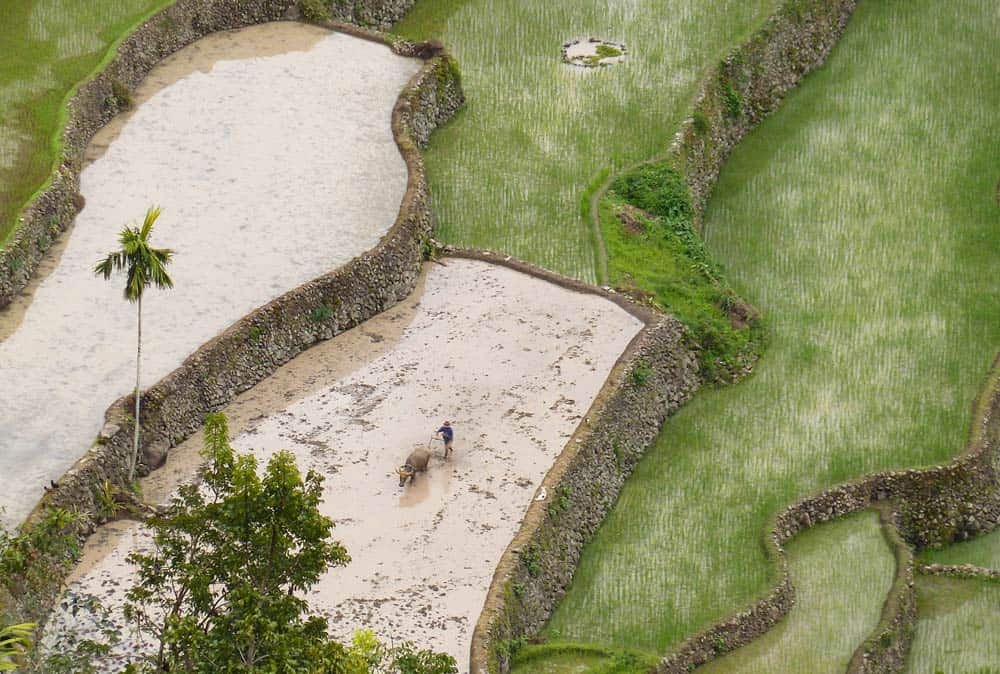
Scholars say that the rice terraces of Banaue—and the vast majority created by the Ifugao tribe—were built more than 2,000 years ago. With their own hands and very primitive tools, the people of the area had no other way to make use of rugged terrain to cultivate their staple food: rice.
Some studies indicate that, in reality, these rice terraces were built around the 16th century, when many Filipinos fled from the Magat River area or from Mountain Province into the mountains upon the arrival of the colonizers.
Ifugao comes from “ipugo”, which means “mountain people”, “people of the earth”, “mortals” or “humans”, the counterpart to a spirit or deity. To summarize a lot, Ifugao culture is nourished by rice and its cultivation and that’s why many celebrations or rites (which they still observe) are based on the harvest cycles. Rice cultivation also helped them keep their culture and identity alive, since they spent much of their time in the rice fields.
Due to the elevation of the terrain (between 1,300 and 1,500 meters above sea level), the climate in Banaue is much cooler than in other parts of the Philippines, so here it’s normal to have only one or two growing cycles. Thus, a good portion of the harvest is for self‑consumption or is sold at much higher prices than other types of rice, since pesticides are generally not used.
Unfortunately, the rice terraces of Banaue and its surroundings are at risk of disappearing. Maintaining them takes an enormous amount of effort and, in many cases, the younger generations prefer to migrate to the big cities in search of other opportunities. Add to this weather events such as heavy rains or typhoons, as well as pests or the greater returns offered by other types of crops.
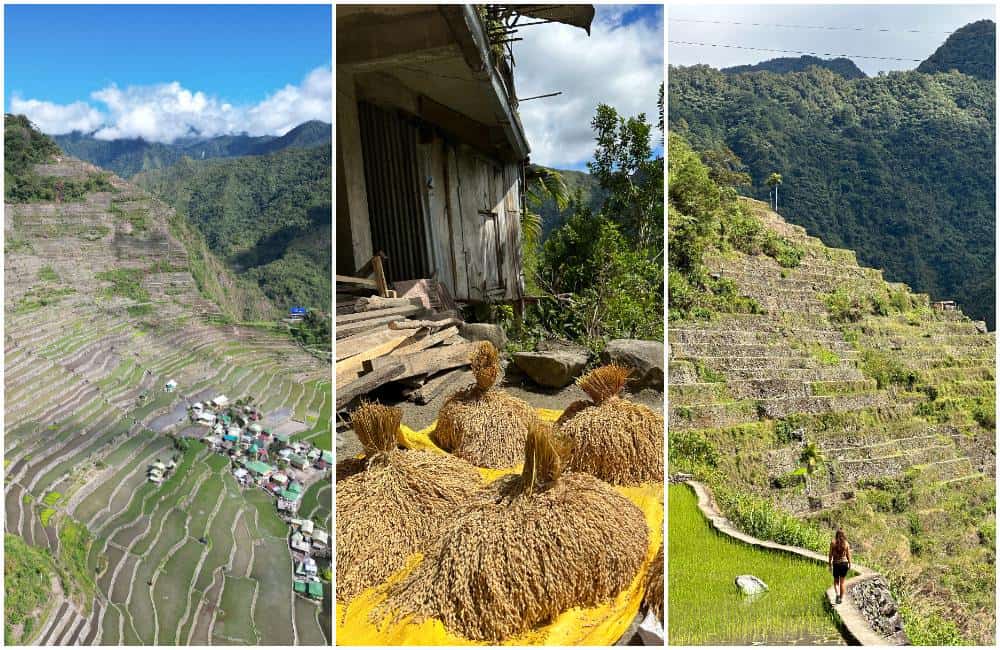
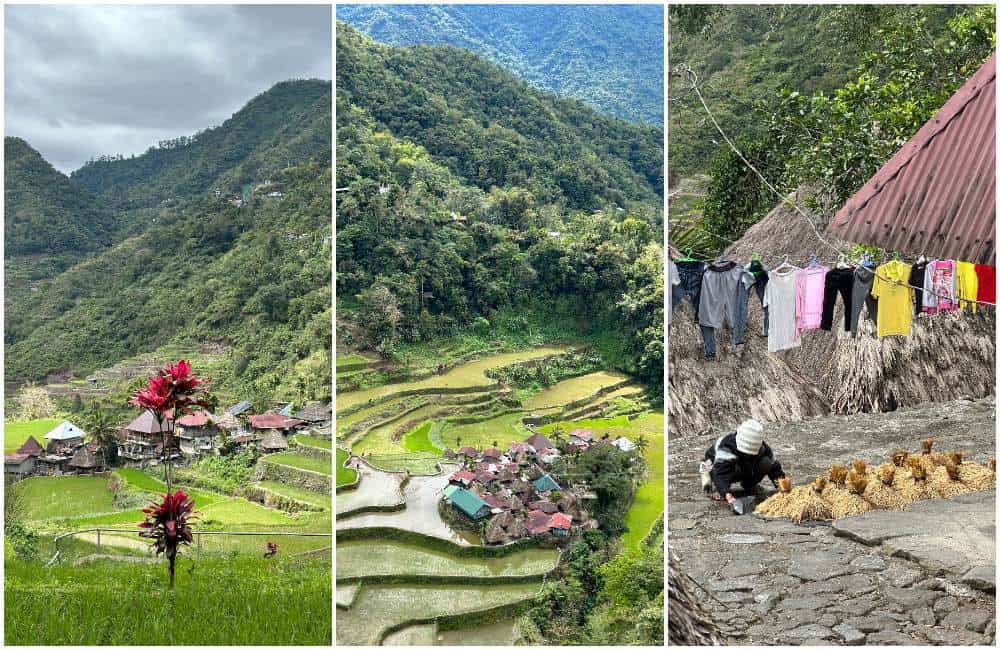
Postcards from Batad, a must‑see in Banaue
How many days to spend in Banaue and possible itineraries
Although you could spend barely a day in Banaue and see the basics (the viewpoints and Batad), we believe that at least 2 full days are necessary. If you like walking or simply want to balance the trip away from beaches, 3 is a better number in your case.
If you’re doing a slightly express route through the Philippines, you could do something like this:
Day 1: Arrival in Banaue, walk through the Batad rice terraces and Tappiya Falls, and visit Bangaan
6:00/8:00 – Arrival in Banaue and payment of the environmental fee (100 pesos)
8:15 – Check‑in at the hotel and breakfast in town with a good coffee
9:00 – Departure by tricycle to Batad
10:00 – Arrival at the parking area and walk to Batad
10:15 – Arrival in Batad
10:45 – Route around Batad and Tappiya Falls (if you can, bring something to eat)
15:00/16:00 – Return to the parking area and visit the Bangaan Ifugao Rice Terraces
17:00 – Return to Banaue
18:00 – Relax, dinner and sleep
* If you’d like, as we explain in Things to do in Batad, another option is not to stay overnight in Banaue
Day 2: visit the Banaue viewpoints, other rice terraces and return to Manila (or elsewhere)
6:00 – Time to wake up!
6:30 – Breakfast
7:30 – Hire a tricycle to take you around the Hungduan Rice Terraces and the Hapao Rice Terraces
9:30 – On the way back, stop at the different Banaue viewpoints
11:00 – Visit the Banaue Museum
12:00 – Check‑out from the hotel
13:00 – Lunch and free time
17:00/17:30– Return to Manila by bus (or, if you want, you could continue to Sagada or Bontoc)
If you have more days, on this second day you could do the hike through the Hungduan Rice Terraces and take a dip in the Bogya Hot Springs. The next day, you could explore other nearby rice terraces, such as those in Mayoyao.
Another alternative is to walk between different villages on a 2‑day/1‑night or 3‑day/2‑night route. We’ll talk about this in the list of things to do in Banaue below.
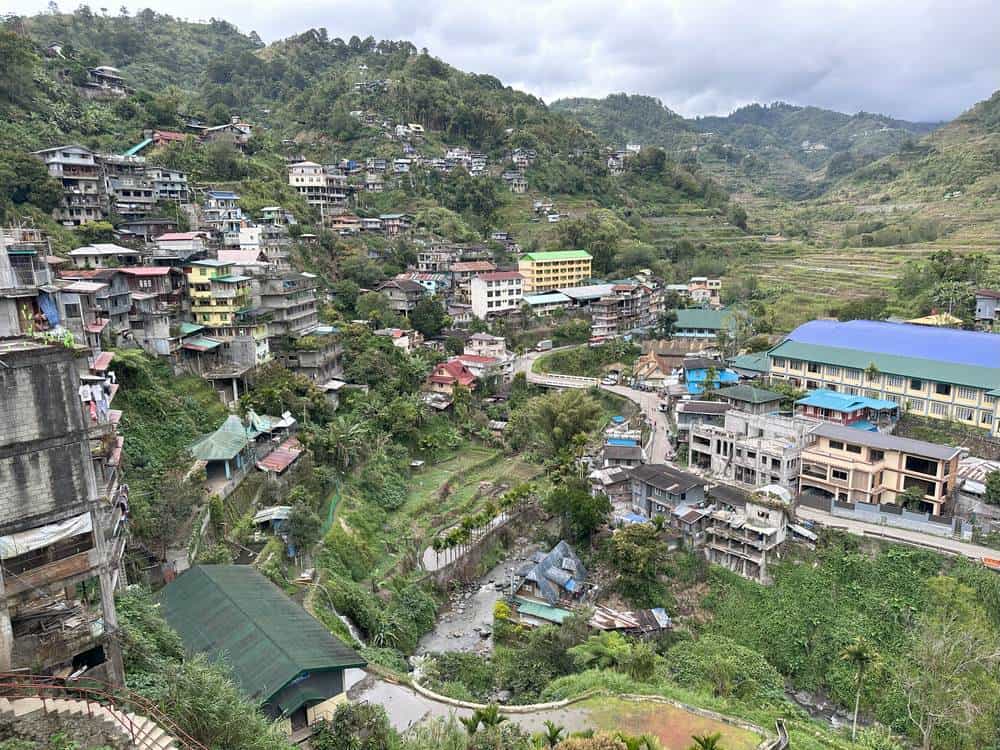
The town itself isn’t very pretty, but great surprises await around it
Things to do in Banaue: essentials
Without dragging this out any longer, here we’ll tell you what we believe is most important to do in Banaue.
1. See the viewpoints over the Banaue rice terraces: Banaue Viewpoint and others
Although on our last visit we found them a bit deteriorated, it would be a sin to come all the way here and not see the Banaue rice terraces. There are many viewpoints along the road that goes from Banaue to Bontoc (to the north), and many of them are completely free. It’s common to find a souvenir shop and some elderly people dressed in typical Ifugao costumes with whom you can take a photo in exchange for a few pesos.
If you look at Maps.me or Google Maps, you’ll see there are many viewpoints. Here are the ones we consider most interesting to see in Banaue (even so, they’re almost all the same, with the perspective varying slightly):
- Banaue View Point (location): the panorama is the one that appears on the 20‑peso bills.
- Dianarra Viewdeck (location): a little further up.
- NFA – Aguian View Deck (location): possibly the most “spruced up”.
By the way, the Banaue rice terraces were not declared a UNESCO World Heritage Site due to the presence of modern structures. In contrast, those included in the Rice Terraces of the Philippine Cordilleras are the Batad Rice Terraces and Bangaan Rice Terraces (both in Banaue), Mayoyao Rice Terraces (in Mayoyao), Hungduan Rice Terraces (in Hungduan and easily visited from Banaue) and the Nagacadan Rice Terraces (in Kiangan).
How to get to them? You can walk (note it’s uphill), take one of the buses or jeepneys that travel this road and get off where you indicate, or hire a tricycle (it shouldn’t cost you more than 200 pesos round‑trip). If you have more time, you can do a route through the rice terraces, descending to the lower part of Banaue.
If you haven’t moved around much in the Philippines yet, you can get more familiar with these terms in Transport in the Philippines.
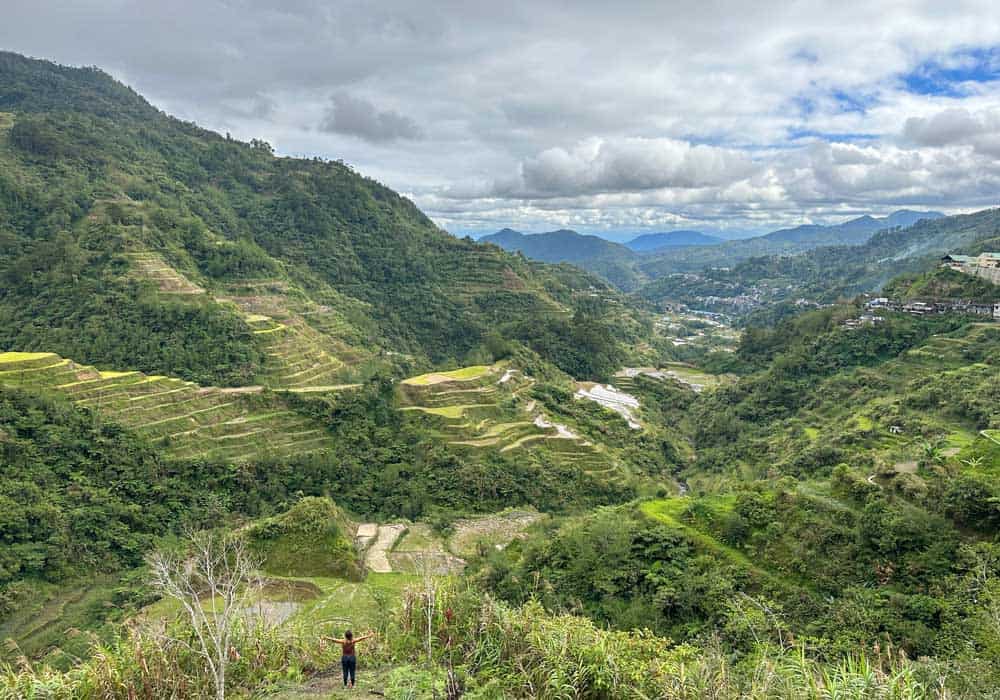
2. Visit Batad and the Tappiyah Falls
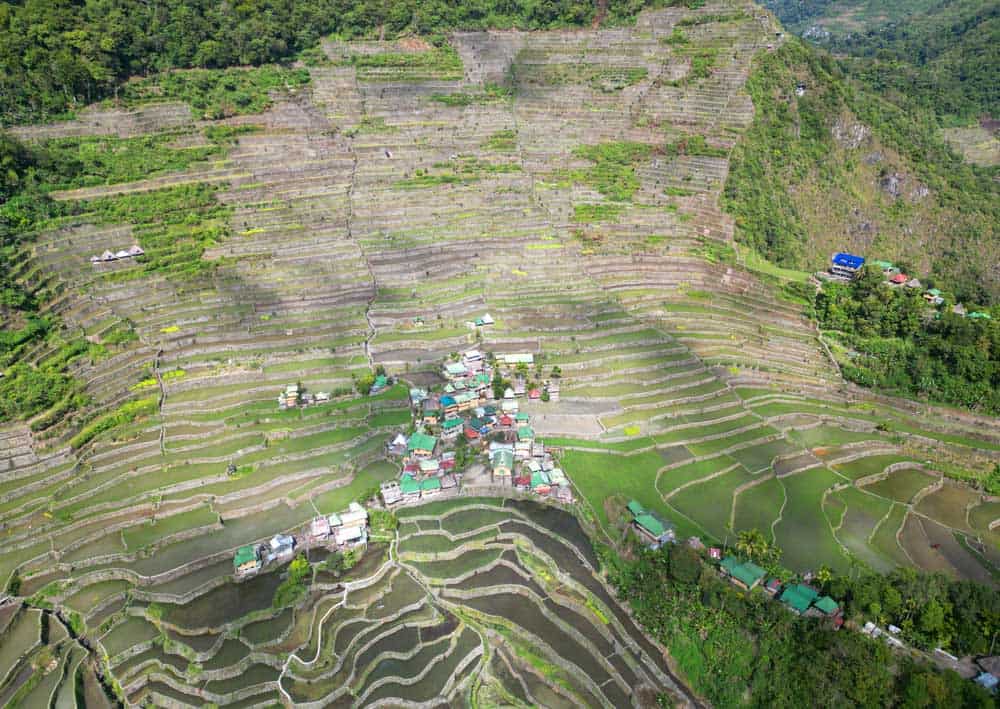
If not seeing the viewpoints over the Banaue Rice Terraces is a sin, not going to Batad should be punished by going straight to hell. Biblical references and jokes aside, the Batad rice terraces are, in our opinion, the most beautiful ones to see in Banaue and its surroundings, so you shouldn’t miss them.
As if it were an amphitheater, the first view is always glorious. However, the best thing is to walk along the pilapil (the paths between the rice fields) and reach the different viewpoints (marked in Maps.me), which give you increasingly beautiful panoramas. Walk carefully, as the terraces are often more than a meter and a half high.
Although there are few houses left built with wood, you can still see some that preserve the style of traditional Ifugao architecture, raised to better preserve the grain. In addition, it’s not uncommon to come across remnants of a harvest, people “pounding” rice or working their plots. You’ll also find the odd souvenir or beverage shop and guesthouses where you can stop for a meal or stay the night.
The most common route is the one that takes you to Tappiyah Falls, which we believe is one of the most impressive waterfalls in the Philippines for its flow and the surroundings. The water is “fresh”, but it will help relax your muscles after the walk and recharge for the climb back up. Even so, be very careful and don’t get too close to the drop (about 70 meters high), as some people have drowned. Legend has it that there’s a mermaid who lures you to go into the depths with her…
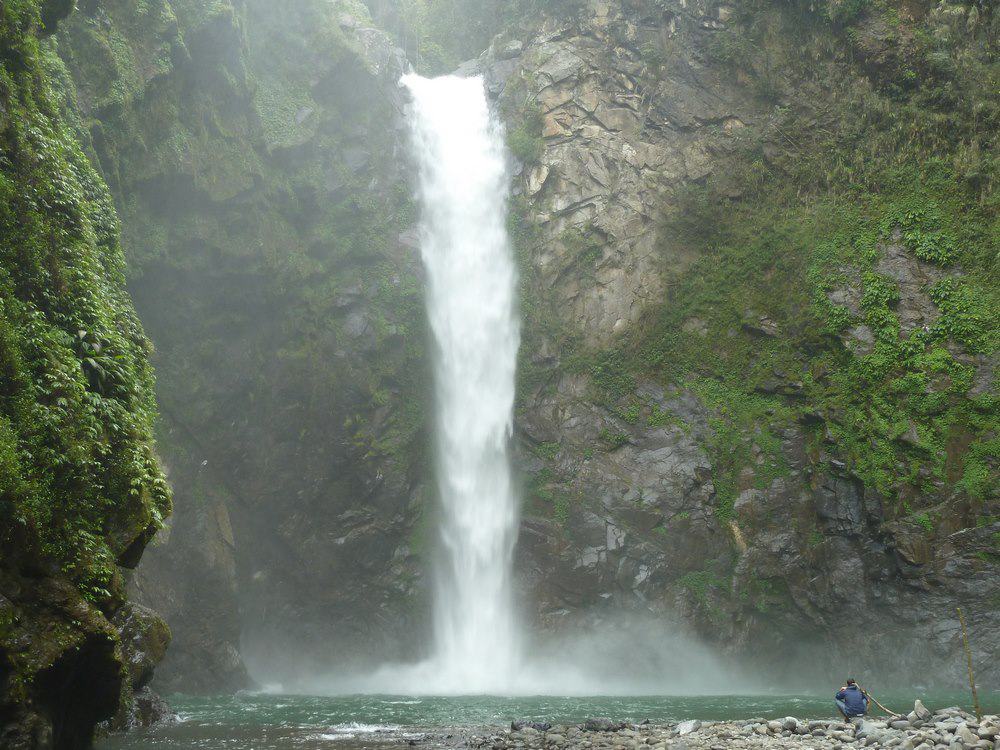
Even though it’s mandatory to pay a 50‑peso fee at the entrance to the village, you can visit the Batad rice terraces completely on your own. With the help of Maps.me you’ll easily find the viewpoints, and a guide isn’t really necessary. Still, going with one will make the visit a bit more interesting, as you’ll learn about the history and traditions of the people who live there. You can hire one at the Banaue tourism office for 900 pesos (for groups of up to 5 people) without the waterfalls or 1,200 pesos including the waterfalls. Plus, on the way to Batad, along the road, someone will almost always stop you to offer their services.
How to get there
The road has improved a lot in recent years, but it’s still not feasible to reach Batad by vehicle. The last kilometers still have to be done on foot and take between 10 and 15 minutes. It’s not a complicated path, but keep in mind there’s some elevation gain on the way back.
To reach Batad’s so‑called “saddle point” from Banaue, you have these options:
- Jeepney: there are 1 or 2 a day from the terminal in front of the market in Banaue. It’s best to check the schedules at the tourism office. If you’re traveling in a group, you can hire a whole jeepney for 3,500 pesos per way. The ride takes between 45 minutes and an hour depending on the stops.
- Tricycle: this is the most comfortable option if there are several of you and you don’t want to wait for the jeepney. The official fare from the tourism office is 800 pesos one way and 1,200 round‑trip, but it’s possible to negotiate. For reference, we paid 1,100 pesos round‑trip including a stop in Bangaan. Tricycle drivers are used to waiting while you do the trek or whatever you want. If you’d like, leave us a comment and we’ll send you the contact for the driver we spent several days with on our last visit to Banaue—very honest, good prices, and he shared lots of tidbits with us.
- Motorbike: check the “how to get around Banaue” section below for more info.
3. Bangaan Ifugao Rice Terraces, other incredible rice fields to see in Banaue
Other must‑see rice terraces to see in Banaue are those of Bangaan, also declared a UNESCO World Heritage Site and, for us, the most beautiful village in all the Philippines. If the scene is magical from the road itself, we were moved to tears when we descended to the village and saw such well‑preserved traditional houses, some of them decorated with carved wood, different handicrafts and even carabao skulls.
Talking with the owner of the two most spectacular houses, she even let us take a look inside. She also sells wooden figures and the odd souvenir such as keychains with the bulol or bulul, the rice deities and guardians of the granaries and possibly the most characteristic element of the Cordillera area, since they can be found in almost any granary. Have a little chat and take a keepsake home—the experience is worth it.
The descent to Bangaan won’t take you more than 10 minutes at a good pace and the path is completely paved. Afterwards, if you like, you can lose yourself among the rice fields. The ascent is a bit tougher, as it is completely uphill, but it won’t take you much more than 15 or 20 minutes either. Everything can easily be done without a guide.
By the way, if you want a very curious experience, it’s possible to sleep in one of Bangaan’s traditional houses for 300 pesos per person. You don’t need to worry about food—they’ll cook for you, since there are no restaurants here. Keep in mind there’s no internet connection. If you’d like, leave us a comment and we’ll share more information.
How to get to Bangaan
Here are the options:
- Jeepney: those heading to Mayoyao also stop here. Just ask at the terminal which one goes to Bangaan and hop on. Keep in mind they’re not very frequent. Renting a whole jeepney costs 2,800 pesos per way.
- Tricycle: time to negotiate again. The official fare is 1,000 pesos round‑trip. As we mentioned above, we got 1,100 pesos including Batad as well. Allow about 45 minutes from Banaue.
- Motorbike: check the prices below.
- On foot: there’s a trail that goes from Batad to Bangaan.
4. Hapao Rice Terraces and Hungduan Rice Terraces
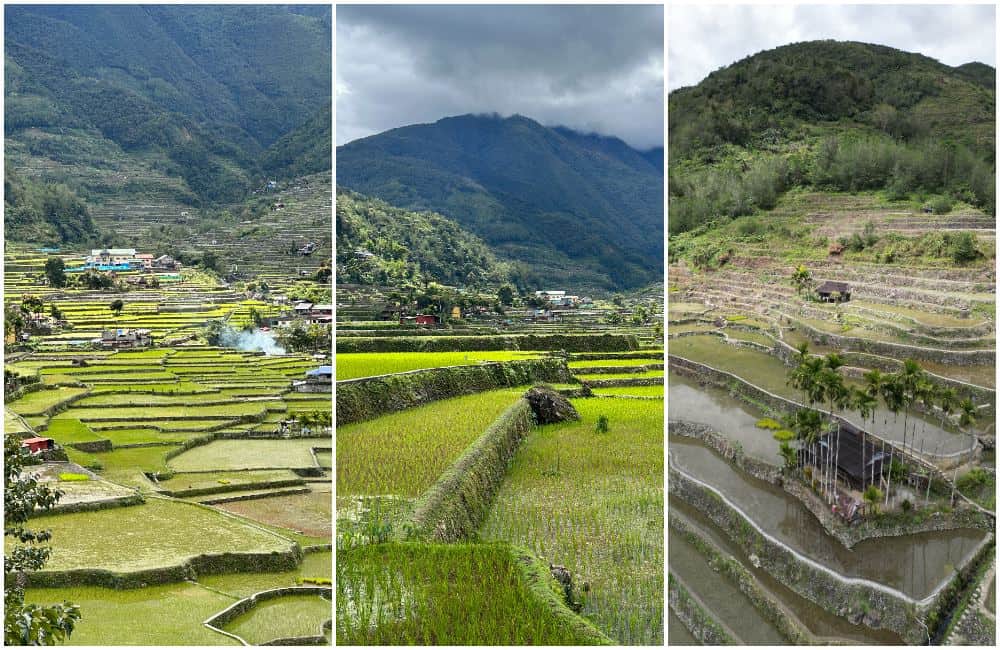
Batad and Bangaan are our favorites, but seeing them isn’t the only thing to do in Banaue. There are several more in the surroundings, and some of the most spectacular are those in the Hungduan area, about 30 minutes from Banaue. Here you’ll find several impressive rice terraces, the ones we liked most being those in Hapao.
Perhaps the amphitheater isn’t as spectacular as Batad’s and the village isn’t as charming as Bangaan’s, but they also create a typical Cordillera postcard to which you can add the trek to some hot‑spring pools hidden inside, the Bogyah Hot Spring. The hike takes 45 minutes and we didn’t know about it and didn’t bring swimwear, so we didn’t check them out on our last visit. If you go, please tell us how it is.
Before reaching Hapao you’ll be required to pay a 50‑peso conservation fee. It’s necessary to pay an extra 20 pesos if you visit the hot springs and it’s advisable to go with a guide (700 pesos per group). They told us at the information office that the route is circular and quite easy—in fact, we did part of it on our own and it’s true that the pilapil are wider and the feeling of vertigo is much less.
By the way, ask your tricycle driver to stop at the viewpoint over the Bokiawan terraces, which are also very beautiful.
How to get to Hapao
Here are the current alternatives for getting to Hapao:
- Jeepney: we don’t know the schedules and prices, but jeepneys to Hapao depart from the Banaue terminal in front of the market. If you want to rent a whole jeepney, it’s 3,000 pesos per ride.
- Tricycle: the official fare is 1,000 pesos or 1,200 if you also go to the hot springs (for the waiting time). Even so, drivers are willing to negotiate. We paid 1,000 pesos for Hapao and the Banaue viewpoints, spending several hours.
- Motorbike: see the “how to get around” section.
5. Banaue Museum, a plus for your visit to Banaue
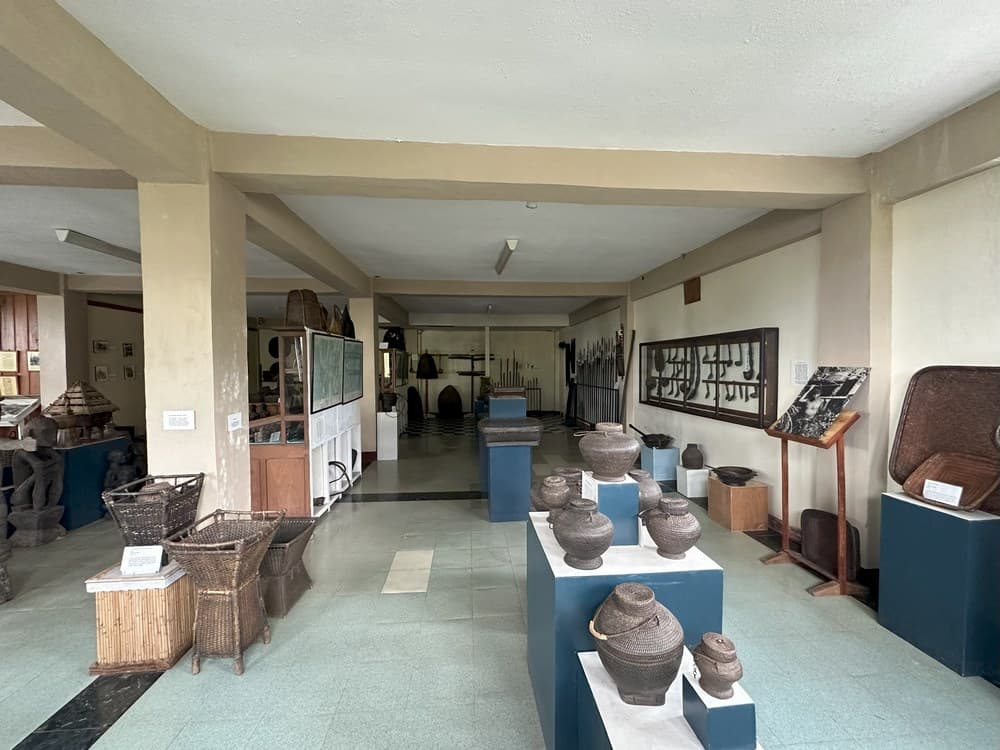
We’re not going to lie and tell you this museum is wonderful, as there are hardly any explanatory signs and it’s more an accumulation of objects; still, we think visiting it is something essential to do in Banaue to take away a more complete view of the area.
The Banaue Museum is a few (steep) steps from the Tourism Office and has a fairly varied collection of Ifugao objects (the “backpacks” or baskets are wonderful), as well as very interesting photographs of what the villages looked like just a few decades ago and of different rites or ceremonies. The exhibition is spread over two floors and there’s also a small shop we’d categorize as “basic,” where you’ll mainly find textiles. In fact, during our visit we found several women weaving 100% by hand.
Admission costs 100 pesos per person and it’s quite possible you’ll find the door closed, since it doesn’t receive many visitors. Therefore, it’s best to go straight to the shop so someone can open it for you.
6. Hike between villages for several days, The Heritage Trek
We’ve left it for last, but in reality many travelers looking for things to do in Banaue choose to base their stay on hiking through the rice terraces, spending the night in different villages. If you’re used to walking, it’s the most beautiful way to contemplate the terraces and experience their traditions a bit more closely, as you’ll stay in basic but cozy hostels or homestays.
The route is about 22 kilometers and can easily be done in 2 days, although it’s best to take 3 to enjoy it more calmly and also see Bangaan. You don’t need to be an avid mountaineer, but you do need good physical condition, as you’ll be climbing up and down stairs a lot and your knees will eventually feel it.
The route can be:
- 2 days and 1 night: includes the Banaue Viewpoint, Pula, Cambulo and Batad.
- 3 days and 2 nights: includes the above plus Bangaan.
Although most accommodations in Banaue offer it, it’s best to compare with the official prices at the tourism office, which are quite reasonable—especially if you find other travelers to share with. As of today, these are the following:
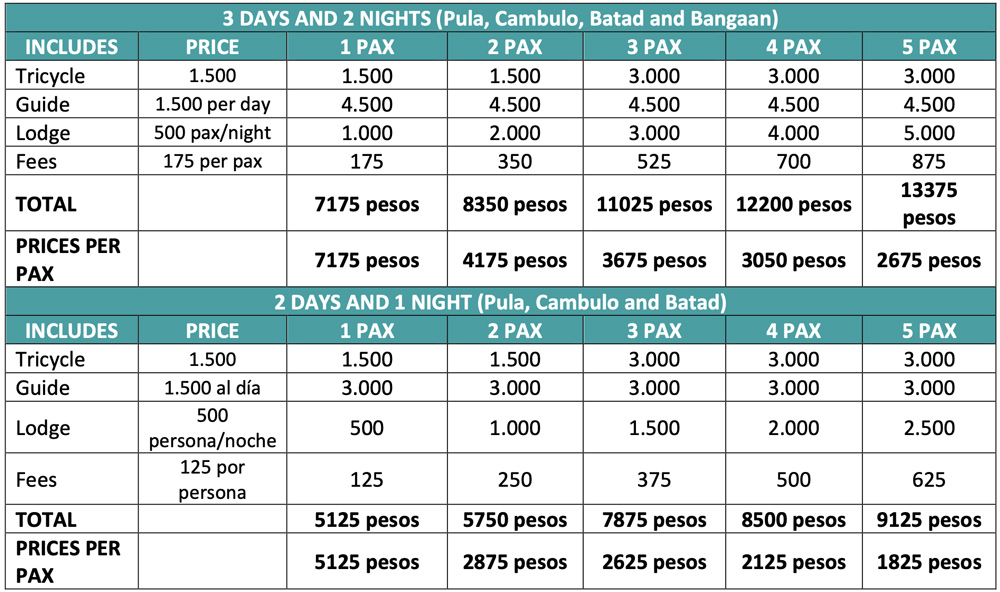
Keep in mind you’ll have to add the food and drink you consume. It’s better to stock up on snacks in Banaue, which is more economical.
If you’re used to this kind of hike, you can also consider doing it on your own and following the routes you’ll find on Wikiloc or directly in Maps.me. You can start in Batad or at what they call the “jump off to Pula,” which is 9 kilometers from Banaue on the road toward Bontoc and where you can get by jeepney, bus or tricycle. The most common way is from Pula to Batad.
It’s advisable to do the route as lightly loaded as possible. Therefore, you can leave your luggage in the tourism office or at a hostel in Banaue. Some, like this one, have lockers where you can use your own padlock.
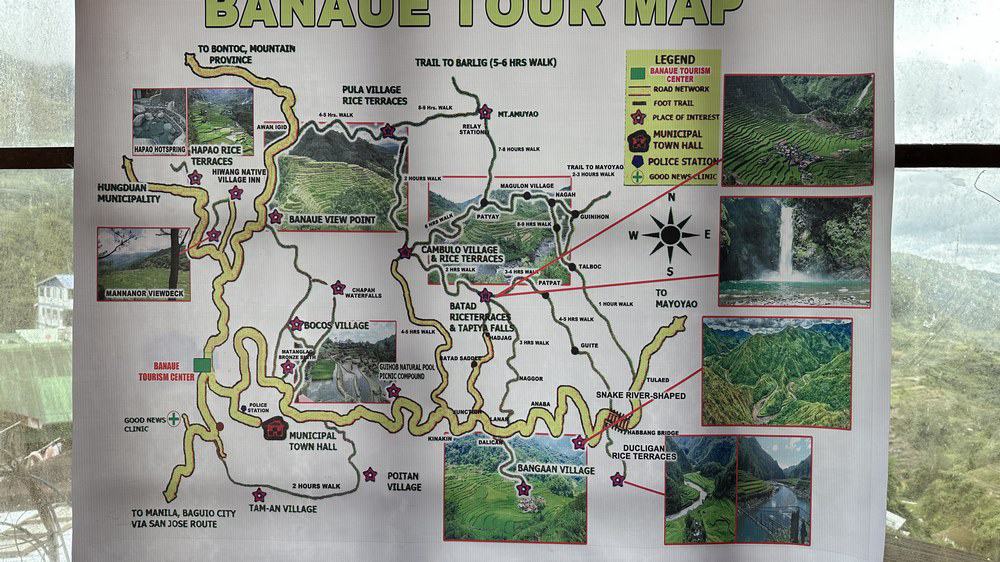
With this map you might understand the route a little better and all the places we’ve mentioned in this selection of places to see in Banaue:
More things to do in Banaue
We’ve already told you the main things, which is what we’d do if it’s your first visit. However, we know there are travelers who want to go further or stay longer, so here are some more things to do in Banaue that we think might suit you:
- Amuyao: at 2,702 meters, this is one of the highest mountains in the Cordillera. If you have good physical condition and time, a highly recommended route is to start from Batad, pass Cambulo, sleep in Pat-yay and then summit. Afterwards, you can descend to the road that connects Mayoyao with Banaue. It can be done in 2 days and 1 night, but it’s better if you dedicate at least 3 days and go with a guide.
- Guihob Natural Pool: these are natural pools on the way to Mayoyao. They’re nothing out of this world, but if you want a dip, you can ask your tricycle driver to stop on this route.
- Ducligan Rice Terraces: we haven’t visited them yet, but they look great, with a river flowing behind the village creating an even more spectacular landscape. According to what we were told at the tourism office, you can do another trek to some hot springs. The guide costs 1,000 pesos per group and the tricycle is 1,200 pesos (always negotiable, you know). Given their location, you could visit after Bangaan and also combine with Mayoyao.
- Hiwang Village: it’s an accommodation with traditional houses (you can browse and book here), but you can also visit on your own to enjoy the views and check out the crafts they have. A tricycle should cost around 200 pesos.
- Tam-am Village, Bayninan and Poitao Village: 3 small villages south of Banaue that you can also reach on foot (they’re marked in the previous photo). At the tourism office they organize guided walks for 1,000 pesos per group.
- Kiangan Rice Terraces (also called Nagacadan Rice Terraces): another group of rice terraces declared a World Heritage Site. We didn’t visit them, but they’re even less touristy than those of Banaue/Batad and look very good. The tricycle round-trip is 1,500 pesos and the guide, if you want one, is 1,000 pesos per group.
- Mayoyao: we end this list with other rice terraces about 50 kilometers east of Banaue. In fact, there are more than 8 rice terraces in this area, as well as waterfalls (Tenogtog waterfalls, for example) and hiking routes, so it would be best to dedicate a couple of days instead of going on a day trip from Banaue. If you want a guide, it’s 1,000 pesos per group. The tricycle round-trip from Banaue is 2,500 pesos or 1,800 one way; you can also catch one of the jeepneys or buses that depart from Banaue.
Practical information about Banaue
Now that you know everything there is to see and do in Banaue, here are some practical details so you can plan and enjoy it even more.
How to get there
As we explain in detail in How to get to Banaue, what we believe is the best way to arrive is coming from Manila on an overnight bus. There are buses from the companies Ohayami Trans and Coda Lines from the Cubao area of Manila that arrive around dawn. You can buy your ticket and see the schedules at this link.
You can also easily arrive by bus from Bontoc or Sagada with Coda Lines buses or by linking buses or jeepneys. Allow 3–4 hours for this journey. If you’re in Baguio there’s an overnight bus every day. You can see schedules and reserve your seat here.
Where to stay
Although it can’t be said there’s a huge offer, there are more and more accommodations in the area, a bit scattered along the road. From our perspective, the best place to stay is around the Tourism Office, where there are also more restaurants. Here are the ones we think are the most interesting:
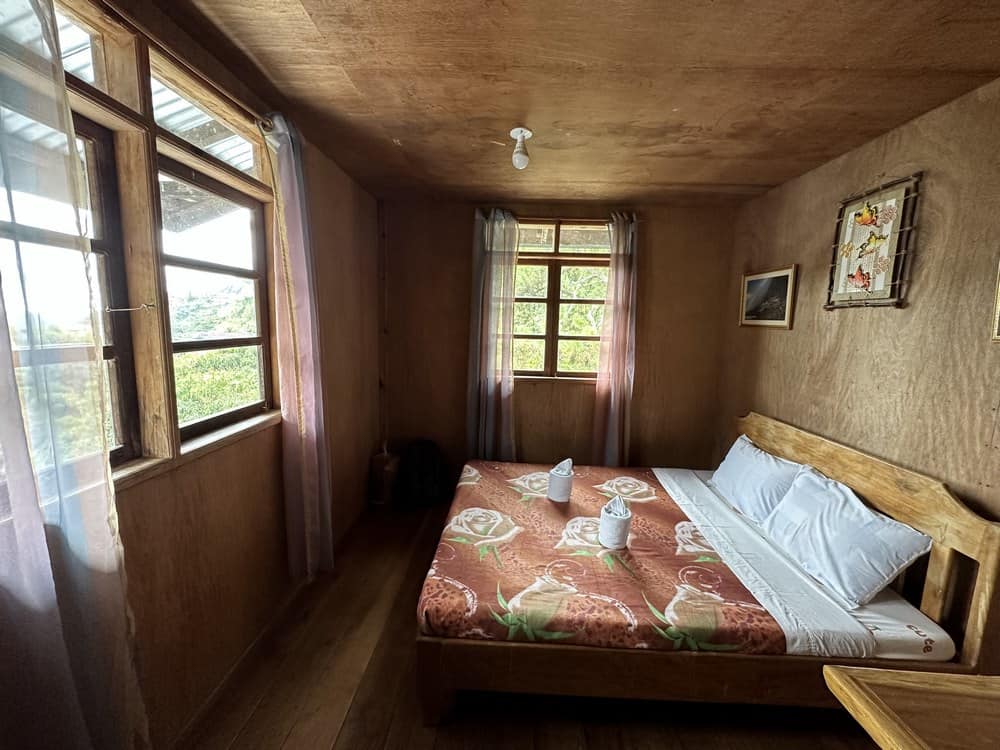
- 7th Heaven Lodge and Cafe: this is where we stayed on our last visit to Banaue. A 3‑minute walk from the tourism office, with spacious and pleasant rooms overlooking the mountains. The bathroom is outside, but there’s one per room, so you don’t have to wait. They have a great restaurant with an outdoor bar with superb views. The food isn’t bad at all, in case you don’t feel like walking at night. They also have lockers if you want to make the most of your time until the evening bus. Book here.
- Banaue Evergreen Hostel and Restaurant: although it’s not as central, the owners are so nice that they’ll pick you up at the station and help you enjoy the area. Rooms also have great views and there’s a reasonably priced restaurant. Without a doubt, another great option. Book here.
- Hiwang Native House Inn & Viewdeck: if you want something special, nothing like sleeping in a traditional Ifugao house—a memory you’ll take with you for life. The place is spectacular, surrounded by mountains and rice terraces. Book here.
You can find more alternatives in Where to stay in Banaue.
On the other hand, you also have the option of staying overnight in Batad, which is what we’ve done on a few occasions. The logistics may be more complicated if you want to visit many rice terraces, but the experience of sleeping in front of that amphitheater of rice terraces is spectacular. You’ll find lodging options in Where to stay in Batad.
How to get around Banaue
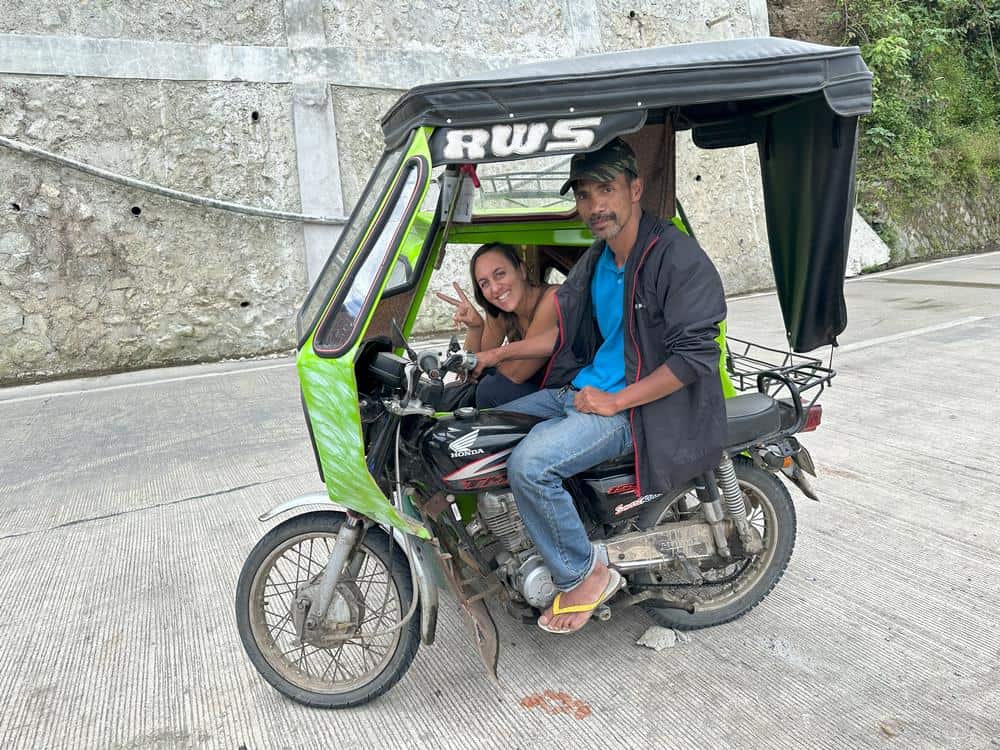
If your accommodation is well located, you’ll be able to reach everywhere on foot. You’ll face some steep inclines, but you can manage without a problem. Even so, if you don’t feel like walking, there are tricycles on almost every corner, so don’t worry. At the Tourism Office they can tell you the official fares, which usually depend on distance. If you want one for the whole day, there are also standard rates depending on the destinations. Even so, drivers are always willing to negotiate.
Want a contact who’ll give you good prices? Leave us a comment and we’ll send you the info.
On the other hand, although it’s not common, it’s also possible to rent a motorbike to visit Banaue. Unfortunately, since there’s no competition, prices are sky‑high compared to other places in the Philippines. Right next to the Tourism Office there’s a restaurant with a “rent a bike” sign, but current prices are 1,200 pesos for the whole day and 750 pesos for 5 hours (far from the 300–350 per day it usually costs elsewhere).
Even so, if you plan to go far, considering tricycle prices, it might be worth it. Be very careful because the roads are winding and the main one can get quite busy. Also, the hills are “fun.”
To give you an idea of tricycle costs, a one‑way trip from Banaue to Batad usually runs around 700 pesos. Round‑trip (waiting included) together with a visit to Bangaan can be had for 1,100 pesos. From Banaue to the Hapao area plus the Banaue viewpoints, a good price is 800 pesos.
Where to eat in Banaue
The dining scene isn’t huge, but you won’t go hungry, don’t worry! Here are some of the places we tried and can recommend:
- Middle Ground Cafe and Restobar: with a small terrace offering nice views of the river and the rest of Banaue, we were pleasantly surprised by the pasta here. They have a few vegan/vegetarian options and also sell specialty coffee from the area.
- 7th Heaven’s Cafe and Lodge: you can eat here even if you’re not a guest. Good portions for the price and friendly service. Great views from the bar area.
- Banaue Public Market: on the upper floors you’ll find several simple carinderias and cafes where you can eat in Banaue for little money. Outside there are also other carinderias for budget meals.
Best time to visit Banaue
This guide is getting a bit long, but the main thing to do in Banaue is enjoy its rice terraces, so you’ll surely want to know when they look their best, right?
As a general rule:
- Between December and March: this is the coldest season (especially December, January and February) and most rice terraces are basically mud or pools of water. Even so, by early or mid‑March it’s normal to already see some green.
- Between April and July: April and May tend to be planting season (though it may start in March), so you’ll already see green without being super tall. In June they look more lush, but keep in mind that during this month and July it rains the most. Therefore, landslides sometimes occur on the road and it can get a bit chaotic.
- Between August and November: this is usually when they’re most grown. August and September are the rainiest months in Luzon, so some landslides can also occur. By November they usually turn yellow and you run the risk that they’ve been harvested.
As we always say, this is just a general approximation, since there isn’t an exact date and not even all farmers plant or harvest at the same time. In addition, other factors come into play here, such as La Niña or El Niño weather phenomena, which can also affect crops.
So… when will they be the greenest?
After all that, you might think: what’s the best time to visit Banaue? In theory, if you want to see the greenest rice terraces, April and May are good months and, moreover, it’s the dry season. Another month we think is good is October, when the season has usually begun and it’s also common to see more grown crops.
Want our opinion? We go whenever we feel like it and we’ve found the rice terraces in all kinds of states, and they always seem spectacular to us. It’s common to find some stretches already planted or more or less grown, while others are more flooded. Even harvested or full of water, they look gorgeous—especially at sunrise or sunset, when the colors of the sky are reflected in them.
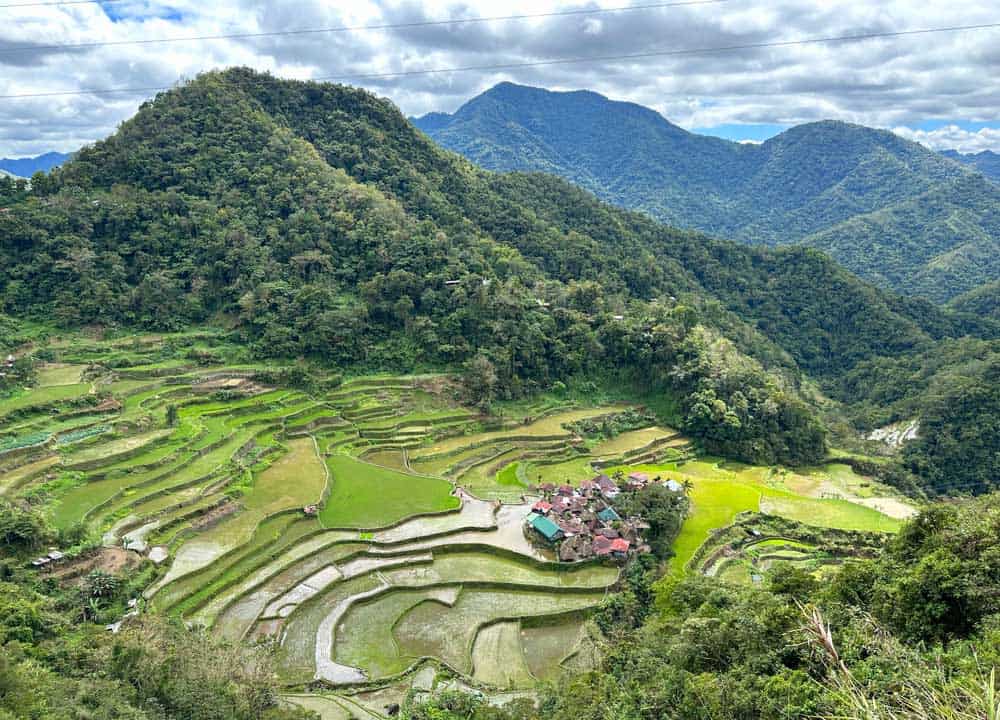
This is how the Bangaan rice terraces looked at the end of February
Tips for visiting Banaue
Don’t think we’re done yet—we’re complementing this list of things to do in Banaue with some tips of our own:
- Download Maps.me and the map of this area because there are parts of Google Maps that aren’t up to date.
- Bring appropriate clothing and footwear. It’s usually a bit cool at night in Banaue, so don’t forget a warm layer and a rain jacket. Hiking shoes will also come in handy. You’ll find recommendations in Packing list for the Philippines.
- It’s quite likely that on arrival you’ll have to pay a 100‑peso fee at the Banaue tourism office, and similar fees in Batad and Hungduan. Ask for a receipt.
- If you’re going to stay in Batad or do the multi‑day trek, ask at the tourism office if they can store your luggage. Usually they can. Some hotels (like 7th Heaven) also have locker service for a few pesos per day.
- Although it’s never happened to us, it seems there are some opportunists who pose as employees of certain hotels and wait for the buses coming from Manila or Sagada with signs bearing the hotel’s name. They do this to charge astronomical amounts for transport. So be careful and trust what we indicate in the “how to get around Banaue” section.
- Every 3 years, in April, the Imbayah Festival is held, where you can see some of the most curious Ifugao traditions, including races with a kind of wooden scooters. If you can make it coincide with your trip, it will surely be great—just remember to book accommodation in advance. The last one was held in 2023.
- Keep in mind everything is paid in cash and while there’s an ATM in Banaue, it’s common to find it broken or out of money. Therefore, we recommend carrying plenty. You’ll find more information about this in Money in the Philippines.
- There’s good coverage in Banaue from both Smart and Globe. In Internet in the Philippines we explain how connectivity works.
- If you’re going to do any routes around Batad, buy water in Banaue and you’ll save a few pesos.
- Banaue sells lots of local handicrafts. In our opinion, those from this part of the Philippines are the most beautiful in the country—take advantage! As a curiosity, they sell many items shaped like a penis as a symbol of fertility… Please don’t haggle like a pirate and contribute to the community.
- If you look closely, many people in Banaue have slightly red teeth and you’ll see stains of the same color on the ground. This is because they chew betel nut (along with other herbs and spices) or moma, something that happens not only in parts of northern Philippines but in other Southeast Asian countries as well.
- Be respectful and always walk along the pilapil—that is, the concrete paths between the rice terraces—and try not to walk on the earthen ones. This helps us preserve these millennia‑old terraces.
- Ask for permission before taking people’s photos. This is responsible tourism too.
- As for food, don’t leave Batad without trying its rice, pinikpikan, the local coffee and a small glass of rice wine.
- Always be careful, since you won’t find major hospitals nearby, and always travel with good travel insurance for the Philippines. By clicking this link you get a 5% discount on the one we always use—and it has saved us multiple times.
Map of places to see in Banaue
To give you an idea of the distances between the different points, here’s a map we’ve made with the best places to see in Banaue:
We’re sure this guide to things to do in Banaue has helped you a lot, but if you still have questions, you can ask us in the comments. Enjoy this other side of the Philippines!