On Travel Around the Philippines you’ll find loads of information about the country’s main tourist spots, but on our trips we also like to lose ourselves in lesser‑known corners. So, as soon as we heard about the charms of some paradisiacal islands not far off the southwestern coasts of Leyte, we didn’t think twice and took a boat from Cebu to Hilongos to see it with our own eyes. Despite not finding much information online and coming across a few contradictory opinions, we managed to do the Four Islands tour, an island hopping in Leyte that—spoiler alert—won us over.
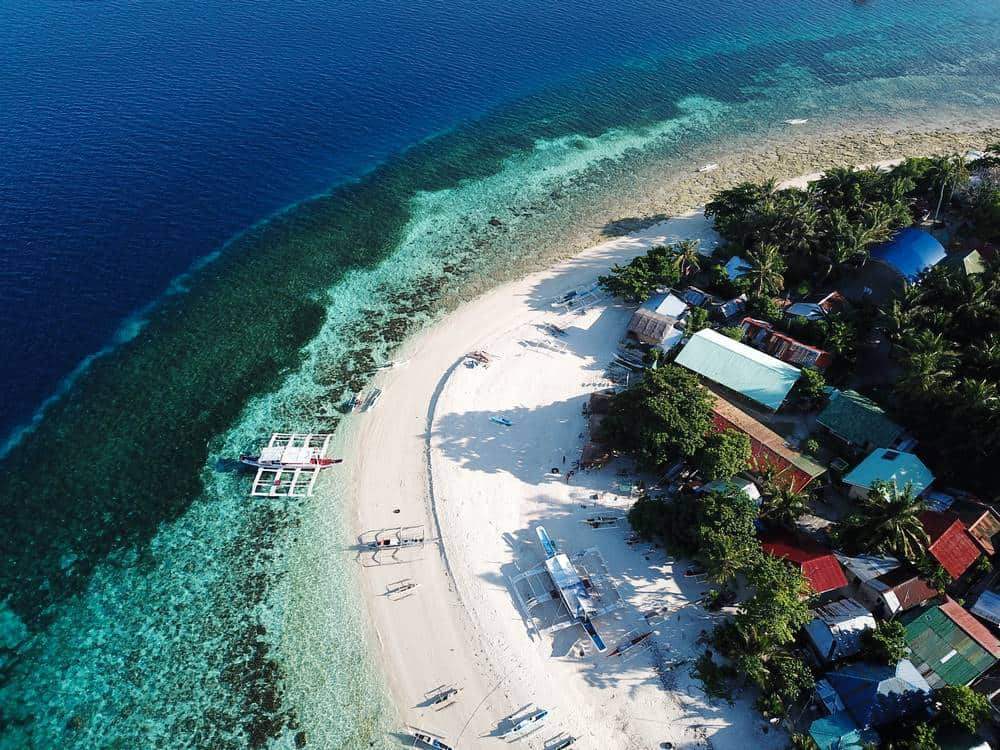
The Four Islands, which are indeed called that, in Spanish, are a group of—yes—4 islands. All of them are known for having white or nearly white sand and being surrounded by turquoise waters where you can take a dip whether the tide is high or low (a big deal in the Philippines). Digyo Island is the most famous for its sandbar and also the prettiest. And although they’re still recovering from overfishing, some of the islands offer interesting snorkeling opportunities. So, as you can see, a day of island hopping around the Four Islands basically means spending a day hopping from one pretty island to another and cooling off to peacefully enjoy Philippine marine life.
If all this sounds great, stick with us—we’re going to tell you in detail everything about the Four Islands tour.
Where are the Four Islands
The Four Islands are located in Leyte and belong to the municipalities of Inopacan and Hindang (only Himokilan belongs to the latter), meaning they sit to the west off the western coast. From Inopacan, the town from which the Four Islands tours depart, it takes barely 30 minutes to reach Himokilan or Digyo.
The closest towns, besides Inopacan itself, are Hilongos (17 kilometers away), Baybay (about 25 kilometers), and Ormoc (75 kilometers). Further down you’ll find how to get to the Four Islands from these and other places in the Philippines.
The Four Islands island hopping in Leyte: what it’s like and which places you visit
As we mentioned, the Four Islands island hopping starts in the town of Inopacan, specifically from the Baywalk. Here you’ll easily spot a white building where you register and pay for the boat and the corresponding fees.
We arrived early in the morning from Hilongos, where we were staying, but even though the day had dawned completely clear, we watched the sky start to fill with very dark clouds and at 10:00 it began to rain heavily. That made us wonder whether it was worth going ahead with our plan, since it’s basically a beach‑hopping excursion, so we waited a bit to see if the weather improved. It did—around 11:00, after a few moments of indecision, we set off for Himokilan and ended up having an awesome day!
Himokilan Island
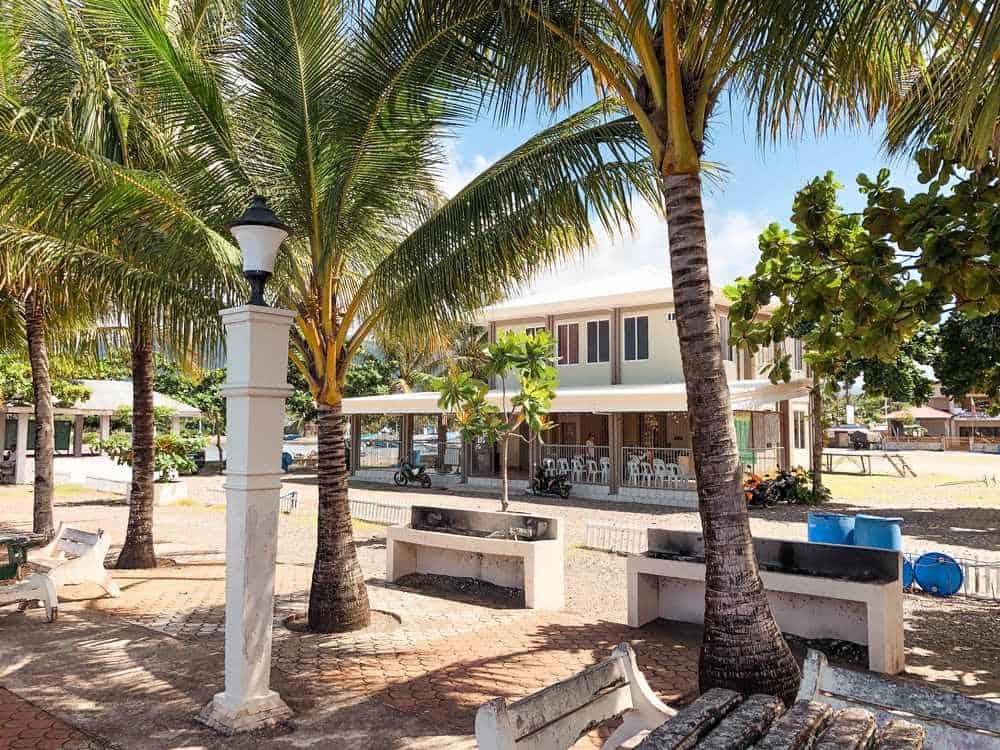
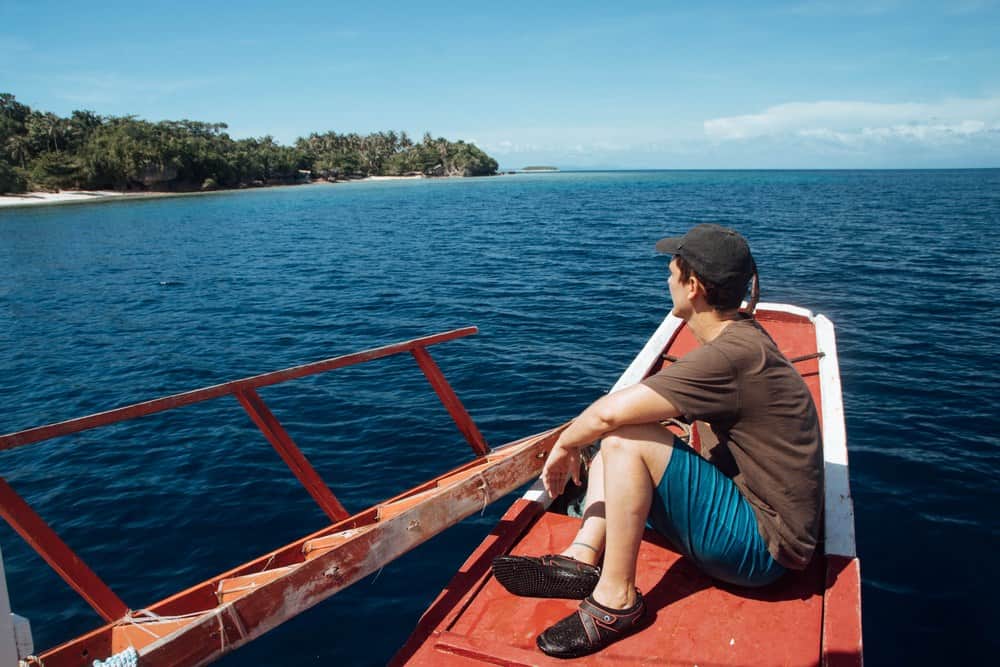
The Four Islands island hopping begins at Himokilan, the largest of the four you visit. We cruised comfortably in our huge bangka and in 25–30 minutes docked at a gorgeous white‑sand beach.
As soon as we arrived, we started looking into what we could do there. Despite there being a small hut where a girl seemed to be working, they didn’t seem too inclined to help us, so we went for a stroll around the village. We always enjoy walking around and seeing how people live on these tiny islands. When we reached the omnipresent basketball court, we turned back and returned to the beach, where we took a walk along the curious sandbar and the neighboring “pool” that forms.
After insisting with the island guide, she told us there was a designated area with a marine sanctuary where you can see giant clams. Since it was getting a bit late and we had already experienced that several times in Camiguin, we decided to move on to our next stop.
If you have time—especially if you plan to spend the night on Digyo—you can try some trekking on the island. We were told there are several caves to explore.
Himokilan doesn’t belong to the municipality of Inopacan but to Hindang. It’s impossible to change the order of visiting this island. By municipal ordinance, you must go to Himokilan first to register. You can’t skip this visit. Once you’ve been, it’s up to you to choose your next stop.

Mahaba Island
We couldn’t say whether this is our favorite on the Four Islands tour or if Digyo beats it… The moment we spotted it, we were blown away. In barely 20 minutes we reached this paradise from Himokilan.
It’s a beautiful island with a huge white, powdery‑sand beach washed by turquoise waters. At the ends of that main beach you can see some rock formations and there’s also plenty of shade to just sit and take in the scenery.

Even so, since we can’t keep still, we put on our masks and went to explore the seabed. Good call! Mahaba has the best snorkeling on the Four Islands island hopping. Although it doesn’t reach the level of the places we talk about in The best snorkeling spots in the Philippines, we saw some interesting corals and little fish. Plus, it’s a seaweed area, so—as we also saw on some info boards—it’s not unusual to spot the odd turtle.
On the other hand, inside Mahaba you can see some lagoons where a kind of little red shrimp lives. Our guide told us that at the moment they couldn’t be seen. We don’t know if that’s 100% true, but it’s worth asking.
Also, depending on the time of year you do the Four Islands tour, it’s possible to see a small sandbar on Mahaba Island, too. We weren’t that lucky, but we still found it a very pretty island.
By the way, did you know that “mahaba” means elongated in bisaya? The elongated shape of the island is what gives it its name.

Digyo Island
The next stop on our Four Islands island hopping was the star and goal of the trip: Digyo Island. We had seen several photos of this place on Instagram and it looked spectacular, so our expectations were pretty high.
Even from afar it looked amazing and, when we set foot on the island, it reminded us of other similar little islands we’ve visited such as Daku or Guyam in Siargao, or the lovely Mantigue in Camiguin.
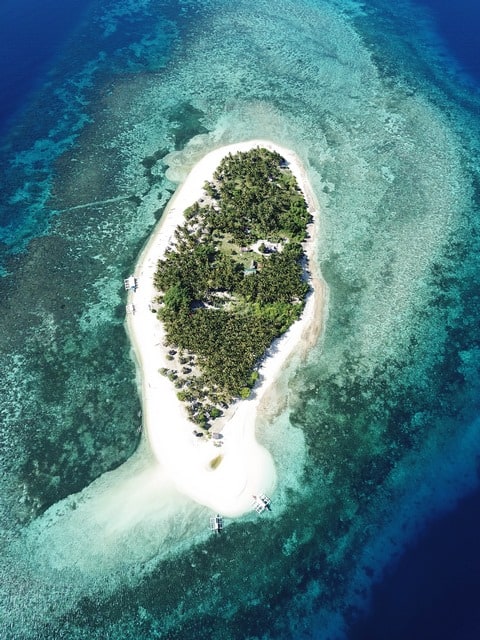
Digyo is the least inhabited and smallest of the Four Islands. There are only a couple of fisher families and those who take care of the island’s upkeep. After walking along the sand, we reached an area full of palm trees and other trees where you can find some open nipa huts for day use and others that are closed for overnight stays. There were just two small groups of travelers—we practically had it to ourselves!
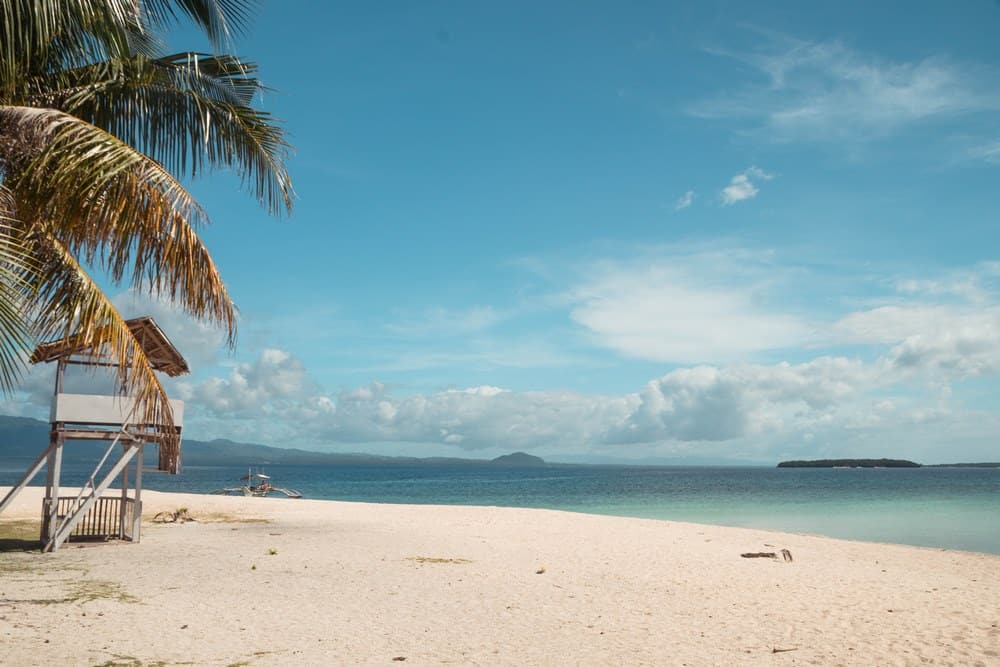
On the island you’ll find some rather basic bathrooms and, if you feel like it, they have fresh water for a shower. It’s the most suitable one to spend the night on, although obviously there’s no electricity and nothing fancy. It’s a very basic island, but the kind of luxury that’s getting harder to find in the world.
Even though the sandbar we had seen in photos wasn’t there—at this time of year the Habagat wind had reshaped it a bit—we found it the prettiest of the Four Islands. From it you can also see all the islands that make up the Four Islands and the neighboring Leyte. The scenery is truly spectacular.

We spent almost 4 hours eating, taking a dip, doing a bit of snorkeling, or simply walking around it (which takes barely 10 minutes).
We’re sure we’ll return at some point to see that sandbar that made it so famous, but even so, enjoying Digyo in such an exclusive way is something we won’t forget.
Apid Island
Although it was still early and our boatmen already wanted to head home, arguing that visiting Apid wasn’t worth it because it’s inhabited, we were determined to complete our island hopping around the Four Islands. We had paid for the whole tour, so—reluctantly—at 16:00 we reached Apid after barely 10 minutes of sailing.
Indeed, on this last island you’ll find a small coastal village and, without a doubt, you’ll be the attraction. We got the feeling not many travelers make it there because the town was amazed to see us. Around 600 families live on Apid; they fish and make mats and other handicrafts from pandan leaves.
Although the beach isn’t as pretty as on the previous islands and it was a bit littered with plastic, we decided to hang around for a while and asked where the marine sanctuary was. We put on our masks and went to explore, but we have to admit we didn’t find what we saw very interesting.

So, satisfied after such a great day of sun and beach, we decided to head “home” and hopped back into our bangka.
By the way, don’t forget to look out on the way back to Inopacan—we were lucky enough to be accompanied by a group of dolphins!
You can watch our Four Islands Instagram stories here. Follow us so you don’t miss a thing!
Price of the Four Islands tour, Leyte
The price of the Four Islands tour depends on the number of people in your group, since full‑boat rates are regulated by the local government. As the lowest fare is for a bangka of up to 10 people, the ideal thing is to look for others to share with right at the port. The earlier you go, the more likely someone will show up.
These are the prices:
- Boat for up to 10 people: 3,500 pesos
- Boat for up to 20 people: 4,000 pesos
- Boat for up to 30 people: 5,000 pesos
These are the fees for the Four Islands tour:
- Entrance: 30 pesos for Filipinos and 150 pesos for foreigners.
- Hindang & Inopacan protection and maintenance: 100 pesos
- Environmental fee: 20 pesos
In total, if you’re a foreigner, it’s 270 pesos per person.
If you want to spend the night on Digyo or rent a hut for the day, these are the prices:
- Closed cottage (day use): 500 pesos
- Open cottage (day use): 300 pesos
- Tent: 200 pesos
- Tent space: 50 pesos
- Overnight use surcharge: 50 pesos
- Cooking fee: 50 pesos
- Fresh water for a shower: 30 pesos
In addition, if you want to stay overnight, add 500 pesos to the boat price for an overnight.

Do we recommend the Four Islands island hopping?
Absolutely! The truth is we arrived with very low expectations after reading a few so‑so opinions about the Four Islands tour, but we loved it. It was exactly what we were hoping for: beachy landscapes with no crowds.
That said, compared with other similar excursions, it’s true that it’s a bit pricey if there are only a few of you and that this island hopping is neither comparable to nor a substitute for the Coron island hopping or El Nido. However, it’s a great opportunity for those who have more time to travel in the Philippines or who want to step off the usual routes. The island of Leyte is one of the least known among tourists and has spots where you’ll be almost alone from Monday to Friday.
That said, we would have loved the guides to be a bit more attentive and to have given us more hints about what we could do. You can tell tourism isn’t very developed here yet and their attitude didn’t strike us as the best. Each time we got to an island we saw a sign with different activities, but we couldn’t make sense of it. So we asked what we could do there or which spots were best for snorkeling, and the answers were always vague and a bit unenthusiastic. We hope the local government takes note and that this changes in the future.
We went to Leyte this time with the goal of doing the Four Islands tour, but then we felt like heading to Pintuyan (about 3 hours away) to see the whale shark again. Boats also depart for sightings from Padre Burgos, so combining these two activities is a great plan. At the end of this article you’ll find other things to do in Leyte and more information.

How to get to the Four Islands
To reach Inopacan, you have several options depending on where in the Philippines you are. Here’s how to get to the Four Islands:
Getting to the Four Islands from Cebu:
As you’ll see, you have lots of boat options:
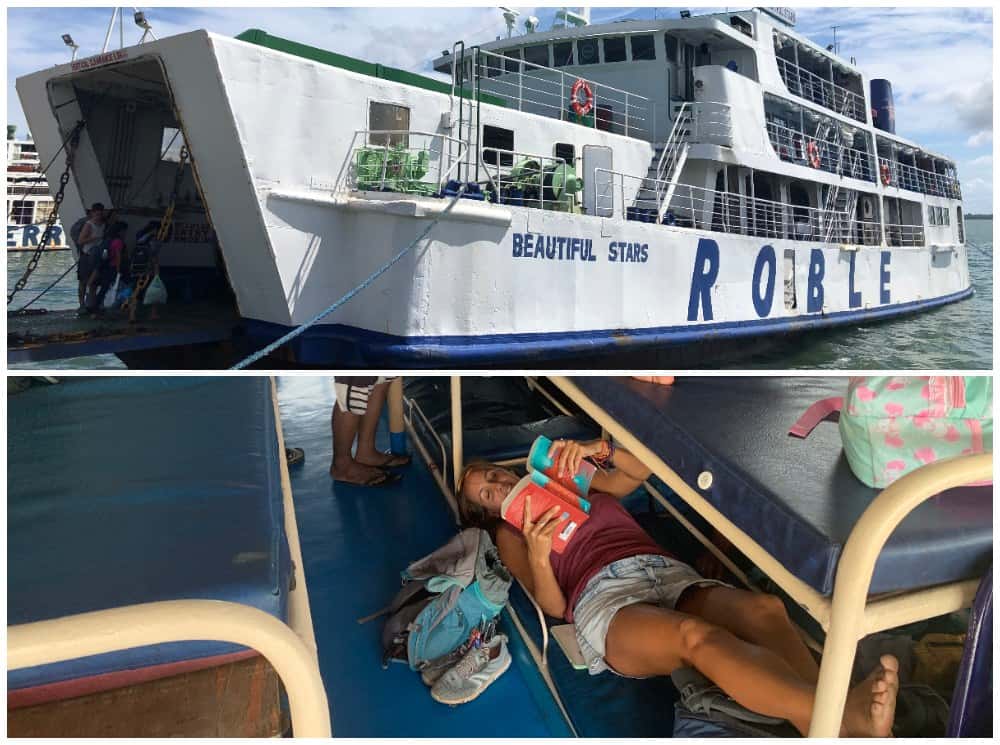
- Boat to Hilongos: this is what we did. There are several companies but the most reliable is Roble Shipping, which has daily boats at 11:00 and 21:00. The trip takes 5 hours and you can do it in a bunk on deck. Seats start at 480 pesos. For the tiny price difference, try to snag a bunk because the seats are a bit uncomfortable. You can’t book online. You have to buy the ticket at the office, which is located here, and then walk to Pier 3, where the boats depart. Gabisan Shipping Lines has boats every day at 21:00, on Wednesdays also at 11:00, and on Monday, Wednesday, Thursday, Friday, Saturday, and Sunday at 14:00. The trip takes around 5 hours and prices are similar to Roble’s. Once in Hilongos, you can take any multicab toward Inopacan. It’ll take around 30 minutes. Be sure to double‑check schedules with the companies.
- Boats to Baybay: Roble Shipping also goes to this city on Monday, Wednesday, Friday, and Saturday at 21:00; the ticket is 700 pesos. Lapu‑Lapu Shipping Lines has a daily ferry at 20:00 that arrives at 3:00. They don’t have a website. From Baybay you can take any multicab, bus, or van toward Inopacan. It’ll take about 45–60 minutes.
- Boats to Bato: Medallion Transport has boats every Monday, Wednesday, and Friday at 20:30. It takes 6 hours. The ticket costs 470 pesos and can be booked online on their website. Southern Pacific Trans. Corp. has boats daily at 20:00 arriving at 3:00. No website. Once in Bato, you can take a multicab, van, or minivan to Inopacan. It’ll take about 45 minutes.
- Boats to Ormoc: Roble Shipping goes to Ormoc daily at 22:00. It’s a slow ferry that takes about 5 hours and costs 600 pesos. Lite Shipping also operates boats from Cebu to Ormoc daily at 11:00 and it takes about 5 hours. Oceanjet has several fast boats daily at 6:00, 10:30, 13:30, and 17:00. The trip takes just 2 hours and 40 minutes. Supercat runs boats daily at 5:15: 7:45, 10:25, 12:00, 14:45, and 17:00. The trip takes 3 hours. You can book both fast boats here. Once in Ormoc, you can take any bus or van heading toward Maasin and get off in Inopacan. The ride is 1.5 hours and usually costs about 100 pesos per person. They depart near Ormoc City Park, between Larrazabal St. and the Ormoc baywalk.
- Boats to Maasin: this city in southern Leyte has boats operated by Cockaliong Shipping on Mondays at 19:00 (arrival 01:30). Prices are around 540 pesos. No online booking. They depart from Pier 1 in Cebu City. Once in Maasin, you can take any bus or van to Inopacan. It’ll take roughly 90 minutes.
We always recommend you reconfirm these routes with the shipping companies by calling them or messaging them on Facebook. We try to stay up to date and refresh schedules, but in the Philippines things change quickly.
You can also opt to fly, which is usually more expensive, and look for flights from Cebu to Tacloban with Cebu Pacific Air (Cebgo) and Philippine Airlines. Once in Tacloban you can take buses or vans bound for Maasin via Baybay. It’ll take 2.5–3 hours and costs 147 pesos.
Getting to the Four Islands from Manila:
Since there are still no flights from Manila to Ormoc, the most direct way to reach the Four Islands is by taking a flight to Tacloban. Once there, you can take any van or bus heading toward Maasin via Baybay, getting off in Inopacan. The journey takes 3–4 hours and usually costs about 170 pesos.
Another option is to take a flight from Manila to Cebu and then follow any of the steps we mentioned in the section above.
Getting to the Four Islands from elsewhere in the Philippines:
There are flights to Tacloban from Iloilo, Davao, and Clark.
You can also reach Leyte from Surigao (handy if you’re in Siargao), since there are boats from Lipata to San Ricardo and Liloan. Once there, you can take any bus heading toward Sogod and then transfer to another going to Bato, Hilongos, or Baybay.
Lastly, you can also get to Hilongos, Bato, or Maasin from Ubay in Bohol. There are several bangkas (traditional Filipino boats) that usually leave in the morning and take 2–3 hours for the route. Medallion has a ferry from Ubay to Bato daily at 10:00, 14:00, and 18:30. From any of these destinations you can take a bus, multicab, or van toward Inopacan.
⭐ In all cases, the bus, van, or multicab will drop you on the main road near the market. From there it’s just a 5‑minute walk to the port where the boats for the Four Islands island hopping depart.
Tips for doing the Four Islands island hopping
Here are the tips we would have loved to read before doing the Four Islands island hopping:
- The most important one: try to go Monday through Thursday. Although we could have gone on Sunday, we decided to postpone our Four Islands island hopping by a day and it was a great decision. There was only one other boat doing the route and not at the same time, so we enjoyed all the islands almost completely alone.
- If you can, choose the months of the Philippine “summer” to see Digyo’s sandbar in all its splendor. March to May is when it’s usually at its best, although nature is unpredictable.
- Try to leave early (around 9:00 or earlier) to make the most of the day. As you’ve read, we left rather late due to the weather. We enjoyed it, but we would have stayed longer. You pay for the whole boat until roughly 16:30–17:00; you choose how long you want to stay. If you arrive early, you’re more likely to share with other travelers.
- Try to spend as much time as possible on Mabaha and Digyo; they’re the prettiest. Even so, try to time your visit to the latter with low tide. You can consult the tide table here.
- Bring food and drinks. Although there’s a small stall on Digyo Island, food is a bit pricier. They sell cold beer for 120 pesos per liter—not bad at all! In Hilongos and Inopacan there are carinderias to buy from, or you can bring something from the market and have it cooked (for a fee) on Digyo.
- Don’t forget your snorkeling mask and a dry bag to protect your valuables. And of course, don’t leave your sunscreen at home—ideally biodegradable. In Backpack for the Philippines you’ll find info on everything we pack for our trips to the Philippines.
- If you’re staying overnight, you’ll need to bring more gear—flashlights, sleeping bag…
- There’s internet coverage and a more‑or‑less decent phone signal on almost all the islands. As we explain in Internet in the Philippines, we always use Globe and 4G worked quite well.
- Please travel responsibly and take all your trash with you. Waste management on these islands is almost nonexistent.
- Travel with a good travel insurance for the Philippines. Medical infrastructure in this area of the Philippines is very basic and, should you need it (hopefully not), you’ll have to be transferred urgently to Cebu or Manila. We always travel with IATI Seguros, so here’s a 5% discount for coming through us. Plus, if you use our link, you help us keep creating quality content for your trips.


Where to stay to do the Four Islands tour
Our base for doing the Four Islands tour was the town of Hilongos, about 30 minutes from Inopacan by multicab (a kind of jeepney, but smaller). We arrived at night and didn’t want to overcomplicate things; however, there are better options than our guesthouse. Here are more details:
- Lyra’s Pensionne House: this is where we stayed; it can’t be booked online. It’s the house of a Filipino man who speaks a little Spanish because he was a sailor on a ship that docked in Spain. It’s super basic—don’t expect any luxury—but it’s fine for one night. Rooms without bathroom and without air‑conditioning cost 700 pesos. Those with air‑conditioning and bathroom are 1,200 per night. No online booking.
- MP Aparments Leyte: closer to Inopacan, the departure port for the Four Islands island hopping. It looks much more decent than ours, so we wouldn’t hesitate and would go here. If your intention is to explore this coast of Leyte, it’s great that they have motorbikes for rent, which we think is quite a feat compared with what we saw—this area is not touristy at all. Rooms are around €30. Check availability and prices at this link.
Whether in Hilongos, Inopacan, or Bato, there are multicabs and buses that frequently run this coast from about 6:00 to 18:30.
Other places to visit in Leyte (besides the Four Islands tour)
As you can see, we really liked the Four Islands tour, but we’re aware that not everyone has that much time to travel in the Philippines and wants to make the most of their trip. So here are some more reasons to visit southern Leyte:
- Canigao Island: we were left wanting to visit this island, but a typhoon was coming and we had to leave it for another time. It’s a small island accessible from Matalom (near Bato) and it seems to be very pretty. We were told the snorkeling is fantastic and that seeing reef sharks is common. Try to go Monday through Thursday since, being close to the coast, it’s a typical weekend spot for Filipinos. The boat costs 105 pesos per person and the fees are 40 pesos per person.
- Waterfalls: Mahayahay Falls, Gunhuban Falls, and Tumpag Falls. All of them are scarcely visited.
- Hitoog Cave: a freshwater cave where you can take a dip.
- Whale shark in Leyte: after our Four Islands tour, we went to Pintuyan in search of the whale shark. As we explain in Where to swim with the whale shark in the Philippines, it’s the best place to see them and it’s done responsibly—unlike in Oslob. Note that whale‑shark season in Leyte is roughly from November to April.
- Limasawa Island: this is where the first Catholic mass in the Philippines was celebrated, but besides being a place of historical importance, it’s a totally untouristy spot where you can spend a couple of days exploring. You get there from Padre Burgos, so you can combine it with the whale shark.
If you rent a motorbike, the waterfalls and the cave are easy to reach. Otherwise, public transport in this part of Leyte is a little erratic, so you’ll need to allow more time. You can also hire the services of a habal‑habal, that is, a motorcycle with driver, to take you to all these places.
And that’s everything about the Four Islands island hopping! We hope you liked it and that you’re inspired to discover lesser‑known places in the Philippines. If you have any questions, leave us a comment!