Some of the most common questions we get from travelers planning a trip around the Philippines are: How should I manage my money while I’m there? Is it better to bring cash and exchange it? Can I withdraw money from ATMs in the Philippines without fees? Can I buy Philippine pesos in my home country?
Don’t worry—here you’ll find clear, up-to-date answers on how to manage money in the Philippines.
Money in the Philippines: the Philippine peso
The official currency of the Philippines is the Philippine peso. In Filipino, it’s called piso, and its currency code is PHP. It may surprise you to come across such a Latin-sounding word in a Southeast Asian country. The reason is simple: the origins of the Philippine peso go back to the Spanish ‘Pieces of Eight’ and the Mexican peso.
Philippine currency comes in 20, 50, 100, 200, 500 and 1,000-peso banknotes, and 1, 5, 10 and 25-centavo coins, plus 1, 5 and 10-peso coins.
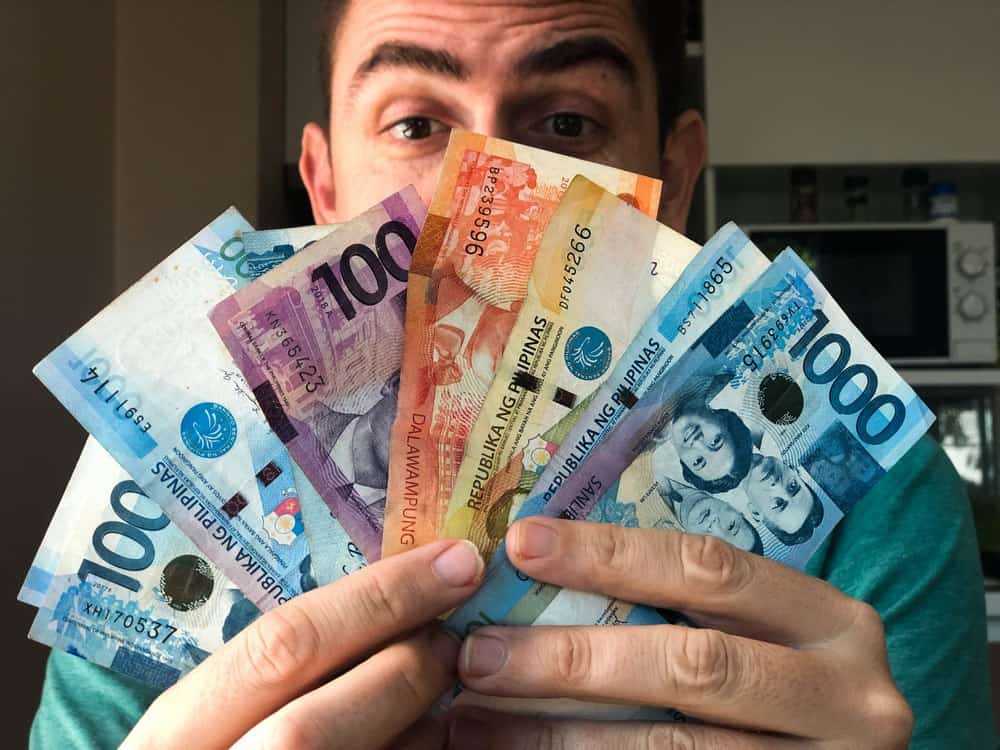
Philippine banknotes are easy to tell apart by their colors and by the iconic landscapes and animals featured on them:
- 20 pesos: orange, featuring the Asian palm civet with the Banaue Rice Terraces in the background.
- 50 pesos: red, featuring the maliputo, a large fish found in Taal Lake, with Taal Volcano in the background.
- 100 pesos: purple, featuring the beautiful butanding, or whale shark, with Mayon Volcano in the background.
- 200 pesos: green, featuring the Philippine tarsier with Bohol’s famous Chocolate Hills in the background.
- 500 pesos: yellow, featuring the pikoy, a colorful parrot, in front of Palawan’s Underground River.
- 1,000 pesos: blue, featuring the Pinctada maxima pearl oyster and Tubbataha’s spectacular reefs.
As of April 2026, the exchange rate is $1 = 69 PHP (much better than a few years ago). Check the live rate on XE.com.
By the way, small bills and coins can be hard to come by in the Philippines. It’s a good idea to break 1,000-peso notes whenever you can and hold on to 20-, 50- and 100-peso bills to pay for transportation and purchases at small shops.
Exchanging money in the Philippines
If you’re flying in from your home country—especially if you’re bringing euros or US dollars—we recommend exchanging money directly in the Philippines. Here’s why:
- The exchange rate is usually much better than what you’d get at home (don’t even think about buying pesos at places like RIA or similar exchange services—fees are sky-high!) and money changers in the Philippines usually don’t charge fees.
- In most cases, withdrawing from ATMs in the Philippines involves a fee charged by the local bank (not counting anything your own bank might add—we’ll go into that below).
There’s also another little-known option (especially among travelers from Europe): sending yourself money for cash pickup at pawnshops, small stores found throughout the Philippines (even on remote islands). Filipinos regularly use them to receive money from relatives abroad or elsewhere in the country. You send money from your account in euros or dollars and receive the equivalent in pesos at a near-market rate for a tiny fee—or sometimes no fee at all. We’ll explain more later, but by using THIS LINK you’ll get a $10 welcome bonus when you pick up a transfer of at least $100, and you also avoid ATM fees. It’s a great hack!
We’ve put together a full guide to exchanging money with Remitly.
Euros, US dollars and Australian dollars are widely accepted for exchange in the Philippines. If you’re coming from the eurozone, you don’t need to switch to US dollars first. Bring euros and you’ll get a good rate.
DO YOU LIKE OUR CONTENT? Help us keep this site going.
Keeping this website up to date—from researching routes, trying out accommodation options and writing each guide
to answering hundreds of your questions every day—takes time, energy and more coffee than we’ll admit.
If any of our tips have been useful and you’re thinking of getting travel insurance using our discount,
booking a hotel or flights, searching for flights on Skyscanner, or using Remitly, we’d be grateful if you used our links.
- You pay exactly the same (sometimes even less thanks to our discounts).
- We receive a small commission, which we reinvest in researching,
writing and publishing free guides. - You get the same price, we can keep creating independent content,
and everybody wins.
Thank you for supporting this project and for joining us as we explore every corner of the Philippines.
1. Where to exchange money in Manila
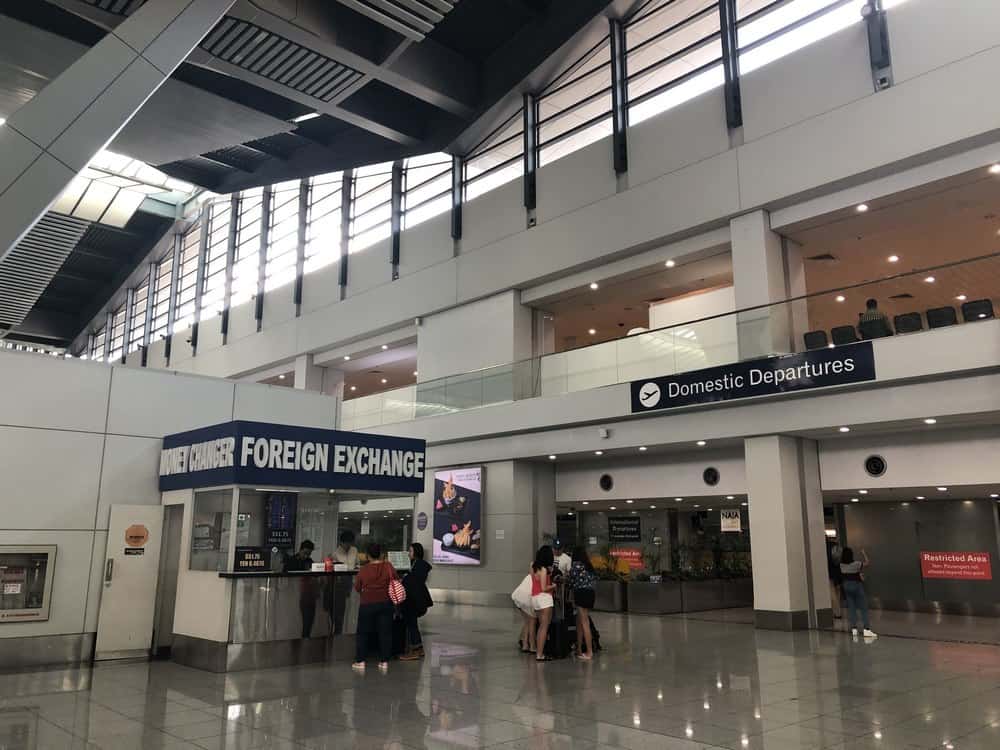
Exchanging money at Manila Airport is a good option, as there are many currency exchange counters in both Terminal 1 and Terminal 3—many are open 24 hours a day. Surprisingly, and unlike most countries, the exchange rate for euros or US dollars at Manila Airport is very good. Even so, we suggest comparing the rates offered at several counters with the live rate on XE, then exchanging your money at the counter with the best rate. If the rate looks reasonable, exchange a large portion of your cash here; you’ll find fewer good options elsewhere in the country.
These counters only exchange physical cash; you can’t use a card to withdraw pesos from them.
You’ll find money changers in both Arrivals and Departures (the one in the photo below, in T3, is very good). Sometimes the counters in Departures offer a better rate than those in Arrivals—compare and see which works best for you.
By the way, you can also exchange any leftover pesos here before flying out. The rate isn’t amazing, and it’s best not to take pesos home because they can be difficult to exchange there.
If you have a few days to explore Manila, you’ll find a few money changers in the city offering a slightly better rate. Examples include branches of Czarina or Sanry’s (there’s one in the Greenbelt 1 mall in Makati). Still, keep in mind that the taxi fare alone can wipe out any savings from the better rate. So we only recommend exchanging money there if you’re staying nearby overnight or if you plan to exchange a very large amount.
2. Where to exchange money in Cebu
Another major gateway is Cebu Airport. You’ll find a few currency exchange booths there; however, we don’t advise exchanging money at Cebu Airport—the rate is usually awful.
So, if you’re arriving in the Philippines via Cebu, our advice is to use one of the money changers in the malls listed below. Here are the places we use to exchange money in Cebu:
- Ayala Center Cebu (next to the Rustan’s supermarket): a good option if you’re staying overnight in Cebu. There are great food options and, just opposite, a couple of fee-free ATMs where you can withdraw cash without paying local ATM fees. The HSBC ATM lets you withdraw 50,000 pesos without local withdrawal fees.
- Raintree Mall: there’s a money changer called ALCO Foreign Exchange that, as of 2025, offers some of the best rates in the city. It’s open Monday to Friday from 8:30 a.m. to 12:00 p.m. and from 12:30 p.m. to 4:00 p.m.; on Saturdays, from 8:30 a.m. to 12:00 p.m. and from 12:30 p.m. to 2:00 p.m.
- Marina Mall in Mactan: a good option if you’re staying near the airport or heading to other parts of Cebu Island—ask your driver to stop here on the way.
- SM City: convenient if you’re heading toward Cebu Port.
- Pier 1 at the port: there’s also a money changer here. The rate is slightly better than at the airport, but worse than at the places above.
- Drop-By Foreign Exchange: located near Fuente Osmeña, it offers very good rates.
3. Where to exchange money around the Philippines
If you need to exchange money elsewhere in the Philippines, don’t panic. Search Google Maps for a Palawan Pawnshop (as mentioned above, its branches offer money-transfer and cash-pickup services), a Western Union or a local bank (BPI, Metrobank…). Most accept US dollars and euros, and the rate—especially at local banks—isn’t bad at all.
You can also use the Remitly app here, as we explain in our guide, including how to get a $10 welcome bonus. The exchange rate you’ll get with Remitly is considerably better than the rate you’ll usually get when exchanging physical cash.
Using Remitly for cash pickup at pawnshops
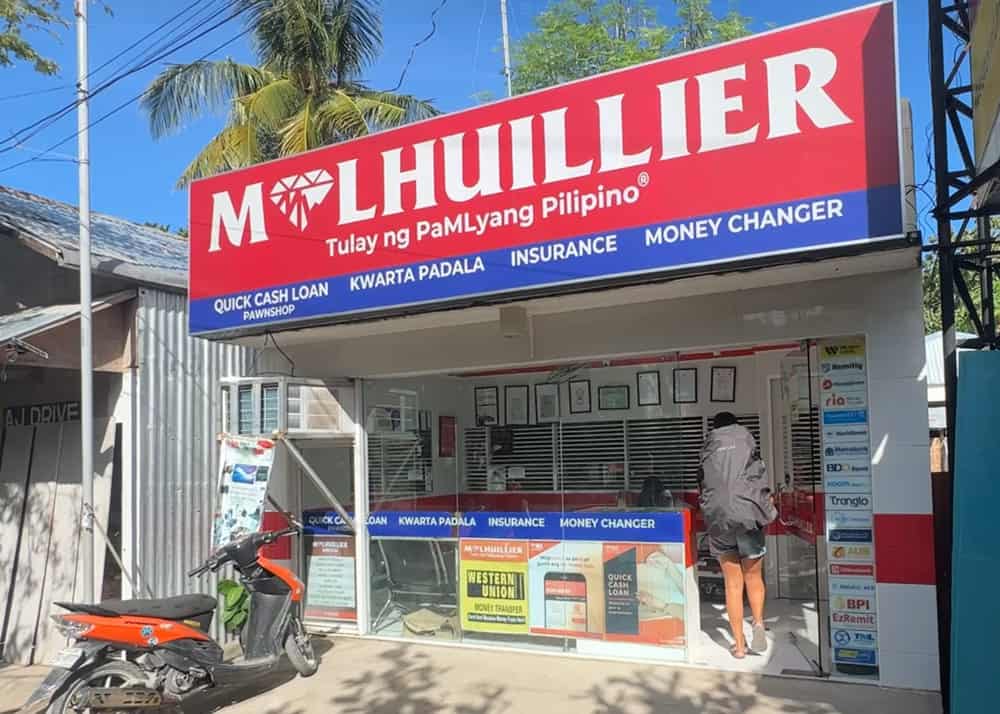
As we mentioned above, although the concept may feel a bit unfamiliar if you’re coming from Europe, the Philippines has many pawnshops that also provide domestic and international money-transfer services. That’s because many Filipinos have relatives living abroad who send money home and need a practical, low-cost way to receive it. There are many companies offering this service, but some of the best-known are Palawan Pawnshop, Cebuana Lhuillier, M.L. Lhuillier, LBC and RD Pawnshop, with branches even in some of the most remote corners of the Philippines. You can see what they look like in the photo below.
If you’ve run out of cash and want to minimize—or even avoid—ATM withdrawal fees (around 250 pesos), here’s how it works:
- Open the Remitly website using this link.
- Select your home country as the sending country and the Philippines as the destination.
- Enter the amount you want to send in euros or dollars and receive in Philippine pesos—you’ll see a fantastic, near-market exchange rate.
- Select “cash pickup” as the delivery method and choose your payment method (debit or credit card). If it’s your first transfer, you won’t pay the $3 transfer fee. Plus, by using our link, you’ll get a $10 welcome bonus. That means if you want to exchange $200, you’ll only pay $190. Note that the minimum amount for the promo is $100 and the maximum is $1,000.
- Choose where you want to pick up your money: at a pawnshop (there are many) or at a bank branch. We recommend pawnshops because there are more of them and they have longer opening hours. You don’t need to choose a specific branch, town or even island in advance. You can collect it from any participating location within two months.
- Enter the recipient’s name, city of residence, phone number and any other requested contact details.
- Pay with your preferred card.
- In most cases, the transfer is ready within minutes, and you can go to any pawnshop branch and collect your cash by showing your ID and providing the code you received when you made the transfer. That’s it!
In short, you can send money to yourself, pick it up at one of these stores almost instantly, and get a near-market exchange rate. Plus, if this is your first transfer and you use OUR LINK, you won’t pay any fees and you’ll get a $10 welcome bonus.
If you’ve already used Remitly before, you’ll pay a $3 fee per transfer. However, since you can pick up large amounts, it can still work out better than using ATMs, which charge a fee per withdrawal and—except for HSBC, which you’ll only find in Cebu and Manila (there isn’t one at Manila Airport, only at Cebu Airport)—usually cap withdrawals at 20,000 pesos (roughly $350).
We explain more in our guide to Remitly in the Philippines.
Paying by card in the Philippines
Alright, all of this is great—but can’t I avoid carrying cash and just pay by card? Unfortunately, in the Philippines that’s not really possible; you’ll need to rely on cash most of the time.
Unfortunately, you’ll generally only be able to pay by card in the Philippines in major cities (mainly Manila and Cebu) and at some higher-end shops, restaurants and hotels in tourist spots like Boracay or El Nido. Card payments still aren’t widely accepted.
Even then, outside Manila and Cebu, many businesses, including hotels and dive centers, add a fee for card payments, usually 3%–5% of the bill.
Bear in mind that many banks charge fees for payments made in a currency other than your home currency. Later in this article, we recommend cards to avoid these unnecessary charges—and always choose to pay in the local currency.
In the Philippines, there are still many card terminals that don’t support contactless payments. You’ll often need the physical card to pay.
Withdrawing cash from ATMs in the Philippines: fees
If you’ve been on the road for a while and you’ve run out of cash, or you simply don’t want to use the Remitly option mentioned above, don’t worry—you’ll find ATMs in many parts of the Philippines. A heads-up, though: most of them charge a 250-peso fee ($5–$7) per withdrawal.
This is a local fee, meaning it’s charged by the Philippine bank. You’ll also need to check with your card issuer to see what fees they may add for using an overseas ATM.
On top of that, many ATMs in the Philippines only allow withdrawals of 10,000 or 20,000 pesos per transaction ($250-$510). BPI ATMs allow withdrawals of up to 20,000 pesos. That means withdrawing cash in the Philippines can get expensive over the course of a 15 to 20-day trip.
The only ATMs in the Philippines that don’t charge local withdrawal fees are HSBC ATMs. They also allow you to withdraw more—up to 50,000 pesos in a single transaction. However, you’ll only find these ATMs in Manila and Cebu and in very few locations within those cities. There are no HSBC ATMs at any airport. If you don’t have any cash left to exchange, we recommend seeking them out whenever possible and withdrawing as much as you reasonably need.
There are still many islands and areas of the Philippines (especially less touristy ones) where there are no ATMs—or where the few that are available are often out of service or run out of cash on weekends or holidays (as can happen in General Luna, Siargao). That’s why we advise you to always carry enough cash. We cover this in more detail in this guide:
Fee-free ATMs in the Philippines: where can you find them?
If you’re planning a trip to the Philippines, it’s also essential to have a bank account or card that doesn’t charge high fees for ATM withdrawals in the Philippines or when paying by card. Note that many banks also charge a percentage for card payments in foreign currency—sometimes above 3%.
Having a fee-free card is also extremely useful while you’re planning, because you can book hotels and flights in Philippine pesos without being hit with currency conversion fees.
Discover the best debit cards for traveling to the Philippines here
If you want to minimize these fees, here’s how we personally manage our money in the Philippines.

The best debit and credit cards for withdrawing cash and paying in the Philippines
As we mentioned earlier, we’ve been living and traveling around the Philippines since 2010, so we know a thing or two about this.
These days, when we travel abroad, we usually carry a reasonable amount of US dollars in cash (around $300), we use Remitly often, and we carry four different cards that help us avoid many bank fees. We believe it’s very important to carry at least two cards (ideally three if you’ll be traveling for a while) when traveling in the Philippines—not only because you might lose one or it could be blocked because of suspected fraudulent activity, but also because sometimes (for no obvious reason) certain ATMs won’t accept one of them.
With that in mind, these are, based on our experience, the best cards for withdrawing cash and making card payments in the Philippines:
1. Revolut card for traveling to the Philippines
Revolut hardly needs an introduction—it’s been popular with travelers for years. The Revolut card is a Mastercard debit card, and we’ve been using it for our travels for 10 years. With the Standard plan you can withdraw $320 per month with no extra fees, using a very competitive exchange rate (on weekends, when markets are closed, they add a 1% fee). After that first $320, they charge just a 2% fee.
The card is linked to your own account, which comes with an IBAN, and Revolut also has a modern, easy-to-use app. With Revolut, you get instant notifications for every payment or withdrawal; many domestic and international transfers are free; and—what we love—you can add money instantly using another card, just like paying online. If you prefer, you can also add money via bank transfer or via Google Pay/Apple Pay.
It’s a great choice if you plan to make lots of purchases because, on the Standard plan, you can spend up to $1,000 a month in foreign currencies with no extra fees. Above that, they charge only 1%—the same as on weekends. This is CRUCIAL when booking flights and hotels, since you’ll be charged in Philippine pesos and Revolut won’t add the fees that many other banks do.
We carry Revolut—and all the cards we mention here—so we have a higher combined ATM limit and backup cards in case anything goes wrong. Plus, if you sign up through THIS LINK, you get a $10 welcome bonus.
What makes Revolut so good, and why does it work so well for us in the Philippines and elsewhere? Here’s why:
- No card issuance, account management or maintenance fees, and no interest charges.
- No minimum contract term.
- On the Standard plan, you can pay by card in 36 currencies (including the Philippine peso) with no extra fees Monday–Friday within your plan’s limits (for the Standard plan, that’s $1,000 per month). Above that and on weekends there’s a 1% fee.
- You can withdraw $320/month at ATMs worldwide with no extra fees; after $320 there’s a 2% fee. Out-of-network ATMs may charge their own fees.
- Revolut uses a very competitive exchange rate (Monday–Friday). From 10:00 p.m. Friday to 11:00 p.m. Sunday, a 1% fee applies.
- It’s a Mastercard.
- It has a very intuitive, easy-to-use app.
- Free transfers within the EU and low-cost transfers to Philippine banks—great because some dive centers and tour agencies ask for a deposit and a conventional bank transfer would be expensive.
- Instant notifications give you peace of mind by alerting you to potentially fraudulent transactions.
- You can create virtual cards that you can switch off or cancel whenever you want—perfect for online payments when you’re not completely sure about a website. These cards also work with your phone’s wallet for contactless payments (though contactless isn’t that common in the Philippines). You can create the virtual card as soon as you open the account, so you can start paying for hotels and flights right away.
Note that Revolut works well in the Philippines, but not at Euronet ATMs. Because of the fees those ATMs charge, Revolut doesn’t allow transactions there. Don’t worry—we’re not fans anyway because they often encourage you to accept an unfavorable exchange rate, which could leave you paying around $50 more on a large withdrawal. Just look for BPI, Metrobank, HSBC or PNB ATMs and you’ll be able to withdraw with your Revolut card in the Philippines. These are major Philippine banks, so their ATMs are widely available.
The details above refer to the Standard plan. If, like us, you travel a lot, an excellent option is to switch to Premium or Metal, which, among other perks, include fee-free ATM withdrawal allowances of up to $600 and $800, respectively (out-of-network ATMs may charge their own fees).
Sign up through this link to get a $10 welcome bonus
If you’re a new user, you’ll receive a $10 welcome bonus when you sign up through our link, order a physical or virtual card and make your first purchase. You only need to make a transaction of at least $1 and you’ll receive the $10 within three days. That way, you can offset the shipping cost of the physical card. Note that you must be over 18 to open a Revolut account. Also check Revolut’s terms and conditions.
*This promotion is subject to withholding tax. Services are provided by Revolut Bank
UAB. Terms and conditions apply; you can read the full details here
2. N26 account and card for traveling to the Philippines
We don’t like this one quite as much as Revolut, but we still have it and think it’s great for frequent travelers.
Opening an N26 account and getting the card is completely free. The entire process is straightforward and online, and the application takes about five minutes to complete. One of its most useful perks is that it includes three free ATM withdrawals worldwide. From the fourth withdrawal onward, they charge a $2 fee per withdrawal.
Unlike Revolut, N26 charges a 1.7% fee on cash withdrawals in currencies other than euros or US dollars, such as the Philippine peso. As you can see, this is a bit higher than the fees mentioned above, but still lower than many traditional banks.
Card payments in currencies other than euros or US dollars carry no fee. The official Mastercard exchange rate applies.
The app is intuitive (though slower than Revolut’s) and lets you manage your card directly from the app—e.g., you can block it when not in use and approve payments without needing access to your home-country SIM card.
The downsides? They now charge $10 to ship the card, and there’s a cap on instant top-ups.
There’s also a version that may be particularly useful if you travel often: the N26 YOU account and card. It’s a paid plan ($15/month) that doesn’t charge any fees on cash withdrawals (up to five per month) or purchases, and it includes the following insurance coverage:
- Travel and trip-cancellation insurance (note: up to 90 consecutive days per trip)
- Mobile phone theft insurance
- ATM theft insurance
You can find more information about N26 here.
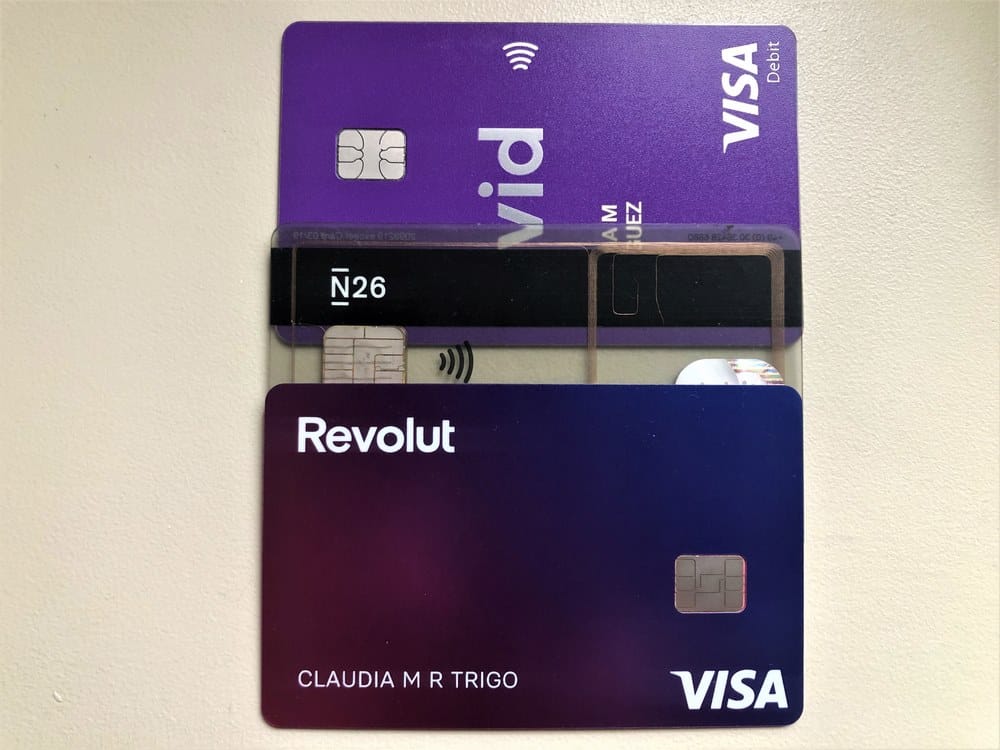
By the way, we used to use Vivid, but in 2022 they changed their terms and we closed our account because it no longer met our needs. The same happened with EVO and BNEXT, so we no longer recommend them.
Of the two, Revolut works best for us (we use it for everyday spending at home and while traveling), but keep in mind the Standard plan only lets you withdraw $300 without extra fees. That shouldn’t be an issue if you follow our advice and bring a reasonable amount of cash to exchange and use Remitly (a great hack). Revolut is always handy for card payments, both during your trip and when booking hotels and flights in advance.
Remember: whenever you pay by card or withdraw cash, don’t accept dynamic currency conversion (DCC)—the conversion rate offered by the ATM or card terminal—or you’ll end up paying hidden fees. That’s why we suggest avoiding Euronet ATMs whenever possible—they often try to get you to accept their conversion rate.
In short: how to manage money in the Philippines
We know it’s a lot of information, so here’s a quick summary of how we recommend managing your money for a trip to the Philippines, in order of preference:
- Bring a reasonable amount of cash (depending on the length of your trip and your travel style; $300 is usually fine) and exchange it at Manila Airport or at one of the money changers we recommend.
- When you run out of cash, use Remitly to send yourself money and claim a $10 welcome bonus, then pick it up at any pawnshop in the Philippines.
- Carry a card that doesn’t charge fees for payments in pesos and keeps ATM fees to a minimum. This is crucial while planning your trip because you can book transportation and accommodations in Philippine pesos without paying conversion fees.
- If you have to use an ATM and you’re in Manila or Cebu, look for HSBC. If you’re not in those cities, look for BPI ATMs (red), which let you withdraw up to 20,000 pesos at a time.
Frequently asked questions about money in the Philippines
To wrap up, here are the questions we’re most often asked after so many years of traveling around the Philippines:
What’s the currency of the Philippines?
The Philippine peso, PHP. The highest-value banknote right now is the 1,000-peso note.
How do you pay in the Philippines?
Although card payments are common in places like Manila and Cebu, you’ll need cash almost everywhere. In touristy areas (higher-end restaurants or hotels) cards are accepted more often, but it’s still far from the norm. Plan to carry cash—and plenty of it, because it’s common for ATMs to be out of service or to run out of cash.
How much cash should I bring to the Philippines?
It largely depends on the length of your trip, your travel style, and what you’ve already paid for. Arriving with your accommodation and transportation already paid for is very different from having to pay for everything as you go; spending $4–$5 on a meal at a carinderia is also very different from spending $8–$13 at a mid-range restaurant, or staying in hostels for $9–$12 per person versus paying about $24 for a mid-range hotel. Likewise, some places are pricier (El Nido, Boracay, Siargao). You’ll also spend more if you’re booking lots of private island-hopping tours and diving trips. As a general guideline, we suggest bringing around $350 per person to exchange at the airport or at a money changer, using Remitly to send yourself money, and carrying one or two of the cards we’ve recommended for emergencies and for any advance reservations you need to make.
Is it safe to carry that much cash in the Philippines?
We don’t love it either, of course, but that’s what we do—and in 15 years of exploring the country, we’ve never been robbed. We’re careful and keep it with us at all times, but the Philippines is generally a safe country. That said, using Remitly to pick up money as needed is our favorite option.
Can I change pesos back to dollars in the Philippines?
In other words, if I have leftover pesos, can I exchange them for dollars? Absolutely. You can change them back at Manila Airport and at a fairly decent rate.
How much does a beer cost in the Philippines?
A very important question indeed. At a convenience store or small shop, you’ll pay around 60–70 pesos. In a bar or restaurant, it usually costs around 90–120 pesos.
Which ATMs don’t charge fees in the Philippines?
Only HSBC ATMs don’t charge local withdrawal fees, and they’re only found in Manila and Cebu.
Can you withdraw cash contactlessly or make contactless payments in the Philippines?
Sadly, almost no ATM supports contactless, so you’ll need a physical card. Contactless card payments are becoming more common, but many places still don’t offer them.
How can I exchange money in the Philippines with little or no fees?
Manila Airport offers a good rate and is a convenient option. Another alternative is Remitly, which lets you send yourself money for pickup almost anywhere in the Philippines at a good rate and with very low fees.
Can I use Revolut in the Philippines?
Yes, you can—we’ve tested it extensively over the past eight years and it’s also our go-to card when traveling elsewhere. It doesn’t work at Euronet ATMs, but it does work at ATMs operated by other banks. Remember, you get a $10 welcome bonus if you sign up through our link.
*Disclaimer: this article contains affiliate links. By using them, you get discounts and we receive a small commission that helps us continue working on the site. Thank you for your support!
Do you have any questions about managing money in the Philippines? How do you usually manage your money while traveling? Tell us in the comments!