If you’re one of those who like to explore off-the-beaten-path corners, even if you have to invest a little more time, we’re sure this Caramoan guide is for you.
Although popular in lots of places around the planet for being the set of different versions of the show “Supervivientes”, the truth is that Caramoan is still largely unknown on the list of places to see in the Philippines. Only a few travelers, mostly Filipinos, are encouraged to explore this region of the country that has little to envy of El Nido or Coron. You only need to take a look at some of the photos we’ll show you below to appreciate those limestone landscapes and turquoise waters that have gone around the world.
Getting there is still a bit of a slog and requires effort, but we’re sure the list of things to do in Caramoan that we’re going to show you will finish convincing you. Get ready to start drooling!
Where is Caramoan
Caramoan is a peninsula located on the island of Luzón, the same one where Manila sits. Specifically, it belongs to the province of Camarines Sur, in the Bicol region, and the nearest airport is Naga, from which you can get there by bus in roughly 5 hours. Another convenient one is Legazpi (Bicol International Airport) because that way you can also admire majestic Mayón, the most spectacular of the volcanoes in the Philippines.
At the end of this guide we tell you the best way to get to Caramoan.
Why go to Caramoan, what to expect?
We’ve already hinted at it, but you could say there’s a little El Nido in Caramoan. By no means can we claim it reaches the magnitude of the cluster of islands and islets that make up the Bacuit Archipelago, but the fact that you can have spectacular places almost to yourself and feel like a survivor makes it well worth traversing almost the whole of the Philippines.
Caramoan is also explored by doing boat trips, the famous island hopping, at a truly incredible price and, again, with the feeling of being an explorer. Since it isn’t an accessible destination, only some Filipinos (and the odd foreigner like you who’s eager to investigate) make it all the way here.
Another thing to expect from Caramoan is little in the way of services and tourist infrastructure. This doesn’t mean anything bad, but since we’re not all the same, it’s important to be aware that you won’t find a great variety of hotels and restaurants, much less nightclubs, fiber-optic internet or other luxuries. You have to go with the mindset that things are how they are, and we believe it will remain that way for a few years.

How many days to visit Caramoan
We travel quite slowly and stayed several days in the area, but we believe the essential thing is that you spend at least 2 full days. With them you can do the so-called Long Trip and Short Trip, which are the two must-dos in Caramoan.
Considering that you’ll need at least one day to go and another to come back, we’re already talking about 4. In addition, we suggest leaving one more for contingencies or in case the weather turns bad.
If you like getting lost on a motorbike, there are some waterfalls or viewpoints to see in Caramoan that deserve more time. It already depends on the type of trip you’re doing.
Lastly, since you’re around here, we encourage you to discover Legazpi and, in whale shark season, Donsol. Other islands you can visit in the area (investing more time in transfers) are Calaguas, Catanduanes or Marinduque, just to give you examples.
Things to do in Caramoan
Let’s get down to it and tell you everything you can do in Caramoan to see if we can convince you to come to this area of the Philippines (we’re sure we will).
1. Island hopping “Short”
As we told you a little above, the two essential things to do in Caramoan are the “Short” and “Long” island hopping. If, unfortunately, you could only choose one, this should be the first. Thanks to it you’ll discover the landscapes that have made it appear in so many TV programs, as they will leave you speechless.
The name already tells you, but it’s the shortest island hopping. The reason? The islands visited are very close to Paniman Beach or Bikal Port, the two starting points for the routes. Also, since there aren’t many, you could actually do it in one morning. Even so, as the bon vivants we are, we spent a good part of the day.
Stops on the Caramoan island hopping
What do you visit? Mainly these wonders:
a) Lahos Island
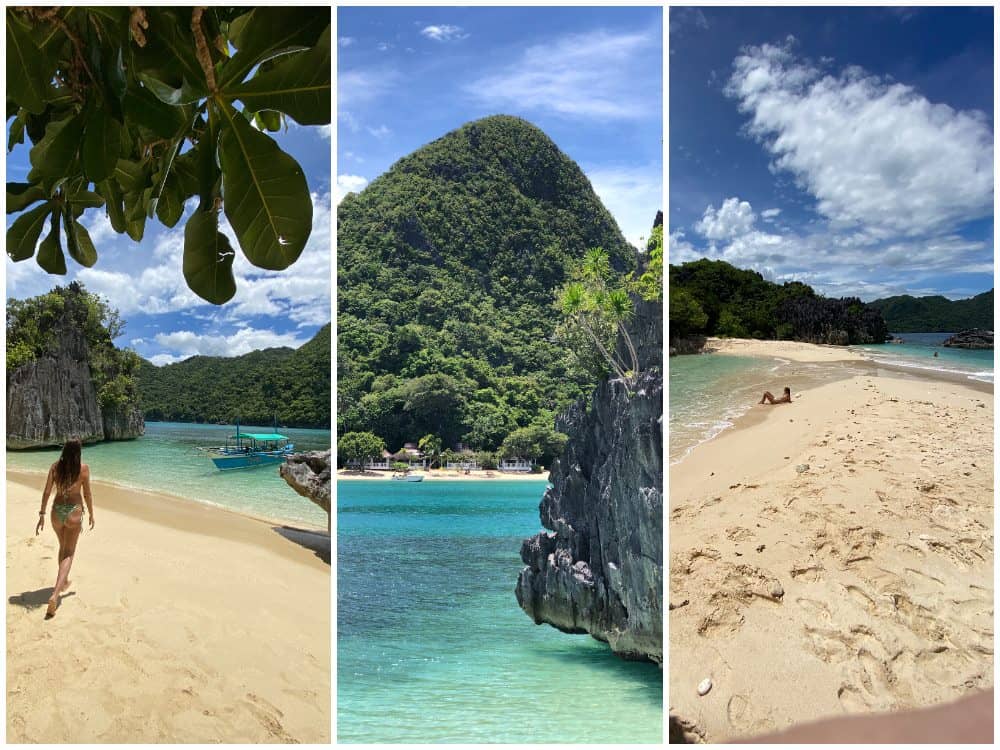
Possibly one of the most beautiful islands we’ve ever seen, after our beloved Black Island and a few others in El Nido like Shimizu. It’s an island with two intensely black limestone ends and bathed by turquoise waters, joined, moreover, by a long sandbar. In other words, you can cross the island in just a couple of meters and swim on either side.
Fine sand, lush vegetation, crystal-clear sea… What more could you ask for?

b) Minalahos Island
The little sister of the previous one, with high limestone walls as well and a tiny beach that looks like it came out of a fairy tale. If you’re up for it, from this beach you can get to the other side over the rocks and even go swimming. We didn’t see great things snorkeling and you have to be careful with the current, but it’s really worth it. We found it a super picturesque spot.

c) Matukad Island
After Lahos, in our opinion, Matukad Island is the star of Caramoan. Seriously, it’s hard to describe this island’s beauty because it’s the most imposing of them all. The beach is, without a doubt, one of the most beautiful we’ve ever seen. Perhaps it’s because the sand is ultra fine and because it’s 100% virgin, but it’s also ideal for bathing, with waters that are usually calm and a perfect depth to spend hours in.
If you look at the map we’ve left below, this island has a secret: there’s a lagoon at its heart. It’s known as the Enchanted Lagoon or “Laguna Encantada”, surrounded by imposing limestone walls and home to fairly large fish, specifically milkfishes or sabalote. How do you get there? At one end of the beach, the easternmost, there’s a somewhat worn rock wall. You’ll have to climb using your hands and feet and we recommend doing so carefully (reef shoes are ideal), since it isn’t as easy as it might seem. To return, you’ll have to go back the same way.
We almost missed it because they were preparing the set for one of the tests of the French Supervivientes, but they did us the favor of letting us through and enjoy it as long as we wanted. It’s no surprise it’s one of the locations they use because it’s simply spectacular.


d) Kagbalinad Island
The island where we spent the most time, where we stopped to eat and enjoy its small yet spectacular beach divided by a small rock. You can swim to either side and do a bit of snorkeling, although that’s not the strong point of this island hopping.
It has direct views of Hunongan Cove Beach, which, according to what we’ve heard, belongs to the nearby Gota Village Resort and where you can find some amazing cabins. They told us it’s private and can’t be accessed, although we don’t think there’s any problem going by swimming (watch out for boats and the current).


How to organize your island hopping route in Caramoan
The most economical way to organize both the Short Trip and the Long Trip (which we’ll talk about below) is by going to the Bikal Port or to Paniman. This is where you’ll find boatmen to negotiate the price of the route. Still, don’t expect agencies or official stalls. There’s really nothing, and sometimes it feels like they don’t even feel like taking you.
There’s a tourism office at Bikal Port, but you’ll hardly find it open. Even so, they didn’t help us much either and we had to figure it out by asking around the different carenderias at the port until a lady went to call her husband, who had a boat.
We’d love to give you his contact, as we do for other destinations in the Philippines, but his zero level of English and the little desire to understand us mean we can’t recommend him. Therefore, the best thing is to go yourself and try to find someone. It shouldn’t be too difficult, but go mentally prepared.
An easier way to organize your route around Caramoan is through your accommodation. It’s normal for it to be a little more expensive, but if there are several of you or, even, if you join up with more guests, it may be worth it and you’ll avoid hassles.
By the way, unless you arrange it with your hotel, these tours will rarely include food and there’s nowhere to buy anything on the islands. You won’t even see shops to buy drinks. Therefore, it’s important that you bring everything you need with you.
In Paniman and at Bikal Port you’ll find some carenderias with prepared dishes that work for takeaway. Another idea is to ask a restaurant in town to prepare something for you.
On the other hand, there’s no set order for this Caramoan island hopping. It’s common to start with the farthest (Lahos), then do Matukad and after that one of the other two, but what we really advise is telling the boatman you want to avoid there being a lot of people. So it’s best to adjust as you go.
Prices for the Caramoan Short Trip
There’s no official regulation on island hopping prices, so this is where your bargaining power comes into play, but, to give you a reference, we paid 1.500 Philippine pesos per boat for just the two of us. Capacity is up to 6 people. A steal!
It’s true that the route is short and, therefore, fuel consumption isn’t large, but considering that a Coron island hopping boat already runs about 3.500 pesos and in El Nido more than 10.000 pesos, we think the value for money for this Caramoan tour is BRUTAL.
We sounded out prices at some accommodations and right on Paniman Beach, and the cheapest we were offered was 1.800 pesos, so keep that in mind. A traveler tells us they’ve recently set up a tourism booth on this beach and they charge 2.500 for the Short Trip and 3.500 for the Long Trip.
As of today, there’s no access fee for the islands visited on the island hopping, but you do pay 30 pesos for the environmental fee.
Since tourism levels are still quite low, unless you go during periods of high demand due to Filipino holidays or on weekends, it’ll be hard to share with other travelers. Even so, if you don’t want to spend that much, you’ll have better chances if you go from 7:00 and wait.
2. Island hopping “Long”
Another of the things to do in Caramoan is the “Long” island hopping or “Long Trip”. It’s not a very ingenious name, but it’s very clear. That is, it’s a longer route because the islands are farther from the port. Specifically, we’re talking about several islands in the northern area, and you’ll easily see what we mean on the map we leave below.
Although less impressive than its little brother, this second Caramoan island hopping is also thoroughly enjoyable. You’ll see an endless sandbar, a nice viewpoint, a beautiful island with another sandbar and, what is for us one of the best beaches in the Philippines and a common scene for Survivors programs, Sabitang Laya.
Stops on the Caramoan Long Trip
In this case, you’ll visit the following destinations:
a) Guinahoan Lighthouse
Located on Basot Island, this is usually one of the must-see points in Caramoan and the first stop on the Caramoan Long Trip. The reason? The spectacular views you get from it, especially of the virgin beach you’ll see at its feet. Unfortunately, this isn’t accessible by land, but it’s worth climbing up here to contemplate it.
The path to the lighthouse is quite simple and short. In barely 5 minutes you’ll be at the top, since it’s also paved. So you won’t need any guide, even if they offer you one as soon as you get off the boat.
At the end, there’s a family that acts as “caretaker” or fund collector for the maintenance of the path and, by the way, sells coconut water at a very good price.
For your reference, from Bikal Port to the lighthouse it’s about an hour of navigation.

b) Cotivas Island or Sandbar
On this island you can enjoy a long, golden, clean sandbar. We don’t consider it one of the best sandbars in the Philippines, but we really loved enjoying it in absolute tranquility and bathing on one side and the other of the sandbar.

c) Manlawi Sandbar
Another sandbar, but one that only appears when the tide is very low. Therefore, it’s important that your boatman consults the tide table or that you make sure yourself what the best time to visit is. There are parts that are more or less elevated, but normally you can walk calmly all over it.
In any case, it’s usually a place to stop for lunch, since there are floating huts (cottages) that are usually rented to hang out for a while.

d) Sabitang Laya
For us, the best stop of all. We loved this beach on Bagieng Island, to the point of considering it one of our favorites in the whole country. It’s super virgin, with lots of vegetation that provides shade and, being protected by a reef, it rarely gets waves.
Our favorite part is the eastern end, where you can find a beautiful limestone section that’s very picturesque and, moreover, from here you’ll access another wonderful beach where you’ll very possibly be alone as well. At the opposite end, you’ll find some seaweed drying racks.
Sabitang Laya is a common setting for Supervivientes tests or even the place where contestants spend a season, depending on the edition. In fact, we saw the apparatus for some challenge there.


Prices for the Caramoan Long Trip
Since it’s a longer route, the Long Trip is more expensive. Even so, we think it’s still extremely cheap: 2.500 pesos per boat (from Paniman they offer it for 3.500). Even if there are only 2 of you, it’s tremendously worth it.
As for the fees, you’ll pay 40 pesos per person for Guinahoan (prices are quite variable) and 100 per boat for Manlawi. If you want to rent a cottage at the latter, it’s 500 pesos in total.
To organize it, you have to do the same as for the Short Trip, with the difference in prices. In theory, you can do a combined short and long tour for 4.000 pesos. Personally, we don’t think it’s worth it timewise.

3. Paniman Beach
We wouldn’t travel to Caramoan just to stay on Paniman Beach, but if you’re here, we encourage you to swing by—it’s one of the easy things to do in Caramoan if you fancy a dip now and then. As we’ll detail below, it’s also a good place to stay.
Paniman is a fairly long beach with dark sand and clear water where it’s quite common to find small fishing boats. Its southern end is the prettiest, as you’ll find a gorgeous limestone wall similar to those you’ll see in Palawan and the mouth of the Manapot River, where you can also kayak.
From this point a path also sets off that connects with Gota Beach or Village. We’d have loved to do it, but a security guard quickly stopped us because the French Supervivientes team was based there and the area becomes private. They told us this is quite common, but if you’re lucky, don’t hesitate. The trail runs alongside the river and the resort setting looks promising.
When we visited Paniman, the vibe was still pretty quiet. There were barely any businesses open, but we’re sure that over the years, and with Caramoan’s growing fame, it’ll become a fairly popular spot. In fact, it reminded us of the early days of tourism in Port Barton.
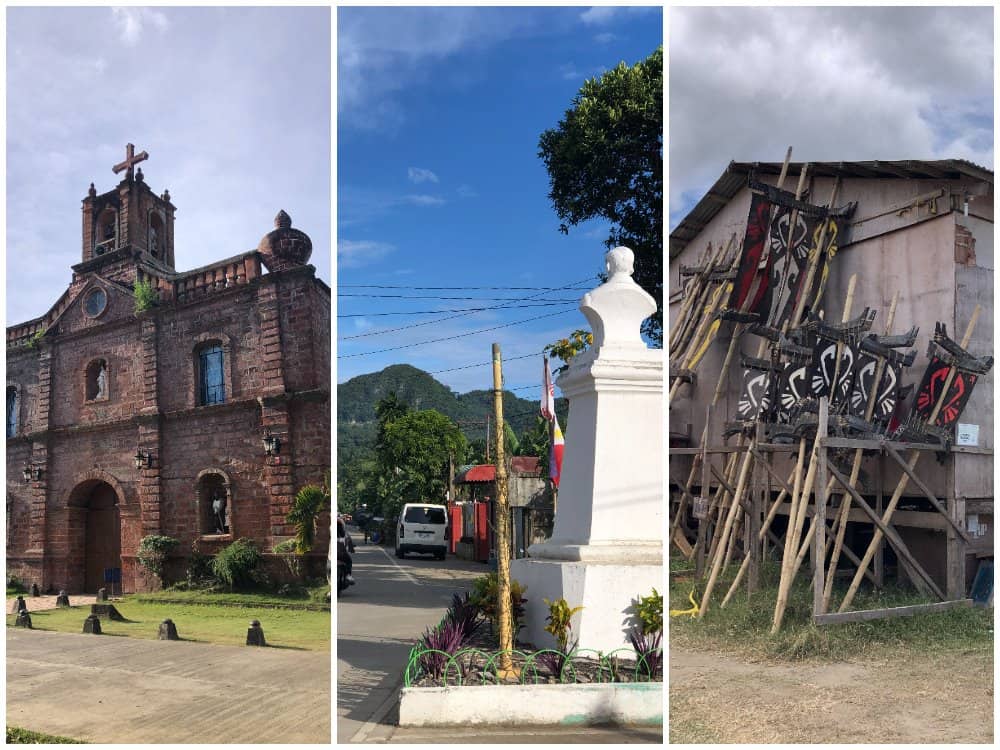
As a curiosity, on this beach you can also see some warehouses/workshops used for producing the Survivors shows. You can watch how they make flags, costumes, gadgets for the challenges, and you’ll often see the speedboats that transport everything to the different sets.

4. More things to see in Caramoan
The above are the basics to see in Caramoan, but, as we say, there are a few more bits to do. Among those you might find interesting:
- Michael Archangel Church: a 17th‑century church founded by the Franciscans. It’s in the town center and access is free, so it’s fine for a quick look, even if it isn’t particularly beautiful.
- Have a nose around the souvenir shops: a bit silly, but both in Caramoan town and in Paniman there are several shops with souvenirs from the Survivors shows. They’re rather tacky, but we found it quite funny to see T‑shirts saying: “Caramoan, Survivor capital of the Philippines”.
- Caglago: there’s a statue of Our Lady of the Holy Rosary Mother of Peace at the top, with about 500 steps to climb. The views must be nice but, to be honest, we didn’t go for it.
- Manapot River: this is the river that flows into Paniman Beach. The landscape is truly amazing and we were lucky to see it from the rooftop of the hotel next door. Even if you’re not a guest, you can use the pool (paid) or rent a kayak to paddle along the river.
- Umang Cave: access is via the Manapot River, near its mouth, and you can explore it on foot. Best to ask at your hotel too, in case they can take you by boat.
- More island hopping: there are other island‑hopping routes that visit islands further south, but most boatmen either don’t want to do them or quote prices that, personally, seemed very expensive. If you have more days, you might ask how much it would cost to reach Katanawan Island, Pitogo and Tinago Beach. These stops could be combined with the Short Trip.

Streets of Caramoan – Various souvenirs – Manapot River
Practical information about Caramoan
We’ve already told you the basics to see in Caramoan, but here’s some practical info so you can enjoy this Filipino corner to the fullest.
Where to stay in Caramoan
As we’ve been saying, there are basically two options for staying in Caramoan: either in the town itself or on Paniman Beach. Which is best? We think Paniman is nicer, although, as we said, we found it a bit dead; but considering the dining scene is even more limited and that you’ll have to negotiate island‑hopping prices from there—which is usually a bit more expensive than from Bikal—that’s something to weigh up.
Here are some options:
- Casita Mia Bed and Breakfast: after lots of research, this is where we stayed. Spacious rooms, hot water, Wi‑Fi, everything clean, friendly people… It was low season (no one around) and we got a good rate. It’s about a 10’ walk from Caramoan town. It’s handy because they organize island hopping at a price that isn’t bad if there are several of you (200–300 pesos more than at the port).
- Tugawe Cove Resort: if you want all the comforts and a full‑on resort with an infinity pool, don’t bother looking—there isn’t another like it. On the map it looks quite far, but you shouldn’t worry, as boats leave directly from the hotel to all the island‑hopping points we’ve mentioned. Compare prices on Agoda.
- La Casa Roa Hostal: possibly the best value for money in Caramoan. It’s accommodation in a huge, beautiful house in the town center, so it’s the most convenient from the bus terminal and for getting to restaurants or the port.
- Airusxander Front Beach Resort: located at the southern end of Paniman Beach (the prettiest part, by the river), this is a recently built hotel with a rooftop pool. They rent kayaks and organize tours. Compare prices on Agoda.
- Magindara Guesthouse: although prices are a bit steep (as in all of Paniman), it’s right on the beachfront. Have a look on Agoda as well.
How to get to Caramoan
Getting to Caramoan can be a bit of a hassle, but we’ll try to simplify it so it’s not a total headache.
a) Getting to Caramoan from Naga
The largest city near Caramoan is Naga. It isn’t a particularly interesting place, but it’s easy to access via:
- Flights to Naga from Manila or Cebu (IATA code WNP): currently operated by Cebu Pacific Air (CebGo) and Sunlight Air. You can find them from 25€ if booked in advance, but the usual is from 50€. Note there are fewer frequencies from Cebu.
- Bus from Manila to Naga: several companies run these routes, the best‑known being Peñafrancia and Bicol Isarog. They depart from different terminals in the city but, in our experience, the most convenient are usually those at EDSA Cubao. The trip takes about 10–12 hours (depending on Manila’s outbound traffic) and tickets run about 1.000–1.500 pesos, depending on the bus type. You can check schedules and buy tickets here. In our opinion, it’s best to leave around 16:00–18:00 to arrive before dawn and connect with the earliest bus to Caramoan.
- Bus from Manila to Caramoan: in theory, Peñafrancia and Raymond Transportation have buses that leave from Cubao at the Aurora Blvd – EDSA junction at 3 in the morning. It’s best to check with these companies beforehand via Facebook because tickets can’t be purchased online.
If you choose the first two alternatives, once in Naga you have two options:
- Buses departing from Bicol Central Station (next to SM City): Florencia Bus, MRR and Raymond Transportation run several buses a day from around 3 in the morning until 14:30. Tickets cost approximately 270–300 pesos (depending on the bus type) and the journey takes about 4–5 hours, with some quite curvy/rough sections. These drop you off next to Caramoan market.
- Vans from the Naga City Van Terminal: operated by Caramoan‑Based Pili Tourist Transport Service Cooperative and faster than the buses. They also offer departures from Naga Airport. It’s best to contact them via Facebook or by SMS in advance to secure departure times.
By the way, if you read that there are boats from Sabang Port to Caramoan, forget the idea. This route hasn’t been operating for years.
b) Getting to Caramoan from Legazpi
This is the option we chose, since we decided to explore Legazpi and the surroundings before visiting Caramoan. In How to get to Legazpi you have all the information, but to sum up, the most convenient is to look for a flight to Legazpi (the airport is called Daraga) or a bus from Manila. Flights to Legazpi are usually cheaper than those to Naga, so it’s an option if you want to save money.
Once in Legazpi, you need to go to the Legazpi Grand Central Terminal (next to the SM mall), from where buses (around 3 hours/180–200 pesos) or vans (2–2,5 hours/220 pesos) depart to Naga.
Once there, follow the steps we outlined in the previous section.
c) Getting to Caramoan from Catanduanes
There’s a third option, which is to fly to Catanduanes (Virac airport, VRC) and from there go to Codon Port, from which, in theory, boats sail to Guijalo. Since flights to Virac are not usually particularly cheap and because it isn’t a very frequent route, we don’t think it’s worth it. However, if you want to explore lesser‑known corners, you might consider it.

Where to eat in Caramoan
Although we’re sure more options will appear over time, don’t expect great things when it comes to eating in Caramoan. From what we tried, we’d stick with these:
- Kape Real: they have a branch in town and another in Paniman and, without a doubt, it’s the best place to eat/dine for miles around. The value for money is very good and the venues are very pleasant. Service is slow but nice. Not kidding—it’s the best pancit we’ve ever had in the Philippines.
- Caramoan Market: at the back of the market there are several food stalls that open from early in the morning. For dinner there’s likely nothing left.
- Chow O’ Clock: one of the few places open at night in town for dinner; they basically have pizza and fried chicken.
On the other hand, some accommodations have a restaurant service, in case you want to ask.
How to get around Caramoan
As it’s a little‑touristed area, motorbike rental isn’t common yet… We managed to have one of the hotel staff lend us her bike for a few hours, but she was quite surprised by the request. You can try to dig a bit more, but people here get around by tricycles or habal‑habal, which usually wait at Alvarez Road with the National Road.
A tricycle to Bikal Port (around 6 kilometers from Caramoan town) charges about 150 pesos (you’ll need to negotiate), while a habal‑habal (with 2 passengers) is 80 pesos. The buses to Naga pass along the road that leads to the port, so you can hop on them too and they shouldn’t charge you more than 15 pesos per person. From there, you can walk.
To get to Paniman, shared tricycles leave from the tricycle terminal we mentioned, but note you’ll have to wait for them to fill up or pay for a whole one, which can cost about 300 pesos. In our case, we negotiated a habal‑habal for 100 pesos for the 2 of us.
Tips for visiting Caramoan
Here are some of our own tips for your visit to Caramoan:
- The best time to travel to this part of the Philippines is from October/November to April/May, i.e., the dry season. Visiting at another time doesn’t necessarily mean rain, but keep in mind that from July to September typhoons can pass through this area, as it’s very exposed. If we had to choose a month, April or May are usually safe bets for good weather.
- Although this is a less touristy part of the Philippines, watch out for Christmas, Holy Week and the Peñafrancia festivities in Naga (first half of September). More and more local tourists are visiting, and it’s better to book in advance. If you can avoid weekends, so much the better.
- You don’t need much for island hopping, but a dry bag, sunscreen (please make it biodegradable) and snorkel gear are advisable. It’ll be hard to find anyone renting it. We also recommend reef shoes to reach the lagoon on Matukad.
- It’s hard to know in advance, but sometimes certain islands or beaches in Caramoan can’t be visited because a Survivors show is filming. Keep that in mind and ask your accommodation in case you can switch the order.
- Note that there’s only one ATM in Caramoan town, from the UCPB company. As it’s a somewhat remote place, your international card might not work, might stop working or run out of cash. Better not to rely on it and bring plenty of cash.
- Near the ATM you’ll find a pharmacy, if you need it. It’s small, but they have the basics. There are also a few grocery shops if you need supplies.
- From our experience, the Globe network works quite well. It’s not the fastest connection in the Philippines, but we could even work. You can read more about this in Internet in the Philippines.
- Not to toot our own horn, but we have an Instagram account with loads of interesting stories where you can watch videos of our Filipino adventures. Here you can see the Caramoan ones.
- In case of a serious emergency, you’ll need to be transferred to Naga (or, better, to Manila), since Caramoan only has a small rural clinic. That’s why it’s essential to carry good travel insurance for the Philippines that you know will be there for you in major cases and ensures a quick transfer. With this link you have a 5% discount on the one we’ve been using for more than 9 years.
Caramoan map
To get a clearer idea of Caramoan’s location and the different points of interest, take a look at this map:
We hope we’ve encouraged you to discover this Filipino corner that has so much to offer, but which still doesn’t receive much tourism. For us, a trip through Caramoan combined with Legazpi and Donsol sounds like a great plan.
If you still have any questions, leave us a comment and we’ll reply as soon as possible