At Travel around the Philippines we’ve set out to make you love this country as much as we do. To that end, the page is packed with recommendations and tips for traveling to the Philippines independently—those traveler-to-traveler tricks we would’ve loved to have the first time we set foot in these lands back in 2010.
While one of the best things when taking a trip around the archipelago is letting yourself go a bit and making new “discoveries,” here we want to give a summary of the basic variables you should consider when designing and carrying it out. So, without fluff or things that might be overly basic, we want to focus on giving you the main recommendations and tips for traveling to the Philippines without failing in the attempt.
1. Try to give your trip plenty of time—the main tip for traveling to the Philippines
Sure, what we do isn’t typical—we’ve lived here and spend months each time we come—but the recommendation for traveling to the Philippines is: don’t skimp on time.
We can’t tell you not to come if you only have 7 days (in fact, we even have an ideal one-week route in the Philippines), but we admit it makes us a bit sad to imagine such a short trip when you’re traveling so many kilometers from home. Just the monetary and time cost of a long-haul flight should make you think about how long you’re going to stay, and on top of that there’s an important factor: getting around the Philippines is tiring.
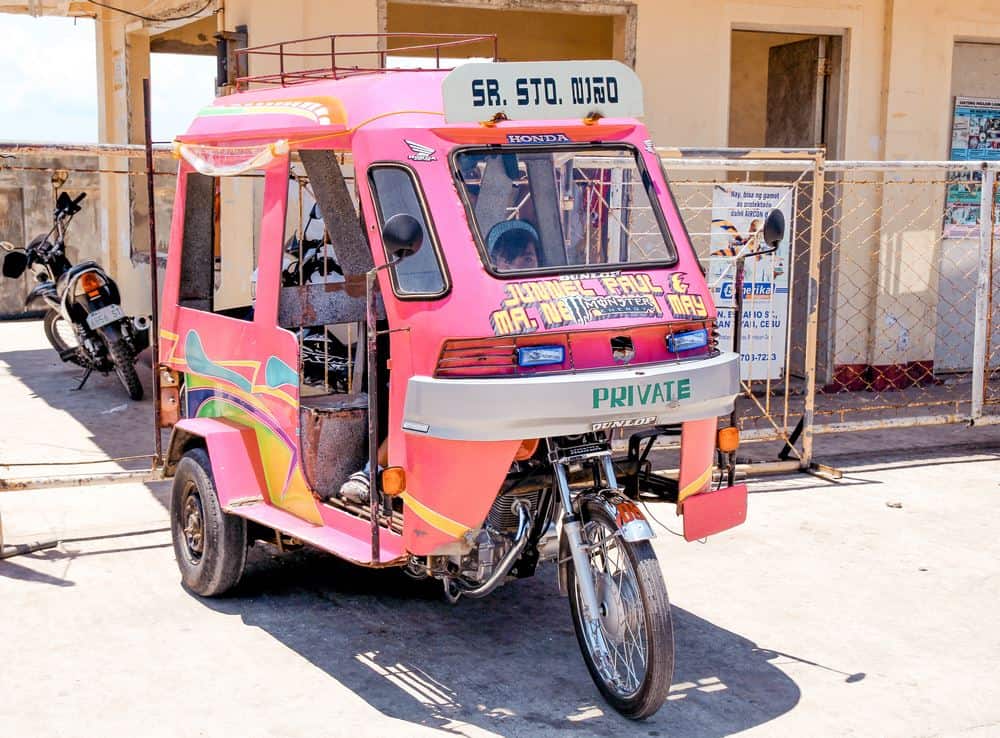
In most cases, every time you change destinations within the country, it means you have to invest a day of your trip. So, the less time you have, the more it’ll feel like you spend the whole day on a plane, a bus, a jeepney, a tricycle, a ferry, a bangka…
Not only that—traveling slowly is cheaper, as we explain in How much does it cost to travel to the Philippines?, since you’ll have the option to take far fewer flights.
Our advice is that you don’t allocate fewer than 15 full days (not counting international flights) to a trip around the Philippines. A much more reasonable figure, in our opinion, would be 20 days, and we talk about this at length in How many days to travel to the Philippines?.
All in all, the most important thing is DON’T OBSESS over seeing everything. Truly, there are more than 7,700 islands in the country and you can’t see it all the first time. This is why we’ve been traveling here for so many years (and we’ll keep doing it). Whatever you choose will be fine, but don’t overload yourself with transfers or you won’t enjoy it.

Cambugahay Falls in Siquijor
2. Find out about the weather when you travel
Just as when you travel around Spain or Europe you research what the weather will be like when you go, in the Philippines this is even more important.
Because of its geographic location, the Philippines has a tropical climate and different climate zones. In a big-picture summary, the climate in the Philippines can be broken down into 3 seasons:
- Dry and mild season: from December to February.
- Dry and hot season: from March to May.
- Rainy season: from June to November.
Taking into account both the weather and tourist numbers, we consider that the best time to travel to the Philippines is in February and March, though the weather usually cooperates more or less from mid-November to mid-May in almost the entire country.
Even so, don’t rack your brain or rule out the idea of traveling to the Philippines at the time you have vacation. Although you can estimate some rain patterns (or lack thereof), the weather is unpredictable. In fact, it’s totally possible to travel to the Philippines in July and in August, and, in the south of the country (on famous islands like Siargao or Camiguin) it’s actually the dry season from May to October (the opposite of the rest of the country).
For all these reasons, the best recommendation for traveling to the Philippines we can give you is to stay informed and orient your trip toward certain areas depending on the season you’re traveling.
3. Search for flights well in advance
Tip: look for your flights as early as possible, especially if you’re coming in high season. In the months of the European summer and during periods of high demand like Easter or Christmas, prices tend to shoot up.
On our page about Cheap flights to the Philippines you’ll find more tricks for spotting bargains, but we’ll tell you up front that nowadays it’s hard to find anything for less than $690. The cheapest options usually involve coming via Kuwait or via China.
4. Get to know everything you can do in the Philippines
It may seem very obvious, but it’s key. There are as many trips to the Philippines as there are travelers and moments. In many cases we’re blinded by the typical photos we see on Instagram, but there’s no absolute must or single “right” trip to the Philippines.
Over all these years traveling around the country and designing travel itineraries for the Philippines, we’ve reconfirmed time and again that “to each their own” really applies. What we’ve loved, someone else might find indifferent—or even hate it. While it’s true that you can only really know this in situ, one of our tips for traveling to the Philippines and not “messing it up” is to inform yourself in advance about everything you can do and plan a trip tailored to you (without copying anyone’s route—and much less an AI’s).
You can start with our article Things to do in the Philippines, where we give a very general overview of what you can find in the country, but it’s essential that you read and read. On our site you’ll find detailed information about many islands (and there are still lots we have to write!), but, of course, there are many more. There are more than 7,700 islands! In the Philippines there’s always room to go off the beaten path. For example, we went to Romblon when there was hardly anything written on the internet, and, like this area, there are heaps more: Masbate, Linapacan, Leyte, Mati…
Traveler to traveler: open a map in Google Maps and start pinning places that interest you.
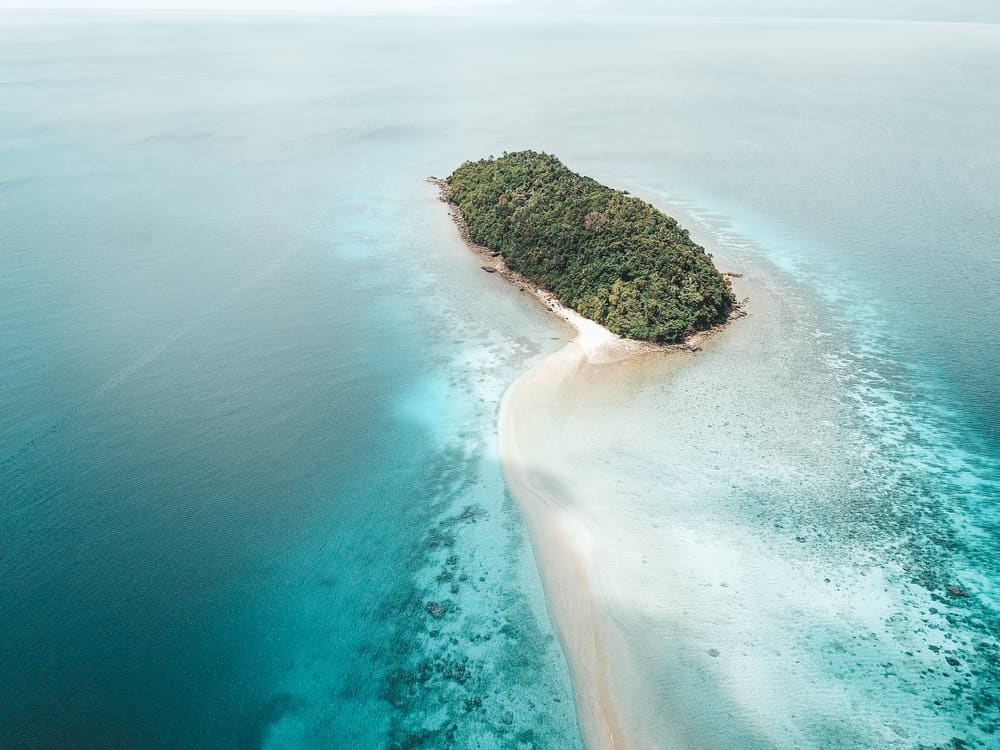
Bonbon Beach en Romblon
5. Take time to design an itinerary and try to keep it modest
Fair warning: this is the hardest part.
Maybe you dropped dozens of pins on the map, but now it’s time to figure out how to link them, how long it takes to go from one point to another, and how many days to spend in each place. In a country like Thailand, with a fairly developed tourist infrastructure and few islands, this might be relatively easy, but in the Philippines—believe us—it isn’t. It’s part of the charm of the Philippines, but if you don’t take it into account, you might end up hating the transfers and therefore not enjoying the trip.
On our website you can find up-to-date information about transport between islands in the Philippines because we make a big effort to stay current, but ferry company websites aren’t usually very good or, frankly, don’t even exist. Little by little things are changing and more options are appearing on sites like the 12go agency (where you can even book buses, vans, and boats), but you also need to leave a bit of wiggle room, especially if you’re going to visit less touristy areas.
Because of this, the best recommendation for traveling to the Philippines that we can give you is: budget 1 day for every inter-island transfer so you don’t get caught out.
As straightforward as it might seem at first because the islands are very close, it’s very likely that to move from one place to another you’ll need to combine several types of transport. For example, Camiguin and Bohol are separated by 60 kilometers, but the journey between them would be:
- Tricycle, jeepney, or motorela from your accommodation in Camiguin to the port of Balbagon (approx. 20 minutes).
- Ferry to Jagna (about 4–5 hours). There’s only 1 per day.
- Transfer from Jagna to Loboc or Panglao (depending on how you do it, but it would be rare for it to take less than 2 hours).
As you can see, it’d be unusual for you to take less than 6 hours to do this route and, considering that it gets dark in the Philippines around 17:30–18:00, you’d have spent a large part of your travel day.
Add to this the possibility of suffering cancellations and delays on flights, boats, and buses. Not everything works perfectly in the Philippines and these things happen—especially given the tropical climate.
So, at the risk of repeating ourselves, don’t be overambitious and don’t try to see a thousand islands on your first trip. Be more measured, give each place enough time, and consider that getting around is tiring. The well-worn motto “less is more” is essential when planning a trip to the Philippines. What usually works for us is to lay out the itinerary day by day like: day 1: arrival at xx, day 2: transfer to x, days 3 and 4: x, etc. That way you’ll see how many real days you have to enjoy the place and how many you’ll spend moving from one place to another.
Itineraries for the Philippines
If you want us to lend a hand, you can write to info@travelaroundthephilippines.com with your route in the schematic way we showed above and we’ll take a look—no strings attached.

Daku Island in Siargao
6. Travel safely—a key recommendation for traveling to the Philippines
Although we’ve already told you in Is it safe to travel to the Philippines? everything you need to know about “dangers,” and in Vaccines for the Philippines what has to do with vaccination, it’s essential that you hear us on this point: travel insurance.
In the Philippines, outside of big cities like Cebu and Manila, provincial medical centers or hospitals are very limited. This means that if you have a serious problem (we hope not) like a car or motorbike accident, it’s advisable to be urgently transferred to Manila or Cebu. We say this from several of our own experiences—one of the latest when Jairo had to be transferred from Tuguegarao (a remote city in the north of Luzon) to Manila to be treated for a severe pneumonia, and another when Claudia had to be hospitalized for dengue in Bohol.
If this were to happen to you, having the help of a good insurer will save you not only a financial headache (which may not be small—in the case of the pneumonia it was 25.000$), but also a logistical one (they’ll take care of everything and you only have to worry about getting better) and a psychological one (when you’re sick you don’t feel like speaking English or dealing with anything).
Really, do not travel without travel insurance. The cost of the policy is nothing compared to the serious problems you could end up having. Take a look at the insurance for traveling to the Philippines that we use. Plus, we give you a 5% discount for being our reader.

7. Don’t idealize everything before you arrive
No one can deny that the Philippines has some of the best beaches in the Philippines in the world. You’ll also be able to do some of the best scuba dives on the planet. Filipinos are friendly, open to tourists, and chatty; the food is tasty; prices are good… There are tons of perfect things about the Philippines! BUT not everything is ideal.
Obviously, on this site, on Instagram, and on any digital medium (even if you talk to the vast majority of travelers) what’s shown most is the pretty side. Surely in our own city or country we take photos of the beautiful things and not of landfills, the most disadvantaged neighborhoods, or the plate of food that didn’t turn out very Instagrammable, right?
And, although this warning might be unnecessary, it doesn’t hurt to stop and think that there are problems in the Philippines, too, especially considering it’s a developing country. To name just a few: although the economic growth rate is almost 6%, more than 15% of Filipinos live below the poverty line (data from ADB); social inequalities are palpable (especially in big cities); there’s a major issue with waste management; and little attention is paid to issues like animal mistreatment (cockfighting, abandoned dogs…).
As a tourist, it’s quite likely many of these aspects will go unnoticed and that this will be one of the best trips of your life, but you can’t go thinking everything will be perfect. A trip to the Philippines is certainly not a trip to the Amalfi Coast (thank goodness!), and you need to go with an open mind to accept the good and the not-so-good—and, above all, to help make the not-so-good better.
8. Arm yourself with patience
Closely related to a previous section, another of our tips for traveling to the Philippines is to apply something Filipinos say a lot: “bahala na.” This means “God will provide” or something like “things will work themselves out.” You’re going to see that this works very well for them—they take everything with a lot of philosophy and have a very different attitude to life than ours.
Join this way of thinking and enjoy the ride on public transport. If there are delays, you’ll have to accept them. If the bus doesn’t leave until it’s full, then that’s how it is. You can read much more about them in Transport in the Philippines.
The same is true in restaurants. It’s very common for them to take a while to cook, so take things in stride and enjoy the evening.
9. Book hotels
For some reason we still don’t fully understand, in most cases it’s cheaper to book online in the Philippines than it is to do it directly when you arrive at the accommodation.
Plus, let’s be honest—the value for money of many hotels (especially in places like Siargao or El Nido) isn’t at all comparable to nearby countries like Thailand or Indonesia. Therefore, if you want a decent place, with a private bathroom, we recommend booking in advance through Booking or Agoda. There really isn’t much difference between the two—sometimes one has a cheaper price than the other and vice versa—so the best thing is to compare.
One of the recommendations for traveling to the Philippines that can’t be missed: if you’re going to go on high-demand dates (Easter, Christmas, Chinese New Year, and the May long weekend or other Filipino holidays) it’s essential to book as soon as possible. Prices go through the roof because, in addition to foreigners, Filipinos travel a lot within their own country. Also, hotel prices rise by up to 40% more in high season: December–May, so WATCH OUT.
In our Accommodation guide for the Philippines you’ll find more information.
10. Make sure your paperwork is in order—do you need a visa?
As we explain in Visa for the Philippines (soon), for most citizens of Europe and the Americas, if you’re going to stay for less than 30 days you won’t need to process any visa in advance. It’s essential, however, that you check that your passport has a validity of more than 6 months from when you enter the country because otherwise they won’t even let you fly.
If you’re going to stay longer, you have the option of processing a visa at an embassy or consulate or doing a visa extension in the Philippines. You can check the extension process in our article Visa extension in the Philippines.
Traveler-to-traveler tip: if you don’t know how long you’re going to stay in the Philippines, you should know that in 99% of cases, at check-in or boarding, the airline may ask you to show a ticket out of the country. You’ll find how to handle this Onward ticket or exit ticket: get it easily.
On the other hand, it’s also important that you research the validity of your driver’s license in the Philippines. For example, Spaniards can use our own Spanish license for 90 days in the Philippines. Even so, as you can read in Driving and renting a motorbike in the Philippines, you should consider a few things if your permit is only type B.
Keep in mind that it’s now also mandatory to complete a form called E-TRAVEL. We talk about all of this in Requirements to travel to the Philippines.

11. Think about how you’ll handle money
In the Philippines, cash is king and, in addition, most ATMs charge a fee of 250 pesos (about $5) per withdrawal. Therefore, we can give you two big tips for traveling to the Philippines without spending a fortune on fees:
- Travel with cash and exchange it in the Philippines. Surprisingly, at Manila airport you’ll find one of the best exchange rates in the country. In Money in the Philippines you’ll find more details about this.
- The star recommendation for the Philippines: USE REMITLY. Honestly, it sounds odd at first, but it’s what we constantly use to withdraw money here. To sum it up a lot, it’s a tool to send money to yourself (via a card payment) to a pawnshop (casa de empeño, which you find even in the most remote places in the country) and pick it up instantly. Not only is the exchange rate better than what any bank applies, but you can collect large amounts (up to 40.000-50.000 pesos in one go) and avoid the ATM fee. With our link and the code VIAJARPORFILIPINAS, you also get 10$ free for the first transaction and an improved exchange rate. Seriously, trust us. It’s all explained in Remitly in the Philippines.
- Although you can hardly pay by card, when you can (either in shops or for online bookings) use cards that at least save you your national bank’s fee. In Best card for traveling to the Philippines you’ll find the ones we use.
Keep in mind that, except in big cities and in the “poshest” businesses in tourist destinations, you’re going to have to pay absolutely everything in cash. Always carry Philippine pesos with you. In addition, to pay for transport and small things, you’ll need to have small bills, since Filipinos “get scared” when they see a 1,000‑peso bill.
Discover your budget for the Philippines.
12. Pack your backpack ahead of time
We already know time will get away from you (as it always does with us), but it doesn’t hurt to warn you: take a look at the most important things you should pack for the Philippines a few weeks in advance. That way you won’t have to rush out shopping the day before, because there are very specific things you’ll need: a dry bag, a decent sunscreen, reef shoes, etc.
On that note: forget the “just in case” items. Honestly, you’re not going to need that many things here. You’re coming to a tropical country where there are laundries that have your clothes ready in 1 day for very little money. On the other hand, Philippine airlines only allow 7 kg of carry‑on luggage. If you don’t check a bag, you’ll save quite a bit of money.
Something we think is always important to bring of your own is snorkel gear. Having your own mask or snorkel is not only more hygienic, but it also guarantees it’ll be in better condition (rental ones often fog up a lot or let in a lot of water) and you’ll end up saving money. As for fins, since they take up a lot of space, we never bring them and we don’t think they’re essential either.
13. Don’t worry about the weather
You’ve got 2 days left before traveling to the Philippines, you open accuweather or the forecast on any other website and it shows: day 1 – rain, day 2 – pouring rain, day 3 – lightning… Don’t panic!
We know it’s easier said than done, but don’t worry so much. The first thing you should do is open the Windy app (the red one) and check that there are no warnings of a typhoon, tropical depression, or tropical storm. The trajectories of these weather phenomena are more or less clear 4–5 days in advance, so it’s not something that catches you by surprise or that you should be afraid of.
If there is such a warning, adjust your trip accordingly.
If there’s no warning, the rest of the weather apps will tell you it’s going to rain all day even when it only really rains for 5 minutes. We’ll repeat it again: the Philippines has a tropical climate. In most cases, it rains for a while and suddenly, 10 minutes later, the sun is blazing. So going crazy over the weather makes no sense. You have to accept what comes and take it the best way. If it rains, there’s still plenty to do in the Philippines—but most likely it’ll only end up raining for a little while.

Del Carmen mangroves in Siargao
14. Be careful when driving
Many roads in the Philippines are in good condition, but others aren’t. There are roads with potholes, full of mud and, most importantly, although outside the big cities there usually isn’t much traffic, there are lots of animals (roosters, hens, dogs, cows, goats…) that dart out of nowhere, which can cause a very undesirable accident.
Don’t get overconfident, drive carefully—especially at night—and if you’re on a motorbike, wear a helmet. If you’ve never rented a motorbike in your life, this isn’t the best time to start learning. That thing about “it’s like riding a bicycle” isn’t true and, unfortunately, we see many travelers who’ve had accidents and there’s little they can do. Even a silly burn can ruin your trip, since the sea water here is so warm that it’s better not to swim to avoid getting an infection.
And although we might sound like parents and you’ll later see many Filipinos without one, please wear a helmet. You can’t imagine how many accidents happen around here, especially in Siargao, and that later end in tragedy. Plus, you can save yourself a fine.
15. Internet recommendations in the Philippines
Let’s be clear: Wi‑Fi outside Cebu and Manila is usually lousy. It’s true that with the arrival of Starlink things are improving, but in most cases it’s not very reliable.
Although the 3G/4G/5G network also fails depending on the area, it tends to work much better than hotel Wi‑Fi. So, if you want to stay connected, the best thing is to buy a SIM card with a data plan. In Internet in the Philippines we give you all the tips in this regard.
16. Tips about food and drinks in the Philippines
While it’s true that the Philippines doesn’t have dishes as “exotic” as Thailand’s pad thai or tom yum, the food is not bad at all. Lunch or dinner (and even breakfast) in the Philippines is basically made up of a good portion of rice accompanied by a stew or casserole, or a grilled fish or meat. In some stews you’ll notice a very clear Hispanic root, like menudo or afritada.
Filipinos usually eat in the so‑called carenderias. These are small businesses where you’ll find little pots with prepared dishes. You can peek by lifting the lids, ask what they have today, and let yourself be surprised. And you might wonder: will I get sick from eating there? Well, as with restaurants, there’s everything. Some have questionable hygiene and others are spotless but, if it helps: in years traveling around the Philippines we’ve never gotten sick eating in carenderias.
The food in these places is usually fresh and also very affordable. It’s not unusual to spend less than $2-3 on a good meal. We definitely encourage you to have most of your meals there—not only because it’s cheap, but because you’ll be eating what Filipinos actually eat.
If you think your stomach won’t tolerate it or one day you feel like something else, don’t worry. In the Philippines you’ll also find all kinds of “Western” and “fast food.” There are pizzas, burgers, pasta… Prices are higher, but you won’t be lacking options.
As for drinks, Filipinos don’t drink tap water because it isn’t potable, so the risk of getting sick from contaminated water is almost zero. And no, ice cubes aren’t made with tap water; they’re made with the purified water they use for drinking. Like any Filipino, drink bottled water or from the jugs they use and, to be responsible, it’s best to bring your own bottle and refill it at the thousands of tanks you’ll see in hotels, restaurants, and even on the street. That way we use less plastic.
Where we do recommend you be especially careful with food and drink is in El Nido. Unfortunately, there have been food‑poisoning issues here for more than a decade and many travelers have their trips ruined, even needing to be hospitalized. Therefore, another of the tips for traveling to the Philippines that we can give you is that in this particular destination you avoid any drinks with ice, only drink bottled water, and be especially careful with the places where you eat. In Best restaurants in El Nido we give you recommendations for the many places we’ve tried and that you can trust.
And if you’re vegetarian or vegan, you may have read out there that you’re going to starve. Happily, that’s not going to be the case. The two of us who write this site don’t eat animal products and we’re still alive and kicking. In fact, it’s a shame because we never lose weight in the Philippines. We still have a lot to write on the topic, but, for example, in Best restaurants in Manila or Best restaurants in Siargao you’ll find great examples of places with vegan food. You’ll also find a good selection in Best vegan & vegetarian restaurants in the Philippines.
Find it all in Food in the Philippines: what to eat

Filipino afritada
17. Resources with recommendations for traveling to the Philippines
On this page you’ll find information galore (we expand it every week and update it every day), but you’ll also find tips for traveling to the Philippines on:
- As for mobile apps:The Lonely Planet guide: it’s not as up to date as our site, but it’ll help you get an idea—or to read while you’re bored on the bus.
- Orientation: Googlemaps and maps.me
- Accommodation bookings: Booking, Agoda and Airbnb (this one to a much lesser extent)
- Flight bookings: Skyscanner
- Money: Remitly
- Weather: Windy
- Transport: Grab, Joyride, Maxim and Angkas
- Storage: Google Drive or Dropbox (to upload to the cloud)
- Ordering food (only in big cities): Grab, Foodpanda
Take a look at the best apps for traveling to the Philippines.
18. SPEAK UP!
It’s true that little remains of the Spanish that used to be spoken in the Philippines, but there are many Spanish‑heritage words left in the different languages spoken in the country. In addition, English is an official language and a large part of the population speaks it fluently. Filipinos are very open, fun, and friendly. An overwhelming majority will be delighted to chat with you a little. Take the opportunity to strike up a respectful conversation and learn about them. This is a real advantage compared to other Southeast Asian countries, where you end up a bit Lost in translation and feel like you miss part of the trip.
Little trick: if you start saying words like the numbers (uno, dos, tres, cuatro…) or tableware (tenedor, cuchillo, cuchara, platito…), you’ll get a big laugh out of them. It’s a good way to start a conversation and enjoy the ties that still unite us.
☀️ You can learn much more about this topic in Languages in the Philippines.
On the other hand, get used to being called “ma’am” or “sir”. This is a form of respect toward visitors—nothing to laugh at or similar (we’ve read some things out there…).

19. Practice responsible tourism in the Philippines
And no less important than the above: please be a responsible traveler. This means the footprint you leave on your trip shouldn’t be negative but, on the contrary, the best possible.
Please keep these recommendations for traveling to the Philippines in mind to do so responsibly:
- Oslob and Lila: don’t go to Oslob to swim with the whale shark. We already told you in detail in Whale shark in Oslob why it’s an aberration. There are other places to do it in a way that doesn’t jeopardize a species in danger of extinction; you can find them in Where to swim with whale sharks in the Philippines. Fortunately, in Lila (Bohol) they ended up banning this activity for the same reasons we mention in the Oslob guide.
- Be respectful with people. Haggling is part of the fun of travel and none of us want to be ripped off, but doing it to death to save yourself $0.50 isn’t responsible tourism either. For you $0.50 is nothing; for a Filipino family it’s a lot (2–3 portions of rice at least). One way to avoid being overcharged is to ask your hotel for an estimated price of what that transfer, that tour, or that souvenir might cost.
- Snorkeling and diving: in the sea you only look and don’t touch. Don’t harass animals (please, don’t chase turtles…) or take starfish out of the water. Don’t step on coral. Use reef-safe sunscreens. In our article on Snorkeling in the Philippines you’ll find more information on the subject.

- Research the companies you’re going to hire: we’re not perfect, but there’s already tons of information online so you don’t mess up. Look for reviews of agencies and check what kind of practices they carry out. For example, we know that in Balicasag (Bohol) there are agencies that harass turtles, feed bread to fish…
- Horse-drawn carriages: don’t ride the typical calesas, horse-drawn carts. It’s very common to see them in Intramuros (Manila) and Vigan, but the horses are in a pitiful state.
- Plastics: reduce single-use plastic consumption. The Philippines has a serious plastic problem. Due to families’ lack of financial resources, many cosmetic, household, or food products (like sauces or the typical 3-in-1 coffee) are sold in sachets (small packets), which makes plastic consumption enormous. On top of that, environmental awareness is still quite low. Although it’s an almost titanic battle, it’s in your hands to do your bit by rejecting this type of packaging, bringing your own refillable bottle, and joining the various cleanups that are increasingly seen in tourist areas. What’s more, there doesn’t need to be a cleanup planned—spending 5–10 minutes picking up the plastics you see on the beaches will already help someone understand how important these gestures are.
- Animal tourism: in the Philippines there are also aquariums, zoos, crocodile farms, cockfighting… Please avoid taking part. In Bohol, avoid the tarsier sanctuary next to the Chocolate Hills; the best one is the one in Corella. In Best things to do in Bohol we tell you everything.
20. Do private tours whenever you can—another tip for traveling to the Philippines
You’ll see we stress this in many of our guides, especially for Coron and El Nido, because it’s really important for enjoying these places even more. In several places in the Philippines you’ll do what’s known as “island hopping”, that is, boat tours where you go from island to island. These are great, but it’s true that with their popularity, some stops can get very crowded.
So we can’t recommend anything more than doing them privately. That is, pay for the whole boat and be able to decide how and when to stop. In fact, in most cases you can head out much earlier than the rest of the people (we’re talking up to 2 hours earlier), so you’ve got a very good chance of being in dreamy beaches and lagoons all by yourself.
Is this much more expensive than booking a tour through an agency? Well, if there are several of you, no. So it’s key to find other travelers.
You can read more about this kind of excursion in the guide Island hopping in the Philippines.

Cadlao Lagoon in El Nido
21. Allow enough buffer time for your international flight
As many times as we’ve come to the Philippines, for us there’s a golden rule: return to Manila or Cebu the day before we have an international flight. We’ve seen too many travelers miss their flights out of the country due to the cancellation or delay of a domestic flight.
You have to consider that there are many airports with limited infrastructure in the Philippines and that at the slightest bad weather, the flight can be canceled. This is the case for Coron, El Nido, Siargao, or Camiguin, to give you a few examples.
If you ask our opinion, we would only really trust the airports in Bohol (Panglao) and Puerto Princesa—and always leaving a buffer of 6–7 hours between the domestic and international flights. Remember that no travel insurance is going to pay for another flight back home if you don’t leave enough margin. At most, they could cover certain amounts for meals or missed connections, but nothing more.
22. Check the tides before visiting beaches
We know it sounds very obvious, but many people don’t take into account that beaches are pure nature and they don’t always look the same. Whether it’s because of the time of year (remember, in the Philippines the wind blows one way or the other depending on the season), because there’s recently been a storm, or because of the tides, you might not see a beach exactly like the ones we have in our guides. We can’t influence the first two factors, but we can choose when we visit.
That is, you can check when high tide will be (which is when it usually looks prettiest) and go to the beach accordingly. Why is this important? Because many beaches in the Philippines aren’t very deep and swimming can be difficult at low tide.
How do I check the tide? A quick Google search like “tide in El Nido” will tell you, but there are also specific apps for this.
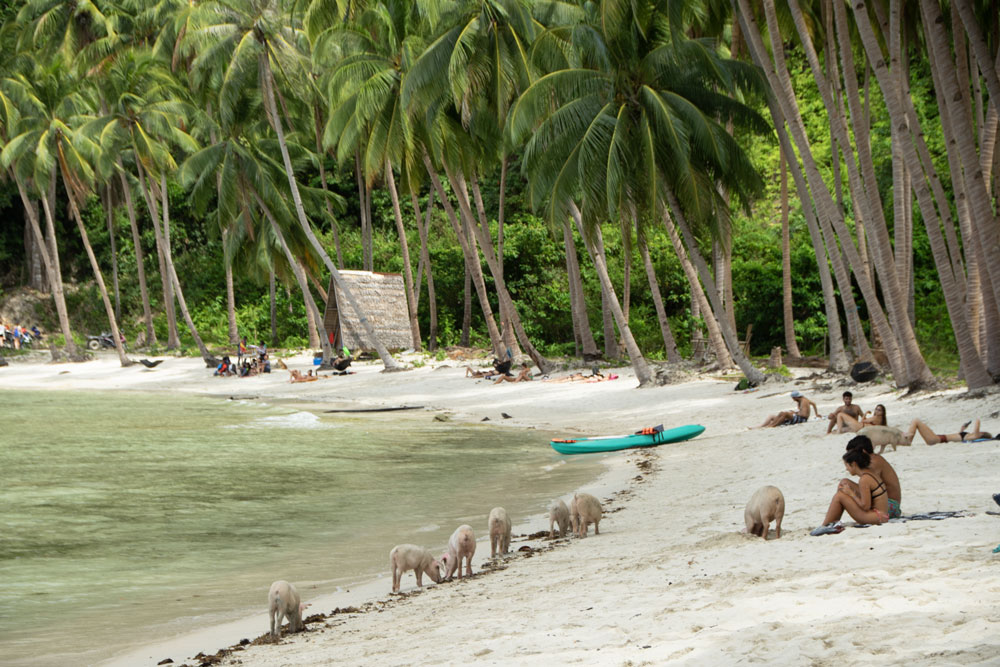
Coconut Beach in Port Barton
23. Go to a travel clinic well in advance—and watch out for mosquitoes
Another good recommendation for traveling to the Philippines is to follow the professionals’ advice. As much as we can tell you which recommended vaccines for traveling to the Philippines are (information taken from official sources and from our experience), it’s important to go 3–4 weeks beforehand to an international vaccination center or public health office so a doctor can assess which vaccines and/or treatments are advisable according to your medical history and the type of trip you’re going to take. Really—don’t rely on what you read on the internet and book an appointment, ideally 2 or 3 months in advance as they’re often slammed.
On the other hand, it’s important to protect yourself against mosquitoes. There’s no need to be paranoid, but in the Philippines (as in much of Southeast Asia), especially in the rainy season (June to October), there’s a fairly high incidence of dengue, and you don’t want that to ruin your trip. As we mentioned above, Claudia caught it in 2022 in Bohol (after more than 12 years here) and had to be hospitalized for several days as a precaution. It’s not usually a fatal disease in adults, but repellent will be your best friend.
Most strong repellents sold abroad work quite well, but in the Philippines you have a much cheaper option called OFF Overtime (bottle with a green and orange label) that also works very well. In addition, depending on the patient’s history, in many vaccination centers now administer the vaccine against this disease, but keep in mind that it requires several doses.
Of course, in this regard, it’s also essential to come with a good travel insurance policy that saves you the fortune something like this could cost. You already know you have a discount on yours by clicking here.

24. Don’t underestimate traffic in Manila and Cebu
It may also seem obvious, but really—take our advice and leave lots of extra time to get to Manila and Cebu airports, especially the former. Due to an almost total lack of public transport (or at least not an efficient one), traffic jams in both cities are monumental, especially between 8:00 and 10:00 and 16:00 and 21:00 Monday to Friday.
If you ask us for recommendations for the Philippines, what we do is leave at least 4 hours early in the case of Manila and 3 hours early for Cebu. Obviously, if you’re staying near the airports, you can reduce this buffer, but don’t oversleep too much if it’s Manila because the areas around the airport also get congested.
You can read accommodation recommendations in this regard in Sleeping near Manila airport and Sleeping near Cebu airport.
On the other hand, if you need to go from Cebu airport to the port or vice versa, don’t plan for less than an hour. It’s true that without traffic it takes around 30 minutes, but in most cases there are cars. We say this so you can calculate departure times for flights and ferries.
25. Ask for a window seat whenever you can
Whenever you take domestic flights, try to ask for a window seat because the views (if there are no clouds) are wonderful. We particularly like the routes to El Nido, Coron, and Siargao, but they tend to be all very beautiful, and asking for it at the check-in counter usually doesn’t cost anything.
26. Be prepared to pay lots of fees
Yes, we know it’s annoying, but that’s how this country works. Instead of including tourist taxes in accommodation, plane tickets, or in other ways, in most cases local governments or municipalities decide to charge separate entry or environmental fees and you feel like you’re always paying.
So yes, be prepared to pay to access waterfalls, beaches, or lagoons, for example. But also be aware that these payments are usually very low (10, 50, 100 Philippine pesos or more if they’re valid for several days, as in the case of those in El Nido), and it’s advisable to carry coins or small bills.

Batad Rice Terraces
27. Do your shopping in Manila or Cebu
It’s logical because you’ll carry less during the trip, but we also think you’ll get better items, especially in stores like Kultura Filipino, which you’ll find scattered across several malls in Cebu and Manila (you’ll see them with a quick Google Maps search). This is explained in detail in What to shop in the Philippines.
With that said, if you see a craft you like—such as the bulul figures sold in Siquijor, the masks in Coron or El Nido, or the hammocks sold at the Puerto Princesa market—buy it, since these kinds of things are hard to find in Manila or Cebu.
28. Watch out for palm trees
Coconuts are delicious and palm trees in the Philippines are gorgeous, but be careful about standing under them for shade. It sounds super silly, but a coconut falling from such a height can be quite dangerous (in some cases even fatal), so just stand a bit away from them—especially if it’s windy or you see they haven’t been pruned in a long time.
29. Do the Coron–El Nido expedition or vice versa
And we’re almost done with a top tip for traveling to the Philippines because after so many years here, there’s one activity we love: the multi-day tour between Coron and El Nido. This is a 3- or 4-day route through the islands in between (which you don’t visit on regular island-hopping tours), during which you visit deserted beaches and snorkel spots while staying overnight in small wooden or bamboo huts—making the experience very special.
We talk about it at length in the guide to the Coron–El Nido Expedition (it can be done in both directions), but you can also check out the 2 companies we recommend:
That said, we recommend you do the Ultimate Tour (the best Coron island hopping) and Tour A or C (or better yet both) of the El Nido island hopping, since you won’t see any of this during the expedition and it would be a shame to visit these 2 incredible places and miss their best parts.

Common questions about tips for traveling to the Philippines
To wrap up, here are answers to the most common questions you ask us related to these tips:
Is traveling to the Philippines dangerous?
Not at all—it’s one of the countries where we’ve felt safest in these more than 10 years traveling around the world. It’s true that in Manila you need to keep an eye out for pickpockets in very crowded areas, but you can travel super safely in the rest of the country. On the other hand, if you’re worried about typhoons, you should know that their trajectory is known 5–7 days in advance and, of course, it’s not something that happens every week or even every month. It’s very unlikely a typhoon will affect you.
What to see in the Philippines in 15 days?
With more than 7,700 islands, there are plenty of options. The key is to learn about the destinations that might best fit what you’re looking for during your trip (beaches, snorkeling, diving, hiking, etc.) and make an itinerary that isn’t too ambitious given the transfers. For 15 days we usually suggest 4 well-connected places such as Port Barton, El Nido, Bohol, and Siquijor.
What is the best month to go to the Philippines?
There are different climate zones in the country, and it also has a tropical climate. However, the best time in general tends to be from December to May.
What do you need to fill out to travel to the Philippines?
You have to fill out a form called E-TRAVEL, which is free and must be completed within 72 hours prior to the departure of your international flight. It’s not complicated, and we even have a step-by-step guide on how to do it.
We’re sure we’ve left a few things out… If you have questions or want more recommendations or tips for traveling to the Philippines, leave us a comment and we’ll be happy to reply.