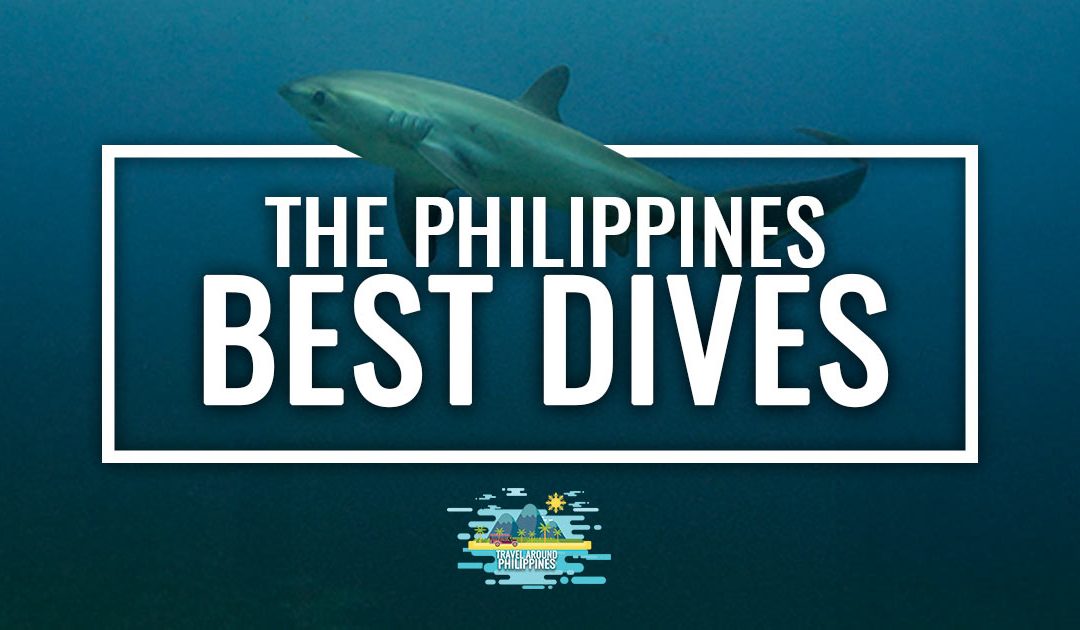
What are the best dives in the Philippines? As you know, we’re absolutely in love with scuba diving. In fact, we actually cut our teeth in the diving world right here in this archipelago. In Diving in the Philippines we give you a detailed rundown of the best bases to enjoy its seabeds, but we wanted to take it a step further and highlight exactly which dives are the absolute unmissables.
Just like you, when we arrive at a famous diving destination, we want to know which spots or dive sites are essential so we don’t leave feeling like we missed out on the highlights. That’s why we’re here to tell you which are the best dives in the Philippines, the reasons why, what you can expect to see, and the certification level you need to truly enjoy them.
This article is geared toward those who already have their diving license in hand. If that’s not you, but you’re dead set on learning to dive, we suggest you check out Diving course in Bohol, the best place to get your Open Water Diver certification.
On the flip side, if you are a hardcore diver planning a trip purely focused on exploring the Philippine underwater world, a great idea is to book a liveaboard. You’ll spend 7 to 10 days worrying about nothing but diving, as the crew handles everything else. If we had to choose, we’d go for Tubbataha, but keep in mind they only run between March and June. If you aren’t traveling during that window, a route through the Visayas (including Malapascua, Bohol, Apo…) will absolutely blow your mind.
Finally, if you’re feeling a bit lost, take a look at these diving trips around the Philippines that we’ve designed just for you.
Read on and dive in with us!
1. Monad Shoal (Malapascua) – Encounters with the thresher shark
We kick off our tour of the best dives in the Philippines with Malapascua, specifically with its crown jewel: Monad Shoal.
This is the spot where you can witness the majestic thresher shark every single morning, making Malapascua one of the few places on Earth where seeing this incredible animal is almost guaranteed. Monad Shoal is a cleaning station sitting at a depth of about 30 meters, which is why dozens of thresher sharks rise every dawn from the depths of the ocean for a grooming session.
Typically, you’ll need to be at the dive center around 4:00 or 4:30 AM. The transfer by bangka, the local boat, takes about 30–40 minutes. The dive usually starts around 5:00 or 5:30 AM, just as the sun begins to peek over the horizon. Since the plan involves dropping down to 30 meters along the wall, it’s rare for the bottom time to exceed 40 minutes. However, it’s not unusual to spot the sharks at shallower depths, sometimes even hovering over the plateau, where they look even more stunning as they catch the morning light.
You can read much more about this experience in Diving with thresher sharks in Malapascua. We can also share info on our trusted dive center if you leave us a comment.
Recommended level: AOW
Depth: 15-35 meters
What you can see: thresher shark, nudibranchs…

2. Whitetip Alley (Gato Island/Malapascua) – A mix of the best dives in the Philippines
They say everyone goes to Malapascua for the thresher sharks, but they end up getting a huge surprise at Gato Island. And, even though the thresher is our personal favorite, we have to agree.
Gato Island is a small rocky islet about 40 minutes northwest of Malapascua. Almost all dive centers head there several times a week because it’s one of the most requested day trips. Surrounding the island, you’ll find 5 dive sites, with Whitetip Alley or The Tunnel being the standouts. In reality, though, the dive plan is usually a mix of these sites depending on the group’s experience level.
Either way, they’ll take you to see the imposing cave or tunnel at Gato, which runs 20–25 meters long. You’ll go in with a flashlight, and for most divers, the highlight is the cave entrance. Here, you’re often greeted by a stunning play of light and whitetip sharks patrolling the area. As you push forward, you’ll see them resting under rocks alongside some of their cousins, like bamboo sharks or cat sharks.
Whichever line you choose, you’ll find beautiful, intensely colored corals and impressive rock formations, as the island is practically Swiss cheese—riddled with holes. It’s quite common to spot frogfish, pipefish, leaf fish, seahorses (including the adorable pygmies), cuttlefish, octopus, mantis and harlequin shrimps, nudibranchs (including the wonderful Spanish dancer), and the dreaded banded sea snakes.
If you’re itching to do this dive in the Philippines, don’t miss our article Diving in Malapascua.
Recommended level: OW
Depth: 10-24 meters
What you can see: schools, whitetip sharks, bamboo sharks, banded sea snakes, nudis…
3. Okikawa Maru (Coron) – Epic wreck
In September 1944, the vast majority of the Japanese fleet anchored around Coron Town was bombed, sending the ships to the seabed. To the delight of divers today, some of them now make up several of the best dives in the Philippines.
If we had to pick just one, it would be the Okikawa Maru. Located very close to Busuanga Bay, near Concepcion, this tanker was 160 meters long and now rests between 12 and 26 meters deep. It’s still in good condition, so it’s possible to penetrate almost the entire ship and enjoy landscapes that feel otherworldly. Plus, you can enter the engine room to see the ship’s massive propeller shaft.
Inside and out, you’ll find hard and white corals, but the most interesting area for marine life is the deck. It’s not unusual to see nudibranchs, flatworms, reef fish, scorpionfish, and lionfish here. The bow stands completely vertical, and if the current picks up, you’ll often see huge batfish and snappers hanging around.
The catch, as with most Coron dive sites, is that visibility tends to be limited. You’re usually looking at about 5–10 meters max, but don’t let that stop you from enjoying the interior of this marvelous wreck.
⚠️ Please, as always, make sure you go with a professional dive shop that respects your certification level and keeps groups small. This is particularly important in Coron, where there have been fatalities inside the wrecks. Remember, you’ll be passing through tight spaces with hardly any light, so solid buoyancy control and experience are non-negotiable.
Oh, and if you plan to do more dives around here, we suggest adding the Akitsushima and the Irako to your list—two more of our favorite Philippine dives.
Recommended level: AOW
Depth: 12-26 meters
What you can see: macro life, corals…
4. Padre Burgos Pier (Padre Burgos, Leyte) – The night dive of your life
Picking just one dive gets even harder here, because the quirky Padre Burgos pier quickly landed in our top 3. The funny thing is, we knew next to nothing about it; we went to Padre Burgos to swim with whale sharks, but the dive shop convinced us to try the pier—and thank goodness they did!
This dive takes place literally at the town pier of Padre Burgos. You walk in a bit before sunset, wondering what on earth you’re doing there surrounded by trash. You dive under the pier with typical visibility of 15–20 meters and a depth that rarely exceeds 5 meters. Because it’s so shallow, this dive can last upwards of 90 minutes of pure magic.
In our opinion, Padre Burgos Pier is a critter paradise, and you’ll spot something new with every kick. Pygmy seahorses, frogfish, stargazers, all kinds of nudibranchs, cuttlefish, flying gurnards, and the crowd favorite—the blue-ringed octopus—are regular residents here. In short, it’s a mandatory stop for lovers of muck diving and underwater photography.
This dive only happens a few times a week (usually Mondays, Wednesdays, and Fridays) because they share the pier with local fishermen. So, make sure to check the schedule with the dive center to fit it into your trip.
Recommended level: AOW
Depth: 5 meters
What you can see: blue-ringed octopus, pygmy seahorse…

5. Sardine Run (Moalboal) – Surrounded by sardines
How would you feel about diving and not being able to see the sun because millions of sardines are blocking it out? Well, that’s exactly what happens off the coast of Panagsama in Moalboal every single day. Just a few meters from the bars and restaurants, a massive school of sardines serves as the main attraction of this destination.
While it’s true you can see them snorkeling, from one diver to another, we strongly recommend including this in your list of dives in the Philippines. The experience of hovering calmly at 15–18 meters and witnessing the sheer magnitude of the sardine ball is absolutely mind-blowing.
Plus, you’ll also get to enjoy the coral wall, the green turtles living there, and the occasional visit from a whale shark passing through the blue.
Staying longer in Moalboal? Your must-sees are Pescador Island and Tongo Point.
If you don’t have time to squeeze Moalboal into your itinerary, there’s a “little brother” version north of Panglao. Napaling is the spot to mark down if you’re going diving in Panglao.
Recommended level: OW
Depth: 10-15 meters
What you can see: sardines, sardines, sardines, green turtles, whale shark…

6. Manta Bowl (Ticao) – Mantas in season
If you’re looking for “big stuff” in the Philippines, beyond Monad Shoal, you need to think about Manta Bowl. Located in the Ticao Pass—the strait between Ticao Island and the Bicol Peninsula—this spot has strong currents that attract huge manta rays. Since it’s a cleaning station with high concentrations of plankton, they show up here almost every day. Although they can be seen year-round, the prime season is from December to May.
This dive is recommended for experienced divers. If the current is ripping, you’ll need to use a reef hook to stay in place. The reward, aside from the majestic mantas, can include whale sharks, barracudas, thresher sharks, and even hammerheads.
You can visit this site from Ticao Island or from Donsol, where there are several dive centers. Donsol is also one of the best places to swim with whale sharks in the Philippines, roughly from November to April.
Recommended level: AOW
Depth: 20-23 meters
What you can see: mantas, whale shark…
7. Black Forest (Balicasag/Panglao/Bohol) – Marine life everywhere
If you’re hunting for dives where you won’t be short on tons of marine life, healthy coral, huge schools of fish, and turtles, Balicasag is your spot. This island, located just a 40-minute boat ride from Panglao, Bohol, is an absolute essential.
Of the various sites surrounding the island, our advice is: do not miss Black Forest. This gentle sandy slope gets its name from the black corals found deeper down.
The dive starts in a shallow sandy area dotted with intensely colored coral formations, abundant macro life, and reef fish. At 12 meters, the slope gets steeper, and you start seeing more hard and soft coral. It’s common to run into large groupers, snappers, scorpionfish, wrasses, damselfish, barracudas, frogfish, and the notorious triggerfish (watch out—they can get aggressive between May and July).
This is an ideal Philippine dive even if you’re only an Open Water Diver, as the most interesting action happens around 15 meters, though the black coral sits between 35 and 45 meters. Sometimes, you’ll hit a bit of current past 15 meters, turning the dive into a comfortable drift dive.
Read all about it in Diving in Balicasag. If you’re staying in the area longer, don’t miss our article on Diving in Panglao to discover more great spots. After having dived with almost all the dive shops on the island, we can recommend the best one. Drop us a comment and we’ll give you the details.
Recommended level: OW
Depth: 8-40 meters
What you can see: turtles, black corals, schools…

8. Ego Wall (Apo Reef) – Go big
If you have enough travel time and want to get off the beaten path, don’t hesitate: head to Mindoro and have a blast at Apo Reef. This reef is almost 2 hours by boat from Sablayan, a small coastal town, and it is a paradise for pelagic lovers.
It’s common to do 3 dives in a day, but since you’re traveling so far, we’d suggest booking a 6-dive excursion with an overnight stay on the island or the boat. Apo Island itself (not to be confused with the one near Negros) has pristine white-sand beaches that you’ll have all to yourself.
Apo Reef is massive and features cool spots like Shark Airport, where you’re almost guaranteed to see whitetip sharks. But if we had to pick just one for this list, it would be Ego Wall. As the name suggests, it’s a vertical coral wall teeming with life and frequently visited by sharks—whitetips, grey reef sharks, large groupers, turtles, humphead parrotfish, and huge schools of tuna, barracuda, and jacks.
Although there’s plenty to see on the wall itself, keep one eye on the blue because you might get lucky and spot mantas, like we did. The dive can easily last over an hour since the shallow top of the reef allows for a very long, relaxed safety stop.
If we’ve piqued your curiosity, check out our Apo Reef Guide.
Recommended level: AOW
Depth: 20-25 meters
What you can see: macro life, big schools, sharks…

9. Coconut Point (Apo Island) – Perfect reef diving
We’ve mentioned several times how much we love Apo Island. Even though it’s not yet super famous, we find it to be a paradise for relaxing for a couple of days of snorkeling and diving. Besides offering some of the best dives in the Philippines without the hassle, it’s also very budget-friendly, with dives often costing around 1,200 pesos including gear.
Among all the sites around the island, Coconut Point is probably our favorite. It’s a spectacular coral wall about 150 meters long where you’ll find all kinds of macro life, but also barracudas, mackerel, tuna, and, of course, the ever-present Apo Island turtles.
You need to keep your wits about you because conditions here can be tricky—hence the nickname “The Washing Machine.” Check with the local dive masters to ensure visibility is good and the current isn’t too wild. The best season is usually December through May.
Recommended level: AOW
Depth: 10-24 meters
What you can see: turtles, big schools, barracudas…

10. Amos Rock (Tubbataha) – Going all out
If you came to the Philippines specifically to dive, then that’s it—go big or go home. Hop on a liveaboard in Tubbataha. This is the best-preserved reef in the archipelago and was declared a UNESCO World Heritage Site in 1993.
Since it’s far from the mainland, the only way to visit is via a liveaboard from Puerto Princesa (Palawan). Also, due to weather conditions, these boats only run roughly between February/March and May/June. Because it’s so exclusive, you’ll likely have these dive sites all to yourself.
Within Tubbataha, Amos Rock (also known as Southwest Rock) is easily one of the best dives in the Philippines. It’s a jaw-dropping coral wall located in the North Atoll. Here you’ll enjoy an impressive variety of corals and huge gorgonians hiding macro life and large fish species like groupers, snappers, and Napoleon wrasse. However, the most exciting part is often looking out into the blue, where it’s not uncommon to see grey reef sharks, whitetips, mantas, and whale sharks passing by.
The wall drops down to 70 meters, so you can do multiple dives at Amos Rock without getting bored. With 600 species of fish, 360 coral species, 11 types of sharks, and 13 species of whales and dolphins, your chances of seeing something epic are huge.
Recommended level: AOW
Depth: 6-70 meters
What you can see: large schools, reef sharks, whale shark…
Comparison of dives in the Philippines
| BEST PHILIPPINES DIVES | NEAREST ISLAND | TYPE OF DIVING | RECOMMENDED LEVEL |
HIGHLIGHTS |
| Monad Shoal | Malapascua | Sharks | AOW | Thresher shark |
| White Island | Gato Island/Malapascua | Reef and caves | OW | Mix: reef, sharks, caves… |
| Okikawa Maru | Busuanga (Coron) | Wreck | AOW | Shipwreck |
| Padre Burgos Pier | Leyte | Macro/Night | AOW | Macro life |
| Sardine Run | Moalboal (Cebu) | Reef | OW | Huge sardine school |
| Manta Bowl | Ticao | Current | AOW | Mantas |
| Black Forest | Balicasag (Bohol/Panglao) | Wall | OW | Coral, turtles, schools… |
| Ego Wall | Apo Reef | Wall | AOW | Pelagics, coral… |
| Coconut Point | Apo Island | Current | OW | Coral, turtles, schools… |
| Amos Rock | Tubbataha | Wall | AOW | Schools, pelagics… |
Map of the best dives in the Philippines
You can use this map to see exactly where all these dive sites are located:
We hope this article has fueled your diving wanderlust and that you’ll be able to submerge yourself at one of these sites soon. Remember, you can find a ton of scuba info on our website in articles like:
Dive itineraries in the Philippines
If you have any questions or suggestions about diving in the Philippines, we’ll be happy to answer you in the comments.