While it’s true that many travelers plan their trip to the Philippines by choosing the best beaches, the archipelago has so much to offer that you could also explore its mountains, waterfalls, cities and, of course, its cultural side. Focusing on the latter, in this article we want to tell you about the festivals in the Philippines.
Perhaps not as well known as other Asian events such as Songkran in Thailand or Holi in India, Filipino festivals will surprise you with their color, joy, and music. What’s more, it’s at these celebrations where you’ll notice the result of syncretism in the archipelago’s culture and understand the Filipino way of life a little better.
The Philippines, a country of festivals
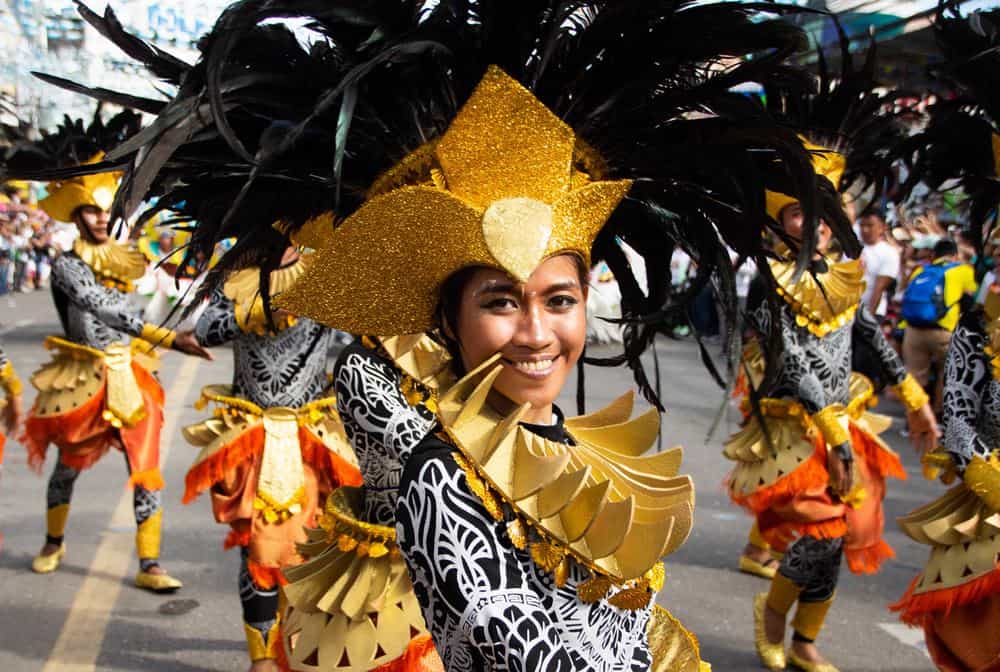
You won’t need to spend much time in the archipelago to realize the festive character of Filipinos. Their religious fervor is matched by their desire to celebrate any event, and every city, town, or neighborhood has its own party or festival. So much so that it’s said there are more than 42,000 festivals in the Philippines every year—more than one a day! Many of them feature costumes so elaborate they take months to prepare, as well as choreographies perfectly executed by dozens of people who rehearse all year long.
Festivals in the Philippines are anything but quiet. In addition to music, dancing, and colorful outfits, there are banquets where there’s no shortage of food and drink in abundance. You can also stroll through the peryas (fairs), where you can throw a few pesos at betting games, buy a snack, or simply enjoy the vibe. Other common events at Filipino festivals include processions, masses, exhibitions, concerts, and even beauty pageants, which spark passions across the country.

The origin of Filipino festivals
What is the origin of festivals in the Philippines? While many festivals have roots in the Christianity brought by the Spanish (indeed, the word “fiesta” is also used to refer to them) and are therefore held in honor of Jesus or a particular saint, they’re best understood as a result of cultural syncretism. In most of them you can also observe pre‑Hispanic traditions, many related to sowing, harvest or fishing, times of abundance, or significant historical moments such as the eruption of a volcano and the magical salvation of its neighbors.
In fact, if we analyze the festivals of the Philippines month by month, a more or less common pattern emerges. For example, throughout January and February you’ll find celebrations in honor of the Santo Niño de Cebu, the first symbol of Catholicism to reach the archipelago in the hands of Ferdinand Magellan in 1521.
In May you can experience several festivals in the Philippines that celebrate the abundance of the harvest and, related to this, the feast of San Isidro Labrador, the patron saint of farm workers. June marks the start of the rainy season and is also the time to venerate Saint John the Baptist, so water takes center stage in the festivities. In August, the dry season in much of the Mindanao region, you’ll find festivals in almost every city. In September, Saint Michael the Archangel and the much‑venerated Our Lady of Peñafrancia are honored. In December, of course, Christmas festivities take on importance and you’ll already see giant parols typical of Christmas in the Philippines.
The most important festivals in the Philippines
Sinulog Festival, Cebu
The first of the country’s major festivals—and our favorite—is Cebu’s Sinulog. This celebration is held in honor of the Santo Niño de Cebu, which, as we mentioned above, was a small image of the Child Jesus brought by Ferdinand Magellan to the archipelago as a gift for the wife of the Rajah of Cebu in 1521.
According to the history of the Philippines, upon receiving it she raised it over her head and began to perform a dance consisting of two steps forward and one step back. Overcoming several vicissitudes—including the destruction of the city and the loss of the statuette for several decades (it now rests in the Basilica del Santo Niño in the city center)—this dance can still be seen in every Sinulog choreography today.
The biggest event of this Filipino festival is the Grand Parade, which brings together around twenty troupes from all over Cebu and nearby islands. Participants work hard each year to prepare colorful costumes and rehearse their choreographies to perfection since, in addition to a substantial cash prize, more than 2 million people come to enjoy this parade every year.
As a curious note, many dance groups base their outfits on the traditions or clothing of the tribes that inhabited the archipelago in pre‑Hispanic times. In fact, at this and other festivals in the Philippines, you’ll likely see many participants dressed up as “Negritos,” Aetas, or Atis—a term coined by the Spanish to refer to certain ethnic groups they believed resembled African peoples due to their darker skin and curly hair.
For this reason, Sinulog cannot be understood as a 100% Christian festival but rather as a ritual that unites the country’s pagan and religious traditions—or its transition to Christianity with the arrival of the Spaniards.
The parade is joined by several interesting events from a traveler’s perspective. In our opinion, the most worthwhile is the Fluvial Parade, which recreates the Santo Niño’s arrival by sea in Magellan’s hands. In addition, the streets surrounding the parade fill with parties and Cebuanos give it their all at this time of year. Don’t forget to memorize the rallying cry: “Viva pit senyor!” It’ll bring smiles wherever you go.
You can find everything you need to enjoy the father of all festivals in the Philippines in our article on the Sinulog Festival.
Location: downtown Cebu City, though you’ll also find small Sinulogs in other corners of the Visayas such as Malapascua. Read How to get to Cebu to make it to Sinulog.
Date: between the 2nd and 3rd Sunday of January; the Grand Parade is on the third Sunday.
Recommended hotels: Cebu Hotel Plus, Trillium Residence, and Shejoje Poshtel Hostel.
Ati-Atihan, Kalibo
If Sinulog is one of the most important festivals in the Philippines, Ati‑Atihan is known as “The Mother of Filipino Festivals”. Held in Kalibo, the capital of Panay Island, many say it is the oldest of all and the one that inspired others like Sinulog or Dinagyang (Iloilo).
Its name is derived from the ati, the ethnic group that lives in Panay and neighboring islands (such as Boracay) and is considered to be descended from the archipelago’s first settlers, called “Negritos” for their physical features. In fact, Ati‑Atihan means “to imitate the ati.”
The origin of this festival is considered a pagan celebration commemorating the barter of Panay—namely, the Aeta’s acceptance of gifts from the datus or chiefs of neighboring Borneo, who fled the tyranny of dictators seeking to settle in Philippine lands around 1200 AD. This union was celebrated with music and dance by both communities, while the Indonesians smeared themselves with soot to resemble their hosts, who had dark skin.
However, with the arrival of Spanish missionaries, Ati‑Atihan acquired a religious character that it has retained to this day. Like Sinulog, it is now also celebrated in honor of the Santo Niño, which you’ll see dancing everywhere; at the same time, everyone paints themselves black and other colors and dresses in colorful costumes—featuring feathers and bead necklaces—very much in the Mardi Gras style. So Ati‑Atihan can also be seen as further proof of religious syncretism in the Philippines.
There are tons of events at Ati‑Atihan—from massive masses to noisy parades where participants give it their all. The most important event, and the one we recommend you focus on, is the Pagpadungog, when the winning troupes perform their dances before the crowd. In the afternoon the revelry begins and everyone takes to the streets to dance and drink, making it a true blowout—perhaps what sets it apart from other festivals in the Philippines.
The day before—that is, the third Saturday of January—is also noteworthy, as the parade runs along the city’s main streets in a great festive atmosphere.
By the way, if in Cebu you shouted “Viva pit senyor!”, here the rallying cry changes. In Kalibo you’ll greet people with “Hala Bira!” or “Viva Kay Señor Santo Niño!”.
Location: Kalibo City, though smaller parades are also held in other towns such as Ibajay, Malinao, Makato, Batan, or Altavas, as well as in Boracay. Similar festivals include Dinagyang (Iloilo), Halaran (Capiz), and Binirayan (Antique). You can fly to Kalibo from Cebu or Manila.
Date: 10 days between the 1st and 3rd week of January. The most important day is the 3rd Saturday of January.
Recommended hotels: GQ Plaza, Ati‑Atihan Festival Hotel, and ETT HomeTel.
MassKara Festival, Bacolod
Did you know Bacolod is known as “The City of Smiles”? The reason is none other than the smiling faces on the masks of one of the most important festivals in the Philippines held here: the MassKara (literally “many faces”) Festival.
Its roots lie in an agricultural crisis the region suffered in the 1980s. Negros Occidental is an eminently sugar‑producing area (in fact, you can still visit huge mansions built with the wealth this crop brought), and at that time the price of sugar fell so much that its inhabitants lost almost everything. To this was added the sinking of a ferry carrying more than a thousand people home from Manila, which went down on April 22, 1980, taking around 700 lives. Amid the tragedy, Negrenses sought an escape by creating a festival that would bring their smiles back.
If you make it next year, don’t miss the Street Dance Competition, where each barangay showcases its costumes and choreographies for the edition. Don’t think it’s easy—masks can weigh more than 2 kilos and the dances take place under the sweltering Filipino heat, which gives no respite. This is held at the Bacolod Public Plaza.
And while every festival in the Philippines will remind you of samba school rhythms from Rio de Janeiro’s Carnival, the one we think is most similar is Bacolod’s MassKara Festival—perhaps because it’s more recent and has drawn the most inspiration from it.
What’s more, along Lacson Street you’ll find live music, all kinds of parties, and, of course, lots of food, including stalls serving Bacolod’s famous chicken inasal, that is, marinated grilled chicken.
It’s well worth sticking around until sunset so you can also experience the Electric MassKara. This is another street‑dance competition in which participants wear neon lights to stand out at night and are accompanied by huge illuminated floats.
Location: Bacolod, which you can fly to from Cebu or Manila, or reach by ferry from Iloilo, which also has an airport. The main parade routes are Araneta and Lacson Street.
Date: the last weekend of October, though this Philippine festival is held throughout the month with different events.
Recommended hotels: The Suites at Calle Nueva, Acacia Hotel Bacolod, and Seda Capitol Central.
Moriones Festival, Marinduque
If there’s a Filipino festival that might make you feel a bit at home, it’s Moriones. It has been held since 1887 in honor of Saint Longinus, a Roman centurion said to have pierced Jesus’ side with his spear on the cross to make sure he was dead. According to the Bible, Longinus was blind in one eye but, upon receiving some of Christ’s blood, he regained his sight, converted to Christianity, fled to Turkey, and was venerated as a martyr.
A “morion” is a term used to refer to the mask or visor that covered soldiers’ faces, so the Moriones are people with huge masks and colorful tunics representing the centurions who searched for Longinus after he deserted the army. It’s possible that the word “Moriones” derives from “Moor” or “murió” (“died”). The former suggests some connection with Valencia’s Moors and Christians Festival.
This Philippine festival takes place during Holy Week in five towns on the island of Marinduque: Boac, Gasan, Santa Cruz, Buenavista, and Mogpog. Over seven days the search for Longinus and the Passion of Christ are reenacted. One of the toughest moments is the Via Crucis, when you can see people recreating Christ’s ordeal and flagellating themselves or carrying a cross in penance. Everything culminates on Easter Sunday, when the life of Saint Longinus is reenacted, including his beheading.
Although it’s a religious celebration that can be a bit raw at times, the Moriones Festival also has an important element of folklore and fun. In fact, during the processions the centurions have a blast scaring the little ones.
Thinking of visiting the country at this time? Then you’ll be interested in our article Traveling to the Philippines at Easter.
Location: different towns on the island of Marinduque. There are flights to Marinduque Airport from Manila. You can also take buses from Manila to Marinduque; go by bus to Lucena City and take a boat to Banalacan Port; or go from Manila to Batangas by bus, to Calapan by ferry, then by van to Pinamlayon Port and boat to Gasan Port (Marinduque).
Date: during Holy Week (March–April, depending on the year).
Recommended hotels: Balar Hotel and Spa and Freedom Eco Adventure Park.
Lanzones Festival, Camiguin
Arriving in Camiguin always slows our pulse. This island in Mindanao is a true haven of peace, offering such a range of activities that we can’t help but spend several weeks every time we visit. However, in the third week of October each year everything changes, as it proudly hosts one of the most important festivals in the Philippines.
The Lanzones Festival celebrates the annual harvest of delicious lanzones, also known as langsats or buwahan. These small fruits are native to the Malay Peninsula but are grown in many Asian countries, and in the Philippines they’re found in abundance in lovely Camiguin. It’s said that the variety from this island is the sweetest in all Southeast Asia and also very healthy, thanks to its high content of fiber, antioxidants, vitamins, minerals, and proteins. The flesh, seeds, and peel are all used in traditional medicine. Its fame is such that growing lanzones is the livelihood of many families in Camiguin.
There’s also a legend explaining the origin of this Filipino festival. It’s said a couple living on the island wanted to start a family, but the woman couldn’t get pregnant. So one day she decided to ask a lanzones tree for help. Surprisingly, nine months later, she gave birth to a boy. Some time after, a Filipino witch passed by and cast a spell on him that made the boy fall ill. The parents realized they had never thanked the spirit of the tree for granting their wish, so they returned to ask it to do something for their son. Magically, the boy recovered, and they decided to throw a party to celebrate and honor the spirit of the lanzones. And so it has been, for a week, for more than 40 years.
The most important event of the Lanzones Festival is the Street Dance Competition. In it, dance groups from different municipalities of Camiguin present the choreographies they’ve been rehearsing all year. As with the previous festivals in the Philippines we’ve mentioned, you’ll also find colorful outfits and banners here in which the lanzón is the clear protagonist. The music features plenty of drums, beating a batucada‑style Brazilian rhythm.
Most of the activity is concentrated in Mambajao, the capital. The football stadium is where you’ll see the most important competitions, including the election of the Lanzones Queen. There are also loads of food and drink stalls, vendors of local products and handicrafts, and a fair that will brighten your nights with concerts and parties. Even so, don’t hesitate to wander around the island and enjoy the decorations and festive atmosphere in every town. Oh, and don’t forget to stop by the all‑you‑can‑eat to fill up on lanzones at the Ugmad Site for just a few pesos.
Location: Mambajao, Camiguin. See how to get there in How to get to Camiguin.
Date: the third week of October. Dates of the most important events are posted on its Facebook page.
Recommended hotels: Mountain View Cottages and Hilltop Bed and Breakfast. More info at Where to stay in Camiguin.
https://www.youtube.com/watch?v=HDUcgzYfjFM
Pintados-Kasadayaan Festival, Tacloban
When the Spanish first arrived in the Philippines back in the 16th century, they encountered many tattooed people on the islands of Cebu, Bohol, Leyte, Negros, and Samar. That’s why they began to call the Cebuanos and Waray—members of the indigenous tribes inhabiting these parts of the archipelago—“Pintados.” Tattoos are believed to have indicated bravery in battle, and the Pintados to have been warriors always seeking to conquer other lands.
One of the festivals in the Philippines keeps the history of these warriors of Leyte alive. The Pintados Foundation was created in 1986 with this goal in mind, although it also incorporated some elements of Catholicism and, as in other events in the country, the figure of the Señor Santo Niño was exalted. The following year it joined the Kasadayaan (“joy”) Festival, which had already been celebrated for some time on June 29; hence its compound name and its nickname as the “Festival of Festivals.”
During the Pintados‑Kasadayaan Festival you’ll see impressive choreographies performed by dance groups from all over Leyte, with plenty of references to the Pintados’ tattoos and other traditions of the island. While the big day is at the end of June, there are events throughout the month such as concerts, fairs, and exhibitions.
Location: Tacloban, Leyte. To get there, it’s best to take a flight to Tacloban from Manila, Cebu, Clark, or Davao. You can also combine boats and overland transport from Cebu, Bohol, or Surigao.
Date: around June 27. You can find the exact dates on its Facebook page.
Recommended hotels: Hotel XYZ and Z Pad Residences.
Guimaras Mango Festival or Manggahan Festival, Guimaras
We’ll wrap up our tour of festivals in the Philippines with one that may not be the most important or lavish but is one of the most curious. It’s well known that Philippine mango is the best in the world (you’ll understand when you try it), but if you’re after the best of the best, head to the island of Guimaras in May, the month when the sweetest mangoes are harvested.
Guimaras, located between Panay and Negros, is a small mango Eden. Wherever you go, you’ll find lush mango trees that, in high summer (April–May), turn a mouth‑watering shade of yellow. This festival is held at harvest time to give thanks for such abundance and showcase the island’s culture. That’s why each barangay prepares activities such as concerts or plays with themes related to the star product.
However, what we find most interesting is its huge fair of mango growers and their derivatives. The stalls are a feast for the eyes and taste buds, and this is also where you’ll find an all‑you‑can‑eat mango buffet. For 120 pesos (about €2) you’ll have 30 minutes to feast on the sweetest mango on the planet. No cutlery allowed—you’ll get messy, but it’ll be worth it.
When night falls, there’s nothing like getting lost among the town fair (seriously, we were amazed by the rides, which looked decades old) and, of course, trying The Pitstop’s mango and cashew pizza.
Besides stuffing yourself with mango (which you can buy from 50 pesos per kilo), although Guimaras isn’t a destination with spectacular beaches, you can take the opportunity to enjoy an island less known to international tourism. Explore little coves such as Alubihod, Baras, or El Retiro, climb the Guisi Lighthouse (of Spanish heritage), or go island hopping to Ave Maria Islet for some great snorkeling. Avoid weekends, though, since being so close to Iloilo makes it a classic escape.
You can read all about it in What to do in Guimaras: Complete Guide.
Location: Jordan, Guimaras. The easiest access is from Iloilo (Panay), which has an international airport. Therefore we recommend checking flights to Iloilo. Once there, go to the port and take any boat to Guimaras.
Date: throughout the month of May. You can check the most important events on its Facebook page.
Recommended hotels: Czech Beach House and Nature’s Eye Resort (they’re not in Jordan, but it’s a small island and it’s better to stay in other areas).
Dates of the best festivals in the Philippines
| FESTIVALS IN THE PHILIPPINES | LOCATION | DATES |
| Sinulog | Cebu City | 3rd week of January |
| Ati‑Atihan | Kalibo | 1st–3rd week of January |
| Moriones Festival | Marinduque | Holy Week (March/April) |
| Manggahan Festival | Guimaras | May |
| Pintados‑Kasadyaan | Tacloban | June 27 |
| Lanzones Festival | Camiguin | 3rd week of October |
| MassKara | Bacolod | Last weekend of October |
Other interesting festivals in the Philippines
Since it’s impossible for us to cover more than 40,000 festivals in the Philippines, below we list by month the most important ones and others that may interest you so you can look for more information if you’re traveling at that time of year.
We’ve highlighted in bold the ones we find most interesting from a tourist point of view:
- January: Procession of the Black Nazarene (January 9, Manila), Biniray Festival (Romblon), Sinulog (Cebu), Vigan Fiesta & Longanissa Festival (Vigan), Ati‑Atihan (Kalibo), Dinagyang (Iloilo), Apribada Festival (Donsol), and Bagoong Festival (Lingayen).
- February: Panagbenga Festival (Baguio), Kailangan Festival (General Santos), Pamulinawen (Laoag), Tinagba (Camarines Sur), Tawo‑Tawo Festival (Bayawan City), Babaylan Festival (Bago City), Patunob sa Birhen sa Lourdes Festival (Binuangan), and Festival of Lights (Tagub City).
- March: Alimango Festival (Lana City), Strawberry Festival (La Trinidad), Malasimbo Music & Arts Festival (Puerto Galera), Dinamulag Festival (Iba), and Seslong Festival (South Cotabato).
- Holy Week (depending on the year falls in March or April): Moriones (Marinduque), Healing Festival (Siquijor), and the crucifixions of San Fernando (Pampanga).
- April: Lang‑ay Festival (Bontoc), Vakul‑Kanayi Festival (Sabtang, Batanes), Kaamulan Festival (Bukidnon), Panaad sa Negros (Bacolod), Aliwan Fiesta (Manila), and Pistay Dayat (Lingayen).
- May: Flores de Mayo (countrywide), Bohol Fiestas (Bohol), Palong Festival (Capalonga), Guimaras Mango Festival (Guimaras), Magayon Festival (Legazpi), Pasayahan Festival (Lucena), Balangay Festival (Butuan), Pahiyas Festival (Lucban), Agawan sa Sariaya (Sariaya), Ammungan Festival (Nueva Vizcaya), and Abaca Festival (Virac).
- June: Baragatan Festival (Puerto Princesa), Parada ng Lechon Festival (Balayan), Lechonan sa Baroy Festival (Baroy), Tabak Festival (Tabaco City), Naliyagan Festival (Prosperidad), Gotad ad Ifugao (Lagawe), Pinyasan Festival (Daet), Pili Festival (Sorsogon), Payuhwan Festival (Basco), Piat Sambali Festival (Piat), Empanada Festival (Batac), and Pintados‑Kasadyaan Festival (Tacloban).
- July: Sagayan Festival (Tubod), Pagoda Festival (Bocaue), T’nalak Festival (Koronadal), Subayan Keg Subanen Festival (Ozamis City), Banig Festival (Badian), Camiguin Dive Festival (Camiguin), Kinabayo Festival (Dapitan), Kaliga Festival (Gingoog City), and Sublian sa Batangas (Batangas).
- August: Kadayawan sa Davao Festival (Davao), Timpupo Festival (Kidapawan), Higalaay Festival (Cagayan de Oro), Ibalong Festival (Legazpi), Coron Festival (Tiwi), Hudyaka sa Panglao Festival (Panglao), Buyogan Festival (Abuyog), and Cabibi Festival (Lal‑lo).
- September: Bonok‑Bonok Maradjaw Karadjaw Festival (Surigao), Banigan‑Kawayan Festival (Basey), Peñafrancia Festival (Naga), Burdang Lumban Festival (Lumban), Agal‑Agal Festival (Bongao), Diyandi Festival (Iligan), Dalit Festival (Tangub), and Lapay Bantigue Dance Festival (Masbate).
- October: Kasanggayahan Festival (Sorsogon), Lubi‑Lubi sa Glan Festival (Glan), Sagingan Festival (Tubod), Inug‑og Festival (Oroquieta), Lanzones Festival (Camiguin), Buglasan Festival (Dumaguete), Catandungan Festival (Virac), Sambuokan Festival (Mati), and MassKara Festival (Bacolod).
- November: Helobung Festival (Lake Sebu), Higantes Festival (Angono), Pasungko Festival (Oroquieta), P’yagsawitan Festival (Maragusan), and Kabkaban Festival (Carcar, Cebu).
- December: Coco Festival (Oriental Mindoro), Kasadyaan Festival (Dumaguete), San Fernando Giant Lantern Festival (San Fernando), Niños Inosentes Day (Ibajay), and Christmas Symbols Festival (Tangub).
We believe you’ve had your fill of festivals in the Philippines, but you can find even more events here.

Some tips for enjoying Filipino festivals
Have you already chosen which festivals in the Philippines you’re going to? Perfect—but be sure to read these tips of ours carefully:
- Check in advance which days the festivals take place and which events are most important. For long festivals like Sinulog, which lasts more than a week, this is essential—you don’t want to miss the big day. In many cases, festivals in the Philippines are held on different dates depending on the year, so you’ll need to verify this beforehand.
- Based on the above, book your accommodation well in advance (2–3 months) in the cities where the festival is held. Prices skyrocket and places sell out. This is particularly important in Cebu, Kalibo, and Bacolod.
- Regarding accommodation, it’s best to stay close to where the processions take place, as traffic chaos is guaranteed and finding transport isn’t always easy. This is important in Cebu.
- Except for certain corners in the mountains of Luzon, it’s hot throughout the country all year round. As most festivals are held outdoors under a blazing sun, we suggest you wear light clothing and comfortable shoes. See Backpack for the Philippines for more on this.
- Don’t forget to stay hydrated. It sounds obvious, but Filipino humidity can play tricks on you.
- Forget about wifi and mobile data at major events. Due to the number of people gathered, the network often can’t cope during peak hours.
- It’s safe to travel to the Philippines, but as everywhere, there are opportunists when big crowds gather. So be very careful with pickpockets.
- Take out a good travel insurance policy for the Philippines like the one we use. It’s really important if you want to enjoy your trip to the fullest. By clicking this link you get a 5% discount on your policy.
- You probably already know this, but bring plenty of good vibes and a desire to have fun. If Filipinos are cheerful and open people as it is, they’re even more so during their festivals. Don’t be shy—enjoy!
Frequently asked questions about festivals in the Philippines
What is the most important festival in the Philippines?
The throne is disputed between Cebu’s Sinulog and Kalibo’s Ati‑Atihan. Both are spectacular, but if we had to choose, we’d go for the former.
How many festivals are held in the Philippines?
It’s estimated there are more than 42,000 every year. In fact, it’s believed each barangay (neighborhood) has a festival or a feast day. Imagine!
What makes Filipino festivals special?
The color of the outfits, the dancing, the music and, ultimately, the joy of the Filipino people.
We hope this list of festivals in the Philippines has caught your eye and that you can enjoy one of them on your trip, making the most of the archipelago’s cultural side. If you want to know a little more about the country, don’t hesitate to check out our article on Curiosities of the Philippines.
If you have any questions or suggestions, we’ll be happy to read you in the comments.