Is it possible to travel to the Philippines in August? Will it rain all day? Is it dangerous? You’re probably asking yourself these questions if August is the only time you can take a holiday and you’re planning a trip to this country of more than 7,000 islands.
We’re not going to make you wait until the end for the answer and, although we’ll go into detail and add a few caveats later on, we can already tell you that it’s perfectly possible to travel to the Philippines in August and it’s far from a crazy idea. In fact, August is a popular month for international travelers to visit the Philippines, and we know that most return home absolutely delighted.
Traveling to the Philippines in August 2026
What will the Philippines be like in August 2026? Wonderful, we hope! We’re writing these lines from the Philippines, after spending several extended periods exploring the country again since the borders reopened—just as unspoilt as ever, if not more so, and with fewer tourists than usual.
For us, 2026 is a fantastic time to travel to the Philippines. Businesses are open, transport services are running normally and more routes and services are becoming available. Since 2022, we’ve noticed growing interest in the Philippines and, although it’s still far from reaching the tourism levels of other countries like Thailand or Indonesia, we believe tourism is likely to take off soon, so we wouldn’t put off visiting for too long if you want to enjoy the country while it’s still relatively unspoilt.
Although we can’t know exactly what the situation will be by August, the Philippine peso is currently relatively weak against major currencies, which makes traveling around the country particularly affordable right now.
Of course, traveling with comprehensive travel insurance for the Philippines is now essential. As one of our readers, you’ll get a 5% discount on your policy when you use this link.
Take a look at the current entry requirements for the Philippines
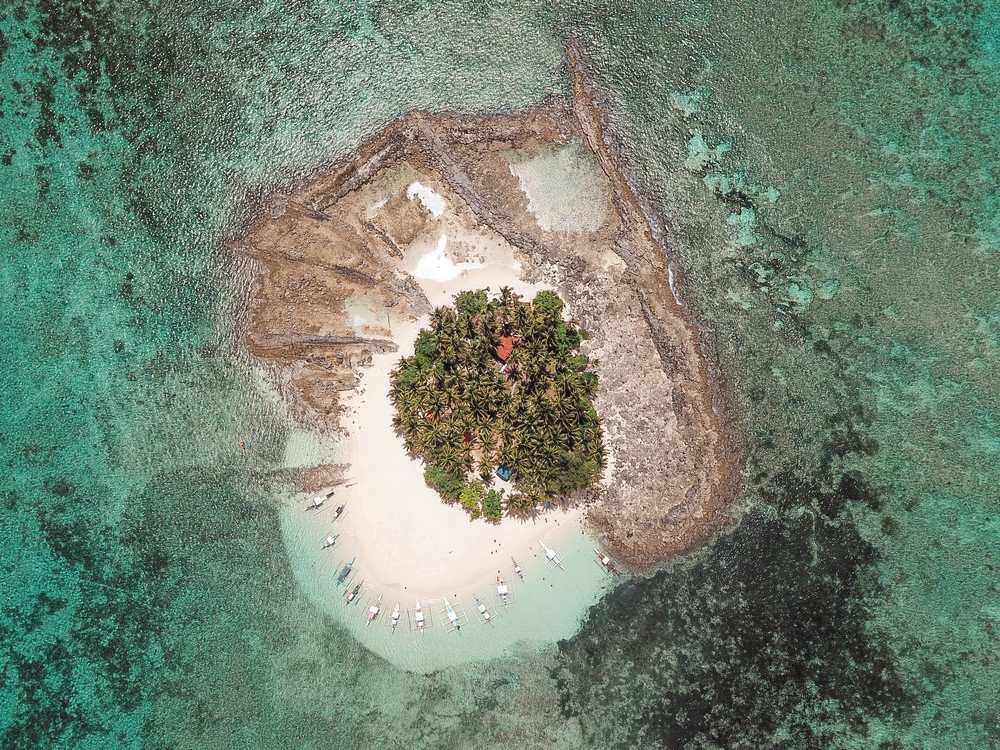
Guyam Island in Siargao
What is the weather like in the Philippines in August?
As we explain in both Best time to travel to the Philippines and When to travel to the Philippines, the Philippines has several distinct climate patterns. The country is commonly divided into six main climate types and, although there are certain broad weather patterns depending on the month, the archipelago has a tropical climate, so the weather can be unpredictable at any time of year.
To keep things simple and give you a very quick overview, much of the Philippines experiences its rainy season in August. This generally runs from June until October or November. Palawan, Luzon and much of the Visayas—including islands such as Bohol, Siquijor and Malapascua—are affected by the Habagat, or southwest monsoon, during these months, bringing more frequent downpours, while tropical depressions, cyclones or typhoons can also develop over the Pacific Ocean.
Can there be typhoons in the Philippines in August? We don’t want to mislead you—yes, it can happen. But in recent years most typhoons have occurred in September and October (the season seems to be shifting later), and they most commonly move from the western Pacific towards northern Luzon; that is, they don’t usually sweep across the whole of the Philippines and, to be clear, it’s rare for them to pass through Palawan. Plus, typhoons can usually be tracked several days in advance, so you’ll usually have time to adjust your itinerary.
Does that mean it will definitely rain if I travel to one of these areas in August? Absolutely not. What’s more, in the south of the country—on islands like Siargao, Dinagat and Camiguin—it’s the dry season, because the seasonal weather pattern is different there.
The rainy season doesn’t mean that it will rain all day, that you’ll get rained on every day of your trip or that the skies will always be overcast. As in many Southeast Asian countries, the rainy season usually brings one or two hours of rain, typically in the late afternoon or evening. That said, there can also be days of continuous rain, and you might also run into a low-pressure area (tropical depression) during your trip, which can complicate things and occasionally lead to flight or ferry cancellations. We’ll talk more about that later.
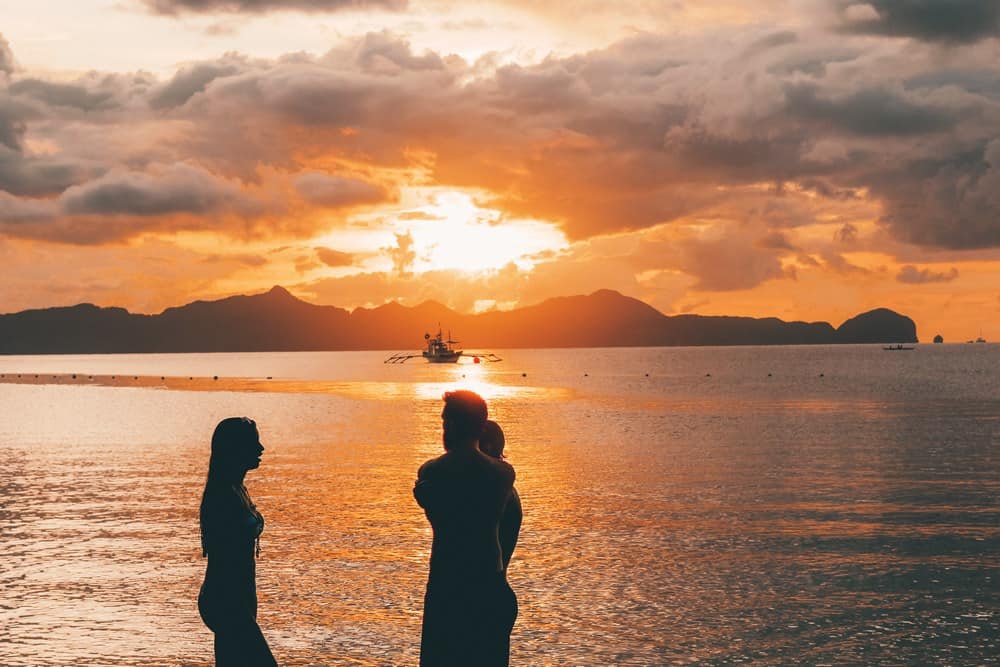
Port Barton in the middle of August
Which parts of the Philippines tend to get less rain in August?
As we mentioned earlier, there are places in the Philippines in August where it’s the dry season. As a general rule, from July to November rainfall tends to be lower in the southeast of the country, particularly in eastern Mindanao. Therefore, if you want to travel to the Philippines in August, you’ll have a good chance of enjoying drier weather on two of our favorite islands: Siargao and Camiguin. In addition, if you want scenery reminiscent of Palawan—on a smaller scale, but beautiful nonetheless—you can go island hopping around the incredible Dinagat Islands, which are relatively easy to reach from Siargao.
Of course, as we’ve warned, we’re talking about a tropical country and this doesn’t mean you won’t get any downpours. It’s simply a general weather pattern, not a guarantee. In fact, on our last visit to Camiguin in November, our guide for Mount Hibok-Hibok in Camiguin told us that, in their experience, the best time to visit the island is in March or April, when it rains less. As you can see, the weather is never entirely predictable.
We’ve been lucky enough to travel and live in the Philippines throughout the year—and unlucky enough to get caught in storms that led to ferry cancellations both in February and in August.
We’d love to assure you that you won’t encounter any rain during your August trip to the Philippines, but no one can predict the weather with complete certainty—and forecasting it is even harder in a tropical climate.
If the thought of rain is making you nervous, check out this 15-day Philippines itinerary in August.

As for temperatures—to sum things up briefly—the Philippines is warm throughout the year, except, of course, in mountainous areas. Average temperatures in August generally range from 26°C to 31°C, so you’re unlikely to feel cold at any point—except when you’re on public transport, where the air conditioning is cranked up.
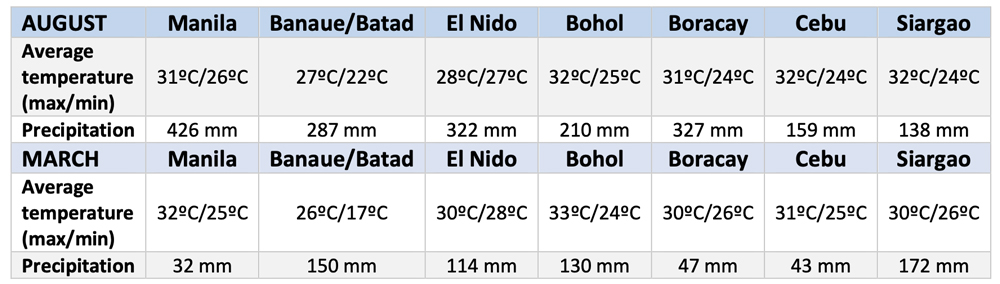
To help you understand the weather in the Philippines in August even better—as far as that’s possible given how changeable the weather is—we’ve made a table comparing temperatures and rainfall in August and March (the height of the Philippines’ hot, dry season) across the country’s main tourist destinations:
What is it like to travel to the Philippines in August—any tips?
We’ve already talked about the possible weather you might encounter, but what is traveling to the Philippines in August like in other respects?
As August falls during the rainy season in much of the country, it is generally considered low season. Unlike times such as Holy Week, Chinese New Year or Christmas, fewer people are traveling, especially Filipinos, and therefore accommodation, international flights to the Philippines and domestic flights within the country tend to be cheaper.
However, that’s not quite the whole story, since more and more international travelers are visiting the Philippines in August, and tourist hotspots like El Nido and Siargao can feel particularly busy at this time of year. In fact, August is one of the busiest months of the year for international visitors to the Philippines. This additional demand also means prices in these destinations do not fall quite as much.
In short, traveling to the Philippines in August is very similar to doing so at other times of year, but accommodation availability is generally better and prices are a little lower.
Which part of the Philippines should you visit? We’ve already seen that, weather-wise, the south and southeast of the Philippines tend to receive less rain in August, particularly on islands like Siargao. So you can plan a trip that includes Siargao, nearby Dinagat and Camiguin, which is also relatively close to Siargao. Bohol, which is relatively close to Camiguin, also tends to have fairly stable weather. For this reason, you’ll see that our two-week Philippines itinerary for August focuses on these three islands.
Palawan in August? With all that in mind, we’re not telling you to skip other islands in the Visayas or rule out Palawan, as the rainy season doesn’t mean it will necessarily rain all day. Many of you ask whether the island-hopping tours in El Nido and Coron run at this time of year and, yes, they generally do. It’s true that occasionally, if the sea is very rough, El Nido’s Tour C or Coron’s Escapade tour may be canceled because they involve longer stretches across open water, but it’s far from a daily occurrence.
Many travelers spend their first week or two in Siargao and Camiguin, then check the weather elsewhere in the country before deciding where to go next. This may mean paying more for flights, but it’s a good compromise that gives you flexibility and peace of mind. As for hotels, you can book many properties with free cancellation on Booking.com, which is what we do, as accommodation in the Philippines doesn’t always offer great value for money.
As for activities, scuba diving is possible throughout the country, and the same goes for snorkeling. It’s not the best time to do the Coron–El Nido expedition, since the sea can be rougher at this time (it’s an open-sea crossing), but some companies still operate. It’s not the ideal time to visit Balabac either, but if you’re set on going, it may still be possible. Bear in mind that tours may sometimes be suspended for several days, because the southwest monsoon directly affects Balabac, at the southern tip of Palawan, and can make boat trips to more remote islands such as Onok difficult.
As for whale sharks, you may be able to swim with them in Puerto Princesa in August. You can read more about it here: Where to swim with whale sharks in the Philippines.
Of course, if you want to surf in Siargao, you should find plenty of opportunities. The best spot will depend on the conditions that day, but there are plenty to choose from. Siargao is also buzzing with international travelers in August, and you’ll find parties almost every day, if that’s your thing.
Finally, it’s not the best time to visit the Cordillera region, particularly around Banaue, Batad and Sagada. It’s not that it will definitely rain on you, but as this is the rainiest time of year in Luzon, landslides sometimes occur in the mountains and getting around and hiking can be more difficult. It’s also not the best time to visit Mount Pinatubo, as tours are sometimes cancelled for the same reason; and, unfortunately, Mount Mayon, near Legazpi, is more likely to be shrouded in cloud.
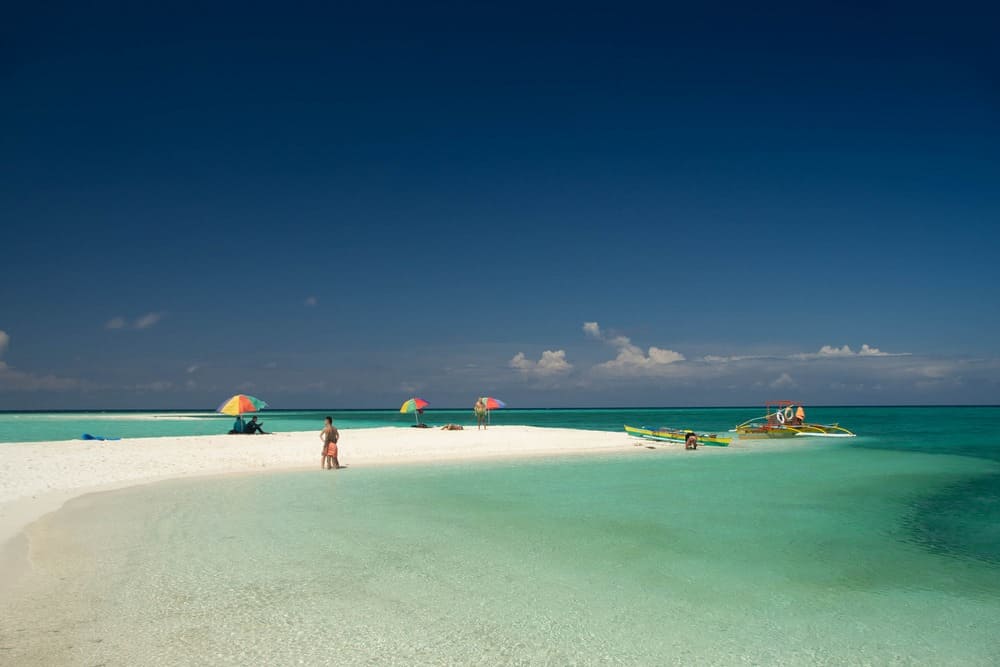
White Island, Camiguin, in August
Tips for traveling to the Philippines in August
We get a lot of questions about the weather or whether it’s even worth traveling to the Philippines in August. We firmly believe that traveling to the Philippines is a good idea at any time of year but—as with any trip—staying informed and planning carefully are key. So here are some tips we consider essential if you’re thinking about traveling to the Philippines in August:
- Don’t obsess over the weather. We’ve spent many Augusts here (both traveling and living) and, honestly, it’s not as dramatic as people make it out to be. Usually, it rains for a while in the afternoon and that’s it.
- Plan wisely and put together an itinerary that includes islands like Camiguin, Dinagat and Siargao. As we’ve mentioned, the weather tends to be better there in August—and they’re gorgeous. Don’t get fixated on just one destination: not everything in the Philippines is Palawan or Boracay. That said, WE’RE NOT TELLING YOU TO EXCLUDE PALAWAN. The fact that it’s the rainy season there doesn’t mean you’ll encounter constant rain; we visit these areas too, and usually have a great experience.
- If you’re particularly keen to visit Palawan or Coron, you can leave that part of the trip for the end and assess the conditions once you’re there.
- Don’t make your trip too short. We may sound like a broken record, but traveling around the Philippines for just a few days can be tricky because transfers are long, and traveling to the Philippines in August can make things a little more complicated. During periods of heavy rain or strong winds, flight and ferry delays or cancellations aren’t unusual, so it’s essential to build some flexibility into your itinerary. We wouldn’t recommend a trip of fewer than 15 days and we’d spend at least half the trip in the south of the country. Think of it this way: five rainy days will have a much bigger impact on a 10-day trip than on a 20-day one, right?
- Don’t plan your trip to the Philippines in August down to the last detail. Along the same lines, try not to cram in too many places and consider allowing more time for transfers—especially if you have several flight or ferry connections.
- If you’re traveling for 20 days or more, keep your itinerary flexible. If you’d rather not decide everything as you go (totally understandable), try booking hotels with free cancellation until shortly before your arrival date. On Booking.com, our favorite booking platform, you’ll be able to see which hotels offer free cancellation and until when.
- With this in mind, we believe it’s worth booking accommodation in places like Siargao, Coron and El Nido, which are in high demand and where accommodation often offers poor value for money. Unless you’re traveling on a very tight budget and don’t mind sleeping in very basic places, we recommend booking your accommodation in these destinations in advance. In Where to stay in Siargao, Where to stay in El Nido and Where to stay in Coron you’ll find our personal hotel recommendations.
- Check PAGASA’s satellite images regularly. There’s no need to monitor them constantly, but start checking them about a week before your trip and continue doing so while you travel around the Philippines in August. Typhoons don’t usually develop without warning—they can be tracked several days in advance and forecasters can usually estimate their likely path. This will help you adjust your itinerary and head to another area of the country with better weather. The Philippines is huge! Luckily for you, we’re weather nerds and we regularly share weather updates on our social media channels, especially on our WhatsApp channel. Since PAGASA can be a bit hard to understand, alongside our updates, we highly recommend the Windy app (the red one), which is easier to use and generally reliable for short-term forecasts—just remember that forecasts are most reliable within the next three or four days. The weather is very changeable.
- Don’t worry if a flight in the Philippines gets canceled or changed. Airlines will usually rebook you on an alternative flight. That’s why it’s essential to travel with reliable travel insurance for the Philippines, like the policy we use ourselves.
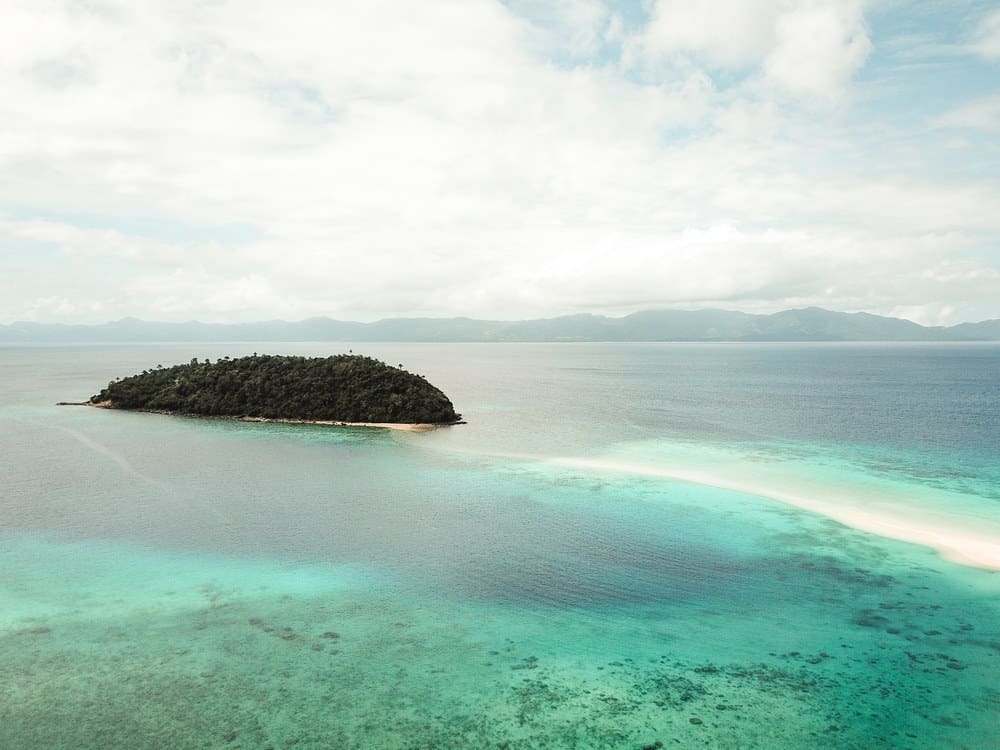
Romblon
Frequently asked questions about traveling to the Philippines in August
We’ve shared plenty of information about traveling to the Philippines in August, based on our own experience, but below we want to answer the most common questions travelers have about this time of year:
Is it possible to travel to the Philippines in August?
Absolutely! In fact, some parts of the country generally experience drier weather.
What’s the weather like in the Philippines in August?
The weather is more unpredictable in the north, west and central parts of the country, but in the south/southeast (islands like Siargao or Camiguin) it’s generally the drier season. Even in the wetter parts of the country, this doesn’t mean it will rain all day; rather, you’ll get showers, especially in the afternoon and/or evening. Sea conditions may be rougher in exposed areas and some activities, such as multi-day expeditions, may be canceled, but standard island-hopping tours usually operate as normal.
How much rain is there in the Philippines in August?
It’s impossible to say how much rain there will be. It’s the rainy season in Luzon, Western Visayas and Palawan, but that doesn’t mean it will rain all day or that you’ll encounter a typhoon.
Can you travel to Palawan in August?
Of course—you can. We’ve traveled extensively around Palawan in August without experiencing any major issues. The rainy season doesn’t necessarily mean you’ll encounter constant rain.
Which parts of the Philippines get the least rain in August?
The south and southeast of the country generally experience drier weather at this time of year. This includes destinations such as Siargao, Dinagat, Leyte and Camiguin. Bohol, which is relatively close to Camiguin, also tends to experience fairly stable weather.
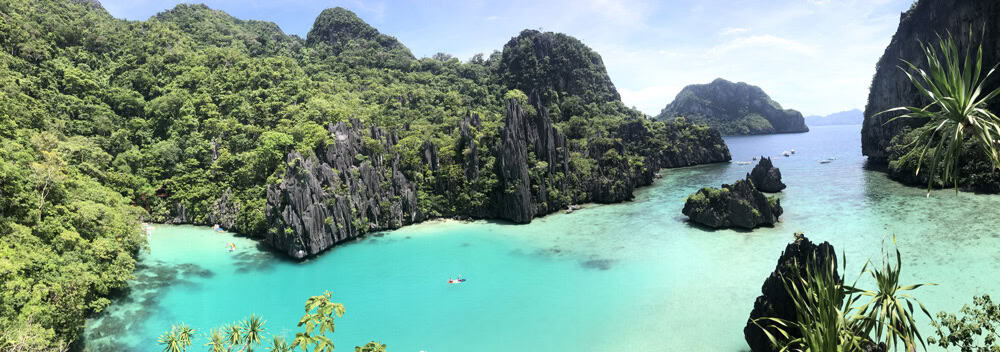
El Nido in August
We’ve also created guides to visiting the Philippines in other months, in case you’re considering traveling at a different time:
Traveling to the Philippines in July
Traveling to the Philippines in September
Traveling to the Philippines in October
The Philippines at Easter (Holy Week)
And if we’ve convinced you (we hope so!), you can start planning your trip with these two guides:
How to plan a trip to the Philippines
Things to do in the Philippines
Do you still have questions about traveling to the Philippines in August? Tell us in the comments and we’ll reply as soon as possible.