Is one of your goals on this trip to the Philippines to go snorkeling and see thousands of colorful little fish, turtles, mantas and (yes, indeed) the beautiful whale shark? You’ve come to the right place because, after many years exploring the country’s reefs, here we’re going to tell you the best places to snorkel in the Philippines.
You already know we’re in love with diving in the Philippines and, not for nothing, we both got our diving license here many years ago. However, we’re aware of two things: 1) diving is cumbersome and, it must be said, expensive; and 2) not everyone wants to or can dive. So, on every trip to the Philippines, we don’t hesitate to pack a mask and a snorkel to check what’s moving under the water by snorkeling in the Philippines on our own.
Tips for snorkeling in the Philippines
As we tell you in Things to do in the Philippines, there are tons of places to snorkel on the islands without the need to join any kind of tour. You’ll find beaches where, as soon as you get into the water and swim a few meters, there’s an enormous amount of marine life, but we think it’s important to remind you of a few rules so that in a few months and, above all, in many years everything remains the same.
Since we’d love many people to keep enjoying these wonders in the Philippines, we kindly ask you to be a responsible traveler and keep these tips in mind:
- In the sea you only look and don’t touch: please don’t touch the fish, turtles, starfish… Touching them or getting too close not only causes them stress, but you’ll also be removing their protective layer and, therefore, making them more vulnerable to parasites or infections.
- Do not take starfish out of the water: we’ve said it many times, but we still see photos everywhere. Please, even if everyone else is doing it, starfish need only a few seconds out of the sea to die. Likewise, touching them isn’t OK and you have no need to do it.
- Do not touch or step on the coral: reefs are alive and are key to the ocean’s survival. They take years to grow just a few centimeters, but a single fin kick can easily destroy them, leaving many marine species without a home. All this without counting that your skin can react very badly to contact with coral.
- Do not feed the fish: it may sound harmless, but feeding fish actually does more harm than good. If you see someone, even a guide, feeding bread to the fish, let them know this isn’t right.
- Use biodegradable sunscreens or UV-protection shirts: believe it or not, the chemicals in regular sunscreens harm coral and can also cause diseases in marine animals like turtles. Look for reef‑safe products; in the Philippines there’s even a brand called Human Heart Nature that’s totally respectful.
- Do not support irresponsible tourism practices such as swimming with whale sharks in Oslob or Lila (Bohol), where this endangered species is fed every day, with the serious problems that entails. Don’t support the agencies and hotels that do it either; do your bit and explain how little of a favor they’re doing nature. In Swimming with the whale shark in the Philippines you have all the information.
- Make a small effort in your day‑to‑day and reduce single‑use plastics. People may look at you funny, since in the Philippines it’s not common to ask, for example, for a smoothie without a straw, but, little by little, if we all explain the why behind our actions, perhaps we can keep enjoying our sea for much longer. Likewise, a stainless steel bottle will be your great ally. Not only will you be able to refill it with purified water in lots of places, but many keep water nicely cool for 8 hours.
- Please, don’t consume certain fish species in the Philippines, especially parrotfish. It’s sold in lots of places, but you have no idea how harmful its consumption is for the reefs and how it also damages the country’s beaches. The same goes if you see sharks or manta rays; they’re seen less often, but, unfortunately, they are consumed.
On the other hand, you can snorkel in the Philippines all year round and, in addition, the water temperature is always around 26ºC-28ºC, so you’ll hardly feel cold.
As for mask rental, you’ll find it in most destinations, but for hygiene and because of the usual condition of the gear, we advise you to bring your own snorkeling set. As for fins, due to their bulk, we don’t usually bring them and we manage just fine without. Even so, if you want to rent them, that’s usually feasible. Expect that renting a mask with snorkel runs about 100 pesos.
By the way, better safe than sorry: keep in mind that snorkeling falls under adventure sports for travel insurance. It would be unlikely for something to happen to you, but not impossible. Therefore, we advise not only that you travel with a good travel insurance for the Philippines, but also that you make sure you have coverage for snorkeling in the Philippines. We always travel with IATI Mochilero, which covers snorkeling and diving down to 40 meters.

Where to see sharks and turtles in the Philippines
Before we start talking about the best islands for snorkeling in the Philippines, we want to answer two questions you ask us very often: where can I swim with sharks in the Philippines? and where to see turtles in the Philippines? Without going on too long, here are our answers:
- Sharks: unfortunately, they aren’t that common in the Philippines, but you can regularly see reef sharks (small ones, usually blacktips or whitetips) at the Tulapos sanctuary (Siquijor), in front of the Tepanee hotel in Malapascua and, farther afield, at Apo Reef (not to be confused with Apo Island).
- Whale sharks: there are 3 places in the Philippines to see them ethically (far from the barbarity of Oslob): in Leyte (either in Pintuyan or Liloan or on an excursion from Padre Burgos), in Puerto Princesa and in Donsol. All of this is explained in much more detail in our guide on where to swim with whale sharks in the Philippines, where we also explain the sighting seasons in each of these places.
- Turtles: this is easier. The best places to see turtles in the Philippines are Balicasag (Bohol), Pamilacan (Bohol), Apo Island (you can go from Siquijor) and Moalboal. Other places where they are frequently seen are Siquijor Island itself at some reefs, Mantigue Island (Camiguin), Siete Pecados (Coron), Onok Island (Balabac) and Port Barton (on the island‑hopping tours).
Best islands for snorkeling in the Philippines
Let’s get to it—here we tell you what we consider the best places to go snorkeling in the Philippines. Obviously, with more than 7,600 islands (according to the latest count), there are many, many more places than those we mention here, and there’s nothing like taking your own mask and snorkel and, by chance, discovering a special corner. Still, this is a selection of those that tend to offer the richest marine life without making things complicated.
1. Moalboal (Cebu)
Cebu is an island that, for many, is just a stopover; however, there’s a very powerful reason to stay at least a couple of days: Moalboal. This small town to the south brings together some of the best snorkeling spots in the Philippines.
The most spectacular one is right in Pagnasama, in front of all the restaurants. If you go down the stairs at Pacita’s Beach Resort or the ones next to the famous Chili Bar and put on your mask, it’s very likely you’ll start freaking out when you run into a massive school of sardines. Millions of these fish swimming peacefully, moving as if they were a single wave and shifting together as you swim along. It’s hypnotic!
Not only that, when the tide is high it’s very common to find beautiful turtles placidly feeding in the area. And if you hit the jackpot, you could also see whale sharks—imagine!
An outstanding snorkeling in the Philippines experience for the modest price of 0 pesos. If you don’t have a mask, at Cebu Dive Center you can rent them for about 100 pesos and store your things there. By the way, we’ve never needed fins, but you can also rent them there if you feel like it.
On the other hand, there are also other snorkeling spots in Moalboal, such as the one in front of Herbs Guest House (which is among our recommendations on where to stay in Moalboal), where it’s also common to see turtles, and all those around Pescador Island. This is an island a few kilometers off Moalboal’s coast, very well‑known for diving, but it also welcomes people who want to snorkel. So, if you feel like it, you can also book a tour (around 500 pesos per person) that will take you to Pescador Island and other snorkeling spots in the Philippines near Pagnasama.
What’s more, Moalboal isn’t only a snorkeling paradise in the Philippines; you can also combine this visit with canyoneering at the fabulous Kawasan Falls or visit other waterfalls in the Badian area.
If you only have one day to do all this from Cebu City, you can book a pretty intense, well‑priced tour here.
Take a look at the Moalboal Guide and discover everything about this place: what to do, how to get there and where to stay. You’ll find even more specific info in Where to snorkel in Moalboal.
By the way, just as we tell you the good, we tell you the bad and, regarding snorkeling in Moalboal, we have to tell you two things:
- In 2021 a pretty strong typhoon swept through the area and damaged the reefs a lot. They’ve recovered somewhat, but not to their former glory. That said, it’s still worth it.
- Moalboal is no secret and there are lots of tours from Cebu catering to Asian tourism, which causes the area where the sardines and turtles are to get crowded. In addition, the way they snorkel is lamentable: many people at once and, in most cases, they try (and often manage) to touch the turtles.

2. Balicasag Island (Bohol)
One of the best‑known places to snorkel in the Philippines is Balicasag Island. This beautiful island about 40 minutes off the coast of Panglao, Bohol’s annexed island, has a marine sanctuary with gorgeous coral and, above all, spectacular marine life, among which the huge population of green and hawksbill turtles stands out.
Balicasag is truly a paradise for divers, but also for those who only want to snorkel. So we strongly recommend you go to Balicasag if you’re spending a few days discovering everything there is to do in Bohol.
How to get to Balicasag?
On Alona Beach you’ll find lots of people offering you tours that include dolphin watching and snorkeling in Balicasag. They used to stop at Virgin Island, but the island had to close due to a regrettable incident of some tourists who “engraved” their names on coral. We agree it sounds great, but the tour is usually a bit of a mess for several reasons:
- More than dolphin watching, it tends to be a dolphin chase at 6 in the morning. We don’t think it’s a respectful activity given the huge number of boats.
- You can no longer go to Virgin Island which, it must also be said, was anything but virgin, as they filled it with food stalls.
- You spend very little time in Balicasag, which was the main goal of this excursion.
Therefore, what we advise are 2 options:
- Hire a private tour to Balicasag and make sure you’ll have plenty of time to snorkel. This is very important—insist and ask whether the fees are included. They will charge you 250 pesos for each snorkeling spot you visit and normally you visit 2. For us, spending at least a couple of hours in Balicasag would be more than fine, but it’s a strictly personal decision. There isn’t much on the island, but you could also have a drink and enjoy a while on the beach. Prices are usually around 2,500–3,000 pesos for 4 people.
- Our recommendation: go to a dive center and ask if they allow you to go just to snorkel. Since they go with people who dive, it’s rare to spend less than 2.5–3 hours and you’ll be able to move at your own pace.
Take a look at our article Snorkeling excursion in Balicasag and the Bohol Guide, where you’ll find the most complete information that exists about this huge Philippine island.
By the way, Balicasag isn’t exactly a role model for responsible tourism. Unfortunately, there are lots of people, regulation is almost non‑existent and, as in Moalboal, you can see people harassing turtles. It’s important that you’re aware of this and that you let your guide know. If you’re a certified diver, the experience is completely different, so we recommend prioritizing a few dives over snorkeling—you’ll enjoy it a thousand times more.

3. Around Bohol
Don’t leave Bohol so fast! You can also find spots to snorkel in the Philippines around the island, for example:
- The Napaling area: going in where the Almira Diving Resort is, you’ll find a spectacular place to snorkel, where there’s usually a huge school of sardines and the occasional visit from a whale shark.
- Cabilao Island: north of Tagbilaran lies this small island with very basic services and geared toward divers, but if you want total peace and good snorkeling, it’s a good alternative to spend a couple of days. For sleeping we recommend the Polaris Beach and Dive Resort. To get there, you can take a bus or jeepney from Tagbilaran to Loon and from there a tricycle to Monpoc (Sandigan Island). Afterwards you’ll have to take a small boat to Cabilao, which costs about 40 pesos. There are also direct boats from Argao (south of Cebu) every Tuesday and Saturday at 13:00. — Heads up, Cabilao’s reefs were badly damaged by a 2021 typhoon.
- Pamilacan Island: stay on “the island where the mantas rest” and get ready to disconnect from everything and focus on enjoying the sea. Pamilacan is an incredible place to snorkel in the Philippines. You can go on a day trip from anywhere in Bohol (including Panglao) or, if you want to enjoy a super‑quiet spot, do as we did and stay at Liwayway Sa Bohol (basic but lovely), and right on the shore you’ll enjoy beautiful coral, sea snakes, turtles and, with luck, mantas and whale sharks. To get there, take a bus from Tagbilaran to Baclayon. Then you’ll have to negotiate the price to go to the island; the normal thing is to pay about 1,500 pesos (3,000 round trip) and split it among the people in your group. Read all about it in What to do in Pamilacan.
But it doesn’t end here. You have even more options, which we tell you about in Best places to snorkel in Bohol and Panglao.

4. Apo Island (Negros)
If you only had time to visit one place to snorkel in the Philippines, we would strongly recommend going to Apo Island.
This tiny island between huge Negros and mystical Siquijor is a snorkeling paradise in the Philippines and a great place to spend a couple of days simply enjoying the sea. In fact, there isn’t much more to do in Apo than diving, snorkeling or simply going for a walk and seeing how its inhabitants go about their day‑to‑day lives. There aren’t very pretty beaches in Apo, but we promise that what’s under the sea is more than worth it. No wonder we’ve been 3 times and the last time we stayed there for a week.
You can read all about it in our Apo Island Guide.
How to get there?
To get to this fabulous snorkeling spot in the Philippines you have 4 options:
- Spend at least one night on Apo: you can easily get there from Dumaguete by taking a bus or jeepney to Zamboanguita. The ride to Malatapay takes just 30–40 minutes and costs between 33 and 50 pesos, depending on whether it has air-conditioning or not. Then you’ll need to walk a bit to the port and take the bangka to Apo. The ticket costs 300 pesos. They’re not super frequent and there’s no fixed schedule. You can also charter a boat for 2,000–3,000 pesos depending on the size. Heads up: upon arriving in Apo you must pay a 100‑peso fee.
- Do the day trip from Dumaguete: some hotels and hostels (not many) organize it for about 1,500 pesos per person
- Do the day trip from any of the resorts in the Dauin area: this is an area south of Dumaguete that has loads of dive resorts, as it’s one of the best places to dive in the Philippines. At places like Bongo Bongo Divers you can join this kind of tour.
- Do the day trip from Siquijor: it’s organized by the Coco Grove hotel and costs 2,750 pesos per person. Keep in mind they only charter the boat if there are at least 12–15 people, so it’s best to ask them as soon as possible if you plan to snorkel in Apo on your trip. In the Siquijor Guide you’ll find more information about the island.
You can find everything in detail in How to get to Apo Island.
5. Mantigue Island (Camiguin)
You already know we’re in love with Camiguin, and one of the reasons is that there are tons of opportunities to enjoy spectacular snorkeling in the Philippines. One of the best places to put on your mask and snorkel is a nearby island called Mantigue. Here you’ll find some of the best snorkeling spots in the Philippines, as there’s both coral in very good condition and loads of marine life, among which we highlight the beautiful turtles.
While Mantigue may not have a turtle population as large as Balicasag or Apo Island, we think it’s a must. You can rent your snorkeling gear right there for 150 pesos.
In the Camiguin Guide you’ll find all the information on how to get to Mantigue and the best places to stay in Camiguin.

6. Camiguin
Camiguin itself is also surrounded by very interesting reefs, making it one of the best places to snorkel in the Philippines.
If you’re a fan of the sport, don’t miss these snorkeling destinations in Camiguin:
- Giant Clam Sanctuary: a massive hatchery of giant clams. — unfortunately, it’s still closed, but you can find a few clams right in front of the beach next to the entrance, which is open.
- Blue Lagoon: corals and lots of marine life. It was somewhat damaged by a typhoon, but little by little it’s improving.
- Sunken Cemetery: an old cemetery that was flooded by several volcanic eruptions. There are some giant clams here.
Find more information about snorkeling in Camiguin in our Camiguin Guide.
7. Port Barton (Palawan)
The island hopping tours from our favorite town in Palawan, Port Barton, give you the chance to visit some of the best snorkeling spots in the Philippines. In addition to visiting gorgeous reefs, Tour A always includes the option to visit ‘Turtle Point’, which is usually a spot near German Island or Inaladelan Island inhabited by a couple of beautiful turtles.
Don’t miss our Port Barton Guide and discover everything you can do in one of our favorite places in the Philippines.

8. Siete Pecados (Coron)
Yes, you often tell us that there aren’t many pretty beaches near Coron and that the most interesting places are on the tours. It’s true, Coron Town itself isn’t very attractive, but if you have at least half a day, we strongly encourage you to head to a place called Siete Pecados.
Although it isn’t especially close to other stops, it’s usually included in the so‑called Ultimate Tour (in Things to do in Coron we talk about this island hopping in detail), but if you’re going to do a private tour, we recommend leaving it separate and dedicating at least a couple of hours to it.
On the other hand, the tours you can do in Coron will take you to several beautiful snorkeling spots, including the Skeleton Wreck, a shipwreck at shallow depth that you can see without needing to dive. Another tour that’s great if you’re after excellent snorkeling is Reefs&Wrecks.
How to get to Siete Pecados?
Since it’s a group of small islets off an area close to Coron Town, our advice is to get there by motorbike (around 500 pesos for a day) or tricycle (about 200 pesos per ride), rent a kayak or a bangka (250 pesos per person) and pay the 100 pesos entrance fee. If you don’t have one, you can rent a mask for 100 pesos per person. Get ready to enjoy snorkeling in the Philippines—last time we even saw turtles.
Take a look at our Coron Guide for more information on this fantastic destination.
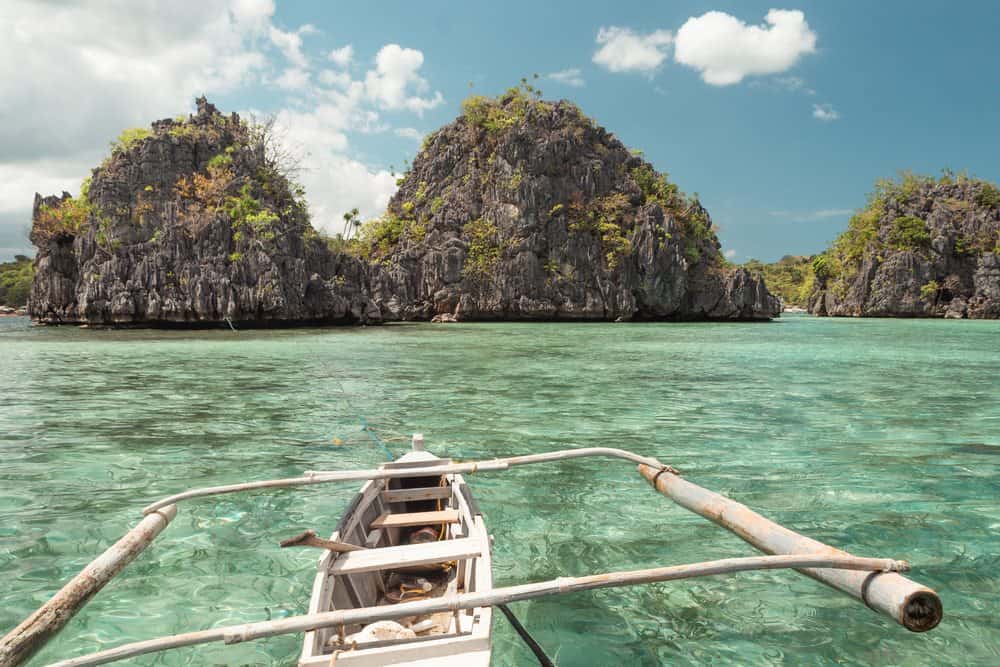
9. Siquijor
We’re often asked: is there an island where I can find pretty beaches and good snorkeling in the Philippines without needing to do a tour? We’ve got the solution: what you’re looking for is Siquijor.
This island in the Visayas has several highly recommended snorkeling spots such as the Tubod marine sanctuary, in front of the Coco Grove hotel, or, a little further south, in the area of the Cliff Garden Hostel. For those who want to explore further, there are also others like Sandugan Marine Sanctuary (in front of Kiwi Dive Resort) or Tulapos Marine Sanctuary. The latter has become especially interesting in recent years and it’s common to see reef sharks, turtles and schools of barracuda.
Read our Siquijor Guide and don’t miss a thing about this wonderful and varied island.
10. Pintuyan/Padre Burgos (Leyte)
We’ve saved the biggest for almost last: snorkeling with whale sharks. In our guide on where to swim with whale sharks in the Philippines you have all the information you need to see this incredible animal responsibly, but among all of them, we recommend opting for Sogod Bay in Leyte.
Whether from Padre Burgos (more expensive but more accessible) or from the town of Pintuyan itself, very close to the marine sanctuary where they’re protected, you’ll be able to see the whale shark up close, without harming them and without crowds, making the experience truly unique.
Remember: to swim with whale sharks in Pintuyan you’ll need to visit the Philippines between November and April, with higher chances from February to April.
Heads up: as we mention in the Pintuyan guide, the 2024–2025 season here was “weird.” The whale sharks stopped appearing around Pintuyan and moved a bit further north, toward Liloan, which isn’t very far either. We don’t know how 2025–2026 will be, but keep it in mind. In any case, we have contacts to try in Liloan, if you need them.
11. Pandan Island (Mindoro)
For those who want to get off the usual route, Pandan Island, just 10 minutes by boat from the Sablayan (Mindoro) port, is an awesome place to snorkel in the Philippines.
There’s a small resort on it, the Pandan Island Resort, which is usually packed (unless you book well in advance), but you can visit during the day and stay overnight in Sablayan for little money, as we did.
Along the shores of Pandan Island it won’t be unusual to find lots of turtles and coral and, best of all, it’s a super‑quiet place where it’s not uncommon to be the only one swimming with them.
By the way, snorkeling and diving excursions depart from Pandan to the spectacular Apo Reef. Although it’s mainly a diving spot, offering the chance to see mantas and hammerhead sharks, you can also go just to snorkel and be amazed by the marine life and visibility.

12. Calauit, Coron (Busuanga)
Back on Busuanga’s coasts, let’s talk about a very special animal: the dugong. It lives in the waters around Busuanga Island, specifically those of a peninsula called Calauit, and the chances of seeing it each day are roughly 90%. Therefore, if you’ve been dreaming about it for a long time, don’t miss the chance to swim alongside it in a respectful way.
We tell you all about it in How to swim with dugongs in Coron.
More places to snorkel in the Philippines that we liked
In addition to everything we’ve told you, we want to share some extra destinations that may not be so well‑known for snorkeling or that are harder to access, but are still worth it for their reefs:
- Malapascua: you surely know it’s an island famous for being almost the only place in the world where sightings of the fabulous thresher shark are guaranteed (and without feeding). You can only see it by diving and therefore with at least an Open Water Diver certification; however, around Malapascua there are several reefs you can visit on a two‑hour snorkeling tour. And then, in front of the Tepanee hotel, there’s a family of resident blacktip sharks. Don’t worry, the ones on the shore are “baby sharks,” which feel very protected there and, therefore, it’s the only place to snorkel with sharks in the Philippines. In any case, everything is super well explained in Things to do in Malapascua.
- Tablas: specifically in front of Binucot Beach you have reefs that no one visits and that are splendid. We’ve even seen turtles here. More information about this island that almost no one visits in Things to do in Tablas.
- Romblon: belonging to the same archipelago as Tablas, it’s, for us, one of the crown jewels and, no matter how much we insist, almost no one goes here… The Agpanabat marine sanctuary blows our minds and you’ll have it all to yourself. You have everything about this island in Things to do in Romblon.
- Dauin: although snorkeling in Apo Island steals the limelight, on Dauin’s own coast (a small town south of Dumaguete) there are several reefs you can swim to, and they’re great. More information in Things to do in Dauin.
- Anilao: it’s not a destination many people usually include in their trips; rather, divers or people living in Manila go for a weekend escape. It’s true that it’s a place mainly geared toward divers (especially those of us who love macro), but there are indeed shore reefs that are very cool.
Map of the best snorkeling spots in the Philippines
To help you plan your trip with a focus on snorkeling, we’ve made this map to give you a sense of the distances between the different places we’ve mentioned:
Even so, keep in mind that getting around in the Philippines is exhausting. It’s more than likely that every time you move from place to place you’ll have to invest almost a day.
Frequently asked questions about snorkeling in the Philippines
To summarize a bit of everything we’ve told you, here we answer the most common questions we receive about snorkeling in the Philippines:
Where to snorkel in the Philippines?
There are tons of interesting places to snorkel in the Philippines; among the best are Balicasag, Pamilacan and Napaling in Bohol; Siquijor; Apo Island; Camiguin; Coron; and Moalboal.
Which island is best for snorkeling in the Philippines?
Hard to choose! Perhaps two of the most convenient destinations for snorkeling in the Philippines without having to rely on tours are Moalboal and Siquijor.
Where can I swim with sharks in the Philippines?
If you want to see reef sharks, you have more chances in Malapascua. If you want to see the whale shark in the Philippines, the best (and most ethical) places to do so are Leyte (from Padre Burgos, Pintuyan or Liloan), Donsol and Puerto Princesa. In the latter case, you’ll have to check the sighting season, as it varies.
Where to see turtles in the Philippines?
They can be seen quite easily in Balicasag, Pamilacan, Moalboal and Apo Island. You also have a good chance of seeing turtles in the Philippines on Mantigue Island (Camiguin), the Port Barton tours and Siete Pecados (Coron).
What’s the best time to snorkel in the Philippines?
You can snorkel in the Philippines all year round.
Did we miss any incredible place to snorkel in the Philippines? Got questions? Tell us in the comments!