If you’ve landed here, it’s because you’re worried about the weather you might get on your trip to the Philippines. What are the best dates, when is the best time to travel to the Philippines, what weather-related problems might I run into, and which places are best avoided during the rainy season? These are the questions we get most often from travelers. The answers can be complicated: in a country with more than 7,000 islands and a tropical climate, it’s hard to give an answer that applies everywhere, which ultimately means it’s always a good time to visit the Philippines.
Still, we’re going to give you all the information on the best time to travel to the Philippines with both the weather and tourist crowds or special events in mind. We’ll also share our own experience, as we’ve been living and traveling around the archipelago since 2010.
What is the best time to travel to the Philippines?
We’ll organize this guide around the weather and the number of tourists you’ll encounter, another factor to keep in mind when planning your trip to the Philippines. We’ll also take a closer look at the activities the archipelago offers and the best time to enjoy them.
Best time to travel to the Philippines: the weather in the Philippines
We’re pretty sure it was those pictures of idyllic Philippine beaches that made you want to visit this country, so we get it: you don’t want to spend all day cooped up in your hotel because of the rain.
The Philippines enjoys a tropical climate, which means the weather is quite changeable and unpredictable. Still, it is possible to talk about better or more desirable times to travel to the Philippines.
So, the dry season in most of the country runs from November-December to May. During this time, Palawan, the Visayas, and Luzon all see less rain, giving you more opportunities to enjoy the Philippines’ spectacular natural surroundings. However, this isn’t a hard-and-fast rule. Downpours are common even in the dry season and, although they don’t usually last long, they cool things down and give the archipelago that lush vegetation we love so much.
During the dry season in the Philippines, the sea tends to be calmer and visibility is better, making it the best time if you’re planning to go diving. You can read much more about this in Diving in the Philippines and Snorkeling in the Philippines.
These dry-season months are undoubtedly the best time to travel to the Philippines.
The dry season can be divided into two distinct periods:
- “Winter”: runs from November/December to February and is the coolest time of year, though certainly not cold. Average daytime temperatures hover around 30°C, except in mountainous areas such as Banaue, where they’re a little lower and nights can be cool. The northeast monsoon (Amihan) dominates during these months and sometimes blows strongly, which can mean rough seas in places like El Nido and Coron, disrupting some tours and the Coron-El Nido expedition.
- The Philippine “summer”: covers March, April, and May. These are the hottest months, when people take time off from school and work, and you’ll also find the most fiestas in the barangays, the local neighborhoods in the Philippines. These are also the driest months, so the chances of rain are even lower.
The rainy season in the Philippines
Meanwhile, the rainy season in the Philippines runs across most of the archipelago from June to October. Keep in mind that this doesn’t mean it will rain all day if you decide to visit the Philippines in June, July, August, September, or October. In most cases, monsoon downpours alternate with sunny spells.
During the rainy season, apart from major holiday periods such as Christmas or other celebrations we’ll cover below, prices for both accommodations and flights drop considerably.
The Mindanao region in the south of the country and the eastern coast of the Visayas (Leyte and Samar) deserve a separate mention. If you’re thinking of including the beautiful islands of Siargao, Dinagat or Camiguin in your trip to the Philippines, bear in mind that their dry season is the opposite of the rest of the country’s. So, if you’re traveling in June, July, August, or September, be sure to include them, as you have a very good chance of enjoying calm, sunny weather. Experts also tend to include Bohol, which is very close to Camiguin, in this group.
So, if you’re feeling a little unsure, we’ve put together this 2-week Philippines itinerary for August, which also works for July and September.

White Beach (Port Barton)
At a glance: where should you go in the Philippines at different times of year?
We’ve already let you in on the best destinations for the time of year you want to visit the Philippines, but here’s a quick overview of the best time to visit each area:
- Northern Luzon (Banaue/Batad, Sagada, Manila, etc.): December to May.
- Central Visayas (Cebu, Malapascua, Bohol, Boracay, Romblon, Siquijor, etc.): December to May.
- Palawan (Coron, El Nido, Port Barton, Balabac, etc.): December to May. This area is generally less affected by typhoons, although it can still rain from June to November. Winds can also be strong from December to February, leading to cancellations of tours that involve more time at sea (Coron’s Escapade tour, El Nido’s Tour C, and the Coron-El Nido expedition in either direction).
- Mindanao (Siargao, Dinagat, Camiguin, etc.): it’s the other way around here, with the dry season running roughly from June to November, which is why we always say you can travel to the Philippines in summer. The rainiest months tend to be December, January, and February. Still, Mindanao is a large island, and its western side follows the same pattern as the regions above, with a dry season from December to May.
That said, as you can see below (on a map from PAGASA, the country’s official weather agency), it’s not all that “simple,” and broad generalizations don’t always apply. Within a single island or group of islands, there are different climate zones, since both the Amihan monsoon winds (which come from the northeast and blow most strongly between November and March) and the Habagat winds (which come from the southwest and blow from June through September or October) affect them to varying degrees.
For example, on Luzon’s eastern coast (where you’ll find Legazpi, Baler, Caramoan or Donsol), the seasons aren’t as clearly defined, and the same goes for Samar and Leyte, so rain can actually fall at any time. Even so, these areas are usually more affected during typhoon season, which runs from June to October.
To complicate things further, the Philippine climate is also heavily influenced by the El Niño and La Niña phenomena. When El Niño dominates, it tends to rain less, even during the rainy season, and droughts can occur. The opposite happens with La Niña. For example, when La Niña dominates, the weather tends to be wetter and the chances of a typhoon or other similar weather events can be higher.

When is typhoon season in the Philippines?
One of the fears travelers have when looking for the best time to travel to the Philippines is the possibility of being affected by a typhoon. One thing that sets this country apart from others in Southeast Asia is the risk of typhoons, cyclones, or tropical storms. Typhoon season in the Philippines usually lasts from July to November, with August theoretically being the month with the highest likelihood.
Don’t panic! This doesn’t mean you’ll definitely experience a typhoon on your trip, but you should keep the risk in mind, and we encourage you to check the weather forecast for the Philippines ahead of time. Where should you look? We think your best bet is to check the satellite imagery from PAGASA, the country’s official weather agency, or follow updates from meteorologist Robert Speta, who always gets it right and explains things in a much more intuitive way.
As for apps, almost none are useful. We only trust Windy (the red one), and it’s best to get the hang of it before you start worrying. The other apps will tell you it’s always raining in the Philippines, whatever the season, even if the forecast only calls for 5 minutes of rain that day. That’s why we recommend not even opening them, to save yourself the stress.
Is your life in danger if a typhoon arrives? Of course not. First, a typhoon’s approximate path is usually known about 6-7 days in advance, giving you time to move elsewhere. Second, unfortunately, the people who are seriously affected are those living in substandard housing, not those staying in regular hotels. Of course, if a typhoon is on its way and you’re staying in a cabin very close to the sea, you should follow the local authorities’ advice and move.
What is common when a typhoon hits the Philippines is flight and boat cancellations. So, if you’re traveling around the country from July to October, consider leaving some flexibility in your trip and, above all, keeping up with the weather. Still, don’t be afraid: in most cases, travelers only experience 3 or 4 days of rain and wind that don’t spoil their whole trip.
For situations like these (and really, for any trip), it’s essential to have good travel insurance for the Philippines. It isn’t just about medical care if you need it: insurance also pays out certain amounts (which vary by policy) when your transportation is canceled, and the insurer may even find you alternative transportation. It’s a way to save yourself stress and money. With our link you get 5% off the insurance we’ve been using in the Philippines for more than 10 years and can wholeheartedly recommend.
Traveling to the Philippines in July?
Traveling to the Philippines in August?
Traveling to the Philippines in September?
Traveling to the Philippines in October?
Traveling to the Philippines in November?
Traveling to the Philippines in December?

Typhoon season in the Philippines runs from June to October
Traveling safely at any time of year
Something we really emphasize because of its enormous importance is having travel insurance, whatever time of year you’re traveling. In Best Travel Insurance for the Philippines we talk about the insurance we’ve been using for years and recommend from personal experience. In addition to medical care, it can cover you in situations where, for example, bad weather causes you to miss your transportation or leads to excessive delays, even covering basic necessities. It’s also a huge safety net in the event of an accident, whether caused by wet roads or storms affecting sea travel.
As a reader of Travel Around the Philippines, you also get a 5% discount if you buy it through this link:

How to check the weather in the Philippines
As we mentioned, many travelers check the weather forecast on websites like AccuWeather, and it shows rain in the Philippines whatever the time of year. But don’t worry: with such changeable weather, in most cases it shows rain even if it’s only for 5 minutes. That’s why we recommend relying above all on the website of PAGASA, the Philippines’ weather agency.
Although PAGASA’s detailed weather reports can be a little hard to understand, checking the satellite imagery is ideal for seeing which areas are affected by rain and where typhoons or tropical storms may be forming. On its Facebook page, it also posts storm track alerts for these weather events, which can help you plan which areas to avoid at least 5 or 7 days in advance.
As we mentioned above, meteorologist Robert Speta is an excellent source of information, as is this Facebook group, which monitors all weather events in the Pacific region.
Another useful app is Windy, which also helps you check the tides and wind conditions. It’s one of the apps we recommend in Best Apps for Traveling to the Philippines.
Best time to travel to the Philippines: high season and low season in the Philippines
One thing to consider when deciding on the best time to go to the Philippines is how many tourists visit the islands. High and low seasons in the archipelago essentially coincide with the rainy season and the dry season.
You’ll find more tourists in the Philippines from January to May, especially domestic travelers. The VERY BUSIEST season is usually March, April, and May, since this is when vacations (remember, it’s summer) and the most important holidays fall. So, if you’re traveling to the Philippines at this time, especially during Chinese New Year (Chinese visitors, along with Koreans, make up the largest groups of international travelers), Holy Week (keep in mind that this is a very religious country and people have days off during this period), and the May long weekend, book both your flights and hotels well in advance.
If you’re planning to spend Christmas in the Philippines, you should know that the Philippines has the largest Catholic population in Asia, so people travel all over the country and hotel and flight prices skyrocket. The same happens if you’re going to travel to the Philippines during Holy Week.
Meanwhile, the cheapest time to travel to the Philippines is from July to November. Hotel prices drop by as much as 30%. Still, keep in mind that many international tourists now visit the islands in July and August, especially the country’s most popular tourist areas, such as El Nido, Siargao, Bohol or Boracay. Other months with moderate prices are January and February, our favorites, since the weather is usually good and there are fewer people.
If you’re worried about your budget, take a look at How Much Does It Cost to Travel to the Philippines?
Traveling to the Philippines in January
Traveling to the Philippines in February

In Dinagat, for example, the dry season runs from May to October
Best time to visit the Philippines depending on what you want to do
Now you know what the weather is like in the Philippines, which islands are best at different times of year, and when high and low season fall, so you can find fewer crowds at popular spots or pick the cheapest time to go. But we’d be leaving something out if we didn’t tell you the best time for different activities.
1. Best time for beaches and island-hopping tours or expeditions
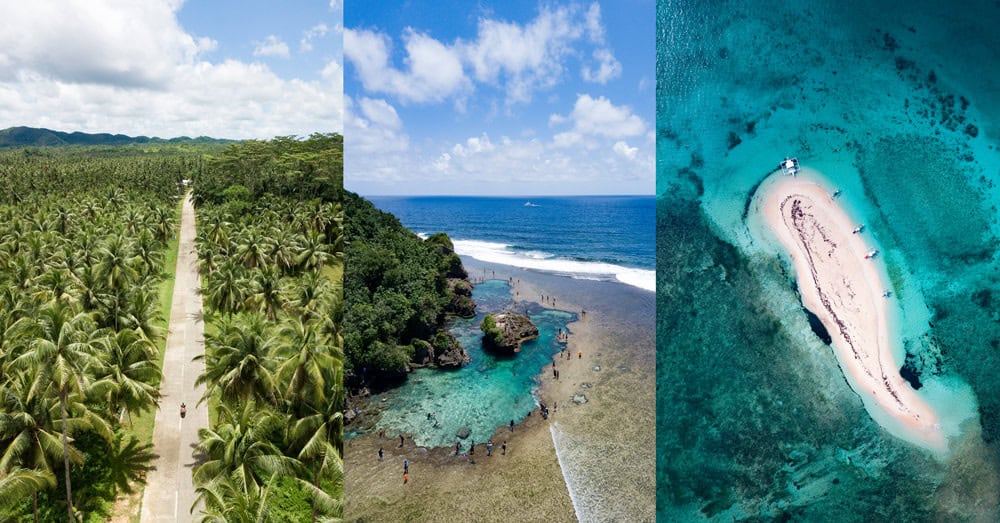
Although there are beautiful beaches all over the country, if you want to see its most iconic ones (El Nido, Coron…), it’s better to come between December and May, when you have a better chance of less rain and calmer seas. To narrow it down even further, March to May tends to bring the best weather and lighter winds, so cancellations are rare for island hopping in the Philippines.
Calm seas are even more important for boat expeditions lasting several days. That’s why, for the El Nido-Coron expedition (which lasts between 3 and 4 days) and the tour of Balabac (also 3-4 days), March to May tends to be best. Does that mean they don’t run at other times? Not at all: you can enjoy both experiences year-round.
Keep in mind that May to October is a great time to visit other beautiful beaches, such as those on Siargao or Dinagat. And, as we’ve mentioned, just because it’s the rainy season elsewhere doesn’t mean it will rain all day or every day. The chances are higher than in the dry season, but that doesn’t mean the weather will be bad.
2. Best time for diving and snorkeling
For diving in the Philippines you want calm seas and good visibility, right? The best time depends on the area, but to sum it up, we’d say December-May is the top choice. Visibility tends to be best from March to May.
For specific spots like Apo Reef and Tubbataha, though, you need to be more precise, because getting there involves more time at sea and trips don’t run year-round. Liveaboards in Tubbataha only operate from mid-March to mid-June. For Apo Reef, the season usually runs from October to June.
For snorkeling in the Philippines we’d say the same: the best time is from December to May. Still, since you snorkel close to shore, the timing isn’t as important as it is for diving, as conditions tend to be good year-round.
3. Best time to see whale sharks
If one of your dreams is to swim with whale sharks in the Philippines, you need to pay close attention to the season, since they’re migratory animals. To sum it up:
- October to May: Pintuyan.
- December to May (best between February and May): Donsol.
- April to October: Puerto Princesa.
Of course, we’re only talking about ethical places where they aren’t fed.
4. Best time for festivals
Maybe you’re less concerned about the weather or tourist crowds and more interested in exploring the archipelago’s cultural side. In that case, you’ll want to check the dates of the best festivals in the Philippines. In our view, Cebu’s Sinulog (January), Kalibo’s Ati-Atihan (January), and Camiguin’s Lanzones Festival (October) are the most spectacular. Keep them in mind when deciding when to travel to the Philippines and work them into your itinerary.
5. Best time to surf in the Philippines
Looking to go surfing in the Philippines? Given how far this archipelago stretches and everything we’ve covered, it won’t surprise you that the best time to catch waves depends on the area.
Still, here’s a very brief overview:
- West coast: from December through mid-February, the monsoon sends the swell toward the southern part of the China Sea, making spots in western Luzon and western Palawan better.
- East coast: the waves are said to be better from August to March, with October and November being the best months. Keep in mind that the best time for Siargao tends to be mid-September to mid-October, which is also when its biggest competition takes place.
6. Best time to go hiking in the Philippines
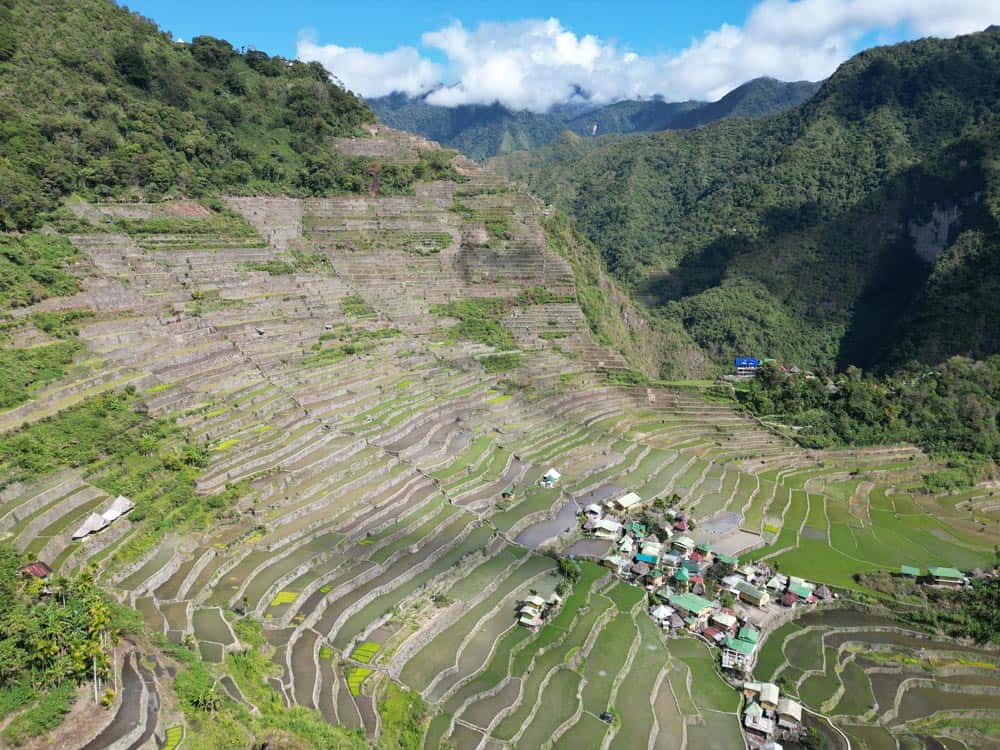
Although the vegetation looks lusher during the rainy season, the dry season is a better choice because the terrain is easier to navigate and there’s less chance of landslides. For us, the best hiking destinations are Banaue, Bontoc, and Sagada, so the best time to visit them is from December to May.
If you’re especially keen to climb volcanoes, things are different, since they’re scattered across the country. As a general rule, use the time frame we’ve outlined.
7. Best time for city sightseeing
To be completely honest, apart from Vigan and certain parts of Manila, such as Intramuros, city sightseeing isn’t interesting enough to make it your main consideration when choosing the time of year. Still, if you want less rain, December-May is the best time to stroll around the cities.
So, what is the best time to travel to the Philippines?
As you can see, the answer is a little more complicated, but if we had to commit, we’d say that the best time to travel to the Philippines is February and March. Visiting at this time gives you a better chance of enjoying clear skies, plenty of sunshine, calm seas, and better visibility. And since these aren’t peak tourism months, you can also enjoy moderate prices and quieter tourist spots. We also love the beginning of the year, so take a look at Traveling to the Philippines in January, The Philippines in February or Traveling to the Philippines in March and let us win you over.
If clear skies and calm seas are an absolute must, regardless of price, focus on mid-March to mid-May. It’s the height of the Philippine summer, the monsoons are calm, and the risk of weather events such as typhoons or low-pressure areas is therefore almost zero. Take a look at Traveling to the Philippines in April and Traveling to the Philippines in May.
Still, we’re absolutely convinced that any month is a great month to travel to the Philippines. Even in the middle of July or August, when people worry the most, you can enjoy areas where the dry season is in full swing, such as famous Siargao and the lesser-known but equally beautiful Camiguin. Go for it and discover the Philippines as soon as you can!
Meanwhile, in When Should You Travel to the Philippines? we explain what the weather is like month by month and share even more information on the topic. And if you’re thinking of traveling in summer, don’t miss our dedicated posts on Traveling to the Philippines in July and Traveling to the Philippines in August.
Frequently asked questions about the best time to travel to the Philippines
To round things out, here are our answers to travelers’ most frequently asked questions about when to travel to the Philippines:
What is the best time to visit the Philippines?
You can travel to the Philippines at any time, since the archipelago has different climate zones. That said, if you want to visit more areas during their dry season, the best months are December to May. March to May is the height of the Philippine summer, which means drier weather and less rain.
When is typhoon season in the Philippines?
It runs roughly from July to October. In recent years, September and October have seen the most weather events of this kind.
When is monsoon season in the Philippines?
The first thing you need to know is that monsoons are winds that dominate the Philippine climate for several months each year, and just because they’re the prevailing winds doesn’t mean it will definitely rain. That said, Habagat, the southwest monsoon, is generally said to arrive in mid-May or early June and stay until September or October, bringing more rain. From November to April, Amihan, the northeast monsoon, usually blows, bringing cooler and generally drier weather.
What is the worst time to travel to the Philippines?
We don’t think there’s a worst time, but if you can avoid September and October, that would be better. We’re also not particularly fond of periods like Holy Week or Christmas, as there are more people and prices are higher.
Can you travel to the Philippines in July or August?
Of course you can: it’s entirely doable. Just because it’s the rainy season doesn’t mean it will rain all the time. What’s more, it’s the dry season in the south of the country. That means you can visit destinations such as Siargao, Dinagat, or Camiguin, where it’s the dry season.
Do you have any questions about the best time to visit the Philippines? We’d love to answer them in the comments.