
Philippines TraveL GUIDE
If you’re planning a trip to the Philippines and don’t know where to start, you’ve come to the right place! In this Philippines Travel Guide, you’ll find all the essential information you need to plan your independent trip to the country of 7,641 islands. After exploring the Philippines many times, we’ve organized everything you need to know into different sections. Each section includes practical information and also links to in-depth articles on the topic. Whether you’re looking for pre-trip planning tips or ideas on things to do in the Philippines once you’re there, you’ll find it all here.
VISA – FLIGHTS TO THE PHILIPPINES – TRAVEL INSURANCE – VACCINES – IS IT SAFE? – WEATHER – LUGGAGE
TRANSPORTATION – MONEY – ACCOMMODATION – FOOD – LANGUAGE – CONSULTING – THINGS TO DO IN THE PHILIPPINES

Guide to traveling to the Philippines
1. Visa for the Philippines
Visa requirements are an important part of planning your trip to the Philippines, so of course we had to include them in this complete Philippines guide. If you’re staying in the country for less than 30 days, you won’t need to worry at all. As we explain in our guide to the Visa for the Philippines, once you land in the Philippines, your passport will be stamped and you’ll be allowed to stay for 30 days. This visa is free.
If you plan to spend longer exploring the country, you’ll need to apply for a Philippines visa extension. There are different ways to do this. In some cases, it’s possible to arrange it before your trip and avoid having to look for immigration offices while you’re traveling. Applying for the extension directly in the Philippines is slightly more expensive, but it only requires one visit and can usually be sorted in under half an hour. You can also apply online.
What’s more, if you’re already thinking about extending your stay when you land in the country, you can extend your Philippines visa right at the airport before collecting your luggage. In this case you’ll have to pay 4,130 pesos for 59 days.
DO YOU LIKE OUR CONTENT? Help us keep the site alive.
Keeping this site up to date —from researching routes, testing accommodations and writing each guide
to answering hundreds of your questions every day— takes time, energy, and more coffee than we’d like to admit.
If you find any of our tips useful and you’re thinking about getting discounted travel insurance,
booking a hotel, booking your flights, using Remitly, etc., we’d really appreciate it if you booked through our links.
- You pay exactly the same (sometimes even less thanks to our discounts).
- We receive a small commission, which we reinvest in keeping the site running,
researching, and publishing free guides. - You get the same price, we can keep creating independent content,
and everybody wins.
Thanks for supporting this project and for joining us as we explore every corner of the Philippines.
2. Cheap flights to the Philippines
If you know a few basic tricks, it won’t be hard to find cheap flights to the Philippines. Although it’s usually a bit more expensive than flying to major hubs such as Kuala Lumpur, Singapore, Bangkok or Hong Kong, it is possible to find cheap flights to the Philippines from around $450 round-trip. To do so, we recommend being flexible with your dates and using tools like “Whole month” and “Cheapest month” in the Skyscanner flight search engine to find the best deals. Using the cheaper airports we mentioned above as stopovers can also help you find cheaper flights to the Philippines, since low-cost airlines like AirAsia or Cebu Pacific Air fly from those Southeast Asian cities. Below, you’ll find different flight deals you can access directly from this Philippines Travel Guide.
3. Travel insurance for the Philippines
More and more travelers see travel insurance as essential when traveling internationally. We always travel with insurance and, unfortunately, we’ve had to use it more than once. Thanks to our IATI travel insurance for the Philippines, we’ve saved a lot of money on hospital visits for respiratory and back problems. What’s more, the last few times we needed it, we were on an island without decent hospitals and they covered the cost of a flight so we could be treated properly at one of the best hospitals in Manila. They even covered hospitalizations and surgeries costing $40,000.
As part of the Travel Around the Philippines community, by clicking the button below you can get a 5% discount on your travel insurance policy. In another article, we explain in more detail why we think it’s the best travel insurance for the Philippines.

4. Recommended vaccines for the Philippines
Health is not something to take lightly, so when it comes to medical matters, you should speak to a specialist for professional medical advice. Since November 2022, as we explain in Requirements for traveling to the Philippines, being fully vaccinated against COVID-19 is no longer mandatory for travel to the Philippines. In addition, hepatitis A, tetanus, and typhoid fever vaccines are usually recommended, as well as yellow fever if you’re coming from an endemic country. Some travel doctors may also recommend Japanese encephalitis, rabies, or cholera, depending on your itinerary.
Although the affected areas are very limited, malaria is present in some parts of the Philippines. In the article on vaccines for traveling to the Philippines, you’ll find a map showing the areas with a higher incidence, along with recommendations to help you travel as safely as possible from a health perspective.

- Typhoid fever, hepatitis A, and tetanus vaccines are recommended. Yellow fever may also be required if you’re coming from an endemic country.
- Malaria is found in a very limited area.
5. Is it safe to travel to the Philippines?
Some of the news you see online or on TV might make you wonder whether it’s safe to travel to the Philippines. Although we probably don’t know each other personally, we can tell you, with complete honesty, that the Philippines is not a dangerous country for travelers. With one caveat: you need to travel with common sense.
You can travel through almost all of the Philippines without any problems. It’s no surprise that the country welcomed nearly 6 million tourists in 2024 and you just have to look at social media to see travelers from all over the world enjoying the wonders of the Philippines. If you’re unsure, take a look at our article “Is it safe to travel to the Philippines?”
Some of the precautions we recommend when traveling around the Philippines are:
- Avoid western Mindanao: Cotabato, Tawi-Tawi, Basilan, Sulu… However, you can travel confidently to places on the island such as Siargao, Camiguin, Surigao or Cagayan de Oro.
- Check the weather forecast in advance. As you probably know, the Philippines is occasionally affected by typhoons.
- Protect yourself from mosquitoes (dengue is common, while malaria is only present in some areas) and, above all, get the best travel insurance for the Philippines, because medical facilities can be limited and quality healthcare is very expensive if you need it.
On the other hand, it’s common to read that Manila is a dangerous city. However, having lived there for years and visited the city as travelers several times in recent years, we don’t agree. Obviously, in Manila, as in any other city, there are neighborhoods that are best avoided and where violent incidents sometimes occur. But as a traveler, you simply need to use caution and stay alert, because thefts do happen — we won’t lie to you.
If you’re thinking about solo travel in the Philippines, don’t think twice! Truly, it’s a unique experience and, based on our own experience, we absolutely recommend it. Besides the fact that Filipinos are incredibly welcoming and will help you with anything you need, there are lots of other travelers doing the same thing. If you feel like it, you can even share a few days of your trip with them. Female travelers will love reading Solo female travel in the Philippines: is it safe? For those worried about money, here’s a reassuring fact: there are more and more hostels for backpackers in the Philippines where you can stay in dorms and save money.
6. Weather in the Philippines: When is the best time to go?
Whether by email, in our Philippines Guide, or in the comments section, this is one of the questions you ask us most often. Since the country has a tropical climate, there is a useful rule of thumb, but it should never be taken as an exact science. In terms of weather, the best time to visit the Philippines is from December to May, when the dry season runs across most of the archipelago. This means the chance of rain is much lower in areas like Palawan, the Visayas, or Luzon, but it still doesn’t guarantee you won’t get a downpour at some point.
The rainy season in the Philippines runs from June to November in most of the country. This increases the likelihood of showers and typhoons, but you can still enjoy plenty of sunny beach days. As you can see, Philippine weather is largely a matter of probability. Also keep in mind that, since it’s such a large country with far-flung islands and regions, some places have different microclimates. In Siargao, for example, it’s dry season in July and August, while much of the country sees more rain.
A very useful way to check the current weather in the Philippines is by visiting the official PAGASA website or its Facebook page, where updates for each area of the country are posted regularly.

7. What to pack for the Philippines
In the classic suitcase vs. backpack debate, the backpack is the clear winner for the Philippines. No one doubts how convenient it is to roll your suitcase through the streets of New York and pop it into a taxi, but in the country of 7,641 islands things are quite different. You’ll often have to land on beaches where suitcase wheels are useless, and in other cases, such as when visiting Malapascua, you’ll find that 90% of the streets aren’t paved and it’s much more comfortable to carry the weight on your back.
So, what should you pack in your backpack for traveling to the Philippines? Pack light, comfortable summer clothing for hot days, a rain jacket for the rain showers you’re likely to encounter, a power adapter for power outlets in the Philippines, waterproof covers to protect your bags, and a first-aid kit with basic medicines. To help protect you from mosquitoes, a long-sleeved shirt or two won’t hurt, but there’s no need to bring your own mosquito repellent from home: the ones sold locally are cheaper and more effective.
Of course, let’s not forget the beach! For your beach kit, we recommend bringing a swimsuit, water shoes, which make it easier to move around when you go snorkeling or visit waterfalls, and a quick-dry towel so you’re not carrying it around wet. Dry bags are also very useful for keeping your valuables safe from water when you go on excursions. You can easily buy them once you arrive in the Philippines for about $11.

8. Transport / How to get around
Transport in the Philippines works differently on each island, but in general you’ll find similar options almost everywhere. Tricycles are the equivalent of Thailand’s tuk-tuks — a motorbike with a sidecar attached that can carry 2 to 6 people (or many more!). Jeepneys are old American jeeps modified to carry more passengers and are the cheapest way to get around when traveling in the Philippines. Plus, they’re painted and decorated so colorfully that they often look like true works of art.
Another very convenient way to get around freely is by renting your own motorbike. Prices are usually around 350 pesos per day, more expensive where demand is higher and cheaper if you rent long-term. Make sure you read Driving and renting a motorbike in the Philippines carefully.
To hop from one island to another, you can take ferries in the Philippines that connect the different ports. Sometimes, if you’re trying to reach a less touristy destination, you’ll need patience and may have to combine several forms of transport to reach your final destination.
The other option you’ll probably use most to get between islands is domestic flights. The main airlines operating them are Cebu Pacific, Philippine Airlines, and AirAsia. We always use the Skyscanner search engine to find the cheapest options, as it shows all the routes and makes it easier to compare and buy plane tickets. Delays are very common, so be patient and leave enough time between connections so you don’t risk missing your next connection.
You’ll find all this information in our transport guide: How to get around the Philippines.
9. Money: travel budget for the Philippines
Your daily budget for a trip around the Philippines really depends on your travel style and the activities you do. In that sense, you could say it’s a country for every budget. We think it’s possible to travel around the country on as little as $32 per day if you follow a few tips. In How much does it cost to travel to the Philippines?, we explain everything in detail.
When it’s time to eat, head to the traditional carenderias. These are local restaurants with pots of ready-made dishes where you can choose what you want by simply pointing. Think of them as a kind of buffet with dishes like spring rolls, battered eggplant (oh, how delicious tortang talong is!), rice, adobo, and other Filipino delights. This is one of the cheapest ways to eat, and you can eat well for just over $3.
The same goes for accommodation. If you want a nice resort with a pool, restaurant, and air-conditioning, you’ll find it. But if you simply need a room with a bed and a shared bathroom, you’ll have no trouble finding that either. For the first option, expect an average of around $45 per night depending on the level of comfort you’re after, while for the second you can book from just $13.
Transport costs vary depending on how you want to get around. You can find inter-island flights from $30 if you book in advance, but if you decide to go by ferry, you’ll pay much less per leg. It all depends on how much time you have and the route you take. As always, slow travel is cheaper.
Excursions are what tend to make a trip to the Philippines more expensive. If you want to make the most of your trip, many destinations require boat trips (the famous island-hopping tours), which usually cost between $30 and $50 per person.
It’s also normal to want to discover the islands’ underwater world — which we highly recommend — so keep in mind that a dive in the Philippines usually costs between $35 and $55.
It’s a good idea to travel to the Philippines with cash and exchange it for Philippine pesos when you arrive. Unlike in other countries, airports there often offer some of the best exchange rates. If you need to withdraw money from an ATM, we recommend looking for HSBC ATMs; there are few, but they don’t charge their own ATM fee. You may still pay fees to your own bank for international withdrawals. To avoid these, in addition to what we explain in this Philippines Guide, check out our articles on money in the Philippines and Best debit card for traveling to the Philippines, where we recommend the bank cards we use so we don’t waste money on fees.
There’s also an option not many people know about, but it’s undoubtedly the best of all: REMITLY. This platform lets you send money to yourself through pawnshops — local pawnshops in the Philippines, which Filipinos often use to send and receive money. In a matter of seconds, with no fees on your first transfer (the first time is free; after that it’s just $5) and with a better exchange rate, you can receive more than 50,000 pesos if you need to in one go. Plus, using OUR LINK, you get a $10 welcome bonus. We know it sounds odd, but it’s what we always use on our trips and it works like a charm. You can read more in Remitly in the Philippines.

10. Finding accommodation in the Philippines
Although we usually use Booking.com on most of our trips, when traveling in the Philippines, the selection on this platform is often a little more limited than Agoda’s. That’s why we always recommend checking both before deciding. Sometimes you’ll find the same place listed on both, but at a better price on one of them.
It’s important to know that in some places — Siargao, for example — and at certain times of year, it’s harder to find accommodation. In those cases, it’s wiser to book as far in advance as possible. Because the Philippines is such a Catholic country, during periods like Christmas in the Philippines or Holy Week there’s a lot of local tourism and it can be really difficult to find a room in some places. The same goes for Chinese New Year — late January to early February — or during the most important festivals in the Philippines. Be proactive and book early.
To make it easier to find the best places to stay, we’ve created this ACCOMMODATION GUIDE FOR THE PHILIPPINES. Here you’ll find the top places recommended by us and our readers. Take a look! There, you’ll find the best hotels, resorts, and hostels around the country. And if you’re looking for a special stay, don’t forget to check our picks for the Best resorts in the Philippines and for Overwater bungalows in the Philippines.
11. Food in the Philippines
Traveling to the Philippines is synonymous with epic beaches and unique landscapes, and you might not expect Filipino cuisine to surprise you. As the country was under Spanish rule for many years, you’ll find a wide variety of dishes featuring meat, stews, and vegetables. Carenderias are the most common local eateries in the Philippines, and you’ll see them everywhere. Unlike regular restaurants with set menus, you lift the lids of pots full of prepared food and choose the dishes you want. This is the cheapest way to eat in the Philippines, and at these carenderias you can try some of the most famous dishes: adobo, lumpia, afritada, or our beloved tortang talong, a delicious fusion of omelette and eggplant that we usually end up ordering two at a time. Discover more typical dishes in What to eat in the Philippines: 25 typical dishes and drinks you’ll love.
Of course, in the more touristy areas like Bohol, El Nido, or Siargao, there are all kinds of restaurants offering staples like pasta, pizza, or burgers. You’ll also find plenty of places where you can eat fresh fish with your toes in the sand at very reasonable prices.
And let’s not forget the beer! In our opinion, the Philippines is the Southeast Asian country with the best beer. San Miguel Pilsen is a real treat on an evening by the sea in the Philippines, but you should also try — WITH CAUTION — Red Horse. Prices range from 80 to 150 pesos, depending on how touristy the area is. A much healthier option is to go for mango shakes. We’d bet good money that the best mango you’ll ever taste will be a Filipino one.

Although it’s not a country with a great reputation for vegetarian food, we can assure you it is absolutely possible to travel as a vegetarian in the Philippines.
It’s not as easy as, for example, in Bali or Thailand, but we’ve spent months traveling around the Philippines without eating animal products and without going hungry.
Here’s a very comprehensive article with dish recommendations and places to try them: Best vegan and vegetarian restaurants in the Philippines.

12. What languages are spoken in the Philippines?
More than 170 languages are spoken in the Philippines, but only two are official languages: Filipino and English. Yes, you read that right — English is an official language in the Philippines and, because of this, the vast majority of Filipinos speak it very well. Even if English isn’t your first language, you’ll still find it easy to get around the Philippines. People are very friendly and, even if you rely on gestures or translation apps, you won’t have any trouble.
Very little Spanish is spoken in the Philippines today. Some older people may still remember a little from when they studied it at school, but something that will likely surprise you when traveling around the Philippines is that many of the words people use are a legacy of more than 300 years of Spanish colonial rule. ou may notice familiar Spanish-derived words such as “tenedor,” “cuchara,” “mesa,” “silla,” or “guapo,” as well as many numbers, which remain part of everyday vocabulary in several Philippine languages. You can read more about this in our article Languages of the Philippines.
13. Internet in the Philippines
If you want to get online during your trip, you’re probably wondering whether Wi-Fi is available in the Philippines. The answer is yes — but with caveats. Although the vast majority of hotels and accommodations offer Wi-Fi, away from big cities it’s very likely that it won’t be very reliable. That’s why we always recommend getting a Filipino prepaid SIM card so you can stay connected.
Globe and Smart are the country’s two main carriers, and both offer fairly similar rates, coverage, and speeds. In our internet in the Philippines guide, we break down each plan and explain which one is best depending on how you plan to use it and how many days your trip around the Philippines will last.
14. Custom Trip Planning: We’ll tailor your trip to the Philippines
If you want to travel to the Philippines and forget about making all the arrangements yourself, we can do it for you. We travel around the Philippines constantly and can help with everything you need. We’ll help you find the cheapest flights, the best accommodation for your style and budget, design your perfect itinerary, and we’ll answer all your questions. If you don’t have time to prepare this trip using this complete Philippines Travel Guide, if it feels too overwhelming, or if you simply want us — as people who know the country inside out — to do it for you, don’t hesitate: we’ll help!
Contact us if you’d like some help!

15. Best things to do in the Philippines: Must-see classics
Now that you have all the information you need to travel to the Philippines, you’re probably wondering: What shouldn’t I miss on a trip to the Philippines? We’re so in love with this country that we don’t like to talk about “musts,” because as you explore you’ll discover its magic in every corner. In Things to do in the Philippines, Best islands in the Philippines to visit, and Less-touristy islands in the Philippines, you can get a feel for many of its highlights.
One thing you need to keep in mind when planning your trip around the Philippines is how much time you have. Transfers between destinations in the country are still quite time-consuming, and you’ll normally need a full day to move from one place to another. That’s why we encourage you to plan your trip by region. Most itineraries in the Philippines cover Palawan (El Nido + Port Barton or Coron) and one or two islands in the Visayas (Bohol, Siquijor, or Malapascua) or in Mindanao (Siargao or Camiguin).
There are as many ways to travel around the archipelago as there are travelers, but these are the most popular destinations that appear in most Philippines travel itineraries:

EL NIDO
We’re sure that, if you’re thinking of traveling to the Philippines, you’ve heard of El Nido, Palawan. The town itself isn’t pretty but, from here, exciting boat trips to lagoons and epic beaches surrounded by the karst limestone cliffs of the Bacuit Archipelago await you.

SIARGAO
Siargao is very much on travelers’ radar — and for good reason. The surfing mecca of the Philippines, with its world-famous Cloud 9 wave, has it all. Here you can go island hopping, reach the gorgeous Sugba Lagoon, or swim in the beautiful natural pools of Magpupungko. A must-visit!

BOHOL
Some of the most popular experiences in the Philippines await you on Bohol. The famous Chocolate Hills, fascinating animals such as tarsiers, diving in Balicasag surrounded by incredible marine life, or the vibe of Alona Beach, Panglao, are just the tip of the iceberg.

MALAPASCUA
We’ve lost count of how many times we’ve gone to Malapascua on our trips to the Philippines. This tiny island is one of the few places in the world where you can see thresher sharks, and it also gives you the chance to visit the huge sandbar on Kalanggaman. Even so, Malapascua Island is much more than that. Its magic will make you never want to leave once you’re there.
CORON
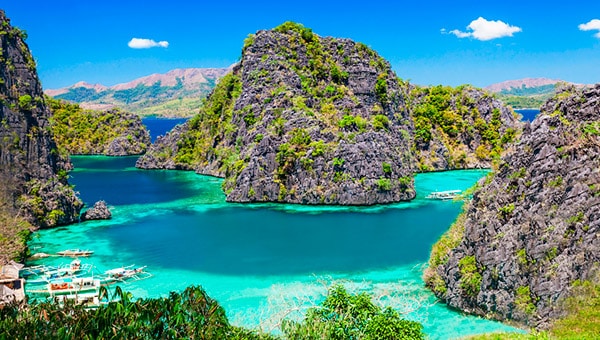
Coron offers experiences very similar to El Nido, but with far fewer tourists. Get up very early, secure a private boat, and set off to discover incredible spots like Malcapuya Island, Bulog Dos or Twin Lagoon. The Coron vs El Nido debate is real and… we know where we stand.

SIQUIJOR
Siquijor adds plenty of variety to a trip around the Philippines. It’s a unique place that combines waterfalls like Cambugahay Falls, caves like Cantabon Cave, and beaches and marine sanctuaries where you can enjoy the sea. As if that weren’t enough, the island of Siquijor hides a magical side that few travelers know about, and we’ll help you find it.

PORT BARTON
When Claudia first visited Port Barton, south of El Nido, she fell in love. This small town is a perfect place for a few relaxing days on your trip to the Philippines. Here you can combine fantastic island-hopping trips, where you’ll swim with turtles, with afternoons swimming beneath a big waterfall.

ROMBLON
On our most recent trip to the Philippines, the highlight was the Romblon archipelago. Still largely unknown to mass tourism, this Philippine treasure is blessed with dreamlike beaches such as Bonbon Beach and one of our favorite islands: Cresta de Gallo.

CAMIGUIN
Camiguin, the “island born of fire,” is truly explosive. If you’re looking for more than beaches and island-hopping trips — think hikes among volcanoes, hot spring dips, and historic sites — Camiguin should be on your Philippines itinerary.
0 Comments