Thanks to its ease of access and the wide variety of things to do, Bohol is included in many Philippines travel itineraries. The country’s tenth-largest island awaits you with beautiful beaches, areas with lively nightlife, spectacular waterfalls, native wildlife and the famous Chocolate Hills, those small hills shaped like chocolate truffles that turn brown when “toasted” by the sun. But Bohol is much more than all that and, thanks to our many visits to the island since 2010, we are going to tell you what it has to offer: the best things to do in Bohol, from the essentials to alternative things to do that you have probably never even heard of.
By the way, in this case, we recommend reading the following sections of the guide carefully. For most destinations in the Philippines that we recommend, it is fairly clear how to explore the area and where to stay, but Bohol is a little different because it is so large. That is why we place particular emphasis on the different bases and ways to get around the island.
How many days to spend in Bohol and where to base yourself
We have a confession to make: we have been to Bohol tons of times. And why is that? Because even though you always hear about the same things to see on the island (tarsiers, the Chocolate Hills, Alona…), Bohol actually has so much more to offer if you are willing to venture off the beaten path. It is such a varied destination that it has something for everyone.
So, if you want to see the essential tourist attractions in Bohol, our advice is to spend at least 3 days of your Philippines trip there. We think this is the minimum amount of time you need (hopefully you can stay longer), and you could divide your days like this:
- 1 day touring the main sights in Bohol by motorbike or car (Chocolate Hills, tarsiers, Man-Made Forest, Loboc River, the zip line, Sipatan Bridge and a waterfall such as Pangas Falls).
- 1 day snorkeling or diving in Balicasag and spending a relaxing afternoon on the beaches of Panglao (especially Dumaluan Beach).
- 1 day discovering everything there is to do on the small island of Panglao (Hinagdanan Cave, snorkeling in Napaling, the beach…).
If you were really short on time, you could reduce your stay on the island to a couple of full days, during which we would do the activities mentioned in the first two points. This would give you a brief overview of the essential things to see in Bohol.
Where should you stay in this case? You can use either Panglao Island or the small town of Loboc as a base for visiting these places. The most convenient option, and the one we recommend, is to stay in Panglao, as this makes the logistics of going to Balicasag easier, there is a wider variety of hotels and restaurants, and you will also be closer to the airport. We tell you much more in our article about where to stay in Bohol.
More days to explore Bohol
If you want to explore even more of the island—which we highly recommend—and have more time, the best thing to do is divide your stay between 2 or 3 areas. One idea for exploring Bohol in depth would be:
- 2 days in Loboc: from here, you can visit tons of waterfalls, enjoy the Chocolate Hills to the fullest, kayak along the Loboc River… If you want to add a more “jungle-like” experience to your Philippines trip, staying in a little cabin by the river is amazing. We usually stay here, and we recommend it 1000%.
- 2 days in Panglao: diving, discovering places such as Pamilacan, relaxing on the beaches…
- 2 days in Anda: our favorite area of Bohol will win you over with its cenotes, beaches, rice fields and waterfalls with hardly any tourists.
This second alternative is the one we always recommend so that you do not leave feeling that Bohol is an extremely touristy island. Alona Beach is a tourism hub catering mostly to Chinese and Korean visitors, but Bohol is a huge island full of places that almost nobody visits.
A middle-ground option for exploring Bohol
If you do not want to spend just 2 or 3 days there but do not want to devote 6 days to it either, another option would be to spend 2 nights in Panglao and 3 (or just 2) in Anda (or vice versa), traveling through the entire Loboc and Chocolate Hills area.
In that case, since the motorbike ride is absolutely exhausting (we are talking about 3 hours there and 3 hours back), we recommend doing it in a car with a driver. We can give you the contact details of our trusted driver, who is a really nice guy.
In any case, the best thing to do is sit down with the map in front of you so you can plan your route in the best possible way based on what you want to do. To help you with that, at the end of this list of things to do in Bohol, you will find our map with all the points of interest marked.
DO YOU LIKE OUR CONTENT? Help us keep the website alive.
Keeping this website up to date—from researching routes, trying out accommodations and writing each guide
to answering hundreds of your questions every day—takes time, energy and more coffee than we care to admit.
If you find any of our advice useful and you are thinking about purchasing discounted travel insurance,
booking a hotel, booking your flights, using Remitly, etc., we would be grateful if you did so through our links.
- You pay exactly the same price (and sometimes even less thanks to our discounts).
- We receive a small commission, which we reinvest in continuing our work,
researching and publishing free guides. - You get the same price; we can continue creating independent content;
and everyone wins.
Thank you for supporting this project and joining us in every corner of the Philippines.
How to explore Bohol
Now that you have a plan for how you could divide your days, and since we will go into all the things to do in Bohol in greater depth below, you are probably wondering how you can get around the island. There are basically 5 ways to explore Bohol:
- On a rental motorbike: prices are around 350-400 pesos per day. Most roads in Bohol are well paved, but do not rent a motorbike unless you have experience riding one and hold a license that is valid in the Philippines. Above all, ride very carefully. Accidents are not uncommon and usually happen because a person or animal suddenly appears out of nowhere. You will find more information in our article Driving and renting a motorbike in the Philippines. You can follow a one-day route through inland Bohol to visit the main points of interest (Chocolate Hills, Corella Tarsier Sanctuary, Man-Made Forest, the Loboc River and the zip line), as well as the occasional waterfall (such as Pangas Falls), on your motorbike. However, bear in mind that, although we have done it tons of times, it will take you nearly two hours to reach the Chocolate Hills from Panglao, which is the most common starting point. From Loboc, it will take a little over an hour. Of course, you can also rent a motorbike to explore other areas of Bohol or the beaches of Panglao.
- On a tour with an English-speaking guide: if you are comfortable speaking English, this tour is more affordable if you are traveling as a couple or on your own. It is offered online by both Civitatis and its Southeast Asian counterpart, KLOOK, which is completely trustworthy. It is what is known as the “Countryside Tour.” Book here, here (the cheaper version) or here.
- Hiring a car with a driver: if there are a few of you or you are not very comfortable riding a motorbike, this is an alternative worth considering. You can also hire a car with a driver. You will easily find one in Alona by asking at the agencies (prices are around 2,500-3,000 pesos per day), or save yourself another hassle by hiring one through the online agency KLOOK (the Philippines’ leading online agency) here. We can also give you a contact if you leave us a comment. If you are in Loboc, you can also hire a tricycle driver, as the journey is shorter.
- Renting a car: you can drive yourself by picking it up at Panglao Airport. You can rent cars at a good price here.
- By public transportation: this is the option we recommend the least for day trips, especially if you are staying in the Alona Beach area. Although buses, jeepneys, tricycles and habal-habal (motorbikes with drivers) travel between different parts of the island, the truth is that you will have to spend a huge amount of time getting around. We only recommend it if you are staying in Loboc and want to visit nearby places, or if you are staying in Panglao and want to get around the island itself.
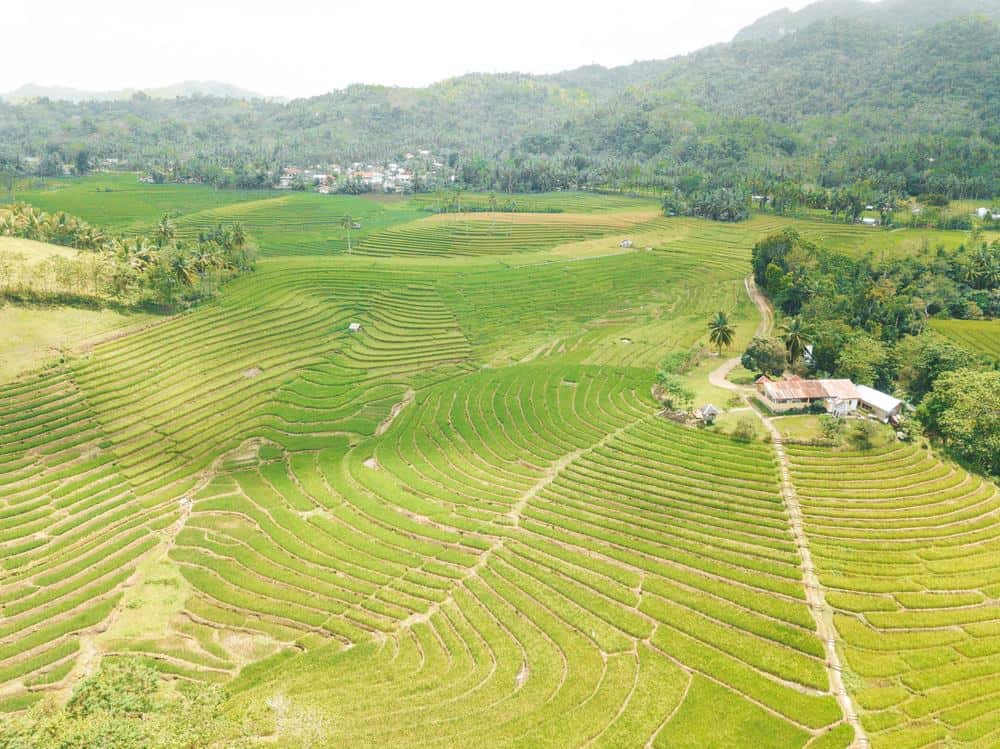
The rice fields of Candijay or Cadapdapan
Things to see and do in Bohol to enjoy the island to the fullest
After giving you a breakdown of the island and explaining how you can explore it, it is time to get down to business and tell you about the different activities you can do in Bohol. We will start with the essentials, and you will find some lesser-known suggestions at the end.
1. Discover the Chocolate Hills
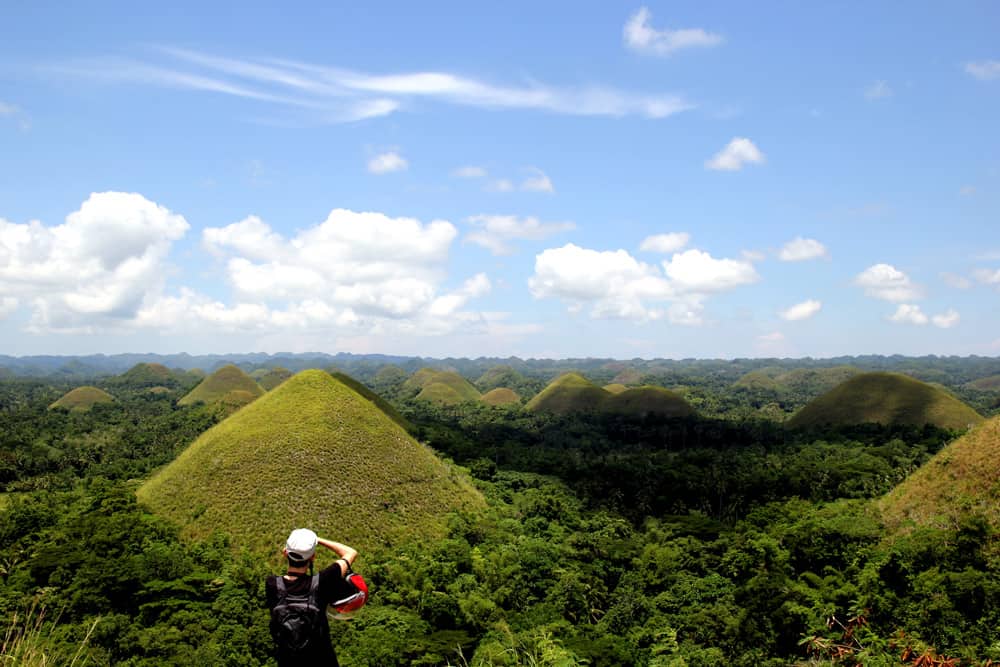
The Chocolate Hills of Bohol are one of its main tourist attractions and a true icon of the island. They consist of thousands of small hills—estimated to number somewhere between 1,200 and 1,700—spread across roughly 50 square kilometers. Although most are between 30 and 50 meters high, some are more than 100 meters tall. Their main distinguishing features are their color and shape. With an outline resembling a chocolate truffle and a chocolate-brown color during the dry season, the Chocolate Hills truly look as though they are set in an endless field of candy.
Admission to the Chocolate Hill Complex costs 100 pesos and gives you access (via a shuttle) to a viewpoint offering incredible panoramic views of the surrounding hills. This is the most common way to visit the Chocolate Hills, but more and more travelers are venturing out to explore this National Monument on buggy or quad bike tours, or on their own motorbikes, which is something we highly recommend. In our article about Visiting the Chocolate Hills, we give you all the details, including an alternative, less crowded viewpoint, as well as the stories and legends hidden behind this must-see attraction in Bohol.
⭐ We explain how to combine your visit to the Chocolate Hills with more inland activities in Things to do in Loboc, as it is on the way.
2. Say hello to the tarsiers—the world’s smallest primate—without disturbing them
Leaving aside the enormous biodiversity found beneath the country’s waters, the tarsier is probably the most iconic animal in the Philippines. This tiny animal, which can even fit in the palm of your hand, lives in the forests of Bohol. In addition to being very small, the tarsier is extremely fragile and can be easily harmed or stressed. It is such a timid primate that, when subjected to high levels of stress, it can suffocate or fatally injure itself. Since 1996, and especially in recent years with the rise in tourism that has made the tarsier one of the things to see in Bohol, the Philippine Tarsier Foundation has worked to protect it and raise awareness of its critical situation.
As you travel around Bohol, either independently or on one of the many available tours, you will see that there are several places where you can see tarsiers up close. We only recommend the Philippine Tarsier Sanctuary in Corella, which is managed by the foundation itself. Cases of irresponsible tourism and poor conditions have been reported at many of the others, and you only have to look at the number of cars and huge tour buses outside to realize that they are anything but peaceful places.
It is important to know that these animals are primarily nocturnal. As a result, when you approach them, you will probably see them clinging to a branch, sleeping or looking at you in fear because of the sound of your footsteps. Try not to disturb them and let them rest peacefully. Please, if the guide makes any noise to wake one of them up, ask them not to. Admission costs 150 pesos.
As you can see, the Corella sanctuary is in the heart of Bohol. That is why it is a good idea to include it on your route through Loboc and the Chocolate Hills.

3. Take a trip along the Loboc River
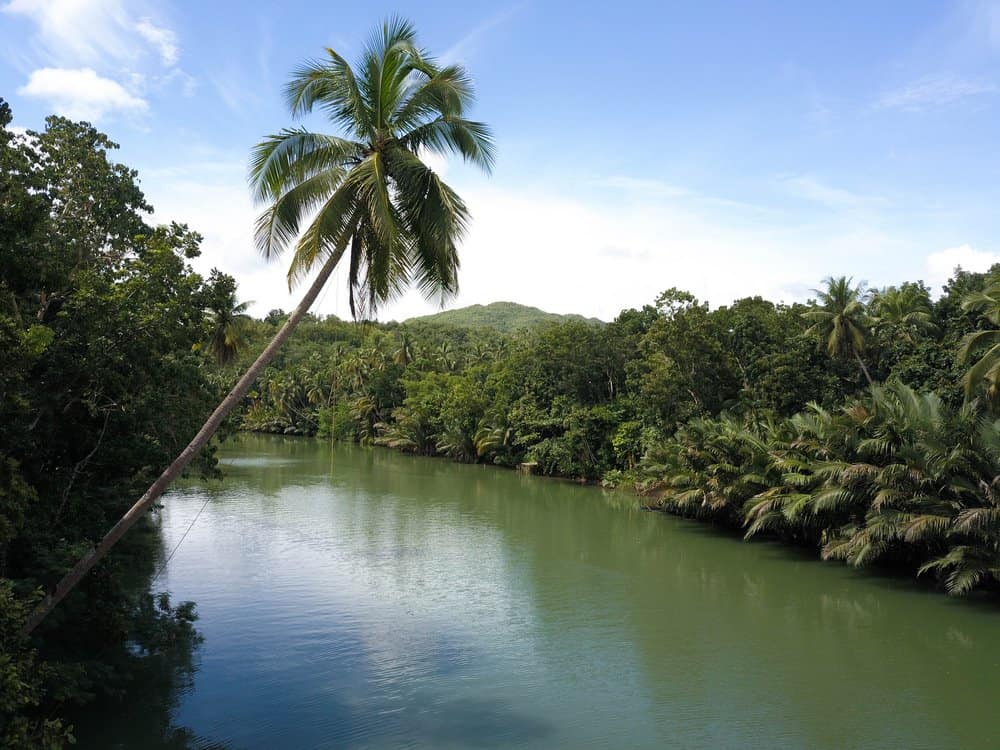
If you are looking for a relaxing activity that lets you discover Bohol in a different way, you may be interested in the Loboc River cruise. Although we do not consider it an essential thing to do in Bohol, lots of people love it, and we think it is a pleasant and enjoyable experience. It is also one of the island’s most famous activities.
This boat trip will take you up the Loboc River to a waterfall and back to the starting point while you enjoy a filling buffet and live music amid the palm trees. It is quite a touristy experience, especially among Filipino travelers, but it is a good way to enjoy a meal surrounded by very lush scenery. The boat ride and buffet cost 850 pesos (children pay less).
Many travelers choose to do other activities on the Loboc River, such as kayaking or paddle boarding/SUP, which are quieter and less touristy alternatives to the boat cruise. You also have the option of exploring it in a small boat, which takes about an hour and a half (we can give you a contact for this). If you stay after sunset, you also have the option of seeing the fireflies along the Loboc River.
In addition, as we explain in our article about where to stay in Bohol, Loboc is a fantastic base in the island’s interior where you can spend at least a couple of nights doing activities like these:
Paddle boarding on the Loboc River
By the way, although it was badly damaged by the earthquake in Bohol, take a look at Loboc Church. This church was built from coral by the Jesuits in the 18th century.
4. Stop at the Man-Made Forest
If you are traveling from Alona Beach to the Chocolate Hills, the road will take you past another place to see in Bohol: the Man-Made Forest.
The history of this place dates back to World War II, when massive deforestation took place as a result of the farming system known as kaingin. Years later, a reforestation plan was launched that led to thousands of mahogany trees being planted in the area. Today, this stretch of road, more than 2 kilometers long and surrounded by vegetation, has become an almost mandatory stop for everyone traveling along this route. The trees’ orderly arrangement, lushness, color and the arch they form overhead undoubtedly give the place a magical, highly photogenic feel that you should not miss.
⚠️ Be careful when stopping to take photos here because it is still a road. People usually drive carefully because they are already aware of this, but it never hurts to warn you.

5. Monkey around at Loboc Eco Tourism Adventure Park
If you like adventure and want to see the Loboc River from an even better angle than from the boat, perhaps Bohol’s famous zip line is what you are looking for. Very close to the town of Loboc is Loboc Eco Tourism Park, where, if you dare, a huge zip line more than 500 meters long awaits you and will send you flying over the river. If you suffer from vertigo, you may want to think twice, as it is 115 meters high!
The price for a round trip on the zip line is 500 pesos. There is also a type of cable car that holds up to 5 people and crosses over the river for 250 pesos. Are you brave enough?
By the way, if you like this kind of adventure, the Chocolate Hills Adventure Park (CHAP) is also located near the Chocolate Hills, where you can ride a bike along a zip line while looking out over this natural monument. There are also several other adventure activities. It will cost you slightly less if you book with KLOOK here.
6. Enjoy the atmosphere at Alona Beach
The vast majority of travelers choose the Alona Beach area as their base for exploring Bohol. This beach area is not actually located on Bohol itself but on a small neighboring island reached by crossing a couple of bridges: Panglao. This is the most touristy area in the entire Panglao-Bohol region.
Alona Beach is not the best beach on the island—we will tell you about those later—but it is a place where you will find plenty of accommodations, restaurants and dive centers from which you can head out on wonderful dives at Balicasag Marine Sanctuary and many other sites along the reef directly offshore.
You can read much more in Diving in Panglao or Taking a diving course in Bohol, but we can already tell you that, for us, Bohol is one of the best places to learn to dive because of its calm waters. Why? Because of what you can see from the moment you dive in and, above all, the extremely high quality of the dive centers. Since there is so much competition, the dive centers make a real effort here, and you will find excellent instructors (we can recommend the best ones).
When night falls, all the beachfront bars and restaurants put out their tables and chairs, and you can enjoy live music and fire shows while having dinner. Therefore, although Alona is touristy, it is a good place if you want to enjoy a relaxed dinner on the beach or have a few beers by the sea.

7. Dive in Balicasag… or go snorkeling, an essential thing to do in Bohol
One of the highlights of this destination is diving in Balicasag. This small island near Panglao is world-famous and attracts thousands of underwater enthusiasts every year. Its variety of marine life, beautiful corals, excellent visibility and pleasant sea temperature draw people there every day for both diving and snorkeling. Perhaps it is the large number of turtles that has made visiting Balicasag an essential thing to do in Bohol for many tourists. Nobody who has entered these waters has come away disappointed, as it is simply spectacular. For us, Balicasag is one of the best places to go snorkeling in the Philippines.
Since it is also one of the best diving destinations in the Philippines (and one of our favorites), the authorities have had to introduce regulations to protect the area, and there is now a maximum daily quota for divers. In our articles about Diving in Balicasag, Snorkeling excursion to Balicasag and Things to do in Panglao, we give you more details about this excursion.
In addition, the reefs around Panglao and Pamilacan (an island relatively close to Bohol and Panglao) also offer first-class opportunities for diving and snorkeling. If you are passionate about underwater life, do not miss them!
⭐ Read everything about diving in Panglao and snorkeling in Bohol and Panglao here.

On the other hand, if you enjoy snorkeling and are not planning to visit Moalboal, make sure you go swimming with the sardine run at Napaling. On the north side of Panglao Island, just a few meters from the shore, this enormous school of fish is waiting for you. The experience is absolutely worthwhile. If you bring your own snorkeling gear, it will cost you 130 pesos (100 pesos for admission to Molave Cliff Resort, from where you can enter the water, and 30 pesos in environmental fees).
Since this is a natural phenomenon, it is a good idea to ask at the entrance whether the sardines are currently there so that you do not end up disappointed.
https://www.youtube.com/watch?v=ZSo0mR_cM_w&t=2s
8. Relax in the sun on Panglao’s different beaches and explore the island
Alona Beach, as we have mentioned, is the most common base for exploring Bohol. Its beach is the departure point for epic dives and excursions to other places, but it is certainly not the best beach in Bohol for swimming. Because it is such a touristy area, Alona Beach is not usually the quietest, and you will have to walk to either end to find the least crowded spots. It is a beach where you can cool off if you do not want to go far, but it will not be the one you remember most when you look back on your visit to Bohol.
About 5 kilometers from Alona Beach, heading toward Bohol, you will find Dumaluan Beach. It is also known as White Beach and has several sections. You will find a huge beach with crystal-clear waters that is much quieter than Alona and is a very popular place for Filipino families to enjoy a barbecue together. One thing to keep in mind is that, at low tide, you will have to walk quite a few meters before the water becomes deep enough for you to fully immerse yourself. Without a doubt, it is the best beach in Bohol.
In the opposite direction, just 15 minutes from Alona Beach, is Danao Beach. Like Dumaluan Beach, it is far less crowded and is home to some of the best resorts in Bohol. For us, it is one of the best places to enjoy the sunset in Bohol. The red, orange and lilac colors that fill the horizon are truly wonderful, and this stretch of the Panglao coastline is a prime spot from which to see them. That said, bear in mind that it is not usually very well maintained.
To choose the one that best matches what you are looking for, read our article about The best beaches in Bohol and Panglao.
But Panglao has more to offer than just its beaches. We tell you about everything in this article:

Dumaluan Beach
9. Discover the Anda area
A large percentage of travelers who visit Bohol base themselves in the Panglao area and, from there, either by renting their own transportation or joining tours, take the standard Balicasag + Chocolate Hills + tarsier tour. They then leave thinking they have already seen everything the island has to offer and, in many cases, thinking it is very touristy and overcrowded. But that is not true! In addition to the dozens of places scattered across the map, such as waterfalls and interesting hiking trails, an area full of possibilities awaits you on Bohol’s east coast: Anda.
If you base yourself here, you will be close to stunning rice fields (Cadapdapan Rice Terraces), huge waterfalls, beautiful beaches, top-notch diving, the famous Binabaje Hills (also known as Alicia Panoramic Park) and even a couple of cenotes. For us, visiting this area is another essential thing to do in Bohol, which is why we have dedicated an entire article to Things to see in Anda.
Although we recommend spending at least a couple of days in Anda, you can take a full-day trip to Anda from Panglao (Alona Beach), Loboc or Tagbilaran. It is exhausting, as Anda is about 3 hours from Panglao each way, but it is possible. Leave us a comment and we will send you the contact details of our trusted driver.

Can-Umantad Falls
10. Explore the island’s waterfalls—and there are plenty of them
Although we have already mentioned some of its waterfalls throughout this list of things to do in Bohol, the island is full of little-known or completely unknown cascades. If you enjoy them, a fantastic excuse to spend more time in Bohol is to travel along its roads in search of the best ones. In our opinion, the best are in the Dimiao and Antequera areas.
We have put together an article featuring the best waterfalls in Bohol, but here is a preview. You can find them on the map at the end of this article:
- Ingkumhan Falls (Dimiao)
- Pahangog Falls or Twin Falls (Dimiao), shown in the photo below — you can explore these and Ingkumhan Falls from Loboc or Anda, or on the route between the two destinations
- Pangas Falls (Carmen/Chocolate Hills) — you can visit them before or after the Chocolate Hills
- Busay Falls (Loboc) — the same applies as with Pangas Falls
- Camugao Falls (Balilihan/Antequera) — accessible from Loboc, Tagbilaran and Panglao
- Mag-aso Falls (Antequera) — they can be combined with Camugao and Kawasan
- Kawasan Falls (Antequera)
- Can-Umantad Falls (Candijay/Anda) — the easiest option is to visit from Anda
- Kinahugan Falls (Jagna) — you can visit them on the route from Anda to Loboc or from Anda to Panglao
You can easily visit them independently by car or motorbike, but you can also take THIS TOUR, which visits the best ones.

Pahangog Falls
11. Island hopping in Bohol? Virgin Island? — perhaps not something we would particularly recommend doing in Bohol
At Travel Around the Philippines, we want you to have all the information you need to make your trip perfect, but we also share our perspective after years of traveling around the country. The island hopping trip to Virgin Island is popular, but for us, it is not one of the essential things to see in Bohol. This trip usually includes 3 things: dolphin watching, Virgin Island and snorkeling in Balicasag.
Virgin Island is a small sandbar that is quick and easy to reach. Although it is touristy and there are usually people there, the many food stalls that spoiled its appearance less than a year ago are no longer there. Therefore, if you are not going to see another sandbar during your trip and are excited about visiting one, do not miss it! Otherwise, there are many other sandbars in the Philippines that are much better, such as Kalanggaman or Cresta de Gallo, and you can devote your time here to discovering more of the essential things to see in Bohol.
On the other hand, to be honest, what happens is closer to harassing dolphins than dolphin watching. There are so many boats that the animals are chased, which makes it an irresponsible activity.
Finally, the snorkeling service offered in Balicasag is usually quite poor. The groups are fairly large, and the fish are sometimes fed even though feeding is prohibited in this marine sanctuary, where you have to pay a 250-peso fee. You also do not usually spend enough time there. Please bear this in mind when booking your tour in Bohol. As we mentioned above, we always prefer to do it with dive schools that offer snorkeling-only trips.
More places to visit in Bohol
What we have described above covers the absolute essentials of what to do in Bohol, and in each of the articles we have written about specific areas, you will find tons of tips to make your experience incredible. Even so, we did not want to leave out some places that do not usually appear on these lists, to encourage you to go further and realize that the island is much more than the Chocolate Hills and Alona Beach.
We are tired of reading comments dismissing Bohol and, honestly, it is a huge island with so much to explore. In addition to all the waterfalls we have mentioned, the opportunities to lose yourself are endless.
- Pamilacan: a cool island for snorkeling or diving and a good place to spend one or two nights enjoying pure relaxation. It is still a very rural place.
- Hinagdanan Cave: a small cave in Panglao with stalactites and a pool where you can take a dip. If possible, go early or shortly before it closes and avoid weekends if you want fewer people around. We tell you more about it in Things to do in Panglao.
- Sunset from the bamboo walkway at the North Zen Villas hotel in Panglao: a cool experience. You will have to pay a small entrance fee, but you can do so through this link, and part of the fee can then be used as credit at the bar. Be aware that many tourists—especially Koreans—now know about this place, so it is best to arrive early to get a spot. If you want somewhere free, although less glamorous, head to Hermit Beach, which you can find under that name on Google Maps.
- Alicia Panoramic Park or Binabaje Hills: a spectacular place for anyone who wants to take an easy hike through scenery that is very different from what you usually see in the Philippines. It is close to the Anda area.
- Take a dip in Lonoy Cold Spring or Canawa Cold Spring: they are cold pools, but they are surrounded by nature.
- Cabilao: although a typhoon several years ago left it badly damaged, it is another small island near Bohol that could fit very well into your itinerary and still has some interesting dive sites.
- The fireflies on the Abatan River: less well known than the Loboc River, the Abatan is one of the largest rivers on the island and, in addition to offering fantastic jungle scenery, it gives you the chance to see these fascinating insects in large numbers. You can book it here and arrange to be picked up in Panglao or Tagbilaran.
- Baclayon Church: built in the 18th century, and therefore dating from the Spanish colonial period, it is one of the oldest churches in Bohol. It is made of coral stone and has a beautiful bell tower. It is on the way to Loboc from Panglao or Anda, so you can stop there. Boats to Pamilacan depart from the town of Baclayon.
- Blood Compact Monument (Sandugo): it represents the blood pact between Miguel López de Legazpi and Datu Sikatuna, the tribal chief of Bohol. It is just outside Tagbilaran, on the way into Bohol’s interior, and makes for a quick stop.
- Inambacan Cave & Spring: a place where Boholanos go to chill out, perhaps more impressive for its surroundings than for its artificial “waterfall.”
For us, there is always more of Bohol left to discover. That is why we keep returning and spending time exploring new places, so we are sure we will continue expanding this list of things to see in Bohol.

Binabaje Hills – Camugao Falls – Abatan River
What not to do in Bohol
Unfortunately, there are many well-known irresponsible tourism activities in Bohol that we ask you to avoid. Although it is our duty as citizens of this planet to research in advance what we are going to do and how it affects nature or local communities, we felt it was important to mention them here so you know what to expect:
- Tarsier sanctuaries where the animals are not respected. As we mentioned, the only one that has not yet become a mass-tourism business is the one in Corella. Basically, every sanctuary other than Corella is an abomination.
- So-called snake or insect sanctuaries that are actually zoos. Bohol is full of places like this where you can pose for the classic photo with a snake around your neck. This is not respectful toward animals.
- The whale sharks in Lila: perhaps even sadder than everything mentioned above, this activity has become a circus like the one in Oslob, where these endangered animals are fed so that they stay in the area and people can swim with them. You only have to look around social media to see how they are treated (being hit, kicked, exposed to chemicals…) and to understand that seeing these animals here contributes to their disappearance, especially because whale sharks are a migratory species. You can read about where to swim with them responsibly in Whale sharks in the Philippines. Fortunately, for the reasons we have explained, this activity was banned some time ago, and we hope it never returns.
Practical information about Bohol
Now it is time to get practical and give you some information to help you plan your visit to this huge island.
Where to stay in Bohol
For convenience, most travelers tend to stay on Panglao Island. Our favorite places to stay in this area are:
- Manta Dream Dive Resort: renovated rooms, within walking distance of Alona Beach, friendly service, a huge pool and good prices—what more could you ask for?
- Bohol Beach Club: if you want something truly high-end, do not hesitate—this is the place for you! Located on Panglao’s most beautiful beach, with an exclusive area of loungers and palm trees, it is a proper resort with every amenity.
To find out more, discover where to stay in Bohol and where to stay in Panglao: the best areas to stay and the most charming hotels.
More practical information and tips for enjoying Bohol
Here are a few more tips and little island secrets we wish we had known before our first visit to Bohol:
- BEST TIME TO VISIT BOHOL: the best time is roughly from December to May, during the dry season. Even so, the weather is always a gamble, and its geographical location means that the seasons are not as clearly defined, so we do not hesitate to visit at any time of year.
- MONEY: in Tagbilaran and the Alona Beach area, you will find plenty of currency exchange offices (the rates are good around this area) and several ATMs. We recommend avoiding Euronet ATMs—the blue and yellow ones—because they try to trick you with the exchange rate. That said, all ATMs in Bohol will charge you a fee of 250 pesos for each withdrawal of 10,000 pesos. As we recommend in Money in the Philippines, the best thing to do is exchange money in Manila and then use Remitly to withdraw money from a pawnshop. Seriously, it may sound strange, but it is what we always use to get cash. You will find tons of pawnshops everywhere in Bohol, and with our link, you get $10 free on your first transaction.
- HIGH TIDE: if you are planning to visit the beaches in Anda and Panglao, it is best to try to do so at high tide. Because the water is very shallow, they look less attractive and conditions are worse for swimming at low tide. Check a tide chart.
- RESEARCH WHERE YOU WANT TO STAY: if you do not like very touristy areas, try not to stay in Alona Beach. Even so, there are tons of places just 10-15 minutes away by motorbike or tricycle that are very reasonably priced and give you access to the huge selection of restaurants and all the conveniences of this area.
- BE CAREFUL WITH DISTANCES IN BOHOL: bear in mind that Bohol is a huge island. Do not underestimate the distances; spending 5 or 6 exhausting hours on a motorbike is not particularly enjoyable.
- HEALTHCARE: do not travel without quality travel insurance. Unfortunately, we have had firsthand experience at four hospitals in Tagbilaran (there are no hospitals in Panglao), and the conditions are not the best. If you have a serious accident, you will most likely need to be urgently transferred to Cebu or Manila, although ACE Hospital (where Claudia was admitted) is excellent. On the other hand, if you are staying in Loboc, Panglao or Anda, you will have to pay for transportation to wherever you need to receive treatment. If you have good insurance, the insurer will arrange your transportation and find the medical assistance you need. If you use this link, you will receive a 5% discount, and you will help us continue devoting our time to the website.
- RESPONSIBILITY: please do not contribute to the horrific kind of tourism promoted in Bohol by visiting places where animals are mistreated or their behavior is altered by feeding them. As travelers, it is our duty to research in advance what the activities we choose actually involve.

How to get to Bohol
Because of its location in the heart of the Visayas region, there are many ways to get to Bohol. Read our guide on how to get to Bohol for details on reaching it from places such as Cebu, Siquijor, Camiguin or Moalboal, but we can already tell you that the island has an international airport and several ports. The busiest port is Tagbilaran, which receives ferries from Cebu and Siquijor.
As for ferries between Cebu and Bohol, our advice is to reserve your seat during periods of high demand, such as weekends and public holidays, especially Christmas, Holy Week and All Saints’ Day. It is also advisable to secure your ticket if you are taking the last ferry of the day. We always use this platform to book.
Where to eat in Bohol
Whether you are heading to Anda, Panglao or Loboc, you will find our culinary recommendations in Where to eat in Bohol—enjoy every bite at our favorite restaurants!
Map of Bohol
On this map of Bohol, you will find all the places we discuss in this and other articles about Bohol. If you open it on your phone, you can save it and use it from there without needing an internet connection.
Frequently asked questions about Bohol — FAQs
Finally, we answer the most common questions asked by travelers who decide to visit Bohol:
Is Bohol worth visiting?
Without a doubt, yes. It is one of the most varied islands in the Philippines, where you will find more “jungle-like” scenery than in other parts of the country, beautiful reefs, mountains, beaches and much more. Many people dismiss it because some areas are very touristy, but there are also places that few travelers venture out to visit.
How many days should you spend in Bohol?
To see the absolute essentials, we recommend 2 full days, not including travel time. If you can spend at least 3 days, you will be glad you did. If you want to get to know Bohol better, given how much there is to do, 5 days would be better, as this will also allow you to divide your stay between Panglao, Anda and/or Loboc.
What can you see in Bohol in one day?
We do not recommend spending so little time there, but if that is what you want to do, we would focus on seeing the island’s interior, which is its most distinctive area. In this case, we would follow a route including the Chocolate Hills, the Loboc River, the Loboc zip line, the Man-Made Forest, the Corella Tarsier Sanctuary and Pangas Falls. If you have time, you can also include Sipatan Bridge and Camugao Falls.
What can you see in Bohol in 3 days?
We would spend one day exploring the island’s interior (Chocolate Hills, Loboc, Man-Made Forest, Corella Sanctuary and a waterfall such as Pangas Falls), a second on a snorkeling or diving excursion to Balicasag and a visit to Dumaluan Beach, and a third on other activities such as snorkeling in Napaling, visiting Hinagdanan Cave or Pamilacan, or spending time at the beach. There are many possibilities.
Are there any less touristy areas in Bohol?
Yes. No matter how often you read that “Bohol is overcrowded,” it is not true. The only area that receives a lot of tourism is Alona Beach. Even some parts of Panglao Island are very peaceful. Hardly anyone visits Anda yet, and few people choose to stay in Loboc, so you can still discover a very unspoiled side of Bohol.
Would you like to know anything else about what to see or do in Bohol? Ask any question you like in the comments, and we will reply as soon as possible.