More and more travelers, when passing through the island of Bohol, choose to base themselves in the Loboc area instead of the touristy Panglao. The reason? There are plenty of things to do in Loboc!
If your trip to the Philippines is packed with destinations where beaches take center stage or if Alona Beach and Panglao simply don’t call to you, it’s worth spending a few days in this area packed with lush nature in the form of rivers, waterfalls and mountains. We created this “Things to do in Loboc” guide after several visits since 2010 to explore this incredible part of Bohol. So believe us, Loboc has something that hooks you and you’re about to discover it with us.
How many days to stay in Loboc
The number of days to spend in Loboc will depend on how relaxed your itinerary is and which activities from this guide you want to do. Based on our experience, we recommend a minimum of 2 days to feel you’ve covered the area, and 3 if you want to take it slower.
A suggested itinerary for Loboc, with two full days, would be:
- Day 1: Visit the tarsiers at the Corella sanctuary, cruise the Loboc River (or go by kayak, SUP or boat—your call), Man‑Made Forest, Chocolate Hills, Pangas Falls and a nighttime firefly tour. If you’re up early and only have 1 day to visit Loboc, you can also fit Loboc Ecotourism Park into this day.
- Day 2: Loboc Ecotourism Park (ziplines), Ingkumhan Falls and Pahangog Falls.
Of course, this is just an example and will depend on your tastes and on what you want to add or remove from what we’ll show you below.
If you have more days to explore the island, Loboc can also serve as a base to see the best of Anda and even Panglao. However, keep in mind you’ll need to spend a fair bit of time on transport, especially if you plan to do it by motorbike. Alona Beach is roughly 90 minutes from Loboc and Anda is almost 2 hours away.
Finally, if you plan to base yourself in Panglao and in Anda and don’t have more time, another idea would be to visit Loboc and the Chocolate Hills with a car and driver on the day you transfer between Panglao and Anda. That is, the driver detours for a few hours so you make the most of the journey. We also have a contact who can help with this. From our perspective, it’s a more complete way to get a feel for what Bohol has to offer.
How to visit Loboc and its surroundings
Now that you’ve got a rough plan for your visit to Loboc, and before diving into each activity in detail, you’re probably wondering how to get around the area. Here are the different options:
- Rent a motorbike: this is our favorite option because it gives total freedom over timing and places to visit. Renting a motorbike in Loboc through a hotel usually runs around 400 pesos, but you can get it a bit cheaper through some contacts we have or by renting for several days. If you want them, leave us a comment and we’ll pass along all the info. The roads in Loboc (except the one to Pahangog Falls and the one that connects to Nuts Huts) are generally in very good condition. That said, as we always say, if you’ve never driven a motorbike before, we don’t recommend your first time be in the Philippines, especially because in Bohol there are plenty of trucks and vans whose driving can be a bit wild.
- Hire transport with a driver: some hotels offer tour packages that take you to the most touristic spots available. The price is usually high and it doesn’t offer the freedom a motorbike does, but it’s a good option if you don’t want to drive. Another option, which we prefer, is to hire a driver and choose the places to visit yourself. If you like, write to us in the comments and we can send you our trusted contact. Keep in mind that, as always, hiring a tricycle driver is much cheaper than a car driver. They’re a bit slower, but just as comfortable.
- Public transport: we only recommend this if you’ll use it to visit places very close to your accommodation or with direct access, such as the Chocolate Hills. Otherwise, you’ll lose a lot of time on the road.
If you’re visiting Loboc from Panglao/Alona Beach, booking this full‑day tour with a Spanish‑speaking guide, this car with driver or renting a car at Panglao Airport may suit you so you can do everything on your own.

What to see and do in Loboc, the other Bohol
Without rambling any further, here we want to talk about everything you can see in Loboc.
1. Boat trip on the Loboc River (cruise, boat, etc.)
The Loboc River is the star of many of the activities to do in Loboc, as it runs through town and winds past places like the Loboc Ecotourism Adventure Park and the firefly‑watching area. The Loboc River cruise is one of the most popular activities in the area and is usually included in the most popular Bohol day tours.
What to expect from the Loboc River cruise? While it’s well‑known that this is one of the classic touristy things to do in Loboc, in our opinion it’s one that’s really worth it. After buying your ticket at the embarkation area (here) you’ll be shown to your seat on the cruise for the next hour and a half. The route, reminiscent of the beautiful backwaters of southern India, takes you along the Loboc River among countless palms and lush vegetation while you enjoy a varied all‑you‑can‑eat buffet and live music, stopping occasionally on the riverbank to see local dances and crafts.
The price of this activity to do in Loboc is 1,000 pesos (including fees, entrance, food and water; children pay 412 pesos). If you fancy a beer or a soft drink, you’ll pay that separately. Depending on the cruise, you’ll find tables for 4, 6 or more people. The trip doesn’t start until all the seats are filled, so you’ll likely share a table with other travelers.
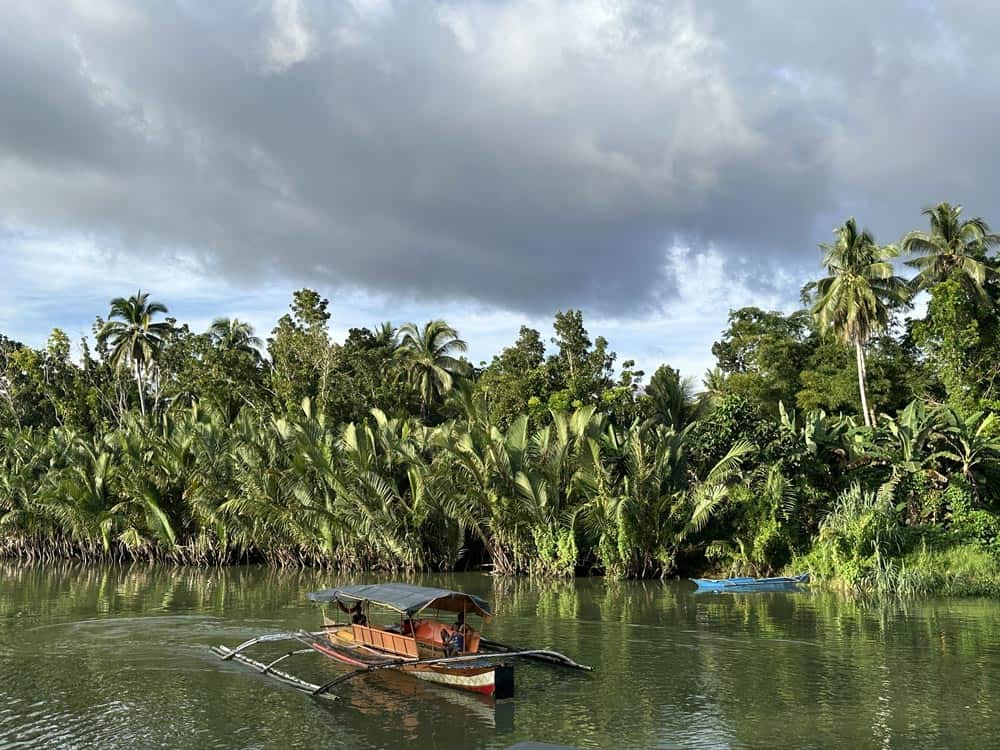
If you’d like something a bit more intimate and want to swim at the waterfalls at the end of the route (Busay Falls), you can also hire a smaller boat (like the one in the photo below). The ride lasts 1.5–2 hours and costs about 500 pesos per person. If you want, leave us a comment and we’ll send more info.
2. Loboc Ecotourism Adventure Park
At first the Loboc Ecotourism Adventure Park didn’t particularly call our attention, but given its popularity we knew we wanted to visit so we could describe it first‑hand in this article about things to do in Loboc. Although we arrived a bit skeptical, we left with big smiles, having really enjoyed the experience.
The park’s two main attractions are its zipline of over 500 meters and a cablecar (a cable car) from which you can enjoy the scenery much more calmly. The views from above, between 100 and 120 meters high, are exceptional and take in everything from palm‑covered mountains to the Loboc River and a small waterfall just below the zipline.
When you buy your ticket you’ll be able to choose between a round‑trip on the zipline for 700 pesos, doing it by cable car for 460, or trying a combination of zipline out and cablecar back for 700 pesos. We tried the combo and, from our point of view, it’s the best option: first an adrenaline rush and then a calmer ride to soak up the views. There’s one more option which, for 900 pesos, lets you do a round trip on both the zipline and the cable car, but one ride will be more than enough.
3. Firefly watching on the Loboc River
Another of the most popular things to do in Loboc, which attracts travelers staying in the area and even those who come here on a tour just for this, is firefly watching on the Loboc River, the famous Firefly Watching Tour.
Heading onto the river from Loboc town you reach an area with various trees where these insects live. By day you could pass by and think it’s just another tree, but at night the “magic” happens and the light show begins. Thousands of fireflies start to glow along the riverbanks, creating a unique spectacle.
How do you see fireflies in Loboc?
There are different ways to see fireflies in Loboc, some less advisable than others. From our point of view and experience, the best way to do the Firefly Watching Tour is by kayak or stand‑up paddle (also called SUP). These usually start around 18:00 and last between an hour and a half and two hours.
Another option, which we don’t recommend, is to do the same tour by boat. Part of the magic of the experience is immersing yourself in the darkness and being amazed by the different sounds of the river and local wildlife—something a motorboat dispels completely due to the loud engine noise. In addition, many boatmen get too close to the trees and hit the branches to make the fireflies fly, which is causing their numbers to decline. Kayak and SUP ensure a much more beautiful and respectful experience.
– If you’re staying in Loboc, you can book your excursion here. These tours depart right on the river (you’ll need to choose between a daytime paddle or a night one to see the fireflies): night paddleboard tour to see fireflies in Loboc
– If you’re staying in another part of Bohol and want to come to Loboc just for firefly watching, this is your tour: night kayak tour in Loboc from Bohol
4. Stand‑up paddle and kayaking on the Loboc River
Another way to travel the river is by paddling a kayak or the increasingly popular stand‑up paddle boards. Unlike the cruise, this way you can have a much more slow experience and really feel the immensity of this place. If you’ve never done SUP or kayaked before, this is a great place to start. The lack of swell, rapids and the very manageable current when you have to paddle back make it an ideal spot for a first time.
Don’t be afraid! It’s a very fun experience and much easier to handle than it might seem.
In Loboc you’ll find various places along the river where you can rent a kayak. If you fancy trying SUP, this is your tour: Paddleboard tour on the Loboc River.

5. Stay in accommodation by the Loboc River
It may sound like filler, but we promise it isn’t. We’ve been visiting Loboc since 2010 and our perspective on the area totally changed when we decided to spend the night at THIS HOTEL. It’s the only one with cabins right by the river, plus a couple of pools and a restaurant overlooking it, which made us appreciate this part of Bohol even more and have a much more complete experience compared with Panglao’s beach area.
Waking up to views of this gorgeous river, watching the sunset, dining beside it while listening to its sounds, or having the convenience of organizing the firefly tour all strike us as incredible—and will make you enjoy Loboc even more. If you don’t believe us, just look at the photos below.
That said, the river‑view cabins sell out weeks in advance, so we recommend booking as soon as possible HERE.

6. Nearby waterfalls to visit from Loboc
Bohol is widely known for diving in Panglao, the Chocolate Hills and the tarsiers… but it’s also an island with a large number of waterfalls worth visiting. They’re spread across the island and near Loboc you’ll find some of the best ones. These 4 (you can easily locate them on the map at the end of the guide) are our favorites:
Ingkumhan Falls: To get to Ingkumhan Falls from Loboc there are two roads—one through the island’s interior and another along the coast. The trip takes about 45 minutes on either, but we recommend the coastal road because the views are lovely and it’s much better paved than the other (which can be a bit dangerous if it has rained recently). After paying a 30‑peso entrance fee (10 for children) and 10 for your motorbike, you’ll reach this spectacular waterfall. To the right you’ll find a rope you can use to swing in like Tarzan, while from the left side you can jump—if you dare—from a height of over 5 meters. The place is truly beautiful and will likely leave you speechless, as it did us. The setting, the rock formations, the vegetation, the color of the water… it’s awesome!
We recommend visiting these waterfalls on a weekday if you can, as weekends are often quite busy with local tourism. We went on a Monday and, along with three Spanish girls, were the only visitors. Note that in the dry season (March–May) they may not have much water, so it’s best to check the most recent Google Maps reviews beforehand.
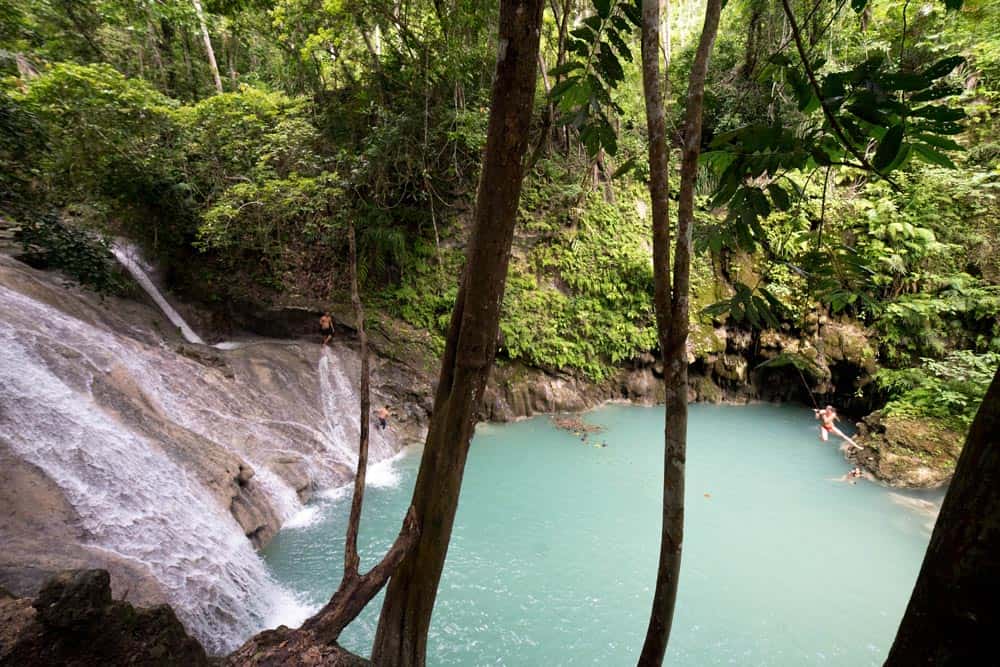
Pahangog Falls: Pahangog Falls are also known as Twin Falls and are a perfect complement to Ingkumhan Falls. The main drawback is the access road. After continuing up the road that took you to the previous falls and turning right at the school you’ll come across, you’ll reach a small basketball court. You can either park and have a local take you by motorbike to the falls’ entrance (100 pesos per motorbike) or finish the route on your own. If it has rained recently (as was our case), we strongly recommend parking and letting yourself be taken. We tried to do it on our own and the effort—and a fall (no serious consequences)—made us regret that decision.
After reaching the end of the road (you’ll see a small stall selling snacks and soft drinks) and a descent of about 10 minutes, you’ll arrive at these wonderful waterfalls. You can swim in a large turquoise‑colored pool, get a natural massage under the big stream of water or, if you’re brave enough, jump from over 10 meters at the left‑hand fall. If you liked the previous waterfalls, this one will definitely win you over.
The entrance fee is 50 pesos, and there’s also the option to rent large rest huts or big donut‑shaped floaters to relax in the water. Unfortunately, although the path is straightforward, it’s recently become mandatory to hire a guide for 200 pesos per group. They also charge 20 pesos to park a motorbike.
Pangas Falls: Pangas Falls are in a completely different area from the previous ones and are an excellent plan if you’re coming from or going to the Chocolate Hills, as they’re on the way. In this case the road is much quicker and easier than the others—it’s straightforward. Entrance costs 30 pesos per person and you reach a medium‑sized waterfall with a large swimming area surrounded by palms. This waterfall is often very crowded because it’s easy to access and close to a tourist spot, but it’s ideal for cooling off during your route exploring the best places to see in Loboc.
We recommend visiting in the morning, as from 14:00 the shade of the palms starts to cover the area.
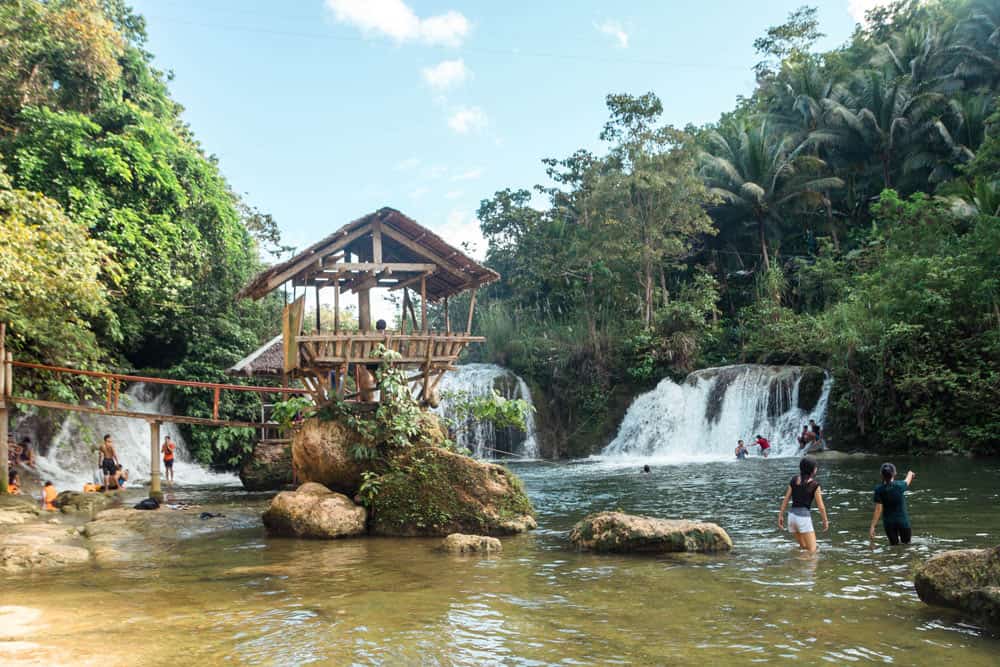
Busay Falls: Heads up! There are two Busay Falls in the Loboc area and it’s fairly common to go looking for one and end up at the other. Here are the details:
The first Busay Falls we’ll talk about (they’re all marked on the map at the end of the article) are on the way to the Bamboo Hanging Bridge. Shortly before arriving you’ll see stairs on your left that go down to the Loboc River. There you’ll find the first Busay Falls in the area (on Google Maps now called Busai Dream Falls) and you can jump into the water using the rope installed on the bank. Keep in mind that the Loboc River usually runs strong in that area and it’s more of a place to swing and jump for a while than to relax in the water.
The next Busay Falls are located right below the Loboc Ecotourism Adventure Park and are what you’ll see when you launch yourself on the zipline—totally worth it! Seeing them from there is easy, but accessing them is another story. To do so you’ll need to rent a kayak from the Nuts Huts resort and paddle upstream for about 10 minutes. Note that this resort is a bit far from the main road and the access road turns into a mud pit on rainy days. If you prefer, you can reach the resort aboard one of the taxi‑boats that depart from near Loboc town.
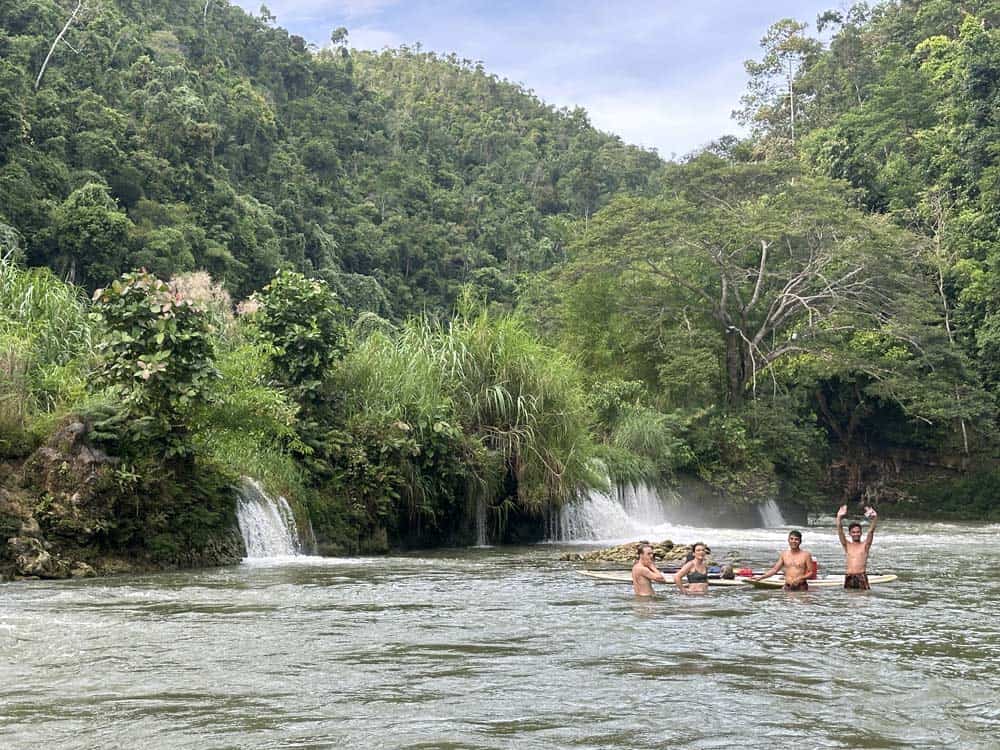
Camugao Falls: these falls are in the Balilihan area and are among our favorites. They’re fairly convenient to visit after the Corella sanctuary or the bamboo bridge and are perhaps the most picturesque. There’s a short walk, but nothing major.
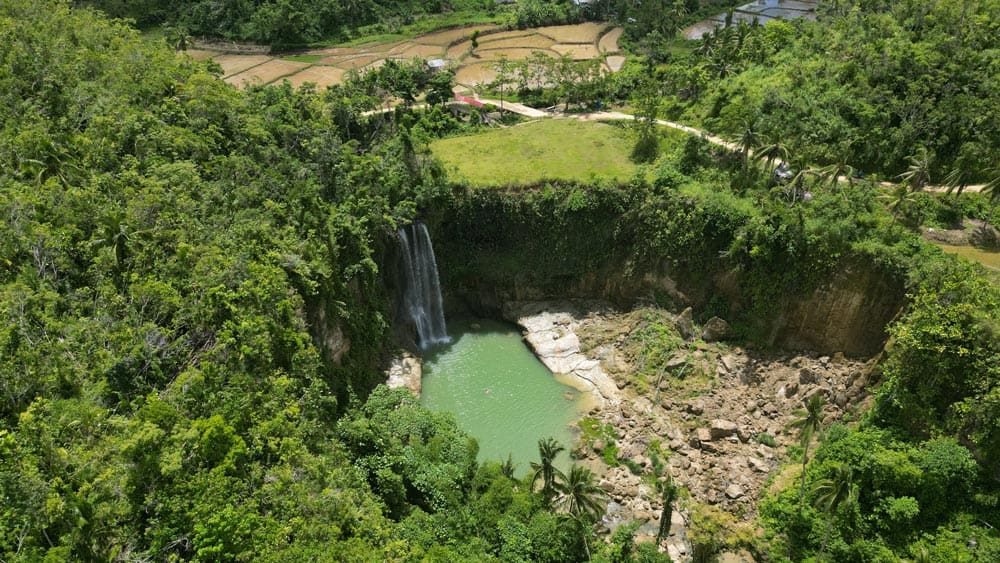
You can read about them and more around the island in our article Bohol waterfalls.
7. Chocolate Hills
The Chocolate Hills are among the most popular places not only in Bohol but in all the Philippines. These spectacular, singular rock formations create a unique landscape that’s very much worth seeing (we’ve already lost count of how many times we’ve explored them).
It’s one of the main things to do in Loboc and for that reason we’ve dedicated a full guide so you can learn all the details: Chocolate Hills. There you’ll find the different viewpoints and how to see them on your own.

8. Bilar Man‑Made Forest
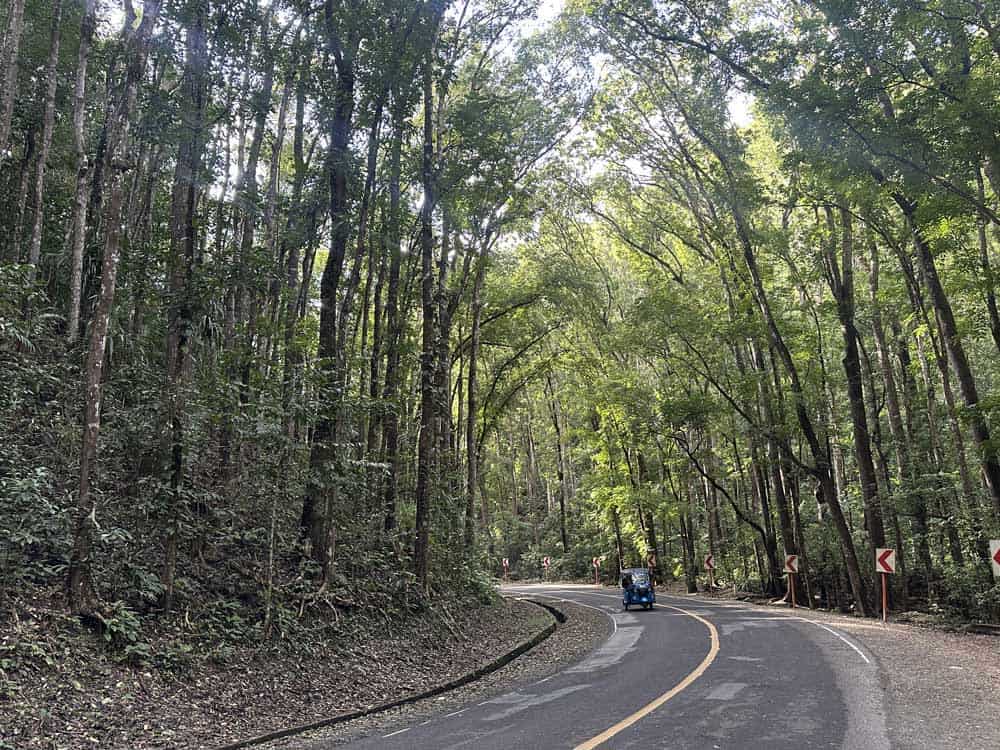
The Man‑Made Forest is on the way, for sure, when you go from Loboc to the Chocolate Hills area. This forest’s story goes back to World War II, when the area suffered intense deforestation due to kaingin, a very aggressive farming system. Over the years, thousands of mahogany trees were planted to mend that environmental tragedy.
Now, hundreds of tourists stop daily along the more than 2 kilometers of road that cross the Man‑Made Forest to take photos in this very special place. The light filtering through the mahogany canopy, the orderly arrangement, the lushness and the colors create a magical atmosphere that makes us stop every time we explore the area.
Just be very careful when you stop because it’s still a through road and there are trucks, cars and vans that drive fast. It’s a tourist spot—but always keep your wits about you.
9. The tarsiers of Corella
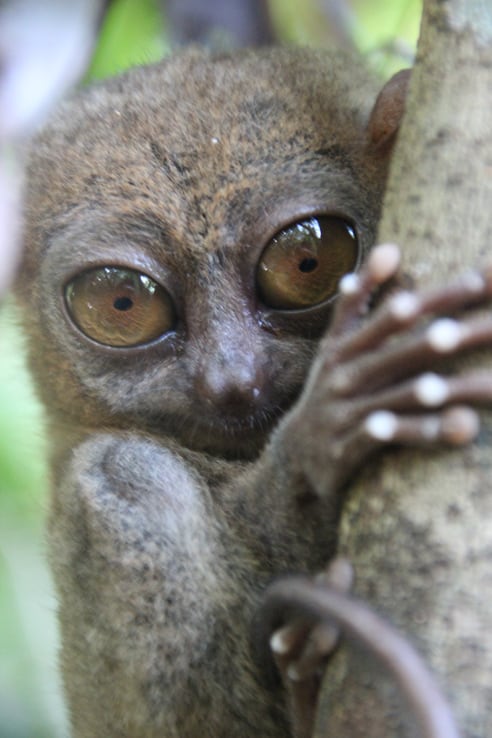
The tarsier, tarsier in English, is one of the most emblematic animals in the Philippines and it can be seen very easily in Bohol on an excursion from Loboc. This tiny animal is the smallest ape (not a monkey) on the planet and its characteristics are truly curious:
- It’s the mammal with the largest eyes in proportion to its body
- In fact, its eyes are bigger than its brain
- They are nocturnal animals
- Though very slow and not fond of moving, when they have to hunt they can leap up to 5 meters
You can discover all this and more on your visit to the Corella Tarsier Sanctuary. The price is 150 pesos per person.
Why do we recommend the Corella Tarsier Sanctuary and not the others (not even the one on the way to the Chocolate Hills, which is awful)? This center is run by the Philippine Tarsier Foundation, an NGO dedicated exclusively to protecting this animal. At other nearby centers where you can see the tarsier there have been many complaints about the state of the facilities and the stress the animals are subjected to (crowds of people, noise, hitting the trees where they’re perching to make them move, camera flashes, etc.). Just take a look at the Google Maps reviews—especially those of the so‑called Bohol Tarsier Conservation Area—to be shocked by the way they’re treated.
Bear in mind that, being a nocturnal animal, the tarsier tries to sleep during the day. So when you visit, please try to make as little noise as possible and don’t disturb its rest.
10. Bamboo hanging bridge (or Sevilla Twin Hanging Bridge)
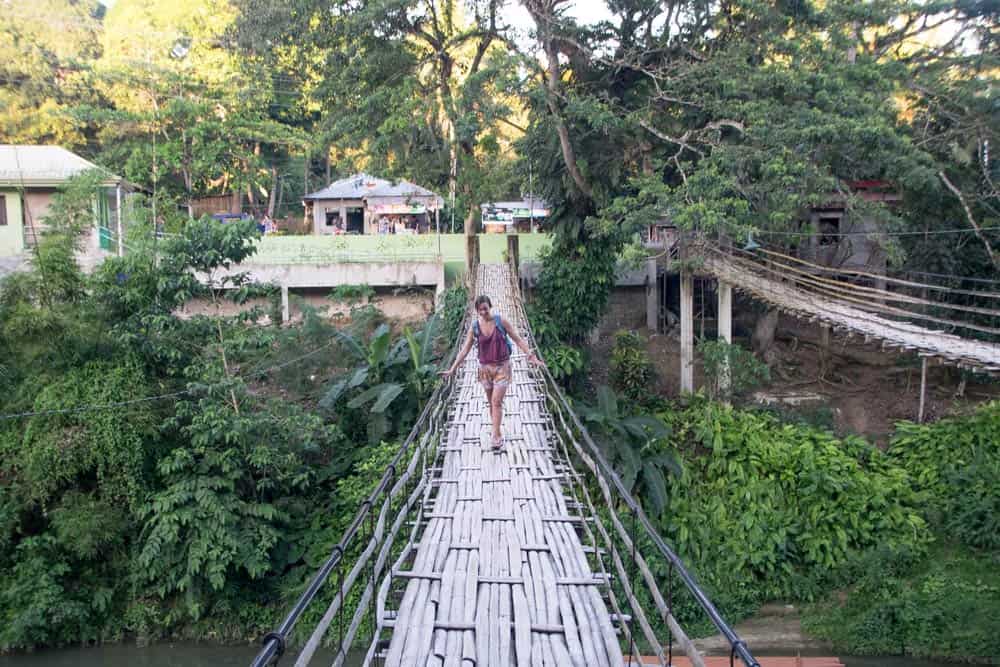
The bamboo hanging bridge is one of those things to do in Loboc that divides travelers’ opinions. Some think it’s a very fun experience and others say it isn’t really worth it. In our case, we think it’s a cool visit and a great complement to wrap up an itinerary of things to do in Loboc that has already taken you to places like the zipline, the Chocolate Hills or Pangas Falls.
Entrance costs just 50 pesos, and with it you can do a round trip over the Loboc River while crossing these bridges which, we warn you, move quite a bit and can scare those who are afraid of heights! It’s a nice place to take photos of the Loboc River.
11. San Pedro Apóstol Parish and the town
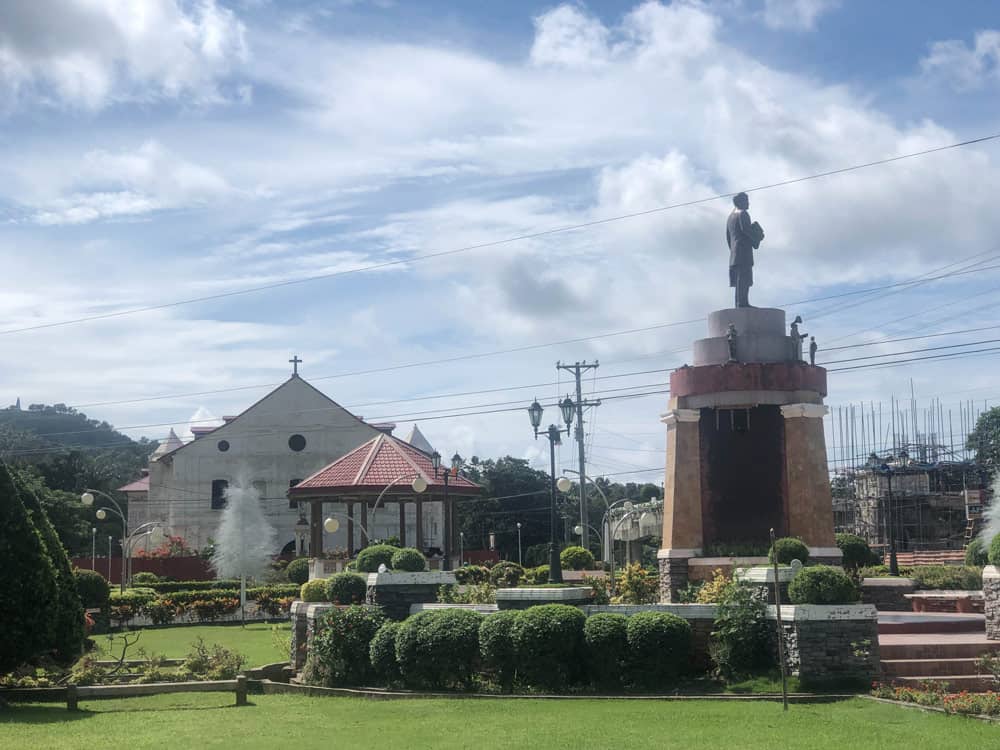
Although it’s far from one of the most attractive towns to visit in the Philippines, we can’t finish this Loboc guide without mentioning San Pedro Apóstol Parish, also known as Loboc Old Church. Just 100 meters from the river stands Bohol’s second‑oldest church, completed in 1638. Romanesque in style, its interior used to feature different frescoes and a beautiful, colorful altarpiece. Unfortunately, a 7’2‑magnitude earthquake in 2013 destroyed much of this sacred building, but it can now be seen largely restored.
Loboc town doesn’t have much more to offer historically/touristically. In the main square you’ll find a motorbike rental stand at a very good price, a 7‑ELEVEN and a few carinderias or barbecue skewer spots, which are the only pockets of evening atmosphere in Loboc.
12. Explore the rest of Bohol
To finish, we don’t want to stop suggesting that, besides Loboc, you spend some time exploring the rest of Bohol, which is one of the largest islands in the Philippines and offers a variety of things to do. Whether you base yourself in Loboc and go from here or stay overnight in each place, our advice is to spend at least one day snorkeling or diving in Balicasag and then a couple of nights around Anda, which has more waterfalls, beaches and fabulous mountains.
To help you plan, you’ll find ultra‑detailed guides on our website:
- Things to do in Bohol
- Snorkeling tour in Balicasag
- Diving in Balicasag
- Things to do in Anda
- Things to do in Panglao
Practical info about Loboc
To round out your visit, here are some practical details about Loboc.
Where to stay in Loboc
The Loboc area has accommodation for all tastes and budgets. In our Best hotels to to stay in Bohol guide, we dedicate an entire section to accommodation in this area. Here are a couple of places in Loboc where we stayed on our last visit and which we recommend:
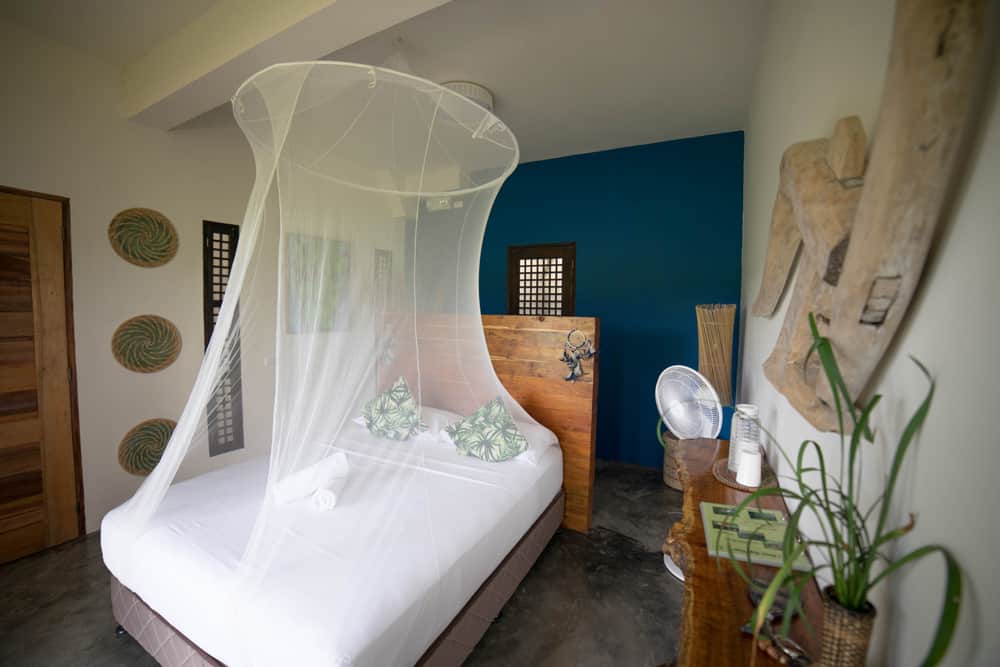
- Loboc River Resort: surely the most famous place to stay in Loboc and our top recommendation if you want a standout experience, because it’s the only one with bungalows overlooking the river—completely changes the game. It also has 2 pools with river views and a fabulous restaurant. ➡ Availability and prices
- Fox & the Firefly Cottages: surely the most famous place to stay in Loboc. Located just meters from the river and next to rice fields, they offer rooms with unique decor. Its terrace is an ideal place to end the day and the open‑air bathrooms are an experience you have to try. You can read our experience at Fox & the Firefly Cottages here. ➡ Availability and prices
- Michelina Princess Guest House: Much cheaper and just minutes from the town center, it has very spacious rooms, air conditioning, good Wi‑Fi, breakfast included and a very friendly owner. The only downside is that there’s no hot water. You can read our experience at Michelina Princess Guest House here. ➡ More information
As more and more of you decide to base yourselves in the area, we’ve created a dedicated article to go deeper into hotels to stay in Loboc.
How to get to Loboc
The first thing you’ll need to do to reach Loboc is get to the island of Bohol—you’ll find all the details in How to get to Loboc. Once there, depending on your port of entry, you’ll need to take one route or another.
- From Tagbilaran head to the DAO Terminal bus station. Buses to Loboc depart as they fill up. It takes about 45 minutes and costs roughly 50 pesos.
- From Panglao, you can take the bus that leaves next to the Alona McDonald’s (70 pesos) or a tricycle (around 300 pesos) to the DAO Terminal. From there, take a jeepney or bus to Loboc as described above.
- From Jagna Port (if you’re coming from Camiguin), go to the main road and take a jeepney, bus or van that drops you at the Loay junction (about 45 pesos) and there take another bus or jeepney to Loboc (around 15 pesos). Allow about 90 minutes.
- From Panglao Airport, you can go to the DAO Terminal by bus or book this transfer.
- From Anda, take any bus or van heading to Tagbilaran (schedules are quite erratic; expect around 100 pesos) and get off at Loay. At the intersection, wait for a jeepney or bus to Loboc (about 15–20 pesos). Expect a bit more than 2 hours in total.
Where to eat in Loboc
Although the options are far fewer than in Panglao, you still have several interesting places to eat in Loboc. You’ll find all the information in Where to eat in Bohol: Panglao, Loboc and Anda.
More tips for visiting Loboc
- Bear in mind it’s an area with little tourist development (for now), with its advantages and disadvantages. You won’t find a huge selection of restaurants or bars, but you will find a very different Bohol compared with Panglao.
- If you need cash, there’s a Cebuana pawnshop (we’ve marked it on the Loboc map below) to use Remitly, which is the best way to get cash in the Philippines. We explain everything in Remitly in the Philippines, where you also get $10 free.
- Choose the way to visit Loboc that best suits you—either as a day trip from Panglao or by spending a couple of nights.
- 4G coverage from both Smart and Globe works well at lodgings near the town. You’ll find more info in Internet in the Philippines.
- If you go for kayaking or paddleboarding and don’t have much practice, avoid the stretch where the Loboc River cruises pass. They’re not super fast, but it might overwhelm you.
- The best time to see Loboc is roughly from October to May, when in theory it rains less.
- Personally, although we love Loboc, we wouldn’t leave Bohol without doing a Snorkeling tour in Balicasag or some diving in Balicasag.
- If you’re riding a motorbike, watch out for dogs, roosters/chickens and people crossing the road—especially at night.
- If you’ve got motorbike experience, we highly recommend going to the Chocolate Hills at sunrise or sunset—it’s even more magical.
- Please be a responsible traveler and avoid taking part in animal activities in the area such as the serpentarium, fake tarsier “sanctuaries” or the butterfly garden.
Map of Loboc
To help you get your bearings, we’ve created this map where we mark all the points of interest: