Camiguin is one of the most impressive and diverse islands in the Philippines. The fact that it has more volcanoes per square kilometer than anywhere else in the world gives you an idea of just how dramatic its landscapes are. There’s so much to see and do in Camiguin, making it ideal if you love active trips, nature, and destinations that offer more than just beaches on your trip around the Philippines. Plus, even today, it still has the charm of an island that hasn’t been overdeveloped for tourism, so unless you visit on local holidays, there’s a good chance you’ll have many of these places in Camiguin all to yourself.
Hiking among volcanoes, swimming in natural pools, visiting huge waterfalls, diving, snorkeling… We’ve been visiting Camiguin since 2010 (most recently for two full weeks!) and we’re already dreaming of going back, so we’re going to share all our tips and favorite spots so you can enjoy it to the fullest. Keep reading and discover the best things to do in Camiguin, Philippines.
How many days to stay in Camiguin
If you keep reading, you’re going to be amazed by the number of places to see in Camiguin. Being such a fascinating island, with so many things to do, it would be a shame to stay for less than 3 full days. By full days, we mean days that don’t include arrival or departure transfers.
If you can, stay at least 4 or 5. We promise you’ll fall in love with Camiguin. As we mentioned, we stayed for two full weeks on our last visit and we assure you we didn’t have a single day to spare.
A good way to organize your Camiguin itinerary could look something like this:
- Motorbike loop: Katibawasan Falls, Walkway to the Old Volcano, Sunken Cemetery, and Ardent Hot Springs
- Motorbike loop: Tuasan Falls, Bura Soda Water Swimming Pool, Sto. Niño Cold Spring, and Moro Tower
- Mantigue Island and White Island
Even so, we recommend visiting Mantigue and White Island on 2 separate days and taking it easy. Seriously, Camiguin is a beautiful island that doesn’t deserve to be rushed.

DO YOU LIKE OUR CONTENT? Help us keep the site alive.
Keeping this website up to date — from researching routes and testing accommodation to writing every guide
and answering hundreds of your questions — takes time, energy, and more coffees than we’d care to admit.
If any of our tips are useful to you and you’re thinking of getting discounted travel insurance,
booking a hotel, booking your flights, using Remitly, etc., we’d appreciate you doing it through our links.
- You pay exactly the same (sometimes even less thanks to our discounts).
- We receive a small commission that we reinvest in keeping the site running,
researching, and publishing free guides. - You get the same price, we can keep creating independent content,
and everybody wins.
Thanks for supporting this project and joining us as we explore every corner of the Philippines.
Where is Camiguin
Small but mighty Camiguin is a province in the Northern Mindanao region and lies 12 kilometers off the coast of Mindanao. To give you an idea, it is 53 kilometers south of Bohol and 102 kilometers west of Siquijor. As we explain in detail in How to get to Camiguin, it is easily accessible from Bohol and Mindanao (Balingoan) by boat and from Cebu by plane.
The island has 2 main ports, Benoni and Balbagon, as well as a small airport. We’ve marked them all on the map below.
If the word Mindanao makes you nervous, don’t worry! Camiguin, just like Siargao (which is also geographically part of the Mindanao island group), is considered a safe island for travelers.
Things to see and do in Camiguin
Like many islands in the Philippines, Camiguin has its own character and attractions that make it very different from those around it. One thing that really stands out is its mountainous terrain. This is a volcanic island made up of four stratovolcanoes, three of which have several domes. This, together with its lush greenery, is why many people call the island a “little Hawaii” and why, beyond ticking off the main things to do in Camiguin, one of the best experiences is simply enjoying the landscapes as you explore, along with its simplicity, lack of mass tourism and, of course, the infectious warmth of its people.
1. Enjoy Camiguin’s beautiful waterfalls
With so many mountains and towering volcanoes, it won’t surprise you to hear that Camiguin has several beautiful waterfalls where you can take a refreshing dip. Below, we cover the most interesting ones, and we recommend not missing any of them.
Katibawasan Falls
Camiguin’s highest waterfall awaits, with a 70-meter drop and a beautiful setting, although it has now been lightly “developed” for tourism and you’ll find a few picnic tables. You can take a refreshing dip in the pool at its base. The entrance fee is 75 pesos and you can get there easily by motorbike or tricycle. Open from 8am to 5pm.
Pro travel tip: get up early and you may have the falls all to yourself. That said, keep in mind that, being surrounded by lots of vegetation, the best time to see them in good light is around midday. Your call!

Tuasan Falls
This is the most powerful waterfall in Camiguin and is perfect for a swim. The area has been lightly developed, but it has remained fairly “natural” and it’s also a great stop if you’re exploring the island’s interior (which we highly recommend). The entrance fee is 75 pesos. Open from 8am to 5pm.
Binanwagan Falls
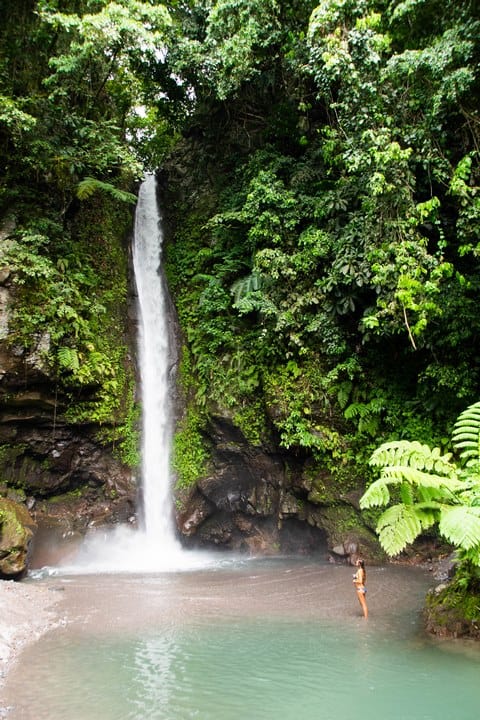
Located north of Sagay, Binanwagan Falls is also known as Hidden Falls, as it’s less visited than the waterfalls mentioned above, so there’s a good chance you’ll have it all to yourself. The waterfall is by no means as impressive as the others we mention in this guide, but if you’re in the mood for a little adventure, this is the place for you.
Getting there can be a bit of an adventure, and you may not find it, but it’s worth trying. First, you have to drive to this point, just before the bridge. Be very careful because it is a winding road with a fairly steep incline, so you’ll have to pay even more attention on the way down, when your brakes will be working harder. Once there, you’ll see some stairs on the left (there’s a turquoise sign) and, when you reach the water tank with pipes, you’ll have to turn left. From there, a rough path begins through the forest that’s a bit slippery and it’s not unusual to come across the occasional leech, so we recommend wearing proper footwear and long pants. In total, it will take you about 45–60 minutes.
If you feel like going but are worried about getting lost (we already said it’s easy to miss the path), you can also look for a guide at the Camiguin tourism office. Guides usually charge around 600 pesos per group.
Update 2026: a reader tells us that there has been a major rockfall on the final downhill stretch and the path has disappeared, and that the falls have been partially covered with rocks from the landslide. In addition, the road down is extremely steep, so some travelers have even had accidents due to brake failure. For that reason, rather than removing the falls from the guide, we’re noting it here so you don’t think we skipped them. We simply want to prioritize your safety.
2. Island hopping: visit Camiguin’s neighboring islands, with idyllic white-sand beaches
Although the beaches of Camiguin are not the most photogenic, as most of them are black sand, there are two nearby islands that are well worth an island-hopping trip.
You can combine both islands if you plan it well. You can visit Mantigue and then watch the sunset at White Island, or do it the other way around: watch the sunrise at White Island and then visit Mantigue.
Read all about these excursions in Island hopping in Camiguin.
White Island
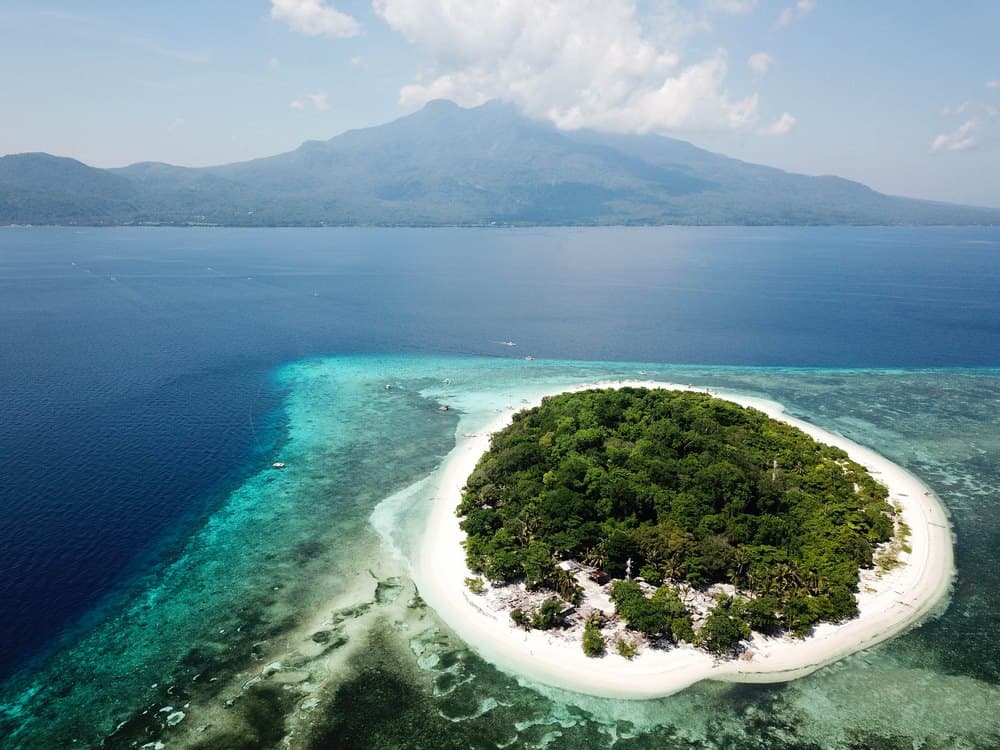
One of the must-do things in Camiguin is to visit White Island. This long strip of white sand will not only give you the chance to enjoy a great swim, but you’ll be able to take in panoramic views of Camiguin and, believe us, it’s breathtaking.
How do you get to White Island? Head to Yumbing, where the boats depart. A private bangka (up to 4 people) costs 550 pesos (round trip) and you’ll have to pay 50 pesos per person in fees. You can stay as long as you like; you just have to tell them a time and they’ll come back for you. If you can’t find more people, the easiest option is usually to show up at the port and join another boat to keep costs down.
White Island is spectacular at any time; the main thing to keep in mind is the tide. It’s best to visit at low tide to see it at its best.

Mantigue Island
This island offers beautiful beaches as well as a marine sanctuary full of life that will win you over, and for that reason we’ve selected it as one of the best places to snorkel in the Philippines. If you don’t bring your snorkel gear, you can rent it there for 150 pesos.
How do you get to Mantigue Island? You have to go to the San Roque pier, from where boats depart for the island. The boat costs 750 pesos for up to 4 people. In addition, you’ll have to pay 75 pesos per person in environmental fees. You can stay on the island for 3 hours, but you can extend your stay by paying a little extra.
If you plan to eat there, you’ll have to bring your own food. There used to be a few small food stalls, but other travelers have told us they’re no longer there.
3. Go hiking on Camiguin’s volcanoes
Camiguin has no fewer than 12 volcanoes. If you like hiking, you’ve got several options!
Walkway to the Old Volcano and Stations of the Cross
Even if you’re not religious, the views from this trail are well worth it. It’s a route along the slopes of Mt. Vulcan that will lead you to enjoy beautiful views of the island, its vegetation, and the Sunken Cemetery. As you climb, you’ll see the 14 Stations of the Cross represented by very colorful sculptures.
The entrance fee is 20 pesos per person. No guide is needed. Open from 7:30am to 5pm.
Trekking to Hibok-Hibok
If you love hiking, Camiguin gives you yet another great reason to visit. Hibok-Hibok is an active stratovolcano, but it can be climbed safely with proper preparation. Although it isn’t the highest mountain on the island, it’s one of the most imposing, as its last eruption in the 1950s killed around 600 people.
Climbing to the summit of Hibok-Hibok (at 1,330 meters above sea level) and enjoying the impressive views of White Island, Bohol, Siquijor, Mindanao, and the crater lake is one of the most incredible things to do in Camiguin. The route to the summit that is currently open (the Yumbing Trail) takes between 3 and 5 hours. If you’re in decent physical shape, the full hike will take about 8 hours, and we recommend starting at 5:30 in the morning to avoid the heat and have a better chance of a clear summit. Bring plenty of water! In addition, since there are quite a few leeches and mosquitoes, we strongly recommend wearing long pants and socks, repellent and, of course, proper hiking shoes or boots.
To climb Hibok-Hibok, you need a DENR permit, so you need to stop by their office in Mambajao to obtain it or ask your guide to handle it for you. It costs 500 pesos per person. Guides charge 1,500 pesos for 1 to 3 people.
Read all the details in our guide to the Hibok-Hibok trek.

4. Explore Camiguin’s underwater world
Camiguin isn’t only beautiful above the sea; beneath the surface you’ll find plenty of marine life and incredible places to discover.
Scuba diving in Camiguin
Although it’s less famous for diving than other diving spots in the Philippines, it’s worth spending at least a day scuba diving in Camiguin. The island has no fewer than 31 marine protected areas. There are several dive schools offering daily trips to Mantigue Island (we’ll tell you more soon), but we also recommend including Old Volcano and the Sunken Cemetery.
A dive in Camiguin costs about 1,100 pesos, but you’ll need to add the sanctuary fees (around 150 pesos) and equipment rental (around 400 pesos per day).
Freediving in Camiguin
If you practice freediving or would like to, Camiguin is one of the best places in the Philippines for it. Kurma Eco Beach Lodge is also a great place to stay in Camiguin, with freediving instructors and daily yoga classes.
Giant Clams Sanctuary
Located in the southeast of the island, in Cantaan, this is one of the most unique places to visit in Camiguin. It’s a giant clam nursery that you can visit. Although it may not sound very exciting, believe us, the experience is worth it. You’ll learn a lot from the guides’ explanations and the snorkeling is great.
You’ll have to pay 75 pesos to enter, plus 300 pesos to snorkel with a guide (mandatory) and 50 pesos if you bring your own gear. It’s around 50 pesos more if you need to rent gear. The fee system is a bit confusing.
Interestingly, the beach at the Giant Clams Sanctuary (Kabila White Beach) is the only beach on Camiguin itself, not counting White Island or Mantigue, that has pale sand. For us, it’s the prettiest of them all.
Update 2026: unfortunately, at the moment, the sanctuary is closed due to permit issues. If you want to see giant clams, you can see some at Sunken Cemetery and at Cabuan Community Village.

Blue Lagoon
In Lawigan, you’ll find this snorkeling area with plenty of marine life, possibly the best on the island. In fact, it’s not unusual to come across a turtle or two. You’ll need to pay a 100-peso snorkeling fee, and you can hire a guide for 250 pesos, although this isn’t mandatory.
It used to be a well-equipped spot to spend a few hours, with huts for shade and other basic facilities. However, on our last visit we saw that almost everything had fallen into disrepair. So it’s probably better to head straight into the water from the port area and ignore the paths. The best part of the snorkeling is still the small bay.
Mantigue Island
Don’t forget your snorkel mask when you go to Mantigue Island because its marine sanctuary will wow you with its marine life and coral. Plus, it’s not unusual to spot turtles! They’re definitely easier to see when diving, but it’s common to come across one or two—much easier if you hire a guide.
Sunken Cemetery
Located in Bonbon barangay, Catarman, this is one of the best snorkeling and diving spots in Camiguin. It’s the site of an old cemetery that sank due to volcanic eruptions between 1870 and 1948.
Although it might sound a bit eerie, you can hardly see any graves now, as they were buried by sand and coral grew over them. The area has plenty of marine life (including lots of giant clams), and it’s possible to see a statue and a couple of crosses. We loved it. The entrance fee is 100 pesos per person, but you’re required to go with a guide who charges 150 pesos. Don’t forget your mask and snorkel! Otherwise, you can rent them there. If there’s a strong current, our advice is to rent fins as well (25 pesos).
We recommend avoiding the lowest tide, as the coral is very shallow, which makes snorkeling more uncomfortable.
By the way, Sunken Cemetery is one of our favorite places to enjoy the sunset in Camiguin. It’s super photogenic!

5. Relax in Camiguin’s natural hot springs
Did you think that was all there was to do in Camiguin? Well, there are also several beautiful natural pools where you can take a dip and soak up that local vibe we love so much on the island.
Santo Niño Cold Spring
These aren’t our favorite pools in Camiguin, but they are a fun place for a swim and a good spot to soak up the local atmosphere, as it’s usually quite busy. As the name suggests, the water is cold (VERY cold). They’re quite developed, with shaded areas and even a restaurant.
Entrance costs 75 pesos per person.

Sa-ay Cold Spring
For a much more private experience, one of the quieter stops you can make in Camiguin is a visit to these natural pools at the foot of Mt. Hibok-Hibok, in Quipasa. Getting there by motorbike is easy and entrance is free.
Hibok-Hibok Ardent Hot Springs
These natural pools are perfect for ending a day of exploring around Camiguin, since the water comes from Mt. Hibok-Hibok and, therefore, it’s warm! Entry costs 50 pesos, and you can try all the pools, which have water at different temperatures. However, bear in mind that the temperature depends on volcanic activity, so sometimes they’re not as hot as you’d expect.
They’re open until 10pm and you can buy something to drink at the shop, so it’s the perfect place to relax.
Bura Soda Swimming Pool
This pool is very similar to Santo Niño Cold Spring (developed), but here the water is cold and fizzy. Yes, soda! The water is safe to drink, so if you like sparkling water, you can refill your bottle at one of its fountains.
Entrance also costs 75 pesos per person. Open from 8am to 5pm.

6. Explore Camiguin by motorbike at your own pace
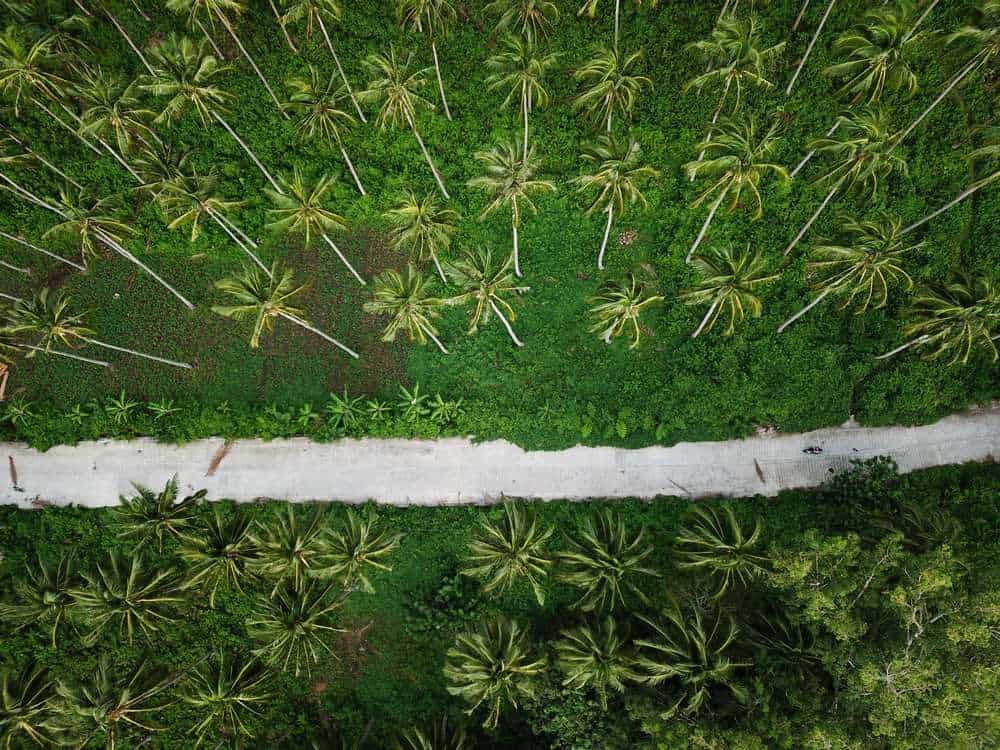
We love everything above, but what we love most about Camiguin is exploring it by motorbike. The landscapes are incredible. Rice fields, palm groves, rivers, mountains, volcanic-sand beaches, charming colorful towns, welcoming people… The best thing you can do in Camiguin is simply soak it all in.
The roads are in good condition and there isn’t much traffic. However, always drive carefully and, if you don’t have much experience with motorcycles, you can always opt for a tricycle. Motorbike rental in Camiguin is around 400 pesos per day, a little less if you’re going to use it for several days.
If you’d like our contact for renting bikes for 300–350 pesos (a real bargain!), leave us a comment and we’ll give you all the info.
If you’ve never ridden a motorbike before, please don’t start in the Philippines. In that case, we can give you the contact details of a lovely, trustworthy tricycle driver, as well as a car rental option.
Here’s a little secret: the roads that cut through the island’s interior are spectacular—don’t just stick to the road that circles the island! Itum Road has epic views of Camiguin’s volcanoes, passes by the Hibok-Hibok Observatory (where you can get information about eruptions) and also has some stunning viewpoints, like the one at Utopia Café (recently opened). Plus, it takes you to the entrance to Tuasan Falls and you can continue toward the Bura Soda Pools and The BeeHive Driftwood Cafe, a quirky place to watch the sunset.
Here are a few extra places of interest (in addition to those we’ve already recommended) that you can visit by motorbike:
Guiob Church (Old Spanish Church Ruins) and the watchtower (Moro Watchtower)
Due to all the volcanic activity, there are only a few historical sites to see in Camiguin. One of the few places of interest is the ruins of an old 16th-century Spanish church, Guiob Church. Although little remains of what it once was, if you’re near the Bonbon neighborhood, stop by to admire this piece of history, which now has a newly built chapel inside. Next to it, you’ll also find the ruins of an old convent. The entrance fee is 75 pesos per person. Open from 8am to 5:30pm.
Another remnant of the Spanish period is the Moro Watchtower, which was used to watch out for possible attacks on the island by Moro raiders from Mindanao. To get there, you’ll have to go through a school, so don’t be surprised if you become the kids’ main attraction! Entrance is free.

Lovers’ Secret Bridge
Also known as Katunggan Park, this boardwalk crosses beautiful mangroves next to Benoni Port. If you have time, it’s a pleasant walk to enjoy these mangroves, spot birds and the occasional crab. The entrance fee is 50 pesos per person and it’s open from 8am to 5pm.
Ancestral Houses of Camiguin
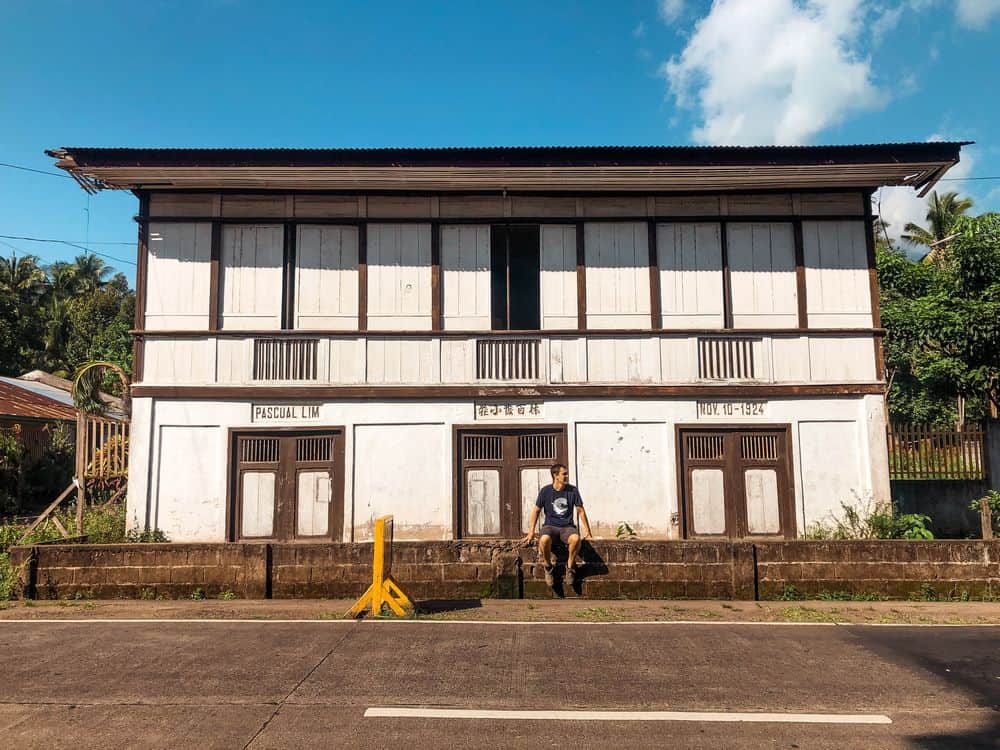
On our last visit to Camiguin, we were amazed by how many ancestral houses there are on the island. These are mansions that mainly belonged to Chinese immigrants and their descendants, and many date from the late 19th or early 20th century. On many of their facades you can find inscriptions showing their construction date and the owner’s name. Unfortunately, many of them are neglected and maintenance is almost non-existent, but even so, it’s worth stopping to take a look.
We found most of them on the route from Mambajao to Mantigue Pier: here, here, opposite the Chinese cemetery and here (this last one is our favorite and the one in the photo below). But you can also find another example in the Yumbing area, right here. You can see them all on the map at the end of this article.
7. Celebrate with the people of Camiguin at the Lanzones Festival
Filipinos are known for their fiestas, and one of the best is Camiguin’s biggest celebration, the Lanzones Festival. Lanzones is a delicious fruit closely associated with the island, and its harvest is the reason for a huge celebration featuring colorful parades and dances.
It’s usually held during the third week of October. So if you plan to visit Camiguin around those dates, book accommodation as soon as possible! You can find the program of activities here.
If you’d like to discover the archipelago’s more cultural side, don’t miss our article on the Festivals of the Philippines.
More travel tips for Camiguin
We’ve covered the main points, but Camiguin is an island that offers so much more. So here are a few more things to do in Camiguin and tips to help you enjoy the island:
- Although most of Camiguin’s beaches are black sand and therefore far from the picture-perfect tropical beach you might have in mind, they still have their own charm. In our opinion, the prettiest are Turtle Beach, Chill’s Beach (a great sunset spot), Yumbing’s town beach, the beach by the Giant Clams Sanctuary (you can visit it even if the sanctuary is closed) and the one at Sunken Cemetery.
- The sunsets from Sunken Cemetery are spectacular, but they’re also fabulous from the Beehive.
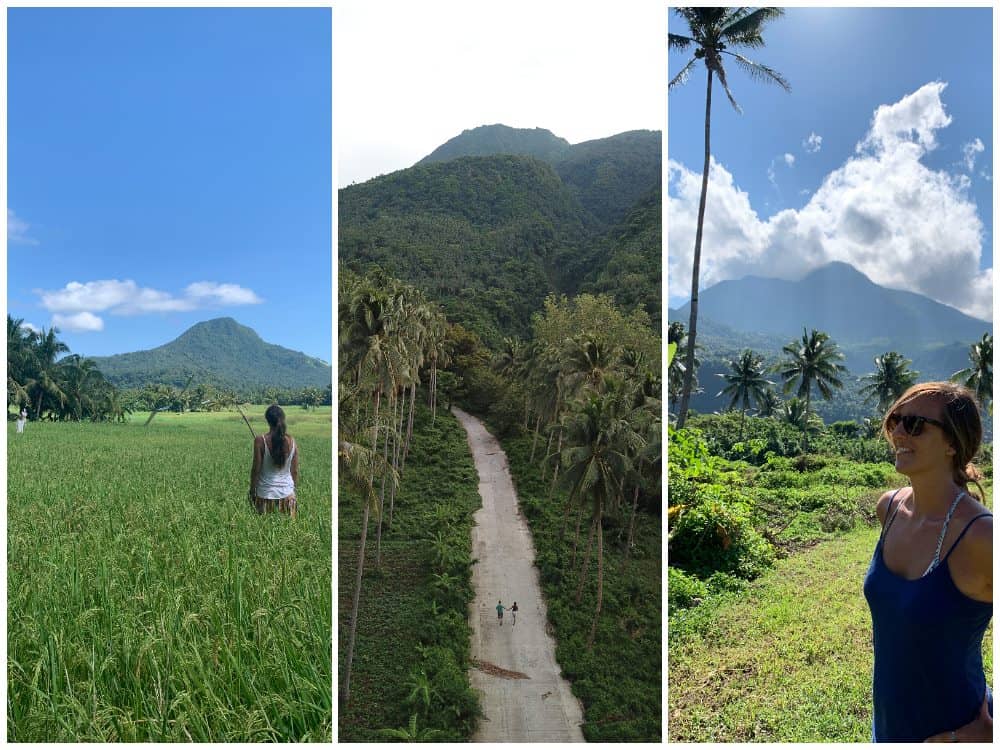
- Camiguin has some beautiful rice fields with volcanoes as a backdrop. We love getting lost and exploring, but we’ll tell you that the prettiest are those in Sagay (roughly here) and the ones before reaching Mahinog on the way to Mantigue Pier if you’re coming from Mambajao.
- Near the departure port for boats to Mantigue, there’s a lagoon with a zipline, some giant inflatables and a couple of restaurants that aren’t bad at all. If you have extra time in Camiguin, it’s worth a stop! It’s called Taguines Lagoon.
- If you want to splash out, there are scenic flights by light aircraft over Camiguin. You can choose between flying over the sandbars or the volcanoes. Prices range between 16,000 and 25,000 pesos. The company is called Camiguin Aviation.
- The restaurant scene in Camiguin keeps getting better—check out our favorites in Best restaurants to eat in Camiguin.
- Camiguin’s weather is a bit peculiar. Although, in theory, it’s a good island to visit between July and September, the driest time is usually between March and May. Locals in Camiguin told us it tends to rain more between September and November. We’d say there really isn’t a bad time to visit Camiguin.
- As in the rest of the Philippines, the tap water in Camiguin isn’t safe to drink. Filipinos don’t drink it either, so restaurants and hotels usually have water dispensers where you can refill your bottle to reduce plastic waste.
- There are several ATMs in Camiguin. Although Euronet ATMs are everywhere, we always try to avoid them because their exchange rates can be very unfavorable. Therefore, we always withdraw from the PNB ATM in Mambajao. Remember that 99% of ATMs in the Philippines charge a 250-peso fee. To avoid racking up fees, the best option is to bring cash to exchange, withdraw money from HSBC ATMs in Cebu and Manila using a card that helps you avoid extra fees, or use Remitly and send money to one of the pawnshops around the island (especially in Mambajao). We explain everything in Money in the Philippines and Remitly with $10 free.
- Hospitals in Camiguin aren’t very well equipped, so if you need serious medical assistance, you’ll have to be transferred to Cebu or Manila. Please don’t travel without travel insurance, which we consider essential for a trip to the Philippines. We’ve been using IATI for more than 10 years and we’re very happy with their service. Here’s a 5% discount on your policy.
How to get around Camiguin
As we mentioned above, a motorbike is the best way to visit all these places in Camiguin. Most of the roads are paved and there isn’t much traffic, but of course, if you’ve never ridden a motorbike, we advise you not to start here. You wouldn’t be the first to have a serious accident.
If you don’t feel confident riding one, don’t worry, there are tricycles, motorelas and multicabs (small jeepneys) that you can hire depending on how many people you’re traveling with. If you’re going to spend a whole day exploring, you can negotiate prices with them. In addition, although availability is limited, there are a few places to rent cars.
For short point-to-point journeys, the easiest option is to use motorelas. These are basically a larger version of a tricycle. They have 2 main routes: “Westbound” and “Eastbound”, meaning westbound or eastbound from Mambajao. If you stay in Yumbing and that area, you’ll usually use the “Westbound” route.
Motorelas have fixed fares, which are usually listed inside. The routes you’re most likely to take are:
- Mambajao (Poblacion) to Balbagon (port): 12 pesos.
- Mambajao to Agoho: 13 pesos.
- Mambajao to Yumbing: 13 pesos.
So, for example, if you go from the port to Yumbing, you’ll have to pay 12 + 13 pesos. The motorelas stop at the Mambajao market.
If you’re in a hurry or have a lot of luggage, you’ll need to pay what’s known as the “special rate”. A fair price between Balbagon port and Yumbing is, for example, 150–170 pesos. From Yumbing to the airport, it would be a little less than 200 pesos. Remember to always negotiate respectfully.

How to get to Camiguin
Since Camiguin is less touristy than other islands in the area, it can be a bit difficult to find transport information. In our article on how to get to Camiguin we tell you how to do it from Bohol, Cebu and other places in the Philippines, but the short version is that you can get there by ferry from Bohol and by plane from Cebu. These are the most direct ways to reach Camiguin.
Where to stay in Camiguin
Accommodation in Camiguin keeps getting better, with everything from charming hotels to places where you can watch incredible sunsets—here are our recommendations:
- For great value for money: Mountain View Cottages. You can read all about our stay in Sleeping at Mountain View Cottages, Camiguin.
- For a more upscale stay: SomeWhere Else Boutique Resort.
- For a budget-friendly stay: Shey’s Travellers Inn.
Find the best hotels and areas to stay in Camiguin to enjoy your stay without spending all day on the road.
Camiguin map
Plan your route around Camiguin with this map we’ve prepared:
Camiguin video
We put a lot of love into this video about the island:
If you have any questions or suggestions about what to do in Camiguin, we’d love to hear from you in the comments!