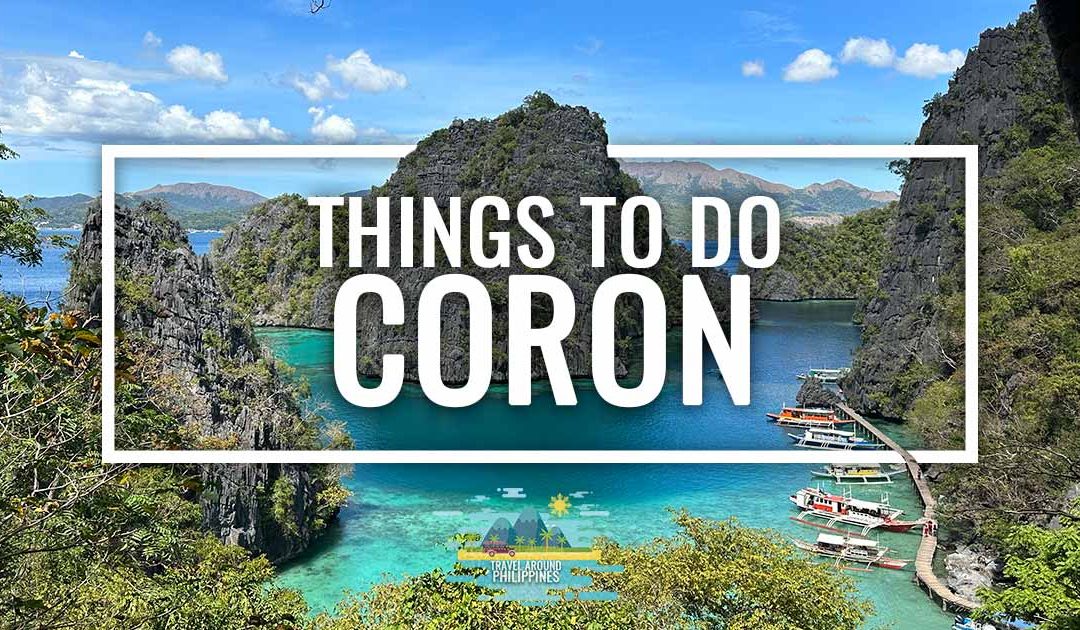
Coron is one of our favorite places to visit in the Philippines. We’ve been eight times (most recently for 12 days) and we’re sure we’ll be back many more times. There’s plenty to see and do in Coron—and, cliché as it sounds, even more to experience.
Coron Island is one of the most beautiful in the Philippines. Here you’ll find landscapes where countless shades of blue and turquoise contrast with the dark, towering limestone cliffs shaped by the karst erosion that’s typical of Palawan. Exploring dreamy lakes, lagoons, and beaches will be the main focus of your days in Coron, but there’s much more—and we’ll walk you through it all.
First of all, a small clarification: Coron Island is the island you’ll visit on island hopping tours, but most travelers stay in Coron Town, a small town located on Busuanga Island, where both the airport and the port are. Keep in mind Coron Town isn’t particularly photogenic and has little to offer travelers—the best of Coron lies beyond town.
We say “Coron” because locals usually call it Coron, not Busuanga—the island where Coron Town sits—which has plenty to do beyond island-hopping. A quick look at the map below will make it clear—this bit can be confusing at first.
How many days do you need to enjoy all the things to do in Coron?
In our opinion, two full days—excluding travel days—are the bare minimum to cover Coron’s main highlights.
You’ll want to dedicate those two days to the two main tours we cover below (Ultimate Tour and Escapade Tour), but we strongly suggest considering four days if you can swing it. This will give you the chance to enjoy one of the best places for diving in the Philippines, visit incredible neighboring islands and go kayaking, among other activities.
Arriving in Coron too late for a tour? Since many flights land around 10:00–11:00 (same for ferries from El Nido), you can use that day for a few of the things to do in Coron that we list below. The most common plan is to pair Siete Pecados (fantastic snorkeling) with Maquinit Hot Springs and Mt. Tapyas. If you’re craving some beach time—even if it’s not a showstopper—head to Cabo Beach.
Also keep in mind that weather in the Philippines is unpredictable. One day it might rain, another it might be windy, or you might just not feel 100% or want to lounge around. That’s why three to four days is a sweet spot.
Still, if you prefer to explore lesser-known spots, Busuanga has beautiful spots beyond Coron Island and Coron Town. For example, on one of our visits we spent a week in Concepcion, on the west coast of the island, riding motorbikes and visiting islands like Pass Island or Black Island from the lovely Ocam Ocam Beach, which we absolutely loved. On another occasion we stayed in Salvacion and went swimming with dugongs off the coast of Calauit. Busuanga is huge and has something for everyone!

Twin Lagoon (Coron Island)
El Nido or Coron? Which should you choose?
Many travelers ask us this question, and with good reason. Just a quick look at photos of both places makes the similarities obvious: both have clear, turquoise water and dramatic karst limestone.
That said, while it’s true that the Bacuit archipelago is vast and the excursion possibilities are endless, how crowded El Nido is these days (unless you book a private tour and can snag a beach to yourselves) can take away from the experience. That’s why we usually enjoy Coron a bit more. Although it draws plenty of visitors, it still doesn’t reach El Nido’s levels—though it’s catching up fast, especially on Ultimate Tour stops. Plus, private island hopping in Coron is much more affordable—even for just two people—making it easier to dodge crowds and feel like you’ve got a little slice of paradise to yourselves.
As a bonus, if you love diving, Coron gives you the unique experience of diving among WWII shipwrecks, which tips the scales even further in its favor. For us, Coron is one of the best diving spots in the Philippines.
Even so, a big plus of El Nido is that you have great beaches very close to town, so you can easily spend a beach day without going far. On top of that, El Nido makes it easy to reach other spots like Port Barton or Darocotan.
That said, after doing the tours in both places many times, we have to admit that the limestone formations are even more impressive in El Nido and 90% of the beaches have fine white sand. Plus, the beaches on El Nido’s island-hopping tours feel more pristine, with hardly any buildings—something you see more and more on the Ultimate and Escapade tours in Coron. This doesn’t mean Coron’s beaches are ugly (far from it!), but in terms of scenery—just our opinion—El Nido wins.
In short, if you have time, visit both—both are incredible—but Coron has a special place in our hearts.
If you can, the cherry on top is the Coron–El Nido Expedition (or vice versa). It’s one of our favorite experiences in the Philippines: you’ll visit islands along the way and sleep on deserted beaches. Words don’t do it justice.

Some beaches you’ll see on the Escapade Tour in Coron
What to see and do in Coron (Updated Guide)
Without further ado, here’s everything you can do from Coron Town—from island-hopping tours to exploring other corners of Busuanga.
Keep in mind that upon arrival in Coron, whether by plane or boat, you’ll need to pay an environmental fee of 200 pesos per person (cash only).
1. Island hopping in Coron
Just like in El Nido, the best thing to do in Coron is explore the nearby islands on an island-hopping tour. In this case, the main attraction is Coron Island, with highlights like beaches, lakes, lagoons, and reefs. The best tour to explore it is the Ultimate Tour.
Most agencies in Coron offer six or seven standard tours; as we mentioned, the best-known is the Ultimate Tour, which combines the top spots on Coron Island. Prices range from PHP 1,200 to 1,700 per person and include fees, lunch, and a guide. However—traveler to traveler—we recommend booking a private tour in Coron, which helps you avoid the worst of the crowds. We share more details in the guide linked below.
Find out everything about island hopping in Coron here
Right in Lualhati Park (in the center of Coron Town) you’ll find people from the Calamian Tourist Boat Association with set prices for private bangka departures. You’re in charge here: you choose the places you want to visit in Coron, how long to stay, and—most importantly—what time you want to set off. Of course, we recommend starting at 7:00 to avoid the masses. That said, the key here is finding a guide who knows where to take you at any given time and makes sure the day runs smoothly and you get the most out of it.
If you need a solid contact, leave us a comment and we’ll share the friendliest guide in Coron, who has been our go-to guide since 2018.
Prices are very competitive (often more so than in El Nido), especially for groups of three or more, and it truly makes a difference to the overall experience, as the crew can point you to less-visited places depending on the time of day and help you have an entire cove to yourselves.
Here are the MOST UP-TO-DATE prices in 2025 for the most common private tours; these are for the entire boat to split among your group (then add per-person site fees and food):

On top of that, you’ll need to add the fees for each place you want to visit, so the more stops you plan, the higher the bill. The most common ones are these:

You’ll also need to buy groceries, but don’t worry: your guide will help you choose at the market and the crew will cook. That’s why the price of a private tour and a shared agency tour ends up being quite similar—except you’ll have a much better experience.
What are the best island hopping tours in Coron?
If you go for a shared tour in Coron, we suggest doing the Ultimate Tour (in the table above this corresponds to Coron Island), which usually includes: Banol Beach, Twin Lagoon, CYC Beach, Coral Garden, Kayangan Lake, Skeleton Wreck and Siete Pecados. To go one step further, many agencies call it the Super Ultimate, but in reality that’s just because it has more stops. If you do it privately, you can call it whatever you like, since you’ll decide where to stop.
Book the best SUPER ULTIMATE TOUR here
If you’re doing a private tour (highly recommended), you can decide what to see on Coron Island. Our advice is to go first to the places that get crowded: Kayangan Lake, Twin Lagoon and Barracuda Lake. Then visit Banul Beach or Smith Beach before the lunch rush because they’re gorgeous, but the experience can be a bit spoiled by the crowds. Finally, you can hit a reef for snorkeling or Skeleton Wreck and then relax on one or two beaches your guide recommends. If it’s a good guide (like the one we recommend), they’ll know where and when to go—that’s key.

The second island-hopping tour we recommend doing in Coron is the Escapade Tour (in the table above called Banana/Malcapuya Island). This covers farther-flung islands with spectacular beaches. The most common itinerary is Banana Island, Coco Beach, Malcapuya Island and Bulog Dos (aka Waling Waling). A private version of this tour is a bit more expensive, but it’s worth it if you want to go at your own pace and see less-crowded spots like Ditaytayan Island.
Book the best ESCAPADE TOUR here

If you’ve got another day and want to feel like a castaway, there are gorgeous, more distant islands you’ll fall in love with and can visit from Coron. For example, you can do a tour to North Cay, South Cay, Pass Island and Maltatayoc Island. Another we love is Black Island, and on the way you can stop at Pass Island. If you don’t want to pay for a private trip, our favorite shared option is Reefs & Wrecks.
Need a trusted contact for any of these tours? Drop a comment and we’ll send you the details—we’ve recommended them to travelers for years.
There are also companies like Big Dream Boatman Coron that run trips through the islands between Coron and El Nido (or vice versa), sleeping in camps—and from experience, they’re incredible. We’ve done the Coron–El Nido Expedition and we can say it’s one of the best things we’ve done in the Philippines. As these are increasingly popular and spots fill up fast, we recommend booking 1–2 months in advance. You can check date availability, prices and more from THIS LINK.
DO YOU LIKE OUR CONTENT? Help us keep the site running.
Keeping this website up to date—from researching routes, testing accommodations and writing each guide
to answering hundreds of your questions daily—takes time, energy and more coffee than we care to admit.
If any of our tips have been useful and you’re thinking of getting discounted travel insurance,
booking a hotel, booking your flights, using Remitly, etc., we’d really appreciate you doing it through our links.
- You pay exactly the same (sometimes even less thanks to our discounts).
- We receive a small commission that we reinvest in continuing to work,
research and publish free guides. - You get the same price, we can keep creating independent content,
and everybody wins.
Thanks for supporting this project and for joining us in every corner of the Philippines.
2. Diving in Coron
On September 24, 1944, during a fierce World War II battle, 24 ships of the Japanese fleet were sunk by American missiles around Coron. Twelve of them have been discovered and can be explored on scuba dives.
Resting at depths of 12 to 43 meters, most are so well preserved that you can see details like engine rooms, the helm, sacks still holding rice, or ammunition from the warships—now home to fish like scorpionfish, ghost pipefish and seahorses. In fact, on our latest dives we’ve even seen turtles. Some of our favorites are the Akitsushima, Okikawa, Olympia Maru and Irako Maru.
Keep in mind that wreck penetration is extremely dangerous and has cost many lives. So here are some recommendations:
- Choose a reputable dive shop (with strong reviews from other divers) that has well-maintained gear, takes you to wrecks suited to your level, and limits groups to 3–4 divers. If you like, we can tell you the shop we always dive with—just leave a comment on this article. Safety comes first, especially here.
- Only enter wrecks if you have good buoyancy and experience diving in low visibility. Visibility in Coron is usually between 3 and 10 meters. Inside the wrecks there’s a lot of sand and silt—poor buoyancy will stir it up and make it even lower. A good shop will match sites to your experience, and each guide or instructor will keep groups small to ensure close supervision. You can dive here as an Open Water Diver, but a serious center will group divers by level. Generally, if you’re not experienced, they’ll take you to East Tangat or Morazan Maru. If you’ve logged plenty of dives, common combos are Olympia with Akitsushima or Okikawa with Irako.
- Discovery dives in Coron are possible because there are shallow wrecks. In this case, you’ll basically be right alongside an instructor and see them from the outside. Of course, it’s not the same as being a certified diver, but it’s an activity many people love. The key here is also going with a trusted shop—if you need a contact, write to us.
- Some wrecks can be visited from the outside—do this if you don’t feel comfortable. Many ships have tight corridors and rooms that can cause claustrophobia. You’ll also have to squeeze through relatively small holes and carry a torch in one hand. Make sure to discuss the plan with your divemaster.
Most Coron dive shops run day trips including two wreck dives plus one dive in Barracuda Lake—a curious lake where you’ll feel the thermocline—or on a nearby reef off Sangat Island called Malpadon (there are seahorses!). As a rule of thumb, boats usually leave around 8:00 and return between 15:00 and 16:00.
Without a doubt, one of the best things to do in Coron is to dive for a day or two and discover the treasures hidden below. Along with Malapascua and Balicasag (Bohol), Coron is one of our favorite places in the Philippines for scuba diving.

3. Maquinit Hot Springs
To wrap up a day of sightseeing in Coron, nothing beats a relaxing soak in these saltwater pools that bubble up from an inactive volcano at 38–40 °C. The warmth will help your muscles unwind. Entrance costs 300 pesos (240 pesos for students) and tricycles usually charge around 300 pesos for a round trip (heads-up: they’ll often ask for 500). You can also get there by motorbike if you rent one.
We suggest saving it for the end of the day because, even if it’s busier, Coron is so hot (around 30 °C) that it’s better to wait until the temperature drops a bit so you don’t overheat. They usually close at 20:00 and, since it gets dark between 17:30 and 18:15, it’s a perfect after-sunset plan.

4. Siete Pecados, great snorkeling in Coron
Siete Pecados (also called Siete Picados) is usually one of the stops included on the Ultimate (or Super Ultimate) Tour. However, we recommend visiting this reef at another time: use your island hopping day for other nearby sites and set aside an hour or two to snorkel here at a relaxed pace. For us it’s one of the best snorkeling spots in the Philippines, and it’s very easy to go on your own.
It’s a group of seven islets—“seven sisters,” according to a local legend a boatman shared with us—with incredible marine life. The reef is in excellent condition and, in our opinion, it’s one of the best places to snorkel in Coron. We’ve even seen turtles!
How to get to Siete Pecados?
First, head to THIS POINT, about 4 km from Coron Town’s center. It’s a bit before Maquinit Hot Springs, so you can combine both activities. To get here, you can rent a motorbike (350–600 pesos depending on whether you rent for several hours or a full day) or hire a tricycle (you’ll need to negotiate, but budget around 400 pesos round trip).
Once at the booth, you have two options to reach Siete Pecados:
- Rent a kayak: 250 pesos per person. It won’t take you more than 10 minutes to get there because it’s really close. Once there, you can tie up at the small hut or snorkel while keeping the kayak alongside you.
- Hire a small boat: also 250 pesos per person or 400 pesos if you’re alone. The advantage is that, without having to paddle, the boatman/guide will join you in the water so you’ll get much more out of it—these guys have been doing this for years and know exactly where to go and what to look for. The outing usually lasts a couple of hours.
There’s a 100-peso environmental fee to visit Siete Pecados. A life vest is included with admission, and you can also rent masks for 100 pesos if you want.

5. Mt. Tapyas and other sunset spots in Coron
If you still have energy after your Coron tour, don’t hesitate to climb up for a lovely sunset over the Calamianes from Mt. Tapyas. Though the ascent is steep, the 721-step climb rewards you with breathtaking views. Don’t forget to bring water and snap a photo with the famous Hollywood-style letters.

If the climb feels like too much, here’s a pro tip: go to Hop Hostel. They have a cool rooftop with the best views of Coron and the perfect sunset orientation. On weekends there’s usually a DJ and a nice vibe, so we suggest arriving around 17:00 to grab a good spot. Entrance is free and you don’t have to be a guest—just pay for your drink (beers around 100 pesos). And, at a lower height, another nice place to watch it is Sunburn Rooftop Lounge.

6. Beaches near Coron
Coron Town itself doesn’t have any beaches, so if you’ve got an extra day and you’re craving a swim, rent a motorbike and visit a nearby beach. They’re not the best in the Philippines by any stretch, but they’re fine for cooling off.
The closest are Bali and Cabu Beach, about 7 km from Coron Town. They’re not among the country’s best beaches, but it’s a 30-minute ride and you’ll enjoy the local vibe. Entrance to each is 50 pesos and, in our opinion, Cabu Beach is prettier (it’s the one in the photo below). If you look at the map, it’s a bit past Maquinit Hot Springs, so if you have a few hours and are after more things to do in Coron, you can combine Siete Pecados, Maquinit and Cabo Beach.
A bit further out are the beautiful Ocam Ocam Beach and Marcilla/Marcilia Beach. Getting to the former will take at least a couple of hours, so consider staying overnight (there are seafront cottages like these) and use it as an excuse to visit Black Island. Reaching the latter takes an hour to an hour and a half. Be very careful if you rent a motorbike to go to Marcilla—the road is awful.
Another nice beach to see in Coron (white sand and turquoise water) is Lakdayan Beach, in the north of Busuanga Island. Getting there by motorbike takes about an hour (follow the sign that says “spiaggia”), and be careful because some sections are unpaved. The entrance fee is 50 pesos, and there’s a good chance you’ll have it all to yourself.

7. Swim with dugongs
Yes, you read that right! Coron/Busuanga is one of the few places in the world where it’s possible to swim with dugongs or sea cows, mammals very similar to manatees and seriously adorable. Getting there isn’t as easy as you might expect—they’re at the far northern tip of the island (off the Calauit Peninsula)—and note that you’re only allowed about 15 minutes in the water with them. But if, like us, that sounds exciting to you, you’ll love it.
You can also dive with dugongs, but they’re usually so shallow and near the surface that, in our opinion, snorkeling is much better.
To make the most of it, we’ve prepared a guide: How to swim with dugongs in Coron.
8. Escape for a couple of days to Concepcion or Salvacion (or to Ocam Ocam)
We mentioned it above, but Concepcion was a real surprise for us. Just 50 minutes from Coron Town, it feels like stepping back in time about 10 years. This tiny town is a great base to see the famous Concepcion Falls (not that impressive, but from here it’s less than a 10-minute walk), do lesser-known island hoppings (Pass Island is a wonder—it’s the one in the photo below), go diving (the best wrecks are closer), or simply get away from the crowds.
We can’t recommend it enough, whether as a great addition to your Coron itinerary or as a home base for your entire trip. You can find everything in Things to do in Concepcion, Busuanga.
A little further northwest is Salvacion (about 75 minutes from Coron Town), which we’ve also visited at times and from where the most affordable island-hopping tours to Debotunay, North Cay and even Black Island depart. Both Concepcion and Salvacion are super quiet towns you’ll like if you’re into low-key places.
Finally, almost two hours from Coron Town lies the beautiful Ocam Ocam Beach, still a peaceful hideaway and a place where you can sleep right by the sea in spots like this one. It’s ideal for one or two nights and a great base to see Black Island or, if you fancy it, do the dugong outing from here.

9. Do an expedition between Coron and El Nido
Fortunately, more and more travelers are doing the journey between Coron and El Nido (it can also be done in the opposite direction), enjoying the epic islands in between and sleeping in beach huts. It’s a 3–4 day route full of pristine beaches and lightly visited reefs.
It’s not super cheap, but we can tell you it’s absolutely worth it—and if you don’t believe us, check out our article (with video) about the Coron to El Nido Expedition. We chose to do it with Big Dream Boat Man, who have the best boat in the area and offer top-notch service. Spots sell out 1–2 months in advance, so book as early as you can.
If that’s already full, you’re after a slightly shorter or cheaper experience, and you’re traveling in the summer months, take a look at this company. They’ve left us a code for 5% off: TRAVELPHILIPPINES

A few extra things to do in Coron
We’ve already covered the essentials and shared a few secrets after so many visits. If you want to go further, here are a few activities that may fit within Busuanga Island itself:
- Kingfisher Park: about 30 minutes from Coron Town, it’s a cool sunset spot where you can often see fireflies and, on some nights (best on a moonless night), bioluminescence. You can walk through the mangroves and, if it’s high tide, go kayaking. Entry is 300 pesos per person or 500 if you do kayak. Agencies and hotels in Coron Town organize trips with transport for around 1,000 pesos. It’s also open during the day, but it’s nicer at dusk. If you go by tricycle, expect about 600 pesos round trip.
- Apo Reef: some dive centers and liveaboards (like this one) run multi-day trips to this reef off Mindoro Island. We went from Sablayan, on that island—you can read our Apo Reef Guide.
- Other waterfalls: Busuanga is a fairly large island and, if you love exploring, there are several waterfalls such as Killien Falls or Seven Falls.
- Other super-remote beaches: like Alito Beach, roughly on the way to the dugong area.
- Spend a few hours at a hotel pool: since the beaches near Coron Town aren’t great (and it’s hot anyway), you might want a place to cool off for a few hours if your hotel doesn’t have a pool. Options include the Outpost Hostel and the Hop Hostel. The Tag Resort pool is much better, but sometimes they charge 350 pesos per person and other times just buying a drink at the bar is enough.
- Get a massage in Coron: always a nice way to end the day at a great price. Two places we can recommend are Kalipay Spa and Dayo Spa.
- Experience the nightlife: Coron nights aren’t as wild as Siargao’s, but there’s usually a vibe at Bam Bar in the afternoon and later on it livens up at Tribu Kuridas.
- Freediving: we’re no experts, but there are more and more freediving centers on the island offering outings to spots like Barracuda Lake or Kayangan Lake, and to see dugongs.
And finally, something we kindly ask you not to do in Coron is support the Calauit “safari” circus. There’s no sense in having giraffes and zebras on a remote Philippine island, and going there doesn’t feel like responsible tourism to us.
Practical info for Coron
We’ve covered the basics, but here are some tips to help you enjoy Coron as much as we do.

By clicking here you’ll instantly get 5% off your travel insurance for the Philippines. Booking through this link is also the best way to support Travel Around the Philippines so we can keep creating content about this paradise.
How to get to Coron
In How to get to Coron we explain how to reach it from different parts of the Philippines such as Manila, Cebu or El Nido. Spoiler: Busuanga has its own airport, with flights from Manila, Clark, Cebu and El Nido. There are also several daily speedboats and flights from El Nido, plus the option of a multi-day expedition sailing between the two destinations.
To get from the airport to Coron Town, shared vans cost 250 pesos per person and drop you directly at your hotel; taking a tricycle isn’t worth the hassle. Same on the way back—just ask your hotel for help.
Where to stay in Coron
You’ll find accommodation for every budget in Coron. Our favorites are:
- Hop Hostel: if you’re after a backpacker spot with a pool and epic sunset views from the rooftop, stop searching—this is it.
- Bay Area Lodge: where we always stay in Coron. It’s a new hotel with all comforts right in the center. Rates are around $40 with breakfast. Hurry—it sells out fast!
- The Funny Lion: if you want something “more elegant,” this is your place. The infinity pool with views is its strong point.
Want to browse more options? Here we handpick the best hotels to stay in Coron.
We highly recommend booking accommodation as early as possible. Honestly, 2025 has been wild—we’ve even seen Coron fully booked more than once. We’ve been traveling around the Philippines for 15 years and it’s definitely challenging.
Where to eat in Coron
With more and more travelers from all over the world, dining options in Coron keep growing. Our favorite restaurants are:
- Verde Rekado: a new spot with a rasta vibe and Filipino/Western vegan/vegetarian dishes, including burgers. Very affordable.
- AlTrove Coron: seriously good pizza. Not cheap, but worth it.
- Castizo Coron: if you like Spanish food, you’ll find the real deal here. Plus, Nacho will give you great tips about the island.
Want more suggestions? You’ll find them in Best restaurants in Coron.
Getting around Coron
You’ll most likely stay in Coron Town and won’t need to move around much, since tours depart from Lualhati Park, which is walkable. If your hotel is farther away or you simply don’t feel like walking, note that tricycles within Coron Town cost 20 pesos per person. This is a fixed price for a shared ride (people will hop on and off), and although some may try to charge more, that’s the going rate.
To reach Siete Pecados, Maquinit or Cabo Beach you can also take a tricycle, but since these aren’t standard routes, you’ll need to agree on a price. We’ve given some references above.
That said, if you want to go on your own to Maquinit Hot Springs or Siete Pecados or much farther (Concepcion, Ocam Ocam, etc.), you can also rent a motorbike in Coron. Prices are around 300 pesos for 4 hours and 500 for a full day for small scooters. Still, we strongly recommend checking tire and brake condition carefully, as they’re often not great. If you plan to tackle tougher roads like those to Quezon or Marcilla Beach, go for a dirt bike.
Shared vans to Concepcion and Salvacion depart from here for 250 pesos per person.
Finally, you can also rent a car in Coron, which runs around 1,500–2,000 pesos per day depending on season and rental length. We’ve heard great things about this company.
Tips for enjoying Coron
If you’re visiting Coron, here are a few tips of our own:
-
- There are some ATMs and money changers in Coron, but as we explain in Money in the Philippines, it’s better to change some cash at Manila Airport or the money changers in Cebu because all ATMs charge fees. If you need cash, the best is to use Remitly (with our link you get a better rate and $10 free) at pawnshops like this one or this one. It sounds like a hassle, but you’ll have cash in 5 minutes with no fees—it’s what we always use.
- The best time to visit Coron is from November to May, the dry season in this part of the country. To narrow it down further, March and April are usually the most stable months.
- If you travel to Coron in the rainy season (you’ll find all the info in Best time to travel to the Philippines, but roughly June to November) and it’s your last stop in the country, make sure to leave enough buffer time to get back to Manila or Cebu without stressing. Coron Airport is very small—if weather is bad, flights get canceled or delayed. Same for boats from Coron to El Nido: rough seas mean cancellations.
-
- If you’re heading to El Nido afterwards, we recommend booking the Coron–El Nido boat in advance.
- Wi-Fi in restaurants and hotels can be spotty. We recommend getting a local SIM in the Philippines if you want reliable internet. 4G isn’t lightning-fast, but it works. If you need to work, your best bet is Pacifico Restaurant, which has solid internet and a backup generator—a lifesaver during outages.
- If you need sunscreen or medication, your best bet is Jhunbelle, the most well-stocked store in Coron Town.
- There are laundry services in town; we’ve marked some on the Coron map you’ll find below.
- Don’t skip travel insurance—medical facilities in Coron are very limited (speaking from experience). If anything serious happens, you’d have to fly to Manila (as we explain in insurance reviews), and a last-minute flight can cost more than a three-week policy. Check the travel insurance for the Philippines we use.
Map of Coron
Use this map to orient yourself to the activities and things to do in Coron:
Frequently asked questions about visiting Coron – FAQ
Here are the answers to some common questions:
When is the best time to visit Coron?
The best time to visit Coron is from November to May, during the dry season. March and April are usually the most stable months with the best weather.
How many days do you need to visit Coron?
The minimum recommended is two full days to do the main tours (Ultimate and Escapade). Ideally, plan four days to add diving, kayaking, and visits to less touristy areas of Busuanga.
What are the best tours in Coron?
The most popular are the Ultimate Tour (Kayangan Lake, Twin Lagoon, Skeleton Wreck, Siete Pecados…) and the Escapade Tour (Malcapuya Island, Banana Island, Bulog Dos…). Doing them privately helps avoid crowds.
Is it a good diving destination?
Yes. Coron is one of the best places in the Philippines for diving WWII wrecks, with sunken ships at different depths and nearby reefs.