Going diving in Malapascua is a resounding YES. If you love the sea or think you’ll enjoy it and want to give it a try, it would be a real sin not to include Malapascua on your trip to the Philippines. Diving in Malapascua is, quite simply, truly wonderful. Besides being one of the few places in the world where you can see the magnificent thresher sharks with a very high probability (if not 100%), you’ve got loads of dive sites that attract people from all over the globe.
From tiny (yet incredible) creatures like the mandarin fish or the blue‑ringed octopus to huge mantas and sharks, we promise that diving in Malapascua won’t disappoint you. No wonder we like it so much that we decided to do our dive master course right there.
We wanted to share all our know‑how about diving in Malapascua and here you’ll find the best dives, dive excursions, which courses are interesting and, of course, plenty of personal tips so you can enjoy it even more.
Diving in Malapascua: What is it like? What can you see?
The entire Philippine archipelago sits right in the heart of the Coral Triangle—the place on the planet with the greatest marine biodiversity—and Malapascua is a clear showcase of it. On this coral cay you won’t be short of chances to see both extremes with your own eyes: pelagics and macro species that are hard to spot elsewhere. Without a doubt, you’ll enjoy some of the best dives in the Philippines.
What makes diving in Malapascua special? Things like these:
- Thresher sharks and other pelagics: by going diving in Malapascua you can almost certainly spot the amazing thresher sharks—something that happens in very few places in the world—but you also have the chance to encounter white‑tip sharks, tiger sharks, giant mantas, the elusive hammerheads and, with a lot of luck, another king of the seas: the whale shark.
- Fabulous macro: you’ll also get the contrast, because the island’s seabed is paradise for macro‑life lovers or muck diving fans. It’s relatively easy to see creatures that are hard to find in other parts of the world. These include mandarin fish (with their fabulous mating courtship), 12 varieties of seahorses (among them, the beautiful pygmy seahorse), the elusive blue‑ringed octopus, the ornate ghot pipefish, the impressive flamboyant cuttlefish, several types of frogfish, as well as loads of nudibranchs and little shrimps like harlequins. If you love underwater photography, you’ll have a blast.
- Epic dive trips: you also have the chance to see a wreck or two, like the Doña Marilyn, relatively close to the impressive Gato Island—one of the best dive excursions in Malapascua. If you want to combine a paradise island with great diving, you can also opt for a dive tour to Kalanggaman.
Unfortunately, unlike, for example, diving in Panglao or Moalboal, you won’t see abundant coral walls. Years ago a typhoon devastated the reefs and now you’ll find some dive sites where soft coral abounds and some hard coral that is slowly recovering. Still, don’t worry: from Malapascua you can take excursions that will bring you to coral gardens like Chocolate Island or Capitancillo. Even Kimud Shoal, the current home of the thresher sharks (the star when it comes to diving in Malapascua), has a wonderful coral wall that, combined with the sharks, is mind‑blowing.
In short, you won’t get bored if you go diving in Malapascua. It’s an ideal island both for divers who have been tanking up for years and for beginners or even those who haven’t tried it yet. In fact, it’s a regular destination for dive‑trip clients who can spend more than a week diving three times a day—you’ll see.
The diving conditions in Malapascua are usually very comfortable, as there aren’t strong currents and you don’t need long boat rides (something you’ll appreciate if you get seasick…). Dive schools, if you wish, take care of everything—even setting up your gear—and you have devoted dive masters with years of experience in these waters, so they more than know how to find what you’re most eager to see.
To all this you can add a really wholesome vibe. Joy is palpable on the boats as chats spring up over a coffee or a Milo while enjoying the sunrise. There’s a great atmosphere among the different centers on the island. As it’s very small, people gather in the bars to watch the sunset or to dine at the market. Can you tell we love it?
Diving conditions and best time to dive in Malapascua
- Water temperature: between 26ºC (January) and 29ºC (May). The yearly average is around 28ºC.
- Visibility: between 15 and 25 meters. Visibility is somewhat worse (5–10 meters) between November and January due to the amount of plankton; even so, at that time there’s a higher chance of seeing mantas. Sometimes, at certain spots in the north of the island, what locals call “calamansi juice” forms. The water looks quite yellowish (like calamansi juice, a kind of lime) and visibility drops, but it’s not the norm.
- Dive depth range: between 5 and 40 meters.
- Difficulty: for all levels. There are no strong currents.
- Best time to dive in Malapascua: you can do it year‑round, with high season between February and May. Between June and October it’s the rainy season and, therefore, there’s a chance of typhoons and rough seas. In our opinion, January–March is ideal. Try to avoid Christmas and Easter. In case you’re wondering, thresher sharks are there all year 😉 and, as we were told, hammerheads are more likely to show up in April and May.

Where is Malapascua and how to get there?
Malapascua is a small island north of Cebu. The most direct way to get there is by taking a flight to Cebu City and then traveling by road to the port of Maya, before hopping on a bangka (traditional boat) to Malapascua.
How long will it take? The overland journey will vary depending on traffic when leaving Cebu. If you go by bus, you shouldn’t count on less than 5 hours. If you take a van or private car, you can do it in a record 3 hours. Both will drop you at the new port, which is where most boats depart.
If you want a private car or van for a more comfortable trip, leave us a comment and we’ll send you all the info. Prices for a private taxi for up to 4 people are around 2.500 pesos.
The boat from Maya to Malapascua takes between 30 and 45 minutes, depending on sea conditions. They usually drop you at Logon pier (Barrio, the main “town” on the island).
You’ve got everything explained in detail, including routes from other parts of the Philippines, in How to get to Malapascua.

How much does it cost to dive in Malapascua? Dive prices
Diving in Malapascua is slightly more expensive than in other places in the Philippines. This is mainly because dives involve a mandatory fee of 300 pesos per day charged by the government. In the case of Kimud/Monad, you pay 150 pesos more.
If you’re planning to do fewer than 5 dives in Malapascua (from there on, package prices usually start to apply), each dive is around between 1.300 and 1.800 Philippine pesos plus the fees we mentioned. Of course, this depends on the school and also the season. Keep in mind that low season runs roughly from June to November.
You also need to consider equipment rental if you’re not bringing your own. Dive centers in Malapascua charge between 500 and 900 pesos per day, more if you need a torch and a computer.
Besides diving in Malapascua, as we’ll tell you below, there are dive excursions you can do as day trips from the island. These are the so‑called “island trips,” and the best known are Kimud/Monad (thresher sharks/tiger sharks), Gato Island, Kalanggaman and Capitancillo. These dive trips from Malapascua usually include 3 dives. On top of a regular dive price, you should add between 1.000 and 1.300 pesos for the extra distance. In addition, if you want to dive in Kalanggaman, you’ll have to pay 1.000 pesos in fees charged by the Municipality of Leyte.
Night dives also carry an extra cost and you’ll need to factor in renting a torch if you don’t have one. It comes to roughly 200–300 pesos.
If night diving appeals to you, this outing might be right up your street:

Where to dive in Malapascua? Best dive sites in Malapascua
You already know what diving is roughly like and how much it’s going to cost, but which are the best dives? Malapascua has more than 20 dive sites. With quite a few empty tanks behind us, here are the ones we find most interesting.
Here you have a map with all the dive sites in Malapascua and its surroundings. If you click on them, you can see the name.
The must‑do dives in Malapascua: Kimud Shoal and Gato Island
If you only had 1 or 2 days to dive in Malapascua or your budget doesn’t stretch further, don’t hesitate—this is what you should do:
- Kimud Shoal: the star, the one that put Malapascua on the map and the reason we’d get up at 4 in the morning over and over again. Thresher sharks come up to this cleaning station every morning, giving us a unique show. The threshers sit between 13 and 20 meters. Previously, these sharks were seen at Monad Shoal, but during the pandemic it seems tiger sharks took over that shoal and the threshers moved to Kimud, making the dive even more fascinating, since there’s no need to go down to 30 meters and they’re seen with great ease. The platform they’re on now is full of coral, so although it’s no longer such a deep dive, the island’s more respectful centers ask divers who only hold the Open Water Diver license to take a shark conservation course or some “adventure” (part) of the Advanced. We tell you more in our post about the Thresher shark in Malapascua.
- Gato Island: coming to dive in Malapascua and not doing Gato Island should be a sin. This small island about 45–60 minutes from Malapascua is a real gem and will give you unforgettable memories. It has 5 dive sites, although it’s common to do 2 or 3. A tunnel runs through it from north to west for about 30 meters, where corals are plentiful, but the stars are the white‑tip reef sharks, which usually offer a glorious sight along with the play of light. You can also spot bamboo sharks and catsharks. It’s not unusual to run into banded sea kraits, frogfish, pipefish, scorpionfish, leaf fish, octopuses, mantis shrimps, Spanish dancers, blue‑spotted rays and a multitude of marine creatures that will delight you. On our last adventure here we saw several rare fish and even the magnificent blue‑ringed octopus. AOW is advisable, but these dives can be adapted to any level.
On the other hand, almost all dive centers in Malapascua run trips of 2 dives at Kimud, roughly from 5:30 to 10:30, so you can plan. This is because the site is quite far, so this way it works out. What’s more, it’s increasingly common to offer trips of 2 dives at Kimud and another at Monad Shoal with the aim of seeing tiger sharks on the second dive. In this case, you usually get back to Malapascua around lunchtime.
Recommended places to dive in Malapascua
For those with more days:
- Deep Rock (Bogtong Bato): this pinnacle northwest of the island offers a very interesting dive between 14 and 28 meters, with multiple chances to see macro life such as frogfish, nudibranchs, pygmy seahorses, robust ghost pipefish… It’s one of the best places to see corals around the island.
- Lighthouse: the reason to come here—and why many come to dive in Malapascua—is because it’s one of the few places in the world where you’ll almost certainly be able to see the mandarin fish mating ritual. It’s a dive usually done at dusk and it’s shallow (between 8 and 11 meters), so afterwards you’ll be able to see other typical night‑time critters. There’s a small World War II wreck very close at barely 3 meters, which you can also see when snorkeling.
- Deep Slope (North Point): one of our favorites. It’s a somewhat unusual dive that starts on a sandy slope down to 26 meters where it looks like there’s nothing, but it’s actually teeming with life. That’s where we saw our first flamboyant cuttlefish (metasepia pfefferi), and you can also find pygmy seahorses, blue‑ringed octopuses, dragonfish and other “odd” creatures. It ends at a reef of soft and hard corals between 12 and 20 meters.
- Manta Point: this dive is done on the same platform as Monad Shoal and is also a cleaning station. As the name suggests, you have chances to see oceanic manta rays but, as it’s right next door, it’s not unusual to see a thresher shark too. On the times we went, we weren’t lucky with mantas, but we were fortunate to see the latter. It’s a deep dive, AOW only.

Other interesting dive sites in Malapascua
- Lapus Lapus: together with Deep Rock, it’s the best place for a coral dive. With a wide variety of soft and hard corals, it’s common to see scorpionfish, lionfish, frogfish, crabs, shrimps and pygmy seahorses.
- Doña Marilyn: almost 100 meters long, this was a passenger ferry that linked Manila with Tacloban, but sank due to a typhoon in 1988. The dives are very interesting as you can penetrate the ship, but unfortunately in 2018 some heartless people stole parts of the wreck. It’s not a very popular dive as it’s quite far away.
- East Garden (Ka Osting): located to the east of the island, this shallow, barely‑current dive is perfect for muck diving lovers. It’s an area of sand and rocks where you can see lobsters, porcelain crabs, frogfish… With luck, you can spot the hilarious hairy frogfish. Neighboring Bantigue offers a very similar dive.
Dive trips from Malapascua
As you can see, you have loads of dive sites in Malapascua. However, you can discover others by doing excursions. The most typical are:
- Gato Island: we already mentioned it above because we think it’s a must, but in reality it’s a trip where you do 2–3 dives. Some centers combine it with Kimud.
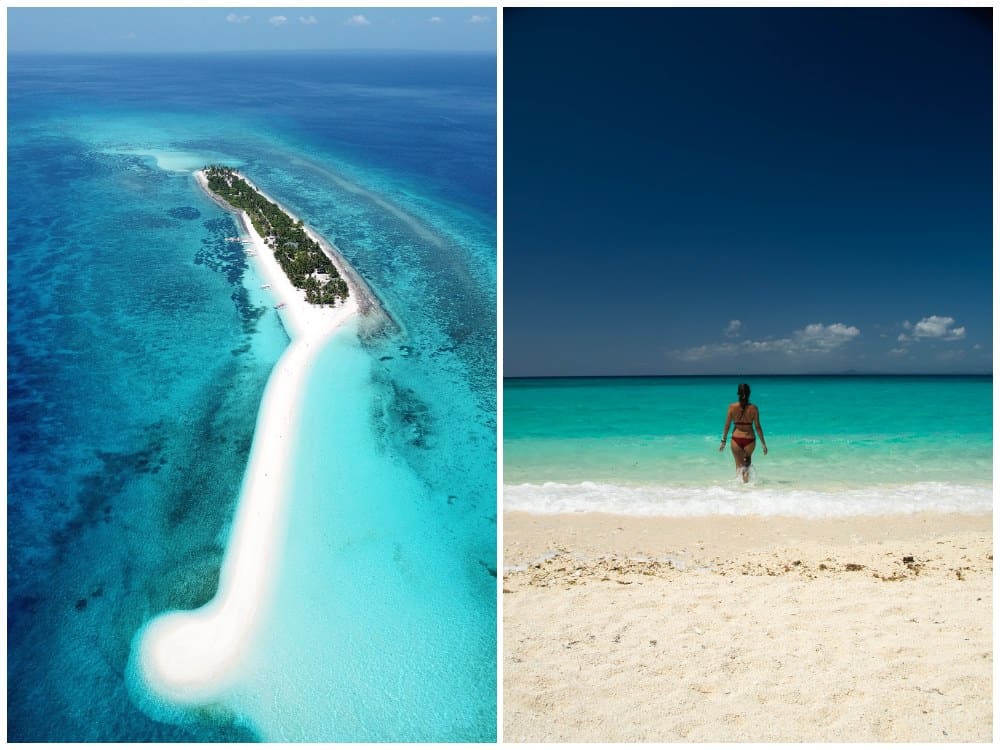
- Kalanggaman: this island is located about 90 minutes from Malapascua and is a true postcard. On this trip you usually do a couple of dives, have a barbecue and have time to set foot on its gorgeous sandbar. Unlike Malapascua’s seabed, here you’ll find coral walls with gorgonians and soft corals. Visibility tends to be amazing and, if you look into the blue, you can occasionally see sharks, rays, tunas or barracudas. You can find plenty of information about visiting this island in our article on Kalanggaman. Centers often combine it with Kimud, as it’s on the way.
- Capitancillo: one of the more recent additions to Malapascua’s diving scene is this tiny island with a lighthouse. Its dreamy seabed is covered with gorgonians, soft and hard corals. These are basically wall dives where you can appreciate macro life, but also schools of groupers, tunas or barracudas. It’s a couple of hours from Malapascua, so diving here means an extra cost.
- Chocolate: a pinnacle south of the island that delights macro lovers. It’s a shallow dive where soft corals predominate and where it’s not uncommon to see flatworms (sometimes mating), pegasus, morays, nudibranchs, shrimps…
- Sambawan + Maripipi: it’s not a very common excursion because it’s quite far (2.5 hours), but the two dive sites at Maripipi (Toblerone and Rock Road) combined with the beauty of Sambawan are a winning combo.
Trips usually start at 9:00 (unless combined with the Kimud dive, which usually departs around 5 or 6 in the morning). You’ll be back on the island around 16:00, a perfect time to grab a spot at Ocean Vida and enjoy sunset with a cocktail in hand.
Who to dive with in Malapascua? The best center with Spanish‑speaking professionals
The million‑dollar question. As you’ve probably guessed, being a diving mecca, there are loads of dive centers in Malapascua. We’ve spent seasons on the island and have been able to try several of them and, as always, there are more and less professional people, more and less worn gear, and more and less comfortable boats.
Surely like you, as Spanish speakers, we have to admit we always feel more comfortable when we’re attended to in our own language. We think this is even more important when you don’t have much experience in the diving world yet. And, to be honest, we also love meeting people who fell in love with the island and stayed to tell us their story over a San Miguel after the day’s dives.
Careful: a dive center having instructors who speak Spanish doesn’t mean all staff are Spanish or Latin American. As everywhere in the Philippines, Malapascua’s dive schools need much of the workforce to be local. For this reason, most of the island’s instructors are foreigners to serve students who don’t speak English, while the dive masters—that is, those who guide the fun dives—are Filipino.
On the other hand, if you want to book your diving directly, you can do it right now from here:
Diving courses in Malapascua
As we already mentioned in Diving in the Philippines, Malapascua is, in our opinion, one of the best places to learn to dive or to see what it’s like. The reasons are very simple:
- It’s a comfortable place to do it, with good professionals and plenty of schools right on the beach to make your studying more pleasant.
- It’s a safe place. There aren’t many currents, visibility is good, and there are schools with good equipment and boats.
- You’ll be able to enjoy the marine life from the start and, in addition, you can put the finishing touch on your Open Water Diver course by diving with thresher sharks.
Do you want a trusted dive center in Malapascua? Leave us a comment and we’ll send all the information to your email.
Discover Scuba Diving in Malapascua
If you don’t want to dedicate so much time, you can also do what’s known as a discover dive, DSD or Discovery Scuba Diving. This is a dive in which you’ll be accompanied at all times by an instructor, going to a shallower depth than usual so you can get a feel for diving.
It takes about 3 hours, in which the instructor will first give you some basic knowledge so you understand the dynamics of diving and how to solve the most common issues. Then you’ll go into the water together, practice a few simple exercises and discover the seabed by diving in Malapascua.
How much is a discover dive in Malapascua? They’re around 3.000–4.000 pesos, all included. If you then want to repeat and do another similar dive, it works out cheaper.
Open Water in Malapascua
One of the most important things to know about the Open Water course in Malapascua is that you’ll need 3 to 4 days of your trip for it. Even so, if you do the theory online, it can be reduced to 2–2.5 days. Plus, we recommend giving yourself 1 or 2 more days to do the Advanced or the corresponding adventure and thus see the thresher sharks. Over these days you’ll learn both the theory and the practical side so that later you can dive anywhere in the world.
As we said above, in Malapascua you’ll have very professional instructors who will teach you in your own language, so that you’ll be more comfortable and forget the fears we all had at the beginning.
How much does Open Water cost in Malapascua? Prices are around 20.000 pesos, including all fees, materials and equipment. It’s the standard price in the Philippines for these courses.
If you want us to send you info about our trusted center for diving in Malapascua, leave us a comment and we’ll give you their details.

Advanced Open Water Diver in Malapascua
If you already have Open Water, we can’t think of a better place to get your Advanced than Malapascua. The reason? One of the course dives is done at Monad Shoal—that is, with thresher sharks.
This 2‑day course focuses on improving your diving skills, with Deep Adventure and Underwater Navigation dives being mandatory. In addition, it’s most common for 2 or 3 of those dives to be at Kimud Shoal, so you get the gift of seeing the thresher sharks. On the other hand, you’ll extend your diving license limit to 30 meters, which matters for many dives around the world.
How much is the Advanced in Malapascua? Around 17.000 pesos, including fees, materials and equipment.
Dive Master course in Malapascua
The crown jewel. If you’ve fallen irretrievably in love with the island, what better excuse than doing the Dive Master course in Malapascua? That’s exactly what happened to us, so we decided to expand our diving knowledge by doing what’s called a DMT.
Thanks to this course you’ll be able to work as a dive guide (dive master) anywhere in the world, but most importantly you’ll learn a huge amount and, let’s be honest, you can spend 1 or 2 months enjoying Malapascua’s seabed and the island itself.
Out of the more than 70 countries we’ve visited, truly, we can’t think of a better place than Malapascua to do a DMT. The island is comfortable, living there is super cheap (you have rooms from 120–150€ per month and you can eat for 2€), diving is wonderful and you’ll be able to do it almost endlessly, your school will be on a fabulous beach, the vibe is great and, most importantly, there are schools with top Spanish‑speaking professionals who have been doing this for years.
How much does a dive master course cost in Malapascua? Prices are around 50.000 pesos, to which you must add equipment rental if you don’t have it (about 10.000 pesos); PADI materials, which are 12.460 pesos; and the PADI Dive Master certification fee, which costs 213 Australian dollars.
If you’re decided and need guidance on the school (in this case this is more important than ever), leave us a comment and we’ll send you all the information.

Tips for diving in Malapascua
Enjoy diving in Malapascua with these home‑grown tips:
- Bring plenty of cash. We could tell you that many dive centers in Malapascua don’t accept cards or charge a percentage for card payments. In Malapascua you have a couple of Euronet ATMs, which charge a 250‑peso fee for each 10.000‑peso withdrawal and, if you’re not careful, tack on other extra charges—they’re sneaky. Plus, they often run out of cash. If you want to save quite a bit, the best thing is to use Remitly, as there are two pawnshops on the island. You’ll find this info in more detail in Money in the Philippines.
- If you’re going to dive a lot in Malapascua or elsewhere in the archipelago, it’s worth bringing your own gear so you’ll save a bit.
- If you plan to dive in Malapascua at Christmas or Easter and want to see thresher sharks, it’s advisable to book in advance. There isn’t a quota like in Balicasag, but it’s still recommended. If you’re doing courses, this is even more important—especially if you want a Spanish‑speaking instructor—as student groups are small (usually a maximum of 4 people).
- Be careful with air‑conditioning. The temperature changes are huge both in transport and in accommodation. You know that if you catch a cold you’ll have a hard time equalizing underwater.
- Most importantly: choose a good dive center—one with professionals, well‑maintained gear and comfortable boats. Don’t be guided by a few euros. Safety in diving is paramount and in Malapascua you have several deep dives that go beyond a simple coral stroll. Plus, there’s no hyperbaric chamber in Malapascua, so it’s better to go with a dive center that ensures that, in case of an accident, you can be transferred quickly and that has the necessary materials on the boat. Finally, choose a center with ethics. We’ve seen it all: shark feeding, coral damage, instructors breaking safety rules…
- Closely related to the above, travel with a good travel insurance like the one we use. Here you have a 5% discount. IATI Mochilero is the best in this case, as it’s the only travel insurance that covers dives up to 40 meters deep.

Recommended places to stay in Malapascua for diving
Almost all the dive schools in Malapascua are located along Bounty Beach, with a few exceptions in the actual “town” and a few more to the north.
Our advice is that, if budget isn’t an issue, you stay right on the beach because it’s a real treat to wake up to those turquoise Malapascua views. If you want to save a bit, staying around the market isn’t a bad plan. You’ll reach Malapascua’s dive centers in under 5 minutes on foot and have all the restaurants at hand.
Here are our 3 favorite places from higher to lower budget:
- Ocean Vida Resort: right in the heart of Bounty Beach, it’s the most convenient resort if you’re going to dive in Malapascua. You have spacious, well‑decorated rooms and, best of all, sea views. Plus, there’s also a hammock area and a perfect restaurant.
- Tepanee Beach Resort: located in a super‑quiet area with direct access to the sea, in our opinion its rooms offer the best value for money if you’re after a cabin with great views.
- Celtis Resort: located very close to the market, right in the center of Malapascua, it’s a pleasant and, above all, very quiet spot (you don’t hear the island’s noisy roosters). The family who runs it is lovely. This is where we stayed throughout our dive master course. You can read more in Staying at Celtis Resort Malapascua.
You’ll find many more options in Where to stay in Malapascua.
Remember you have everything you need to make the most of the island in our Malapascua Guide.
How does diving in Malapascua look on paper? It’s even better in the water! We’re sure you can’t wait to dive in. If you have any questions, we’ll be happy to answer them in the comments.