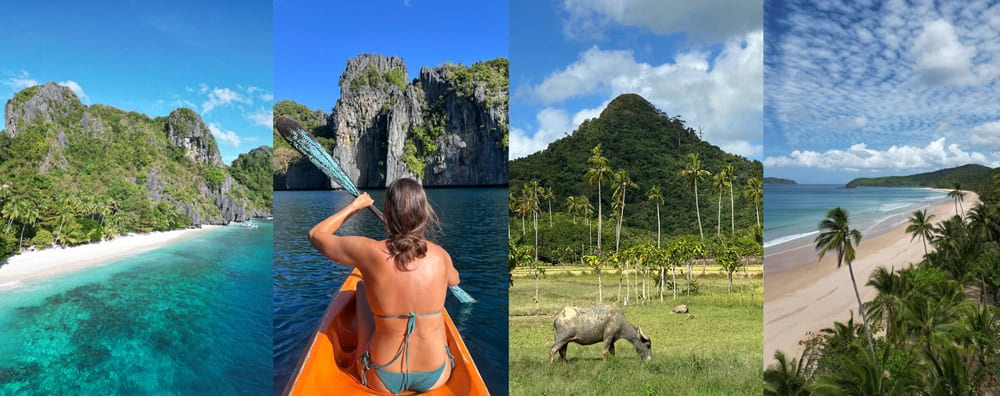
One of the best-known destinations in the Philippines lies north of the beautiful island of Palawan. El Nido isn’t exactly a town you’d call pretty or charming, but when it comes to things to do in El Nido, its secret is only revealed by boat or kayak: the Bacuit Archipelago.
This group of karst islands leaves everyone who visits speechless, with hidden lagoons, paradise-like white-sand beaches, turquoise waters, colorful reefs, and jaw-dropping, one-of-a-kind scenery. Still, there’s much more to see and do in El Nido. At Travel Around the Philippines, where we’ve been exploring this corner of the country since 2010, we want to share everything you need to know.
Is El Nido overcrowded?
Traveler to traveler, we have to say this: El Nido has changed a lot in recent years. Over the last 10 years or so, its surge in popularity has made it a busier destination, though not to the same extremes as other tourist hotspots in Thailand, for example. The number of agencies, hotels, shops, and restaurants has grown exponentially without any real planning, and it can feel a bit chaotic. In fact, certain measures were introduced in 2018 that tried (with mixed success) to minimize tourism’s impact in the area—and you may have landed here because you’ve found conflicting information that’s left your head spinning.
All that said, we visit El Nido frequently and it’s a place we’ll always go back to. In 2025, we did all the tours again (A, B, C, and D) and we were COMPLETELY ALONE at most of their stops. No matter how well we know the Philippines, the grandeur of its landscapes is undeniable and, to be 100% honest with you, they’re even more impressive than those in Coron.
We’ve also done a motorbike trip through northern Palawan starting from El Nido and can confirm we barely saw anyone—and, for example, we spent a couple of nights in Nacpan and enjoyed the beach as if it were ours. What we mean is that El Nido is an incredible place and there are ways to enjoy it. So when people decide to skip it because they’ve heard it’s crowded, it grates on us. Obviously, it’s one of the most famous destinations in the Philippines, but avoiding it just because it’s popular seems like a mistake.
Because there’s nothing like a good tip, we’re going to recommend things to do in El Nido so you can enjoy this wonderful place at a relaxed pace. We’ll not only share tips for the famous island-hopping tours (we’ve done them many times), but also talk about a few less-visited beaches and extra activities that might suit you. Let’s go!
How many days do you need in El Nido, and what itinerary makes the most sense?
We believe the minimum number of days needed to visit El Nido, Palawan, is 4. If you spend 4 full days (not counting travel days), you can devote 2 days to island hopping, 1 to exploring the beaches we’ll talk about below (especially Nacpan Beach and Las Cabañas), and 1 to relaxing, kayaking, diving, or simply keeping some flexibility in case of bad weather.
In other words, a possible 4-day El Nido itinerary would be:
- Day 1: island hopping A. If you arrive in time, you can go watch the sunset at Las Cabañas.
- Day 2: island hopping C. As on the previous day, you can head to Las Cabañas, Corong Corong, or Lio Beach for sunset.
- Day 3: day trip to beaches such as Nacpan, Duli, Lio, and Las Cabañas.
- Day 4: diving, kayaking to Seven Commandos and other beaches, or another island-hopping tour.
If you have less time, 3 full days can be enough; in that case, we’d stick to the first 3 days above. If you arrive sometime between 9:00 a.m. and noon, for example, since tours leave early, we’d rent a motorbike or hire a tricycle with a driver to head to Nacpan, Duli, and Lio and make better use of your time. If you arrive a little later, you can always go to Las Cabañas and then watch the sunset there.
That said, if you’re unsure how to plan your time, you can leave us a comment below and we’ll gladly help.
DO YOU LIKE OUR CONTENT? Help us keep this website going.
Keeping this site up to date —from researching routes, testing accommodations, and writing each guide
and answering hundreds of your questions every day— takes time, energy, and more cups of coffee than we’ll admit.
If any of our tips are useful to you and you’re thinking of getting travel insurance with a discount,
booking a hotel, booking flights, using Remitly, etc… we’d really appreciate it if you used our links.
- You pay exactly the same price (sometimes even less thanks to our discounts).
- We receive a small commission, which we reinvest in our work, further research, and free guides.
- You get the same price, we can keep creating independent content,
so everyone wins.
Thanks for supporting this project and for joining us in every corner of the Philippines.

What to see and do in El Nido – 2026 Guide
Without beating around the bush, here are the best things to do in El Nido and, more importantly, how to do them so you enjoy them to the fullest.
1. Island hopping in El Nido
It would be a shame to come to El Nido and not go on an island-hopping tour. As the name suggests, these are day boat trips that “hop between the islands” of the Bacuit Archipelago. They combine lagoons hidden among towering limestone walls, caves, beaches, sandbars, and snorkeling spots that have made El Nido famous worldwide—and they’re something you really shouldn’t miss.
You can read all the information you need about these excursions in our guide, Island hopping in El Nido.
As soon as you get to town and see the beach packed with boats, you’ll realize that what you came to do in El Nido is exactly what everyone else does. In El Nido Town you’ll find dozens of agencies offering the same tours. They’re all quite similar in price (between 1,200 and 1,400 pesos per person, sometimes negotiable if you book multiple tours) and in service. Here’s what El Nido tours are typically like:
- They usually depart around 9:00–9:30 a.m. and return around 4 p.m. If they’re private (which we recommend), they leave at 7:00 or whenever you want. Tours usually leave from El Nido Town beach or from the agency itself.
- Tours are canceled if the coast guard says so, which is usually at 7:00 a.m. the same day. This tends to happen when rough seas or wind are forecast. Sometimes only tours to the farther points (usually C) are canceled.
- They include a meal consisting of fish, some chicken, cucumber-and-tomato salad, rice, sauces, and fruit. Note that since 2023, cooking on board is no longer allowed as before, due to measures introduced to reduce the food-poisoning cases that had been reported for years; instead, food now comes prepared. Some agencies now offer a tray prepared by local restaurants.
- They usually have drinking water on board, as well as soft drinks such as Coca-Cola or local orange soda. If you want alcohol, you can buy it in advance or from the kayak vendors you’ll often find at the lunch stops.
- Lunch is usually on a beach, though sometimes it’s on the boat itself.
- They include a mask and snorkel and, sometimes, a towel. As we mention in The Philippines Packing List: What to bring, it doesn’t hurt to bring your own snorkeling gear (for hygiene and condition) and some water shoes. The latter are particularly useful here.
- Besides the crew, there’s an English-speaking guide who shares a few details about the trip and keeps things running on schedule. If you don’t speak good English, don’t worry. Don’t expect long speeches about the place—just enjoy the scenery.
- On top of the tour price you need to add an environmental fee, the Eco Tourist Development Fee, of 400 pesos. This fee is valid for 5 days, so if you’re doing more than one island hopping in El Nido, ask for the receipt so you don’t get charged again.
- For certain stops (basically to enter the lagoons) you must rent a kayak, which isn’t included in El Nido tour prices. Check with your agency either way.
Remember this: the key to enjoying El Nido is to do a PRIVATE TOUR with a good company. We’ll talk about this below, but if you need a good contact, leave us a comment and we’ll send you all the info.

There are 4 different tours in El Nido: tours A, B, C, and D. The difference between them is the stops they visit, which are usually grouped by area. We’ve done them all several times, and here’s what they’re like.
One thing to consider: in 2018 a new tour regulation was introduced in El Nido that limits the number of people and boats that can enter two places: Small Lagoon (tour D) and Big Lagoon (tour A). To visit them, you must pay an additional fee of 200 pesos (each) and book in advance. It’s also mandatory to rent a kayak to visit them (not included in the tour price, 300 pesos for a two-seater and 350 pesos for a three-seater).
Tours in El Nido
Because they’re so similar, choosing the best El Nido tour can be the hardest part.
Tour A
This is our favorite El Nido tour because of its spectacular scenery. It’s the most photogenic, as it visits the two most beautiful lagoons (crystal-clear pools surrounded by El Nido’s signature karst walls) and a beach we love: Seven Commandos.
Places visited on El Nido’s Tour A:
- Big Lagoon El Nido
- Payong Payong Beach
- Secret Lagoon
- Shimizu Island
- 7 Commando Beach
Price: 1,200 pesos + 200 pesos for Big Lagoon
Book Tour A on KLOOK for just 950 pesos

Tour B
Less popular but equally beautiful, the star of this tour is Snake Island, a huge sandbar you can admire from a small hill. You also make more snorkeling stops.
Places visited on El Nido’s Tour B:
- Entalula Island
- Snake Island
- Popolkan Rock
- Snake Island
- Cudugnon or Cathedral Cave
- Some snorkeling spot
Price: 1,300 pesos
Book your Tour B here for just 1,300 pesos
Book Tour B on Get Your Guide here

Tour C
Along with Tour A, this is one of the best-known tours and our second favorite. You’ll visit smaller, almost hidden coves that, once you enter, simply leave you speechless. One of them is the famous Secret Beach, which inspired Alex Garland’s novel “The Beach,” internationally known for the film starring Leonardo DiCaprio.
There are also snorkeling stops, such as Star Beach and Helicopter Island. Add to that the fact that Hidden Beach (the one in the photo below) is among the most incredible beaches we’ve ever seen, and you’re set.
Places visited on El Nido’s Tour C:
- Helicopter Island
- Hidden Beach
- Secret Beach
- Talisay Beach
- Hidden Beach
Price: 1,400 pesos
You can book Tour C here for just 1,200 pesos
Check out this island hopping on Get Your Guide

Tour D
This is the least interesting tour in terms of “landscapes,” but the one that gives you more time on some of El Nido’s most beautiful beaches. Even so, with the recent changes and the inclusion of Small Lagoon (formerly on Tour A), we think it’s a great option.
Places visited on El Nido’s Tour D:
- Small Lagoon El Nido
- Cadlao Lagoon
- Nat Nat Beach
- Paradise Beach
- Serenity Beach
Price: 1,200 pesos + 200 pesos for Small Lagoon
Read reviews and book your Tour D
Compare prices on Get Your Guide

Here’s a map to give you an idea of where El Nido’s tours are located.
Which El Nido tour should you choose?
In our opinion—and in that of many travelers who’ve told us—the best tours in El Nido are A and C.
If you have two days to devote to these excursions, do both, one per day. Previously, most companies offered combinations of them, usually A+B, A+C, or C+D. However, after the new regulation many companies are reluctant to offer them (we can advise you on how and with whom to do it) and don’t even offer it. What is possible is to tweak the itinerary a bit with a private tour.
The most important thing of all is: DO A PRIVATE TOUR. Why? Because unfortunately the tourism boom has reached El Nido and that means everyone ends up in the same places at the same time, so you may not enjoy it as much as it deserves—or even leave horrified. Plus, having around 30 people per boat isn’t unusual…
If you book a private tour, you have a much better chance of deciding where to go and how long to stay in most places. You can go at different times and thus avoid crowds. It’s more expensive, since prices are around 10,000–12,000 pesos for a boat for up to four people (if there are more of you, a bit more is added, though the per-person price goes down), but believe us, it’s worth it. Some travelers also do combinations of destinations and add either Small or Big Lagoon, depending on their reservation. In short, you have more freedom.
Need a private tour contact in El Nido? Leave us a comment on this article and we’ll give you all the details for our super trustworthy, very family-run agency we’ve used for years.
Alternative to the traditional tours in El Nido: speedboat
With so much tourism, you also have the option to do the tours by speedboat. These are much smaller and the tours are more expensive, but obviously they can get around much faster. You’ll see them advertised at different local agencies, but the best-known company is this one.
As you can see, it’s a shared tour of about 3–4 hours, which lets you do other things in the afternoon. The first variant (Mondays, Wednesdays, Fridays, and Sundays) includes Big Lagoon, Shimizu, Star Beach (they own the beach and are the only ones who visit it), Hidden Beach, and Seven Commandos. The second (Tuesdays, Thursdays, and Saturdays) includes Cadlao Lagoon, Helicopter Island, Star Beach, Small Lagoon, and Papaya Beach.
2. Beaches to visit around El Nido
You’ll soon notice that the town beaches are not exactly idyllic. On the contrary, the water is often a bit murky and swimming isn’t appealing with so many moored boats. However, the list of things to see and do in El Nido doesn’t end with island hopping—there are gorgeous beaches to visit that will win you over instantly.
Discover the best beaches in El Nido (without island hopping)
a) Nacpan Beach, one of the best beaches to see in El Nido
If you only have time to visit one beach in El Nido, we think it should be this one. Located north of town, it takes about 40 minutes to get there, where you’ll find a huge beach lined with coconut trees and washed by clear turquoise water.
You could spend the whole day at Nacpan Beach (and, in fact, there are hotels where you can stay overnight and, if you have extra time, don’t hesitate to spend a night there because you’ll love it). There are loungers and a few beach bars/hotels to eat or sip a fresh coconut. Plus, it faces west, so sunsets tend to be fabulous.
We recommend walking to the northern end of the beach, where you’ll always find a little spot to be by yourself, and then to the south, where the beach opens out and feels even more peaceful.
Heads up: on one of our visits to Nacpan Beach we got dozens of bites from sandflies (known locally as nik nik). Over the years we’ve found that some people are much more prone than others. In any case, it’s better to use mosquito repellent or, even better, coconut oil to deter them. If you’ve already been bitten, go to the pharmacy and buy calamine lotion, a white lotion that will soothe the itching.
How to get there
To get to Nacpan from El Nido, you have three options:
- Renting a motorbike: rental prices are around 500 pesos for the whole day. Note that if it’s rained a lot in the previous days, the last stretch to Nacpan Beach can be tricky because it gets very muddy. We also have a motorbike rental contact in El Nido for 450 pesos—or 400 if you rent several days. Leave us a comment and we’ll pass it along! They’re lovely people and, most importantly, VERY RELIABLE.
- Hiring a tricycle: you can negotiate the price with the driver, but it’s usually about 1,200 pesos round trip. A tricycle fits about 4 or 5 people.
- Booking a transfer with an agency: from El Nido, vans depart roughly every hour to Nacpan Beach. The round trip costs 700 pesos per person.
- Doing the so-called INLAND TOUR (land tour): a shared tour that takes you to several beaches accessible by land; it’s a good idea if you don’t drive or want to save a bit, since it includes lunch. You can book it here.
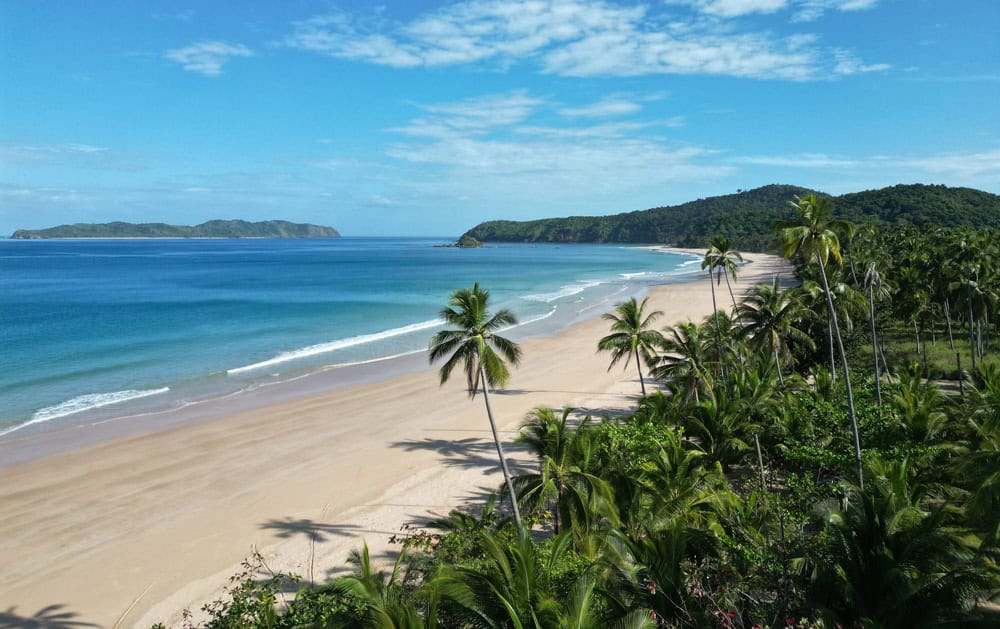
b) Las Cabañas (Maremegmeg Beach) and its famous zipline
Las Cabañas or Maremegmeg Beach (now also known as Vanilla Beach) is one of the most beautiful beaches to see in El Nido. It’s just 15 minutes from town and has a great vibe. It lost some of its untouched feel a few years ago and now has a few bars, a few hotels, and a new mall with a McDonald’s at the entrance, but it’s much quieter than El Nido Town beach. Las Cabañas is an ideal place to watch the sunset in El Nido, with the sun dipping behind the lovely islets of the Bacuit Archipelago.
If you’re into adrenaline, there’s a zipline 1.4 kilometers long that runs from the beach to Depeldet Islet. The price is 600 one way and 1,100 round trip, and we advise patience because the wait is usually at least an hour. Since it opens at 8:30, if you can be there around 8:00, even better. Otherwise, it’s best to go around lunchtime, though note they stop between 12:00 and 13:00.
To get to the beach, you can go on your own motorbike or by tricycle. Tricycles usually charge about 150 pesos for the ride and fit up to 4–5 people. On the way back you’ll find them waiting outside the mall.
Travel Around the Philippines tips: try to visit at high tide, because at low tide it looks much less appealing. That said, the section next to the mall is always fairly deep, so you can always swim. Check the tide times here.
Also, if you prefer having the beach to yourself, we recommend walking toward “Maregmegmeg Corner” (you’ll see it labeled that way on Google Maps and we’ve marked it on the El Nido map below). The beach is shallower there and swimming is less comfortable, but honestly it’s worth it. This is the exact area shown in the photo:

c) Duli Beach, perfect if you want to surf in El Nido (even as a beginner)
This beautiful 2-kilometer beach lies even farther north than Nacpan Beach, so a great day trip from El Nido is to combine the two. The motorbike ride between them takes about 30 minutes.
You can sit back and enjoy this wild, paradise landscape or opt to go surfing. Duli Beach is the best spot to get on a board and tame some waves. Several shops rent surfboards for 250 pesos per hour and 600 pesos if you need an instructor. There are also a few beach bars and a couple of places to stay nearby.
Want to venture a bit more? Keep heading north and check out Verde Safari Beach (watch the road conditions…), Bucana, Sibaltan, and Mariposa Beach—hardly known beaches to see in El Nido.

d) Lio Beach (relax and sunsets)
This is one of our most recent discoveries in El Nido. It’s just 15 minutes from the town center and has a few high-end resorts, yet it’s usually much quieter than the other beaches near town.
To get there, go by motorbike or tricycle for around 250 pesos. Entrance is free and there are free loungers to sit on. There are also several restaurants, so it’s a good spot for lunch or to while away a few hours. It’s also a great spot for sunset.
Curiously, Lio Beach is right next to El Nido Airport, so you’ll see AirSwift planes up close. Don’t worry—it’s not dangerous, nor are there so many flights a day that it becomes a nuisance. However, flying drones is forbidden for safety reasons.

e) Corong Corong Beach (sunset/drinks/dinner)
Although Corong Corong Beach isn’t one of our favorites (swimming is tricky, especially at low tide), it’s worth strolling to discover this very peaceful place near El Nido. This is the trendiest area to stay in El Nido because it’s calmer, there’s a better selection of beachfront accommodation, and, above all, you get incredible sunsets. No wonder people are starting to call it Sunset Beach.
f) Seven Commandos
As a bonus, if you’ve got a free day in El Nido, a great idea is to spend it at Seven Commandos Beach. Although this beach is usually included in Tour A, if you visit outside the docking hours of those boats (typically about 14:00–16:00), you can have it almost to yourself.
In our opinion, it’s a fabulous beach. There are lovely palm trees for shade, a small bar serving cold beer, a snorkeling area, and, above all, a stunning panoramic view over the rest of the Bacuit Archipelago. Plus, because it’s fairly deep, it’s always perfect for swimming.
To get there, you can go by kayak (below we tell you what other stops you can combine it with) or, if you’re lucky—because it’s getting harder—by hiring a bangka. They usually charge about 700 pesos round trip for the whole boat from Corong Corong Beach. Head to the beach and agree on a pickup time.

3. Kayaking in El Nido
Want a break from boat tours? A great thing to do in El Nido for those who want to step off the usual routes is to rent a kayak and explore a few pretty nearby beaches. Kayak rental is around 500 pesos for a full day and can be done at Corong Corong Beach, which is the departure point we recommend.
If you want to take it easy, you can visit the following spots in a day:
- Lapus Lapus Beach (sometimes known as Yoga Beach)
- Papaya Beach
- Seven Commandos Beach (it’s usually quiet until 14:00)
If you’re up for paddling and get an early start, you can continue to the following:
- Ipil 2 Beach
- Ipil Ipil Beach
- Nat Nat Beach
- Paradise Beach
These last two beaches are more accessible from El Nido Town, and we only recommend going if you’re quite experienced with a kayak and ready for a workout. Keep in mind that from midday onward there’s usually more swell/wind, so if you can start early, even better. Don’t forget a dry bag to keep your things from getting wet.
If you want a good-value rental contact, leave us a comment and we’ll send you the info.
Here’s a map showing the kayak route you can do in El Nido:
4. Diving in El Nido
Although El Nido isn’t one of the very best diving destinations in the Philippines, there are indeed nice dive sites where you can enjoy marine life. In the Bacuit Archipelago you’ll find around 15 sites with reef, wall, and the occasional interesting tunnel dive. What might you see underwater? Turtles, manta rays, nudibranchs… If you have experience, The Tunnel is a top dive, although keep in mind that sea conditions need to be very good because of the type of entry.
The best season for diving in El Nido is from April to December. The best visibility (10 to 30 meters) is usually from April to June. In addition, the dives aren’t usually very demanding, so it’s a good place for beginners (you can get your Open Water in a couple of days by doing the theory online—you can see it here) or for people who want to do a discover scuba dive. If you’ve already done more dives, you might prefer to save your budget for more spectacular spots like the ones we cover in Diving in the Philippines.
If diving is on your list of things to do in El Nido, be aware you’ll need to dedicate a full day of your trip. Trips run daily from about 8:00 to 15:00 with 2 or 3 dives. Prices are around 6,000 pesos for 3 dives, including equipment rental and lunch.
Book a discover scuba dive HERE
If you’re certified, book this full-day trip
Get your Open Water certification HERE
By the way, if you want to go a little farther afield, it’s also possible to dive on the other coast of Palawan, in Sibaltan, about an hour by land from El Nido. We stayed here several days, though it’s also feasible to do it as a day trip—and you can see manta rays (we did). You can book your dives here.
5. Watching the sunset in El Nido
It may sound clichéd, but believe us: one of the best things to do in El Nido is to enjoy one of its sunsets. We’re not exactly sure why, but we’ve always fallen in love with this corner of the world at dusk. The sky turns golden, pink, purple—sometimes even deep red.
The best places to watch the sunset in El Nido are:
- Corong Corong Beach
- Las Cabañas
- Lio Beach
- On the far right side of El Nido Town, where you’ll also find beer and cocktail happy hours. The photo below is from this exact area.
You can read much more in our article The best places to watch the sunset in El Nido.

6. Escape to Darocotan or Sibaltan
One of our most recent discoveries in Palawan is the small island of Darocotan, located just 45 minutes from El Nido and the perfect counterpoint to a place as busy as El Nido Town. If you want to feel like a castaway, sleep in seafront huts (just take a look at these or these to see what we mean), enjoy great snorkeling and, most importantly, picture-perfect beaches, then you should definitely add one or two nights on this island to your list of things to do in El Nido.
Sound good? You’ll find everything in detail in our Darocotan Guide.
Another destination that might suit you is Sibaltan, an hour by road from El Nido. It offers quiet beaches, kitesurfing (in season), manta diving, and a really cool island hopping that no one else does. In fact, it’s possible to combine Darocotan with Sibaltan over a few days. You can read more in Things to do in Sibaltan.

7. El Nido–Coron Expedition (or vice versa)
This is something that blows us away, and we don’t hesitate to recommend it and book it as soon as possible, since more and more travelers are going for it: the El Nido–Coron expedition, or vice versa.
It’s a 4-day, 3-night journey between El Nido and Coron (or the other way around), stopping at deserted islands, sleeping in beach huts, enjoying phenomenal snorkeling, and switching off completely, as the crew takes care of absolutely everything—including preparing what will likely be the best meals of your whole trip.
Bear in mind that the main companies operating the route—because the sea tends to be rougher from August to October—only run it from mid-October to mid-July. In our article El Nido–Coron Expedition we tell you more.
If you still want to do it in August and September, or you’re looking for a slightly shorter experience (3 days/2 nights) or something more budget-friendly, we recommend checking out this company. They’ve given us a code for a 5% discount: TRAVELPHILIPPINES.

8. Taraw Via Ferrata (formerly Taraw Cliff)
We must have been among the last people allowed to do the route up to Taraw Cliff before it was banned—and rightly so. They used to let you climb to the top of the karst mountain in El Nido Town, but the path was extremely dangerous and there were multiple accidents, so it was prohibited. For that reason, we’ve had to remove it from this list of things to do in El Nido.
Even so, there’s now a much safer alternative: the Canopy Walk or El Nido Via Ferrata Canopy Walk—a route over much safer bridges. Although it’s at a lower elevation and the views are a bit less dramatic, it’s definitely more worthwhile than the previous option (and you won’t be risking your life). The usual price is 430 pesos per person. You can add the dreamcatcher section, which is even more photogenic. The whole experience takes about 45 minutes, in case you want to plan other things to visit in El Nido the same day.
Book the Canopy Walk for just 375 pesos (cheaper than at the ticket office)

9. Waterfalls to see in El Nido: Bulalacao Falls and Nagkalit-Kalit
Missing a bit of fresh water? Another thing to do in El Nido is to visit the waterfalls in the surrounding area. We only recommend visiting if you’re in the mood for something different from the beach, as they aren’t the best waterfalls in the Philippines and, on top of that, the whole thing has become a bit of a tourist trap because both require a mandatory guide, which makes the experience poorer value for money.
- Bulalacao Falls: about 20 minutes from town heading toward Sibaltan. Once you reach the parking area, it’s roughly a 30-minute hike crossing 5 rivers (not very deep—don’t worry). You’ll have to pay entrance and a guide and, depending on who you get, it usually costs between 300 and 400 pesos per person. In our opinion, these are prettier than Nagkalit-Kalit.
- Nagkalit-Kalit: also about 20 minutes from El Nido Town heading toward Nacpan Beach—and you won’t miss it because there are signs almost everywhere urging you to stop. The reason? Each stop charges an entrance fee and a guide, which you don’t really need because the trail is quite straightforward, though it’s true it’s about a 20-minute walk and you have to cross 9 small rivers. The price depends on where you stop, but the most common is around 400 pesos per person for the entrance and guide service.
Other things to see and do in El Nido
To keep things brief, we’ve grouped together other things to do and places to visit in El Nido for those looking to go further or for different kinds of experiences:
- El Nido Town: it isn’t a particularly pretty town, but it’s true it has improved over the years. Make the most of the huge selection of restaurants, bars, shops, and tattoo studios. At night, part of Hama Street is closed to traffic and that’s where most travelers gather. They also set up more stalls.
- Massages in El Nido: absolutely—there are tons of places to treat yourself here at lower prices. You’ll see them from 500–600 pesos per hour, and of course there are more upscale options. Places we’ve tried and can recommend are The Organic Spa and Sunset Relaxing Spa.
- Go out for drinks and a bit of nightlife: together with Siargao, El Nido is one of the liveliest places to grab a drink. The bars that are usually most happening are Amigos and Tribu Kuridas, and there’s often a party at Lio Beach or Las Cabañas during the full moon.
- Jeepney Tour: if you’re traveling solo or in a group and want a fun day meeting people, there’s also this tour, which takes you to Lio Beach and Nacpan Beach, lets you enjoy a traditional Filipino meal (the so-called boodle fight), visit a farm, and relax at a beach club. You can book it here.
- See turtles hatch in El Nido: yes—at both Duli Beach and Bucana (also Mariposa, Dagmay, and Diapila, though they’re harder to see) a little over 250 green and hawksbill turtles lay eggs each year, so with some luck—since this can’t be predicted—you may see them hatch and/or head for the sea between January and May (most often between January and March) on those beaches. To protect them (as dogs and cats often prey on them), several accommodations have built turtle hatcheries and, when the eggs hatch, they release many of them at once. The place most actively involved in this is this one here, so if this is a big wish for you, we recommend spending one or two nights there or at places in the Bucana area (this one is top). Otherwise, you can always ask around when visiting these beaches. We were lucky enough to see this on our last visit to Bucana, and it was one of the most exciting moments we’ve experienced in the Philippines—but obviously it was pure chance, as we found out that one had just hatched in our hotel’s hatchery.
- Ille Cave: this is something almost no one realizes you can do in El Nido, but if you’re after something different, you’ll like it. It’s a karst mountain that houses a 60-meter-deep cave full of bats and fossilized marine creatures. There’s a small museum at the entrance with artifacts found there. Admission is 350 pesos for the entire group, which is pretty good. For planning, it’ll take about 40 minutes to get there from El Nido Town. If you want even more adventure, you can climb to the top of the mountain and enjoy the views, but keep in mind you’ll need proper footwear, to be in decent shape, and to set aside roughly an hour and a half. In this case, the guide fee is 500 pesos.
- Dewil Eco Mangrove Tour: we think it’s a great thing to do in El Nido with kids or if you’re looking for something different from the beach. It’s past the cave mentioned above and consists of a small-boat ride through the mangroves while they share information about local flora and fauna. With luck you’ll see monkeys, snakes, and various bird species. It costs 550 pesos per person and includes a coconut. If you pay extra (1,200 pesos per person), they’ll also take you to a snorkeling area that’s pretty good. It’s run in a way that benefits the wider community, which we find really interesting. Allow a little over an hour to get there from El Nido Town; the tour itself lasts between 1 and 2 hours, depending on the option you choose.
- Relax at the pool: if your hotel doesn’t have a pool and you fancy spending a few hours by one, you’ll be glad to know you can use the one at La Plage restaurant or at Las Cabanas Beach Resort. Obviously you’ll need to order something, but it’s worth it.
- Shopping in El Nido: in town you’ll find stalls selling the usual souvenir T-shirts, dry bags, and more. If you’re after something more special, we suggest heading to Kalye Artisano in Lio Beach, as they have handicrafts. Another recent discovery is a small workshop roughly here that makes things out of nipa (a palm typical of the Philippines)—bags, lamps, etc. For fruit and vegetables, you’ll find variety at the public market opposite the bus and van terminal.
- Mt. Mansilawit: if you want to stretch your legs, this mountain north of El Nido (you’ll spot it quickly on the way to Nacpan Beach thanks to its distinctive shape) offers lovely views from the summit. The ascent takes between 1.5 and 2 hours and requires good footwear. You need to hire a guide (done on the spot roadside) and it costs 500 pesos—a fair price considering the effort put into making and maintaining the trail.

Tips for visiting El Nido
Here are some tips for visiting El Nido from our own travels that will help you get the most out of your trip:
- WITHDRAWING CASH: El Nido has had ATMs for years now; however, they sometimes stop working or, during peak tourist periods, run out of cash—and every time you withdraw 10,000–20,000 pesos, you’ll be charged a 250-peso fee. Because of that, the best option is Remitly, which not only doesn’t charge fees, but with our link you get a better exchange rate and a free $10 bonus. There are several pawnshops in both El Nido Town and Corong Corong (this one, this one, or this one are some locations). Believe us—although it may sound odd, this is one of the best ways to get cash in the Philippines, and thousands of travelers have done it this way. Check out our article on money in the Philippines for more information.
- EXCHANGING MONEY: opposite Angel Wish restaurant on Serena St., there’s a small exchange booth that usually offers a decent rate.
- FOOD SAFETY: be very careful with food and drinks in El Nido. In recent years there have been cases of food poisoning due to contaminated water. Always drink bottled water and, if you can, brush your teeth with bottled water. We also recommend trying to eat at restaurants that look hygienic. If you get sick, contact your insurance and be very careful with dehydration. We’ve never had any issues at the places we recommend in Best restaurants in El Nido.
- HEALTHCARE: medical services in El Nido are fairly basic (we’ve marked them on the map below) and you’ll have to be taken to Puerto Princesa—4 hours away—if you need hospital care. We stress the importance of having a good travel insurance for the Philippines.
- WHAT TO BRING: remember to add water shoes and a sturdy dry bag to your The Philippines Packing List: What to bring—you’ll miss them during the island hoppings. We highly recommend bringing plenty of sunscreen (ideally reef-safe) or clothing that protects you from the sun. Why? One of the most common scams in the Philippines (especially in Palawan) is selling you body lotion in sunscreen bottles, leaving you badly sunburned…
- BOOK ACCOMMODATION IN ADVANCE: El Nido is one of the most touristy places in the Philippines and value for money is low, so if you don’t book early you’ll be left with the worst options. Below we share our favorite places.
- IT’S WISE TO BOOK THE CORON–EL NIDO FERRY DURING BUSY TIMES: at times like Christmas, Easter, and peak season (April/May) it’s often difficult. You can book from this link.
- MAKE THE MOST OF IT AND VISIT NEARBY DESTINATIONS: if you can, combine your El Nido trip with a visit to nearby Port Barton—we promise you’ll fall in love with it. Another great option is Darocotan, and, as we mentioned, the El Nido–Coron Expedition is one of the best things we’ve done in the Philippines (and we’ve done plenty, trust us).
- RESPONSIBILITY: please be a responsible traveler: try not to generate waste and be careful when snorkeling. Don’t stand on coral, don’t touch marine life, and don’t take starfish out of the water. It’s also important to respect locals, not haggle over a few cents, and remember that we are the visitors.
Best places to stay
Deciding where to stay is trickier than you think. There are different areas to choose from, and you’ll like some more than others depending on your travel style. In Best places to stay in El Nido, Best resorts in El Nido, and Best hostels in El Nido we give you tons of information, but here’s a small selection:
- Best hostel for backpackers: Spin Designer Inn
- Best value for money: South Anchorage Inn
- A little luxury: Maligaya Beach Bungalows
How to get there
Ready to head there? In this article you’ll find up-to-date information on how to get to El Nido from different parts of the Philippines. We can already tell you that El Nido has a small airport receiving flights mainly from Manila, Clark, Cebu, Coron, and Bohol, but they’re a bit pricey, so it’s usually cheaper to fly to Puerto Princesa and then take a van (5 hours) to El Nido.
You can also get there by van from Port Barton and by ferry (or by plane) from Coron. Plus, you can do the Coron–El Nido Expedition we mentioned if you want a top experience and have several days.
When to visit El Nido
The best time to visit El Nido and enjoy all its attractions is during the dry season, which we already cover in our article on the best time to travel to the Philippines. In Palawan’s case, this runs from December to May, with the driest months being February, March, and April.
During August, September, October, and November, El Nido can be affected by the Habagat rains and winds, the southwest monsoon. This means cloudier skies and, sometimes, rain and winds that occasionally cause sea excursions to be canceled—especially Tour C, which involves more navigation.
Either way, if you’re thinking of visiting El Nido in the rainy season, don’t worry. As we always say, the wet season doesn’t mean it will rain nonstop. Showers are usually occasional unless there’s a weather event like a tropical storm or typhoon. To check if that’s happening, rely on official pages like Pagasa (the Philippine weather agency) or the Windy app.
We also recommend avoiding peak tourist times such as Christmas (and the weeks leading up to it), Holy Week, Chinese New Year, or the May long weekend. In these cases, besides foreign travelers, you’ll find a lot of domestic tourism that can dampen your trip a bit. If you’re traveling during these periods, we strongly advise booking your accommodation in El Nido (which already doesn’t offer great value for money) as soon as possible and consider spending a bit more on a private excursion to avoid crowds. We talk more about that below.
Where to eat and drink
Since it’s such a touristy destination, you won’t be short of options, from cheap carinderias to more upscale restaurants, as well as vegan restaurants that can win over any palate. What’s more, there’s almost always a lively atmosphere in El Nido if you fancy a beer (or something stronger). Find all this information (which we update constantly) in Best place to eat in El Nido.
How to get around El Nido
El Nido Town is small and you won’t need more than your own two feet to explore it. If you’re staying in Corong Corong, tricycles usually charge 20 pesos per person to El Nido Town. This is the local fare, but as a tourist they may not want to charge the local fare. Try negotiating 50 pesos for 2 people.
To get to Las Cabañas, the price for a full tricycle is 150 pesos. On the way back, you’ll easily find others at the McDonald’s in the mall.
If you’re making many trips because you plan to visit places like Lio Beach, Nacpan, or Las Cabañas on the same day, it’s well worth it to rent a motorbike in El Nido, especially if there are two of you. Prices are around 500 pesos per day. We have a 100% trustworthy agency contact who usually offers them for 450 pesos or cheaper if you rent for more days. Leave us a comment and we’ll send you all the info.
Be very careful when parking your motorbike in El Nido Town because lately they’ve been issuing lots of fines—clamping wheels and costing you a few hours of your trip (you’ll have to pay 1,000 pesos). It’s important not to ignore the signs and to look for designated areas. There’s a parking lot next to the town hall.
El Nido map
Here’s a map with everything important to see and do in El Nido to help you get your bearings:
Frequently asked questions about El Nido – FAQ
Here are the questions we get most often about visiting El Nido:
What’s the best time to travel to El Nido?
The best time is from December to May, during the dry season, when the sea is calmer and days are sunny. February, March, and April are the driest months.
How many days do you need to visit El Nido?
Ideally 4 full days, with at least 2 dedicated to island hopping, 1 to nearby beaches, and 1 to extra activities or relaxing.
Which island hoppings are most recommended in El Nido?
The most popular are Tour A and Tour C for their lagoons, beaches, and spectacular landscapes. If possible, do them privately to avoid crowds and have more freedom.
How much does island hopping cost in El Nido?
Shared tours cost between 1,200 and 1,400 pesos per person, plus the 400-peso environmental fee (valid for 5 days) and possible additional fees for Big Lagoon or Small Lagoon.
Do you have any questions or comments about these things to do in El Nido? We’d love to hear them!