Is there anything to see in Manila? Many people who travel to the Philippines decide to skip the city because they have read that there is not much to do. However, while we admit that the city once known as “the Pearl of Asia” could hardly be called beautiful, we do think it is interesting enough for you to spend a day or two there. And we admit it will always hold a special place in our hearts, as we have been lucky enough to live there for years, and every time we pass through, we try to discover a little more of it. Go with an open mind and soak up everything it has to offer.
The capital of the Philippines is home to more historical sites than anywhere else in the country, so this is where you can learn about the past and the roots that connect Filipinos, Spain, and Latin America.
And that’s not all: there is so much to do in and around Manila, from enjoying its top-notch restaurants and entertainment districts or shopping for local products to visiting volcanoes such as Taal, one of the most active volcanoes in the Philippines, and gorgeous waterfalls.
Want to know what to see and do in Manila? Keep reading because we are not only going to give you a list of things to do, but also some essential tips to make your visit amazing and an itinerary featuring everything you can do in Manila in one day.
Is Manila worth visiting?
The million-dollar question! Honestly, we have lost count of how many times people have asked us this over the past few years… And for us, the answer is a resounding yes: it is worth it. To be 100% honest with you, Manila is neither beautiful nor surprising, but it is not awful either, nor, as we will see, is it somewhere you need to flee from because it is dangerous. Manila is a very lively city with plenty to offer culturally, gastronomically, and, of course, socially.
Obviously, Manila is not going to be your favorite place in the Philippines. We can think of thousands of places scattered across the islands that are more beautiful, but we also believe that travel is not just about seeing the beautiful side of a place, but also about seeing the full reality of a country, and the Philippines is not just beaches, reefs, mountains, waterfalls, and small towns. The Metro Manila region has a staggering population of 16 million people whose lives are completely different from those of the people in what they commonly call “the provinces.” It will come as no surprise that, despite a growing middle class, social inequalities are far more noticeable than in small towns, and you will notice this during your time here too.
On top of that, the capital—specifically the Intramuros area—is home to what we believe is the most significant historical legacy of the colonial period in the entire country. For all these reasons, spending at least 1 day in Manila (or a few hours) will help you leave the Philippines with a much fuller picture of the country.
What do travelers think of Manila? Well, in our more than 15 years in the Philippine travel scene, we have read all kinds of opinions. Many travelers do not love Manila, but tend to consider it an interesting stop. Others (though fewer) are horrified by it, but there are also a fair number who like it and think spending a day or two there is not bad at all, if only for the history, museums, neighborhoods such as Chinatown or Quiapo, dining scene, or shopping. As always, to each their own!

The Pasig River as it flows between Makati and Mandaluyong
How many days do you need to see Manila?
It all depends on how you have planned your trip around the Philippines. If you have at least a couple of weeks, we recommend spending one day in Manila. Ideally, make it the last day of your trip, so you can wait for your international flight without worrying about an unexpected domestic flight cancellation or delay. In fact, you will see that in many of our guides we warn that it is essential to return to Manila (or Cebu) from domestic airports with plenty of time to spare.
If you have more time to explore the country, you can see Manila in 2 days or spend one day in the city and another at a nearby attraction (such as Taal Volcano). You will find inspiration for those extra days in Day Trips from Manila.
With that in mind, we recommend taking a look at our Philippines Itineraries page.
Is Manila safe?
Many travelers decide to skip the capital of the Philippines because they have read or been told that Manila is dangerous. However, having lived here and visited the city as tourists several times over the past 15 years, we can tell you that Manila is no more dangerous than other Asian cities.
As in any big city, Manila has some less safe neighborhoods that we do not recommend visiting. These are not the neighborhoods tourists usually visit (Intramuros, Makati, Chinatown…), so do not let fear get the better of you. Visiting Manila will give you a fuller picture of the Philippines, and we can assure you that nothing has ever happened to us in all these years, despite the many times we have walked the streets alone, even in the early hours of the morning.
Simply keep your belongings secure at all times and do not flaunt valuables. Violent robberies are very uncommon in the Philippines; the main issue is minor theft when people let their guard down. That said, you can absolutely carry your camera around the places we have mentioned.
Obviously, as is the case anywhere else on the planet, there are some scams, the most common involving taxi drivers who refuse to use the meter or tamper with it. But using Grab or similar apps solves that, so do not worry!
We go into this topic in more detail in Is It Safe to Travel to the Philippines?

Manila Baywalk – Binondo (Chinatown) – Rizal Monument
Manila or Metro Manila?
By the way, although we simplify things here and talk about Manila, we are actually referring to Metro Manila, or the National Capital Region (NCR). It comprises 16 cities: Manila (where Intramuros is located), Makati (the financial district and home to Poblacion, a neighborhood we will highly recommend), Caloocan, Las Piñas, Malabon, Mandaluyong, Marikina, Muntinlupa, Navotas, Parañaque, Pasay, Pasig, Quezon City, San Juan, Taguig (home to Fort Bonifacio, or BGC, which we will discuss later), and Valenzuela.
Things to do in Manila
Now that the introductions are out of the way, we are going to tell you about the main things to do in Manila based on our experience as residents, without any fluff or recommendations for places that are not really worth your time.
1. Discover Intramuros, Manila’s most historic neighborhood
Intramuros, as its name suggests, is Manila’s walled district, where Miguel López de Legazpi established the capital of the Spanish colony in 1571. For us, it is the most interesting area to see in Manila and the place we recommend visiting if you are short on time.
The area is small and can be explored on foot in a couple of hours. Even so, you will see plenty of tricycle drivers offering guided tours, as well as the traditional Filipino kalesas in front of the Cathedral (we ask that you do not use them because of the poor condition of the animals pulling them and the high temperatures).
As it is a place with so much history, if you have time, we strongly recommend joining a guided tour. You will come away with a much better impression, as explanatory signs are conspicuous by their absence. These are the ones we recommend:
Free tour of Intramuros and Chinatown
Afternoon/evening tour of Intramuros
We very highly recommend the last one, which we have had the chance to do several times and find great fun. You can choose one of 2 departure times and either a 1.5-hour or a 2.5-hour tour. We prefer the longer one, but you will learn a ton on either, and both take you inside Fort Santiago on your own bike, which is great fun.

Us in front of Manila Cathedral in Intramuros
In Intramuros, you will find most of the historically significant buildings to see in Manila, along with a few restaurants and craft and souvenir shops where you can pick up a few interesting items. For some background, we recommend reading our Overview of the History of the Philippines.
Although we cover this area in much more depth in Things to See in Intramuros, here is a quick overview of the must-see attractions in Intramuros, Manila:
Fort Santiago, an essential place to see in Manila
The citadel built by the Spanish at the mouth of the Pasig River is, without a doubt, the top attraction in Manila. In addition to being an essential part of the Manila Galleon trade route (mainly between Manila and Acapulco, Mexico), Fort Santiago served as a prison for José Rizal, the Filipino national hero, before he was executed in 1896.
Almost all of it is open to visitors, and many buildings have been restored and feature explanatory signs in English. Admission costs 75 pesos per person and can be purchased here.

Manila Cathedral
Located in Intramuros’ main square, Plaza de Roma (also home to the Governor’s Palace), Manila Cathedral is one of the most important buildings to see in Manila. Founded in the 16th century and built from nipa, wood, and bamboo, Manila Cathedral has been rebuilt several times after suffering fires, earthquakes, and bombings during World War II. Today, you can visit its renovated interior and, if you are lucky, be present for one of the many weddings held there.
San Agustín Church
A true treasure of Spanish Baroque architecture that is well worth visiting. Declared a World Heritage Site in 1993, it is the final resting place of Legazpi. You can enter the church for free, but admission to the San Agustin Museum—located in the adjoining monastery—costs 200 pesos.
Casa Manila
This site is located directly across from the church. Few colonial buildings survived World War II, but Casa Manila will give you an idea of what Manila was like at the time. It is a typical bahay na bato (“stone house” in Tagalog), the kind of home commonly built for the middle class during the colonial period, and it features an exhibition of original furniture and period artifacts that make it a very interesting place to visit. Admission to the exhibition costs 75 pesos (we highly recommend going inside; you can buy your ticket here), but you can also simply look around the courtyards and fountains for free.
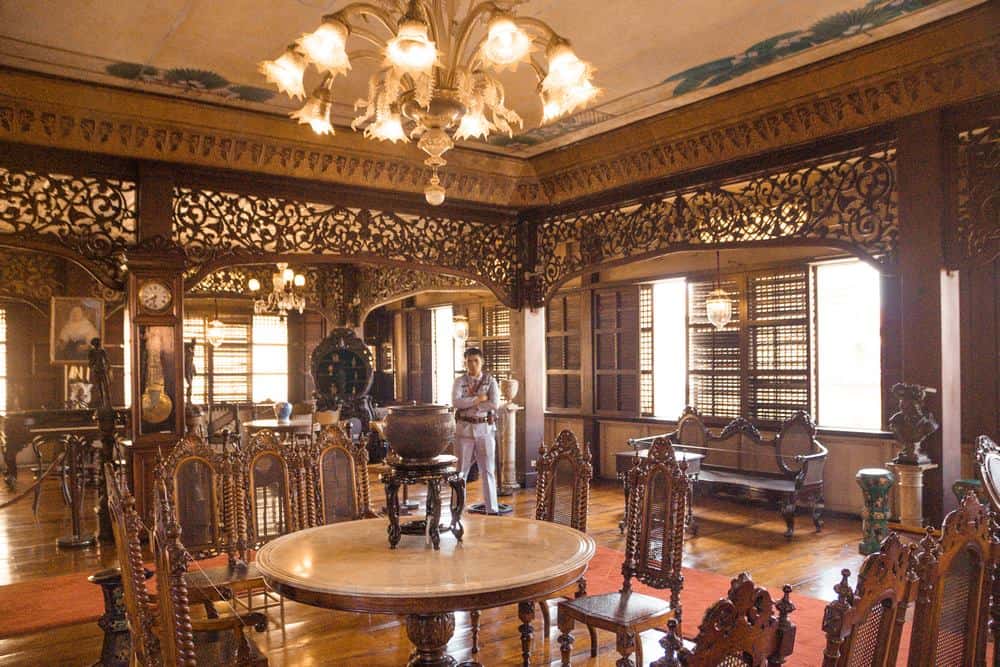
For more information and even a suggested itinerary with a map, take a look at our guide: Things to See in Intramuros, Manila
2. Visit Rizal Park and the José Rizal Monument, two important places to see in Manila
Just outside Intramuros is another place to see in Manila: Rizal Park. Also known as Luneta, this lively park is where you will see many families from Manila picnicking around the fountains. José Rizal was executed here, and you can see a diorama depicting the moment. It is also home to the José Rizal Monument, the twin of the one located in Madrid, and the country’s kilometer zero.
Interestingly, the park also has a Chinese garden and a Japanese garden. The latter is not bad, and admission is free, so you have nothing to lose by going in. The area around the park is also home to some of the most important museums in the entire Philippines, which we will discuss later.
Want to go with a guide? Then there is this private tour with guide, which also includes the various museums next to the park.
If you feel like walking some more, head toward the sea and you will reach the Baywalk, or Roxas Boulevard. This is Manila’s waterfront promenade, or baywalk, and you will find it particularly lively at sunset, when ice cream and peanut vendors make their way along it. Curiously, a few years ago they created an artificial beach, Manila Bay Beach, or Dolomite Beach, after a massive trash cleanup (which they have to continue doing periodically), and it is hard to believe that people swim there considering how incredibly polluted it is.

José Rizal Monument
3. Walk through Chinatown, the oldest Chinatown in the world (outside China)
Did you know that Manila is home to the oldest Chinatown in the world? Binondo (as Chinatown is known) was the place the Spanish government established for the Chinese community to settle. Not only did the sangleys (Filipinos of full Chinese ancestry) settle here, but Spaniards, Americans, and Japanese also decided to make it their home, turning this neighborhood into one of the most important in the Philippines.
The best way to visit it is to start on Escolta Street, one of the most historically significant streets to visit in Manila. It was a commercial artery that offered imported goods from China, Europe, and the Americas during the Manila Galleon era. Some of the city’s most luxurious buildings stood here, and a few can still be seen today. That said, the most interesting spot is the First United Building (do not worry, we have marked it on the Manila map below), which has been restored and is home to a pretty cool café and several independent designer stores.
Then continue walking toward Santa Cruz Church. This is where Ongpin Street, the main street in Manila’s Chinatown, begins. Browse its stores selling gold and jade, stop for some dumplings, visit one of the Buddhist temples (Kuang Kong Temple is the best known), and admire the Arch of Good Will, the kind of arch you will see in Chinatowns around the world, which symbolizes the brotherhood between the Filipino and Chinese peoples.

Plaza Sta. Cruz – stalls on Ongpin St. – Binondo Church
Afterward, you can pass by Binondo Church, or the Minor Basilica of San Lorenzo Ruiz, and, if you want more, continue to Tutuban Mall (a night market is held here in the evenings, although it has lost a lot of momentum and was never like others in Southeast Asia, in case you come across any references to it) and then continue along Recto Avenue through an area known as Divisoria, which is packed with stores and markets selling household goods, cheap clothing, and food.
We have been to Divisoria many times and can tell you that it is an interesting place, but it is not particularly picturesque, nor is it a very worthwhile place to buy souvenirs or handicrafts. It is true that there are a few stalls selling items made from acacia wood, but it is really aimed more at Filipino shoppers looking for trinkets or Chinese clothing.
If you are interested in fully experiencing this part of Manila and sampling Chinese cuisine with a guide, this Chinatown tour in English comes highly recommended.

4. Delve into the heart of Quiapo
Want to get off the beaten path? Quiapo is one of the most interesting districts to visit in Manila. The main reason is that it is home to the famous Minor Basilica of the Black Nazarene (Quiapo Church), which houses the Black Nazarene, or Black Christ of Manila, a carving from Mexico dating from 1606 that arrived in Manila aboard a galleon and inspires tremendous devotion. In fact, every January 9, a procession attended by millions of people (more than 6 million, according to estimates) commemorates the arrival of the Black Nazarene.
Leave the church to admire the little stalls selling amulets (and, they say, herbs used to induce abortions) in Plaza Miranda and stroll along Hidalgo Street if you want to see all kinds of “items” and old houses such as Casa Zamora, Casa Padilla, and Casa Paterno. If you get hungry, the most famous place is Globe Lumpia House, which opened its doors in 1956 to serve this traditional Filipino snack, but Quiapo is also home to Quinta Market, packed with food stalls (its pancit palabok is famous) and trinkets.
Keep in mind that these are bustling areas, especially where there are lots of stalls or markets. Although they are not dangerous, it is a good idea to keep an eye on your wallet and valuables in these places, as you could fall victim to opportunistic theft.
5. Stroll around Makati, Manila’s financial and commercial district
Leaving the “old” part of Manila behind, we dive right into its more modern neighborhoods. For us, exploring it all means discovering the essence of the city: a constant contrast between luxury and poverty, slums and skyscrapers filled with luxury apartments.
Makati is one of the cities that make up Manila and is considered its financial district. We had the chance to live here for a while, and we are not exaggerating when we say we were quite comfortable. If you decide to visit, you will find loads of things to do here.
Although it does not have as much history as the previous areas, it is a great place to enjoy the capital’s dining and entertainment options. You will see ultra-modern malls where Manila residents escape the heat, have coffee, shop, or go to movie theaters with VIP seats. The best known are Greenbelt (with its 5 buildings and a wonderful central area full of greenery that is very pleasant for a meal; it is also home to the Ayala Museum, which we will discuss later), Glorietta (4 buildings), and SM Makati (where you will find a branch of Kultura Filipino, our favorite place to shop).
By the way, if you are looking for more things to do in Manila, Ayala Triangle is very close by, a pleasant park with cafés and restaurants with outdoor seating where you can admire the huge skyscrapers. Interestingly, the Instituto Cervantes is directly across the street.

6. Explore the trendy neighborhood of Poblacion
Nightlife has moved to Poblacion, a neighborhood within Makati where you can enjoy the city’s youthful atmosphere in its restaurants and bars, especially on the streets around P. Burgos St. There are several rooftop terraces where you can have a drink and enjoy the views, including Antidote, which we discuss in Where to Eat in Manila.
Poblacion has gained momentum in recent years, and we think it is the most pleasant place to stay and the one we most highly recommend in Where to Stay in Manila. This is where we usually stay whenever we return, specifically at the Lub-D hotel, where you can also leave your luggage free of charge throughout your time in the Philippines if you have a lot of luggage.
Besides being a safe and quiet place, it has loads of restaurants, bars, and shops. Without traffic, you can reach Manila Airport in under 30 minutes. In addition, free ferries run from the Hulo ferry stop to Escolta Street, from where you can easily walk to Intramuros. Power Plant Mall (in the Rockwell area) and Century City Mall are also very close. There, you can exchange money at a good rate and, if you feel like it, find places offering massages, manicures/pedicures, and other services of this kind at very good prices.
If you are looking for historical things to do in Manila, Poblacion is also home to Makati Church, or Sts. Peter and Paul Parish Church. It was declared an Important Cultural Property in 2023. The Franciscans arrived in this area in 1578, eager to convert the indigenous people to Christianity, but it was the Jesuits who built the first church in 1620, naming it Iglesia de San Pedro y San Pablo Viejo.
It became very important because it housed “La Virgen de la Rosa,” a 1718 carving that arrived from Mexico on the Manila-Acapulco galleon and apparently had a reliquary containing a strand of the Virgin Mary’s hair. Unfortunately, the reliquary disappeared and the statue of the Virgin was badly damaged during various uprisings. The same thing happened to the church, which was severely damaged during the British occupation of Manila in 1762 and therefore looks as though it has been extensively reconstructed. Even so, you can still appreciate the Baroque architectural style typical of the churches built during the Spanish colonial period.
Very close to the church is the Makati Museum, or Museo de Makati, which displays old photographs of the city from the 19th and 20th centuries and explains its entire history. It is not an extraordinary museum, but it is free, air-conditioned, and housed in a picturesque early-20th-century building. From here, you can continue walking along the Pasig River toward Power Plant Mall, a very pleasant shopping mall full of restaurants and cafés.

Makati Church – Makati Museum
7. Shop for local products in Manila: the best malls and markets
If the capital is the last stop on your trip around the Philippines, you may be looking to do some shopping in Manila. Many travelers ask us what local products they should buy, and we always recommend heading to our favorite store: Kultura Filipino. There you will find nipa (palm) products such as bags; household items made from wood or coconut; barong and other textiles made from piña; pearls (with certificates of authenticity); and typical souvenirs such as miniature jeepneys or T-shirts. Our favorite branch is in SM Makati, although you will find others in malls throughout Manila, including SM Mall of Asia, the 12th-largest shopping mall in the world. The easiest thing to do is search for “Kultura Filipino” on Google Maps and visit the closest one.
All these malls also have supermarkets where you can buy dried mango at a good price. It is a typical Filipino snack and very easy to pack. It will be cheaper than buying it at the airport stores.
If you are looking for knockoff clothing or imitation pearls, you can find them at other markets such as Greenhills, Market! Market!, or Divisoria. The first is especially interesting if you are looking for knockoff clothing or footwear, although it also sells a few souvenirs (not many, so do not get too excited) and some electronics. In the modern section, in case you are interested, there is a Kultura Filipino. Keep in mind that Greenhills is quite far from Makati, so it will take some time to get there.

Greenhills Shopping Center in Manila
If you are going to visit Manila on a weekend, one of the most interesting things to do is visit the Salcedo Saturday Market (Saturdays) or the Legazpi Sunday Market (Sundays), both located in Makati. They sell local products from all over the country, mainly food. Remember to go before 2:00 p.m.
If you are at the airport and do not want to go far, there is also the Mall of Asia (MOA), which, at 589,891 square meters, is the largest shopping mall in the Philippines, the second largest in Southeast Asia, and the sixth largest in the world. In addition to loads of dining options (yes, there is a food court), an IMAX theater, and an ice-skating rink, it has every kind of store.
Finally, there is also the Tutuban Night Market, which is the closest thing you will find to a Thai night market, although the comparison is a huge stretch. It has a food-stall area that is not bad, followed by stores selling cheap clothes, household goods, and so on. There are not many handicrafts, and you should not expect many tourists. It is geared toward locals. It is near the Divisoria area and usually starts around 5:00 p.m.
Looking for inspiration? Do not miss our article What to Buy in the Philippines, where we recommend things to take home and share even more shopping suggestions.
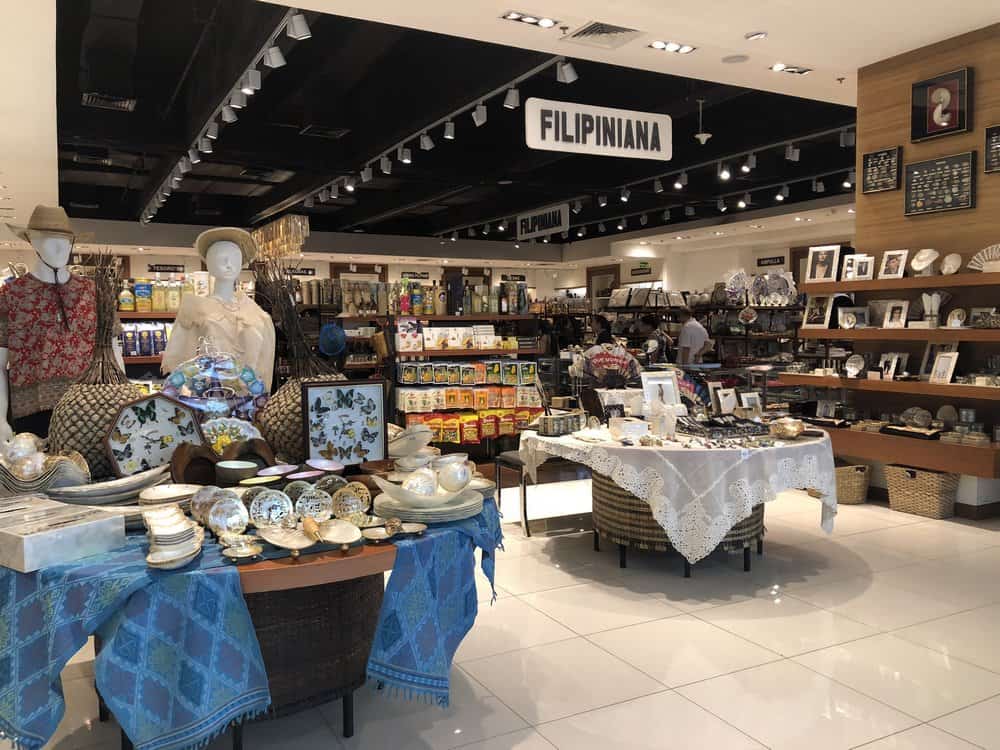
Kultura Filipino
8. Explore dark tourism: cemeteries in Manila
It may sound strange, but one of the most interesting things to do in Manila is visit one or more of its cemeteries. Our favorite is the Chinese Cemetery, which looks more like a residential development than a place where bodies are laid to rest. Many of its mausoleums and tombs look like actual houses (some have a bathroom, a kitchen, and even a hot tub!), and people look after them every day. At the south gate, where you enter, you can hire a guide to take you to the best-known mausoleums so you can learn more about them, but keep in mind that the prices they charge are fairly high (around 1,500 pesos for one hour).
Another interesting thing to do in Manila is visit the Manila American Cemetery, located in the BGC area. The Manila American Cemetery is completely different from the previous one; what will surprise you is the vast expanse filled with white crosses and surrounded by imposing skyscrapers. There are 17,206 graves here containing the remains of American soldiers and soldiers from other Allied countries who died during World War II. Admission is free.
Finally, Makati is also home to the Manila South Cemetery, a cemetery that looks like a real neighborhood, as it has houses, food stalls, and even basketball courts inside. Please be respectful if you visit, and do not take photos as though it were a zoo. If you are lucky enough to be in the area on October 31, November 1, or November 2, you will find a full-blown celebration.
9. See a completely different Manila in BGC
As we mentioned above, Manila is a city of stark contrasts. Although the middle class is making progress (very slowly), the fact is that the social differences are huge and very noticeable. If you explore Intramuros, take the ferry along the Pasig River, and then go to BGC, you will think you are in two completely different cities.
BGC stands for Bonifacio Global City, one of the districts in the city of Taguig (remember, one of the 16 that make up Metro Manila), and it is home to some of the most important multinational companies in the Philippines, as well as the Philippine Stock Exchange. It has the highest concentration of skyscrapers, including the tallest in the country, Metrobank Center, and, of course, loads of luxury condominiums where studios rarely cost less than $1,500 per month, so people with considerable purchasing power live here.
Everything in BGC is spotless and orderly, with sidewalks that are comfortable to walk on, and you will see that it is packed with trendy cafés, restaurants, and stores. That is why walking around here feels like you could be in any city in the United States.
What can you do in BGC? Here are a few ideas:
- Stroll along Bonifacio High Street: this is BGC’s main shopping thoroughfare, a very pleasant pedestrian area with green spaces and restaurants and cafés on both sides. People dress up to come here, especially on weekends. Interestingly, there is a branch of the famous American burger chain Shake Shack along one side.
- The Mind Museum: this is a science museum that opened in 2012 with a clear focus on children. That is why, if you are looking for things to do in Manila with kids, we think it is a great idea. It is open Tuesday through Sunday from 9:00 a.m. to 6:00 p.m. and costs 625 pesos for adults and 550 for children. Discounted tickets are available on this platform.
- Metropolitan Museum of Manila at BGC: it is one of the few contemporary art museums in the Philippines and always has temporary exhibitions by international artists. It occupies 3 floors. It is open Tuesday through Friday from 11:00 a.m. to 6:00 p.m. and Saturdays and Sundays from 10:00 a.m. to 6:00 p.m. Admission costs 550 pesos.
- Explore its malls (and there are quite a few): the most “popular” is Market! Market! (where you will find cheap goods, including electronics), but the most beautiful is SM Aura Premier, which has a branch of Kultura Filipino and a pleasant rooftop garden with views. Finally, there is Venice Grand Canal Mall, which we find a little tacky, although some people like to visit it. It is a mall with a Venetian canal running through it, complete with gondolas.
- Manila American Cemetery: we told you about it just above.
- Have dinner/a drink at Burgos Circle: this traffic circle/park and the surrounding streets (especially Forbestown Rd.) have loads of restaurants and bars that tend to get very lively in the afternoons/evenings, especially on weekends. In keeping with the area, they are pricey. A few suggestions: Dr. Wine BGC, Ma Ma Ci Ta BGC, Locavore, and Tipsy Pig.
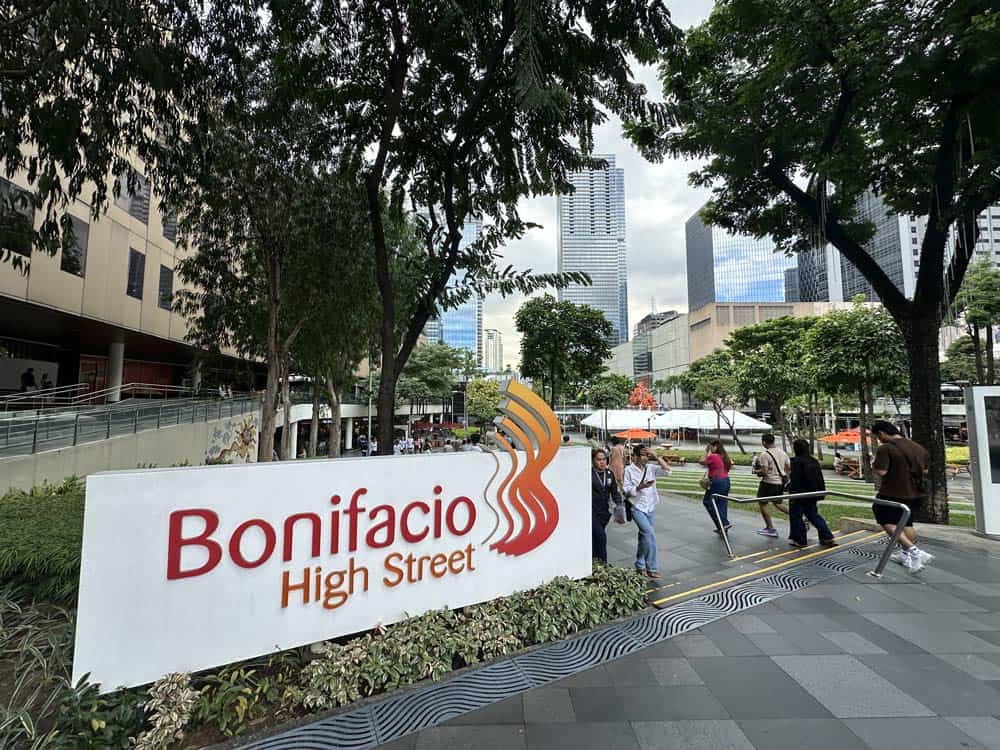
10. Visit one of Manila’s museums
If you want to delve a little deeper into the history of the Philippines, in addition to Intramuros, you can visit one or more of its museums. Based on our experience, the most interesting ones to see in Manila are:
- Ayala Museum: located in Greenbelt 3, on the corner of Ayala Avenue and Dela Rosa St., this museum covers the history of the Philippines through dioramas with explanatory signs in English. On the upper floors, you will find an exhibition of works by Filipino artists and an impressive collection of Filipino goldwork from before Spanish colonization. It also has several galleries for temporary exhibitions. It is open Tuesday through Sunday from 11:00 a.m. to 7:00 p.m., and admission costs 600 pesos (children under 12 pay 240 pesos, and children under 3 enter free).
- National Museum of the Philippines: it consists of several buildings located in the Luneta Park area. These include the Museum of Fine Arts, the Museum of Anthropology, and the Museum of Natural History, all completely renovated and free to enter. They are open Tuesday through Sunday from 9:00 a.m. to 5:00 p.m. In our opinion, the Museum of Anthropology is the most interesting, as it explores the country’s different ethnic groups, including the Aeta and Muslims, through a large collection of objects.
- The Mind Museum: as we mentioned above, it is ideal if you are visiting with children. You can buy your ticket on this platform.
You will also find the Museo de Intramuros, Casa Manila, the San Agustín Church Museum, and the Museum of Chinese Immigration in the Philippines in the Intramuros area, all of which come highly recommended. We discuss them in more detail in Things to Do in Intramuros.
More things to do in Manila
For us, everything listed above is enough for at least 2 days in Manila. However, if you have more time or are looking for more options, here are a few extra things to do in Manila that might suit you:
- Tour Malacañang Palace: it is the official residence of the president of the Philippines, and the building dates from the mid-18th century. Located beside the Pasig River, it can be visited on a guided tour, but only if you request one at least 3 business days in advance using this form. You can also try visiting independently from Tuesday to Sunday, from 10:00 to 11:00 a.m. and from 2:00 to 4:00 p.m. Bear in mind that there is a dress code: no sleeveless shirts or flip-flops.
- Pedicure and manicure services: yes, it may sound a little “superficial,” but the Philippines is known for offering these kinds of services at affordable prices (300–400 Philippine pesos for a manicure), and you can get them for much less than you would pay in your home country. Obviously, there are loads of manicure and pedicure salons, but here are our favorites in the Makati area: Dear Alice Nail Lounge, Enza Nails & Spa, and Nail Addik Makati. You can find them all on Google Maps by searching for these names.
- Massages: as with the previous option, the number of massage places is overwhelming and the prices are very affordable (starting at 400 pesos for 1 hour). A few recommendations in Makati: Well Being Nature Spa Massage Makati, Palmeo Spa & Massage – Makati, Breeze Oriental Spa & Massage – Makati, Thai Boran Makati MNL, and Royal Oriental Wellness.
- Splurge on fine dining: yes, Manila is where you will find the widest range of restaurants serving haute cuisine. One example is Gallery by Chele, run by a Spanish chef who showcases local ingredients by creating his own versions of Filipino and Asian dishes. Another one farther away that you will like is Toyo Eatery. You will find many more options in our guide Where to Eat in Manila.
- Star City Manila: if you are looking for things to do in Manila with kids, this amusement park is very close to the airport and Mall of Asia. Discounted tickets are available on this platform.
- Go out partying: we are not exactly die-hard party animals, but Manila, along with Siargao, is the best place to enjoy Filipino nightlife. There are loads of bars and nightclubs, especially in the Poblacion area of Makati. If you want to meet people, there are tours like this one.

Nighttime in Makati
What to see in Manila in 1 day – The ideal itinerary
You may already be overloaded with information, so here we are going to summarize what to do in Manila if you only have one day to visit the capital of the Philippines. You can put together a fantastic itinerary that takes you to the main sights. What can you see in Manila in 1 day?
- Start in Intramuros and visit Fort Santiago, Manila Cathedral, Casa Manila, and San Agustín Church. For the views, you can go up onto the city walls or take a relaxing break on the terrace of The Bayleaf Hotel, which has the best panoramic views of Intramuros. In Things to See in Intramuros, you will find this route in even greater detail, and if you can, be sure to join this free tour or this bamboo bike tour, as you will discover the best of the area in barely two hours.
- Continue walking toward Rizal Park, enjoy the atmosphere, admire the José Rizal Monument, and keep going toward the Baywalk.
- Take a taxi (or walk) to Chinatown, then walk from Binondo Church along Ongpin Street until you reach the Santa Cruz Basilica.
- You will probably be hungry by now; Chinatown has loads of Chinese restaurants serving delicious food. Chuan Kee Chinese Fast Food, Shanghai Fried Siopao, and Vege Select are our favorites.
- For a day of contrasts, you can take a taxi (preferably a Grab) to the Greenbelt shopping mall. Here you will see how modern Makati’s malls are. Take the opportunity to shop for local products at Kultura Filipino in the nearby SM Makati. Another option—or an additional stop if you have more time—is to go to Bonifacio High Street in BGC. You will feel as though you have been transported to New York.
- Dinner time! You can eat at our favorite Thai restaurant in Greenbelt, People’s Palace, enjoy authentic Japanese food at Nihonbashitei, or look for something trendier in the Poblacion area, such as El Chupacabra or Crying Tiger.
- Toast with a cold San Miguel or a Tanduay at the best rooftop terrace in Manila: the one at I’M Hotel. We also highly recommend Dr. Wine Poblacion Makati.
If you do not want to worry about anything and want an expert guide to take you to the best places, we recommend joining this Manila tour of contrasts. You will explore the city’s most modern area, the bay, and the best of Intramuros.
Day trips from Manila
Do you have more than one day to spend in Manila? Then you may feel like leaving the city and taking a day trip. As you can imagine, with Luzon being such a large island, there are plenty of possibilities. We have been lucky enough to take many of them, so here are the ones we think are most interesting:
- Tagaytay and Taal Volcano: the former is a city a couple of hours from Manila and is very popular with locals for its fantastic views of Taal, one of the most active volcanoes in the Philippines, and the lake surrounding it. It is also a leisure destination, with parks offering amazing views, pleasant places to stay, and restaurants. Due to volcanic activity, it is no longer possible to reach the volcano (you used to be able to go all the way to the crater), but you can still admire it from above and take a boat ride on the lake. You can get to Tagaytay independently if you want, but in that case, we recommend leaving extremely early because of the traffic and to keep the logistics from becoming overwhelming. An organized tour like one of these will be more convenient: Tagaytay + boat ride, Tagaytay + Pagsanjan Falls (really cool), or just Tagaytay.
- Pagsanjan Falls: located in Laguna province, these 91-meter-high waterfalls are even more impressive because of their setting in a canyon reached by canoe through rapids. Part of Francis Ford Coppola’s famous movie Apocalypse Now was filmed here. You can drive there from Manila or, as above, join an excursion such as one of the following: GetYourGuide, Civitatis, or Tagaytay + Pagsanjan Falls.
- Mount Pinatubo: along with Mayon, Pinatubo is one of the volcanoes in the Philippines that impressed us most, and you can reach its crater, which is now a lake. Getting there on your own is complicated (and you also need a permit), so we recommend going on a tour like this one, this one, or this one.
- Sagada and Banaue: we do not know whether this can be categorized as a day trip because getting there takes at least 8 hours overland, but tours do depart from Manila for these two fabulous spots on the island of Luzon, such as this one, which lasts 4 days. If you want to go independently, we recommend our guides Things to Do in Banaue and Things to Do in Sagada.

The rice terraces of Batad
Practical information about Manila
Now that we have given you a few pointers on the city’s most interesting attractions, here are some useful tips from us as residents.
Tips for visiting Manila
Here are a few recommendations that will help you get more out of your visit:
- The best time to visit Manila is from November to May, the dry season in this region. That said, you can go at any time of year, as the rain will not stop you from making plans. You will find more information about this in our guide to the Best Time to Travel to the Philippines.
- Please choose carefully which area to stay in. Manila is a very large city, and you can spend hours stuck in traffic. For us, Makati is the best option, and we tell you more below.
- Be very careful with taxi drivers, especially those at the airport. You can avoid problems by using Grab.
- Manila has loads of currency exchange offices and ATMs, but as we explain in Money in the Philippines, it is best to exchange a little money at the airport (surprisingly, the Philippines is one of the few countries in the world where you can get a good exchange rate in Arrivals) or at one of the currency exchange offices we recommend, as every ATM charges fees. If you need cash, the best option is to use Remitly (you get $10 free with our link) at any pawnshop (just enter “pawnshop” into Google Maps, and you will see that there is one every few meters). We know it sounds convoluted, but you will have your money in 5 minutes with no fees; it is what we always use.
- Card payments are widely accepted in Manila, so take advantage of that, as it is one of the few places where you will be able to use your card this often. However, keep in mind that you will have to pay in Philippine pesos, so your bank may charge you a foreign transaction fee. That is why we recommend using Revolut.
- When paying for taxis, always carry small bills. It is extremely common for drivers to try to keep extra money by claiming that they do not have change.
- If you have to work remotely, you will not have any problems: both the 4G/5G network and Wi-Fi work quite well. In fact, it may be the best place in the country in this respect.
- If Manila is just a stopover or the start of your trip, it is a good idea to buy sunscreen and insect repellent at one of the many Mercury Drug or Watsons stores around the city. They will cost far less than they do in tourist destinations and, above all, will be much more reliable. Refilling sunscreen bottles with body lotion is one of the most common scams in the Philippines.
- The same applies if you want to do laundry. There are thousands of laundromats around the city, with prices of around 40–50 pesos per kilo.
- Get proper travel insurance. Manila’s medical facilities are the best in the entire country, but they are not free. Take a look at the travel insurance for the Philippines that we use. Your insurer will tell you which hospital to visit, but for reference, Makati Med and St. Luke’s are the best.
How to get there
Since Manila is the capital and has an international airport, getting there will not be very difficult. We have summarized the main routes from outside and within the country in How to Get to Manila.
How to get around Manila
Transportation in Manila is quite chaotic, and the traffic is unbearable (we are talking about hours in traffic jams). The public transportation network is not very convenient: although it consists of a “metro” system (the above-ground LRT and MRT), jeepneys, and buses, if you are only visiting the city, you will find it more convenient to use taxis (be persistent and tell them to use the meter) and, above all, Grab, an Uber-like app that lets you request a pickup anywhere. Joyride, which we also mention below, now offers car rides too, but it has fewer drivers, so they are harder to find.
Taxis (and Grab rides) are extremely affordable. To give you an idea, a one-hour ride can cost 400 or 500 Philippine pesos—or even less.
If you are traveling alone, another great idea is to use apps such as Move It, Angkas, and Joyride. You basically ride as a passenger on a motorcycle (known as habal habal in the Philippines), which lets you avoid much of the traffic. That said, it is not for the faint of heart because, although the drivers know exactly what they are doing, they do not exactly ride slowly. The good thing is that you get great discounts the first few times you use them, and sometimes the rides can even be free.
Unlike in other parts of the country, tricycles here cannot travel between neighborhoods or cities, so they are not very practical. Manila residents can only take them for short trips within their local area.
Finally, there is also the option of the free Pasig River ferry. It is not a very conventional alternative because services are infrequent, but we usually recommend it for traveling from Makati (Poblacion, Hulo stop) to Intramuros (Escolta stop) because it helps you avoid a lot of traffic and gives you the chance to see scenes from everyday life in the city.
If you have to go to the airport, unless it is the middle of the night or you have spent the night directly across from the airport or very close by, leave 3 or 4 hours early. Seriously, you do not want any traffic-related surprises. Also bear in mind that rush hours are from 7:00 to 9:00 and from 16:00 to 20:00, Monday through Friday.

Where to stay in Manila
If you have decided to visit the city, we recommend these hotels, where we have stayed many times:
- Lub-D Philippines Makati: for us, this is the best hostel in Manila. If you are traveling alone, it is your best option, but it also has very nice double and family rooms, as well as spacious common areas. We stay here almost every time we come to Manila, so you may spot us hanging around reception.
- City Garden Grand Hotel: looking for a Manila hotel with a pool in a cool area for going out to dinner? This is the place for you. Below is a photo of the views from the rooftop.
As you can see, they are all located in the Poblacion neighborhood of Makati. This is our favorite area to stay because, besides being quiet (as quiet as a huge city like Manila can be), it has a wide range of restaurants and bars, making it a pleasant place to go out for dinner. From here, you can easily reach the airport, and several malls are nearby for any shopping you need to do.
Here, we cover everything you need to know about where to stay in Manila, including which areas are best. If you have an early flight, take a look at Where to Stay Near Manila Airport, but if you do not have much time to look, we recommend this one without hesitation.

Where to eat
As you can probably imagine, the capital’s dining scene is overwhelming. If you want to sample high-end Filipino cuisine, this is the place, but there are also restaurants serving food from almost every part of the world. To keep this guide from getting much longer, we have created a separate one on the subject: Where to Eat in Manila. You will also find café and bar suggestions there.
Map of Manila
Want to see where all the things to do in Manila are on a map? Here is all the information:
Frequently asked questions about visiting Manila
To wrap up, we want to answer the most common questions from travelers who decide to visit Manila for 1 day or several days:
How many days do you need to see Manila?
If you want to see the essentials, 1 day is enough. Even with 5–6 full hours, you would have time to see Intramuros and Binondo, Manila’s Chinatown. If you have more time, you can explore much more or even take day trips.
What should you not miss in Manila?
Intramuros is the most important place, followed by Binondo and Quiapo. One day in Manila also gives you time to explore Makati’s financial district and the city’s most modern area: BGC.
Is Manila worth visiting?
Based on our experience—we have lived here and pass through several times each year—the answer is yes. Obviously, it is still a personal opinion, but Manila has interesting places and adds a different or more complete perspective to a trip around the rest of the islands.
How safe is Manila?
As in any city on the planet, there are problems with petty crime (especially opportunistic theft), but it is a safe city. We lived here for quite a long time and never had any problems, even when going out in the early hours of the morning.
What can you see in Manila in 1 day?
We would get up early and visit Intramuros first, then take a walk along Escolta Street and through Binondo, Manila’s Chinatown. We would walk to Quiapo; if you feel like it, you can stroll around Divisoria Market. Take a taxi to Ayala Triangle in Makati and see the financial district’s famous malls. You can finish with dinner in BGC or Poblacion.
What are the best day trips from Manila?
We think the trip to Mount Pinatubo is the most interesting. You could also go to Tagaytay.
As you can see, we are big fans of the capital of the Philippines, so this is not our only guide to the city. Be sure to take a look at the following guides as you continue planning your trip:
How to Get from Manila Airport to the City Center
Do you have any questions about your stay in Manila? We will be happy to answer them in the comments.