The small island of Panglao is a classic stop on many trips to the Philippines that include Bohol among their destinations. Connected to Bohol by two large bridges over the sea, it is a place many travelers choose as a base for discovering the different things to do in Bohol.
Like anywhere else in the world, Panglao has both its critics and its fans, and in this complete guide to Things to do in Panglao, we are going to reveal all its secrets so you can decide for yourself whether it is the place you are looking for. Grab your snorkel mask and sunscreen—we’re getting started!
How many days to spend in Panglao and a possible itinerary
Before we get into it, let’s answer a question you may already be asking yourself: how many days should you spend here? Well, there is no single answer because it depends on how much time you have to visit the Philippines and what you want to do in Bohol, especially if you are planning to stay in other parts of the island to explore it in depth. Even so, to be clear, we think 2 full days (not counting transfers) is the minimum you should spend here. During these 2 days, we recommend:
- DAY 1: a snorkeling or diving trip to Balicasag (for us, the most important reason to visit this part of the Visayas) and, since you will be back at around 2:30-3:00 p.m., you can choose to snorkel at Napaling, relax on Dumaluan Beach and/or watch the sunset at North Zen Villas.
- DAY 2: if you are not going to visit other parts of Bohol, we would dedicate this day 100% to exploring the interior by motorbike, car with a driver or guided tour, making sure not to miss the Chocolate Hills, Pangas Falls, the zip line, the Loboc River (cruise, kayak or SUP) and the sanctuary in Corella. If you are going to stay around Loboc afterward, we would spend the day exploring Panglao instead by motorbike or tricycle: Hinagdanan Cave, Napaling, beaches, etc.
For us, Panglao is a good base for exploring the rest of Bohol for several reasons. Since it is located next to the airport and around 30-40 minutes from Tagbilaran, where the island’s main port is located, connections to other parts of the Visayas and other places in the Philippines are easy. It has several incredible snorkeling and diving spots, as well as some cool and very accessible beaches. On the other hand, you can reach Loboc and the Chocolate Hills in an hour to an hour and a half, giving you the option of taking a really cool day trip. In addition, because it is a touristy area, the range of accommodation is incredibly good and the value for money even better, as competition is high, and the same goes for restaurants. Finally, if you are looking for nightlife, you will find it at Alona Beach.
But isn’t Panglao really overcrowded? This may also be on your mind after reading things here and there. Well, Alona Beach is indeed one of the most developed beaches in the Philippines and perhaps geared toward a type of tourism we do not particularly identify with, especially tourism from northern Asia. Unfortunately, development close to the beach has caused the sand to gradually disappear, and it no longer looks as beautiful as it used to. However, you cannot simply dismiss Panglao as an overdeveloped mass-tourism destination and say it is not worth visiting. You only have to look at the map to realize that Panglao is quite a large island and that Alona Beach is not the only part you can visit.
That is why sweeping statements such as “Panglao is just another overcrowded resort destination” or “it’s completely overrun with tourists” seem completely out of place to us. You could stay in Panglao without even setting foot on Alona Beach if you wanted to, but even then, we do not think it is that terrible and would say it can actually be fun to take a walk there at night, have dinner or stop at a bar. Having so many Asian visitors also has its upside: there are some spectacular sushi and hotpot restaurants at very good prices. It is simply a matter of keeping it in mind, looking at it from another perspective and visiting whatever interests you most. That is exactly why we created this Panglao guide, where you will find tips on the most relevant places depending on the type of travel experience you are looking for at any given time.
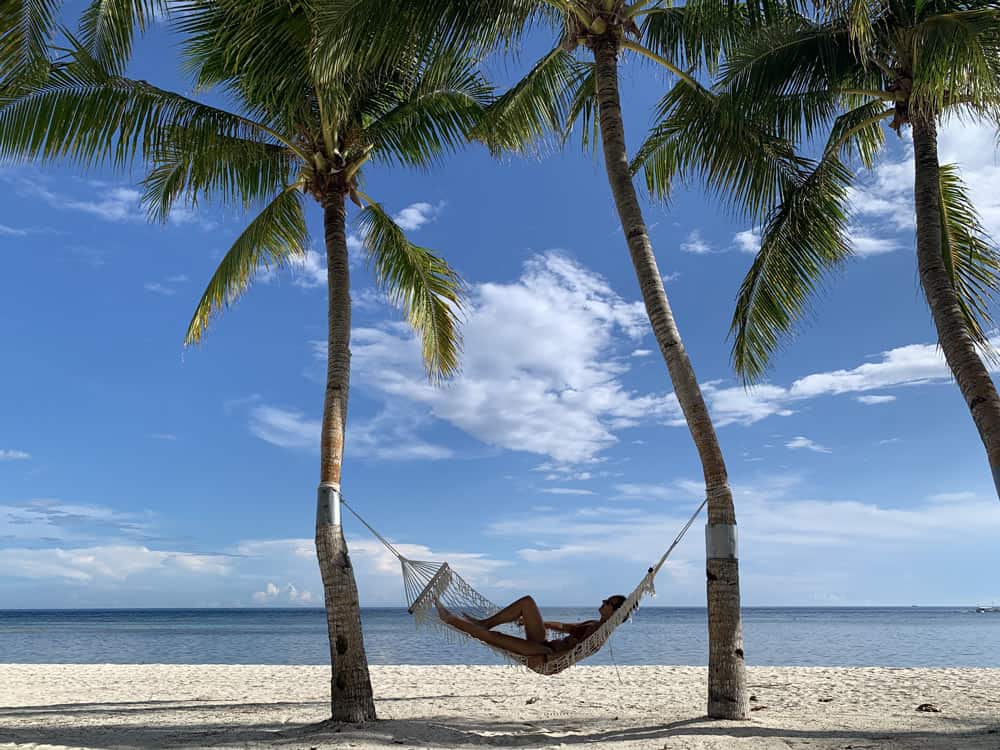
The “crowds” of Panglao
1. Diving in Panglao
Diving in Panglao is the “jewel in the crown,” one of the main reasons thousands of tourists are drawn to the Alona Beach area. There are a large number of dive schools here where you can book dives at more than 20 nearby dive sites. The best known, and a true magnet for divers from all over the world, is Balicasag. It is impossible to dive in Balicasag and not fall in love with this place!
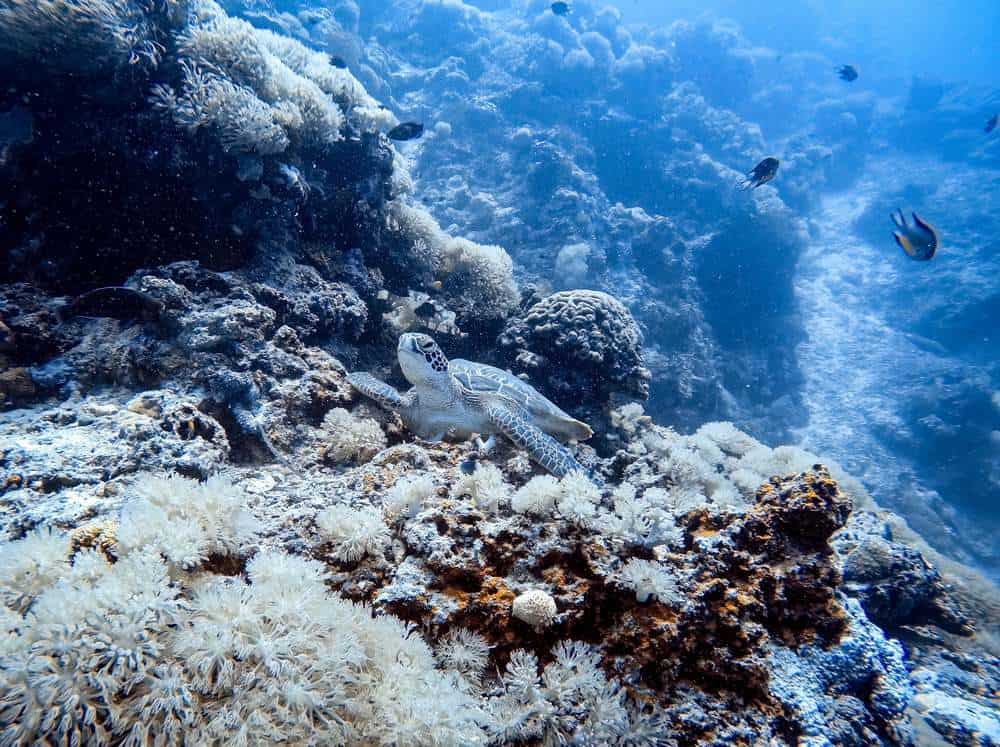
One of its most famous dive sites is “Black Forest.” Its biodiversity will blow you away: groupers, barracudas, plenty of macro life, damselfish, a spectacular black coral forest that gives the site its name and, of course, tons of turtles swimming around the area!
It is important to know that Balicasag is, fortunately, a protected island. This means that only 150 people per day are allowed to dive there, and each of them can do 2 dives. So, it is important to book in advance so you do not miss out on a spot. We give you more information about this below.
If diving is on your list of things to do in Panglao, you will discover other places that are well worth it, such as “BBC,” where a sunken jeepney covered in coral awaits you; “Puntod,” where you will lose count of the nudibranchs you see alongside scorpionfish and coral; or “Garden Eel,” where, after descending along a wall inhabited by shrimp, prawns and nudibranchs, you will reach the territory of the shy and amusing garden eels.
⭐Don’t miss our extremely detailed article about diving in Panglao.
Panglao is an ideal place not only for divers who want to discover new and impressive dive sites, but also for those who have never dived before and want to start exploring the underwater world. In fact, for us, it is the best place in the Philippines to give it a try or simply jump straight into the course. First because of the price, second because of the quality of the dive school we know, and third because you will see cool things from minute one and, on top of that, without getting cold (the water is around 27°C) and with excellent visibility.
In the Alona Beach area, the part most geared toward tourism, you can find several dive schools where you can get your Open Water Diver and Advanced certifications with instructors in many different languages and top-quality equipment. You can find all the information in Diving course in Bohol.
Do you want to dive in Panglao / Balicasag or get your diving certification here with our trusted dive school? Leave us a comment at the end of this “Things to do in Panglao” article and we will send you their contact details so you can enjoy this place with the best professionals, at a beautiful dive school right by the sea with immaculate equipment. We have no hesitation in saying that it is one of the best in the entire Philippines.
2. Snorkeling in Balicasag
Just like diving, snorkeling in Balicasag is another of the best things to do in Panglao for marine-life lovers. Whether it’s because you are not yet certified to dive, because you missed out on a spot by not booking in time, or simply because you feel like experiencing it this way instead, Balicasag offers some of the most beautiful snorkeling in the entire Philippines.
Its main attraction is the large number of green turtles and hawksbill turtles that continually pass through this marine sanctuary, but you will also be amazed by the huge number of colorful fish and impressive corals that populate its seabed. There are several ways to snorkel in Balicasag:
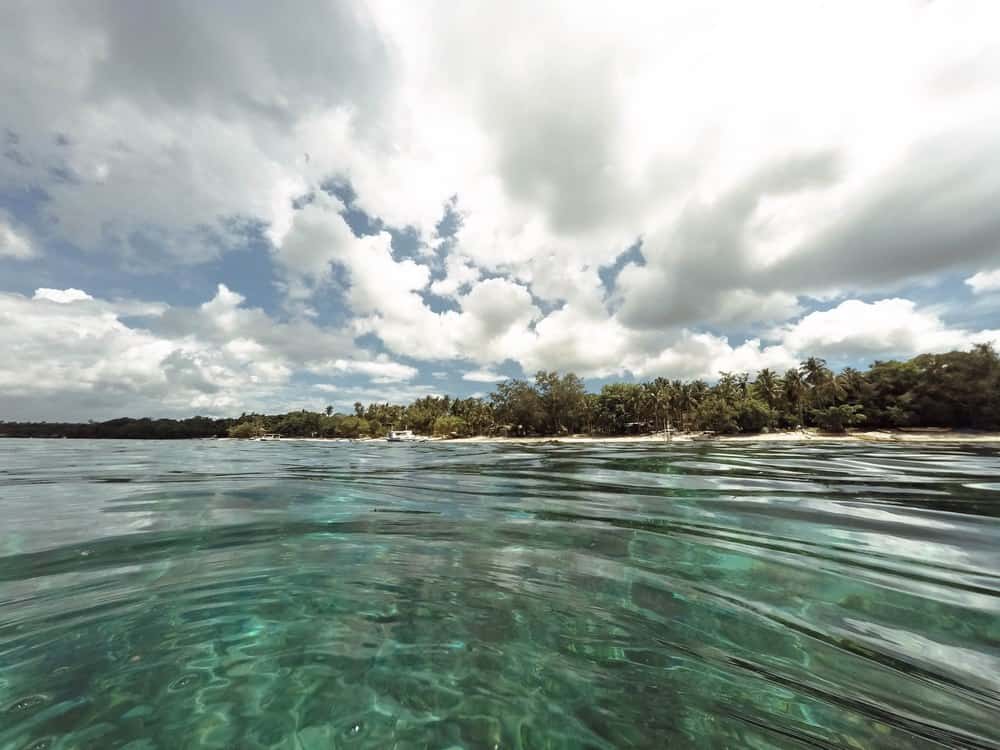
a) Snorkeling in Balicasag on a tour with other activities
Personally, we are not convinced by this option at all for several reasons:
- It includes the misleadingly named “dolphin watching.” On the one hand, seeing dolphins is not 100% guaranteed, so in some cases it takes time away from what you actually came to Panglao to do, and on the other hand, it is usually more like “dolphin chasing” than dolphin watching. You only have to “dive” a little into the Instagram Stories that some travelers post from there to see boats racing right on top of the dolphins without maintaining even a minimum safe distance so the animals can move freely without stress.
- Stop at Virgin Island: there is not much “virgin” left about it because of the excessive number of tourists it receives, although fortunately they have now banned the dozens of food stalls that used to be set up here and made it much less attractive. It is certainly not one of the best sandbars in the Philippines, but you may find it interesting if you have never visited one before. If your priority is snorkeling in Balicasag, we recommend doing it on a separate trip.
- Balicasag: very little time is spent there, you are taken to areas packed with boats and, on top of that, most companies are not at all respectful. Many of them feed bread to the fish, which is outrageous, or fail to stop people from touching the turtles.
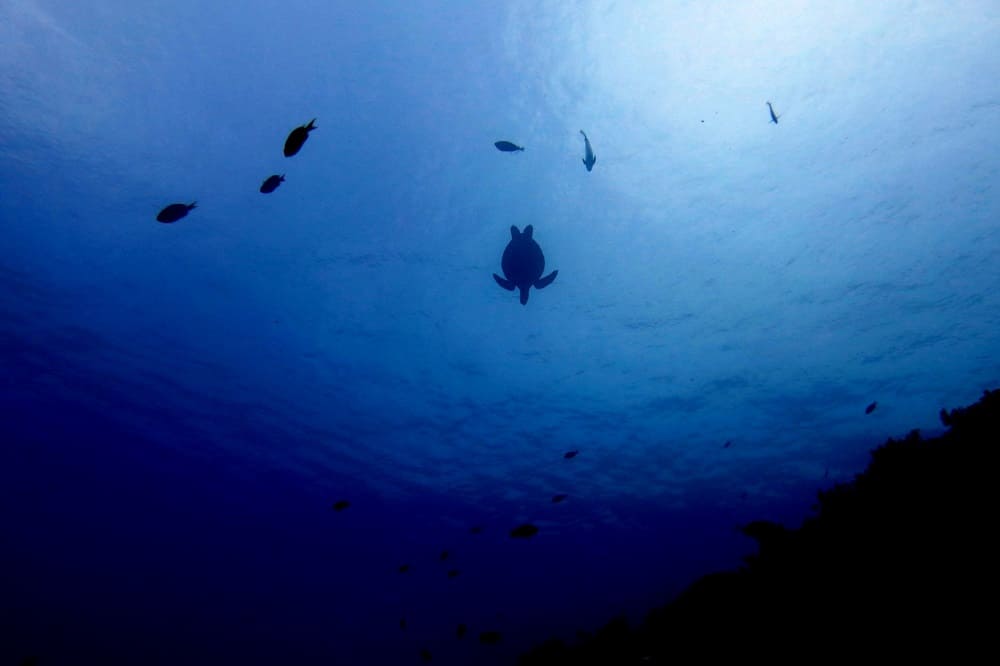
b) Just snorkeling in Balicasag
We think it is better to give snorkeling in Balicasag the time it truly deserves. One option is to book a trip where that is the only activity. Make sure they include at least two snorkeling spots (250 pesos each) and that the fees are included. Also, agree with them in advance on how long you will spend in Balicasag (we recommend at least 2 hours) and let them know that you do not agree with feeding the fish.
Our recommendation is to go to a dive center that is planning a dive there and ask whether they will let you join them for some snorkeling. That way, you can be sure of getting around 2.5-3 hours of snorkeling in Balicasag while the divers are doing their dives. In addition, dive companies tend to be much more respectful of marine life.
In the article Snorkeling trip in Balicasag you will find all the information you need.
If you would like to do this activity, leave us a comment and we will give you information about our contact for a responsible snorkeling trip in Balicasag.
3. Discover Panglao’s beaches
The first beach that usually comes to mind when talking about Panglao is Alona Beach, as it is practically the epicenter of activity on this small island. The vast majority of excursions depart from here, both diving trips and tours to places such as Bohol’s Chocolate Hills, but it certainly does not stand out as the most beautiful beach in the area.
Because of the encroaching sea and loss of sand, as well as the buildings that have occupied the beachfront for decades, many stretches of the beach are not particularly paradisiacal. Even so, the area in front of Henann Resort and the opposite end tend to be very quiet, and you can swim there even at low tide. In short, it is a beach for a refreshing swim and not much more, but very pleasant if you are looking for good restaurants or beachfront resorts.
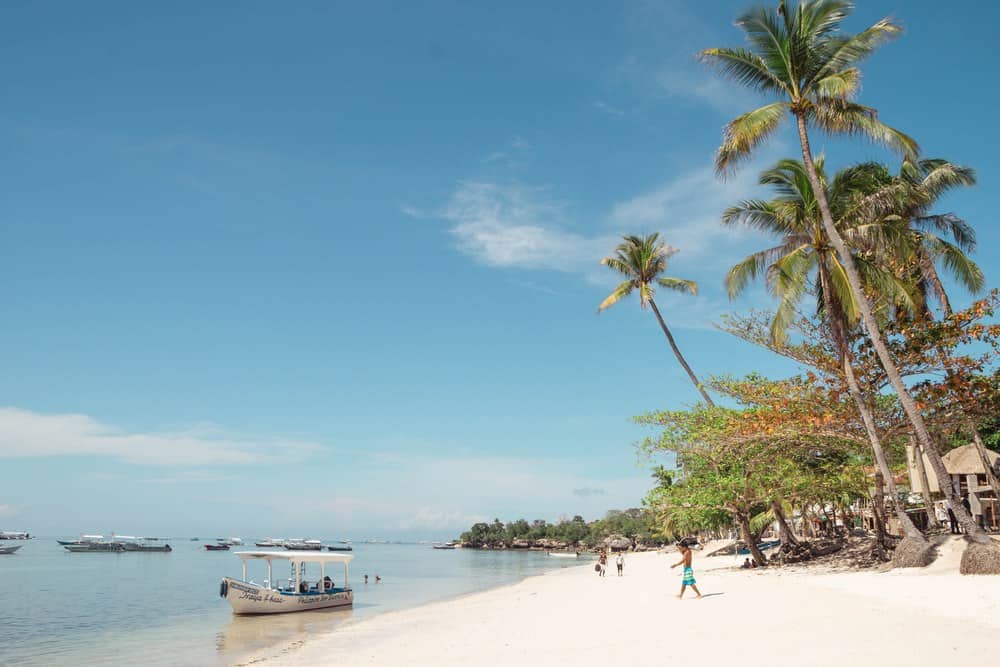
If you hop on your motorbike or take a tricycle, you can reach a large number of nearby Panglao beaches where you can swim in prettier surroundings and with far fewer people. These are some of the ones we recommend:
- Dumaluan Beach: Dumaluan Beach is also known as White Beach and, in our opinion, is the most beautiful beach in Panglao. This stretch of coastline with crystal-clear water and white sand stands out because at low tide you need to walk quite a few meters before the water gets deep enough to swim. Along the shore you will see several food stalls, a big attraction for Filipino tourists who come here for family barbecues. Panglao DBR Grill makes some really tasty shakes. Keep it in mind for your list of things to do in Panglao! It is usually very quiet from Monday to Thursday during the hottest part of the day, and the prettiest section is where Oceanica Resort is located. At Oceanica Resort, you can buy a day pass for 500 pesos, which can be used toward food and drinks, and there is happy hour from 7:00 a.m. to 7:00 p.m.
- Danao Beach: At the western end of Panglao you will find our favorite beach for watching the sunset. It will take you just 15 minutes from Alona Beach, and you will quickly notice that the atmosphere is much quieter. There are far fewer tourists and only the occasional resort where you can cool off with a beer while enjoying the sunset amid shades of orange, lilac and red that will steal your heart. In addition, this beach has a large colony of starfish in all kinds of colors. Unfortunately, depending on the tide, there is sometimes a bit of trash. This is a recurring issue on many beaches in the Philippines. The plastic washes in from the sea, and the resorts only clean up their own sections. We always spend some time doing small cleanups ourselves (5-10 minutes can make a huge difference). There is also an organization called Plastic Free Bohol, which does incredible cleanup work at Danao and other beaches in the area. You can join them!
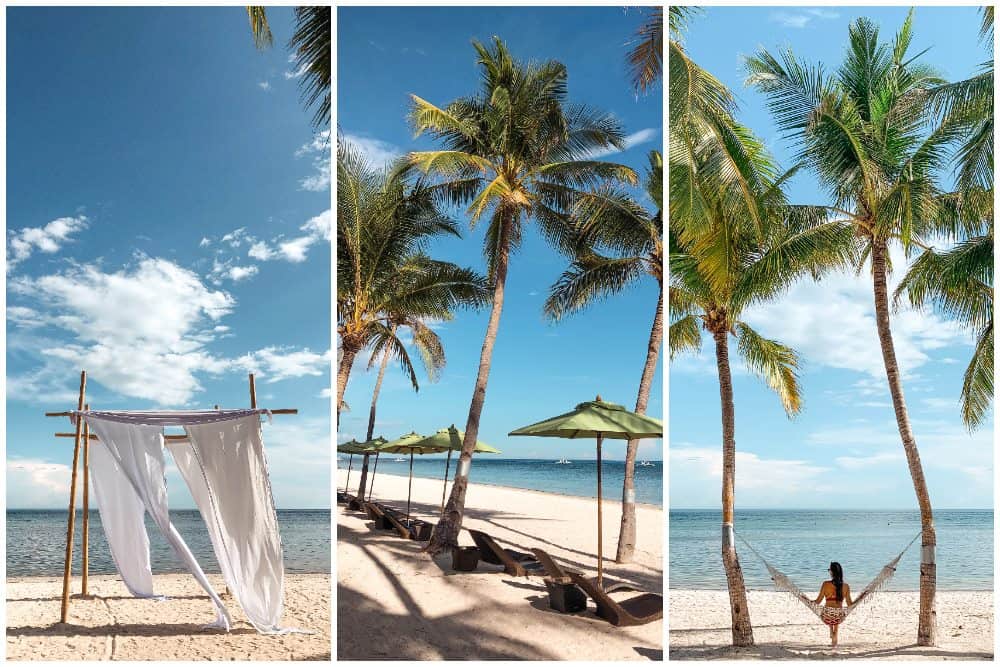
“Please, starfish are extremely sensitive. It is important that you neither take them out of the water nor touch them while they are in the water. They can easily die from stress or lack of oxygen.”
You can find all the information about these beaches and many more in Best beaches in Panglao and Bohol.
4. Hinagdanan Cave
Just like in the Anda area of Bohol, Panglao also has underground caves you can visit. The best-known and easiest to access is Hinagdanan Cave.
A few years ago, completely by chance, a local farmer discovered its entrance. Using a rudimentary bamboo ladder, he managed to get inside, where he was completely amazed by what he found. This flooded cave is a real feast for the eyes! Hundreds of stalactites descend from the ceiling toward the crystal-clear waters that emerge from the ground. In addition, the different openings in the cave ceiling allow the sun’s rays to enter and naturally illuminate the cave, creating a spectacular visual display.
The cave is protected by the Bohol Department of Tourism, and you have to pay to enter, helping to maintain this unique place. If you brought water shoes on your trip, as we recommend in the article Packing for the Philippines, this is an ideal place to use them to avoid slipping on the wet floor at the entrance and to step more safely on the rocks inside the natural pool.
This cave has become one of the must-see places in Panglao, so it is not unusual to find other travelers there and, quite often, groups. Even so, we recommend trying to visit between Monday and Friday and avoiding local holidays. If you go early, even better. It is much more charming that way.
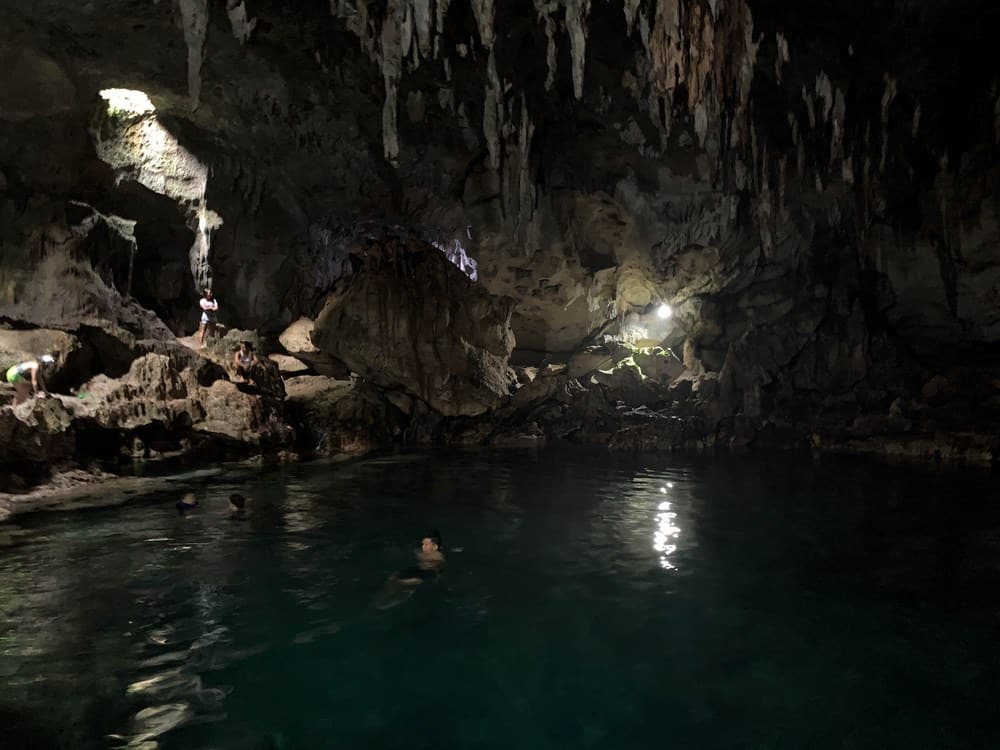
Hinagdanan Cave entrance fee:
- Entrance fee: 50 pesos. For those who only want to look around and take photos.
- Swimming fee: 125 pesos. For those who want not only to see it but also to experience swimming in a cave in the Philippines.
- In addition, if you want to park on the premises, you will also have to pay a small fee.
Hinagdanan Cave opening hours:
The current opening hours are 7:30 a.m. to 5:00 p.m., although at some times of year they are 8:00 a.m. to 6:00 p.m.
Although it is really easy and quick to get there by motorbike or tricycle (approximately half an hour from Alona Beach), you can also enjoy this unique experience in Bohol through tours that visit Bohol’s main sights, such as this one:
Or this other one, focused exclusively on Panglao Island and visiting other places of interest in the area:
Cambagat Cave, another interesting cave in Panglao
If visiting caves where you can swim in natural pools appeals to you, we are going to tell you about another one located less than 300 meters from Hinagdanan Cave: Cambagat Cave.
This one is considerably smaller than the previous cave, but they say that its mineral waters have medicinal properties. Not surprisingly, this cave belongs to the spa at Mithi Resort & Spa, and you will need to stay there to enjoy it. So, if you are looking for a resort in Panglao that offers not only spectacular facilities, 3 beautiful swimming pools, a private beach and a mini island, but also an exclusive cave, take a look because it may be exactly what you are looking for:
5. The atmosphere at Alona Beach
As we mentioned earlier, Alona Beach is the heart of the action on Panglao Island. On the one hand, this means you can find a wide variety of places to stay in Panglao for every budget, plenty of dive schools for diving in Balicasag and other nearby sites, and agencies that will take you from there to explore the island of Bohol.
On the other hand, all these conveniences and infrastructure have led Alona Beach to shift toward a mass-tourism model in recent years, particularly geared toward groups of South Korean, Chinese and Japanese visitors. In short, if you are looking for a relaxed, unspoiled place in the Philippines with few tourists, Alona Beach is the complete opposite.
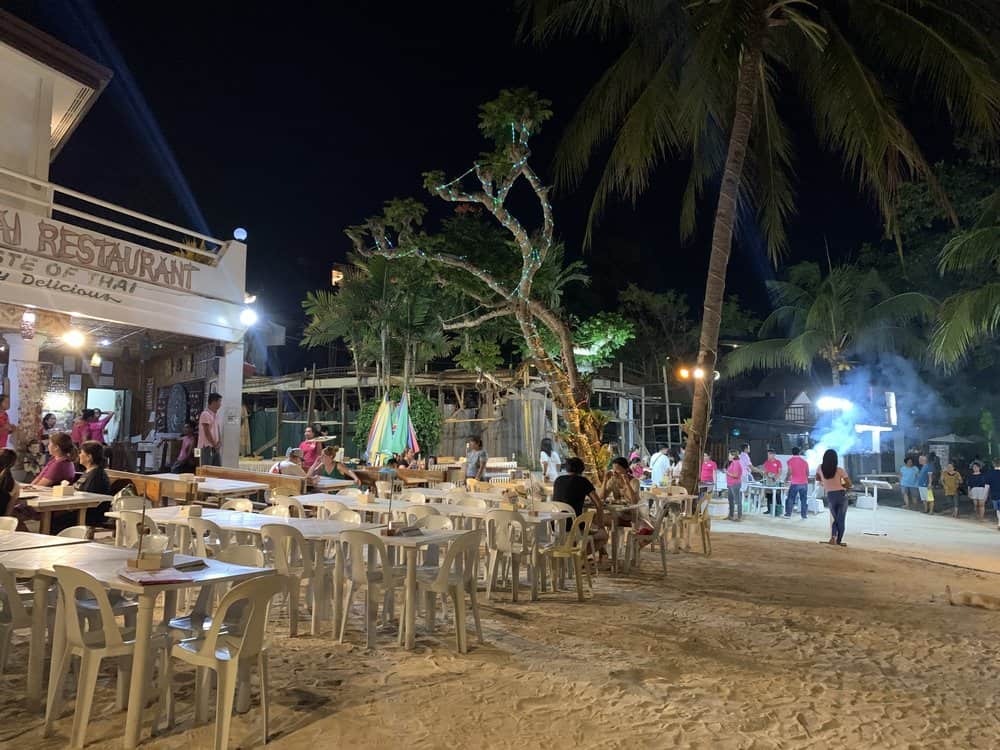
But not all travelers are the same, and if what you are specifically looking for is a nightlife scene where you can go out, have a drink and meet people, Alona Beach is the best place in Panglao for it. At bars such as Aluna Lounge Bar, you can have a drink by the sea, while at others such as Bamboo Bar you can also have dinner and enjoy live music every day.
In addition, if you stroll along Alona Beach, you will find everything from craft shops to dance and fire shows on the shore. Of course, you will have to weave your way around the different outdoor seating areas that are set up when the sun goes down. Alona Beach completely changes character at night!
If you are traveling alone or perhaps as a couple or with a friend and want to meet people, you can now join the Panglao Pub Crawl. It is a tour of different bars around the island with a guide and a small group of friendly people, held on Fridays and Saturdays. Book through THIS LINK.
6. Historic buildings to see in Panglao: Our Lady of the Assumption Church and St. Augustine Church
Fancy learning a little history? This is one of the things to do in Panglao that is especially convenient for those heading out by motorbike to explore Bohol or Panglao, since both churches we are going to tell you about are pretty much on the way. First, the Church of Our Lady of the Assumption is located next to the southern bridge connecting Panglao Island with Bohol.
Completed in 1753, this religious building has been rebuilt no fewer than five times due to the various fires and earthquakes it has had to withstand, the most recent of which was in 2013. As a result, the church features a blend of architectural styles ranging from Neoclassical to Gothic, with a colorful interior decorated with frescoes and altarpieces from different periods.
Bohol’s Church of Our Lady of the Assumption attracts pilgrims from all over the Philippines because legend has it that the water beneath the main altar has healing powers. During the Spanish occupation, pirates repeatedly attacked the different Christian settlements in search of gold and other valuables. During one of these attacks, local residents took refuge inside this church, and when, after several days under siege, they ran out of water and food, a miracle occurred and a spring of drinking water began to flow beneath the altar. For this reason, even today it is very common to see believers arriving with empty bottles and leaving the church carrying liters and liters of “miraculous” water.
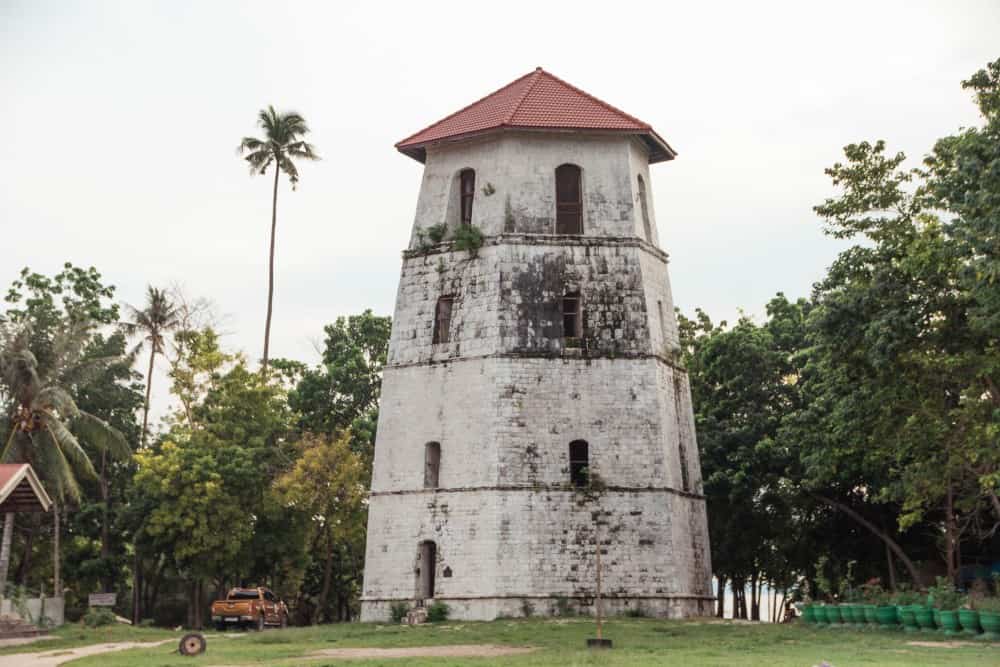
On the other hand, the Church of St. Augustine, or St. Augustine Parish Church, is another interesting place to discover in Panglao if you are exploring the beaches of Doljo or Momo. It is located in the island’s “capital,” Poblacion, and although the current building was inaugurated in 1924, the previous one, now in ruins, was built by the Jesuits in 1782. If it is open, do not hesitate to go inside (it is free) and take a look at both the altarpieces and the ceiling murals. Next to it, you can see an interesting five-story octagonal bell tower made of stone. It was inaugurated in 1851.
Admission to both places is completely free.
7. Island hopping in Panglao: Virgin Island, dolphins, Balicasag…
Do not imagine one of those famous island hopping tours in Coron or El Nido where you spend the whole day going from beach to beach, amazed by dreamlike places. The island hopping here is considerably more basic, but even so, many travelers include it on their list of things to do in Panglao.
The island hopping experience in Panglao consists of three parts, which sometimes vary in order:
- Dolphin watching: as we mentioned earlier, for us this tends to be far too similar to a chase, so it does not appeal to us at all. You should always keep a safe distance from the animals so as not to harass them and to avoid possible accidents.
- Balicasag: after trying (sometimes unsuccessfully) to spot dolphins, the next stop on the island hopping tour in Panglao is Balicasag Island. Here, you are given some time on the beach so you can swim, and they provide a mask and snorkel so you can see Balicasag’s famous turtles while snorkeling. From our point of view, the beach itself is not a major attraction, and if what really interests you about the tour is snorkeling in Balicasag, we recommend doing this trip without all the extras included in the island hopping tour, as we explained in the second section of this article.
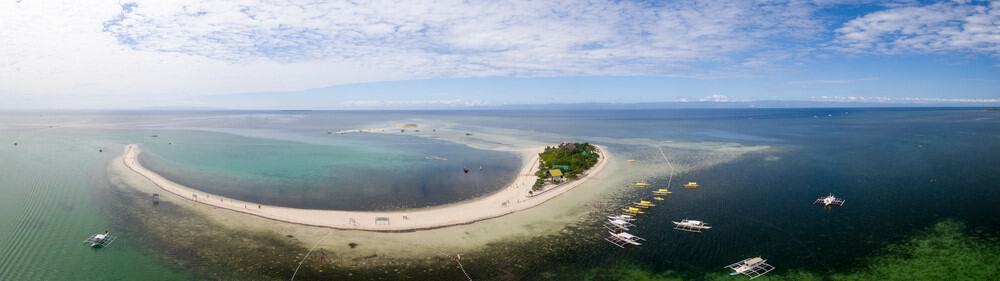
- Virgin Island: this pretty sandbar was “virgin” years ago, before it became a target for large tourist groups. Once it became one of the most popular things to do in Panglao, it lost its untouched nature. If you are really excited about seeing a sandbar and will not come across another one during your trip to the Philippines, it may satisfy your curiosity, but do not expect a place that will steal your heart forever.
As you can see, none of this appeals to us much, and we prefer simply diving or snorkeling in Balicasag.
8. Snorkeling at Napaling
Not all the snorkeling in Panglao is at Balicasag Reef! On the island’s north coast, before reaching Hinagdanan Cave, in front of the Almira Diving Resort, there is a spectacular snorkeling spot: Napaling.
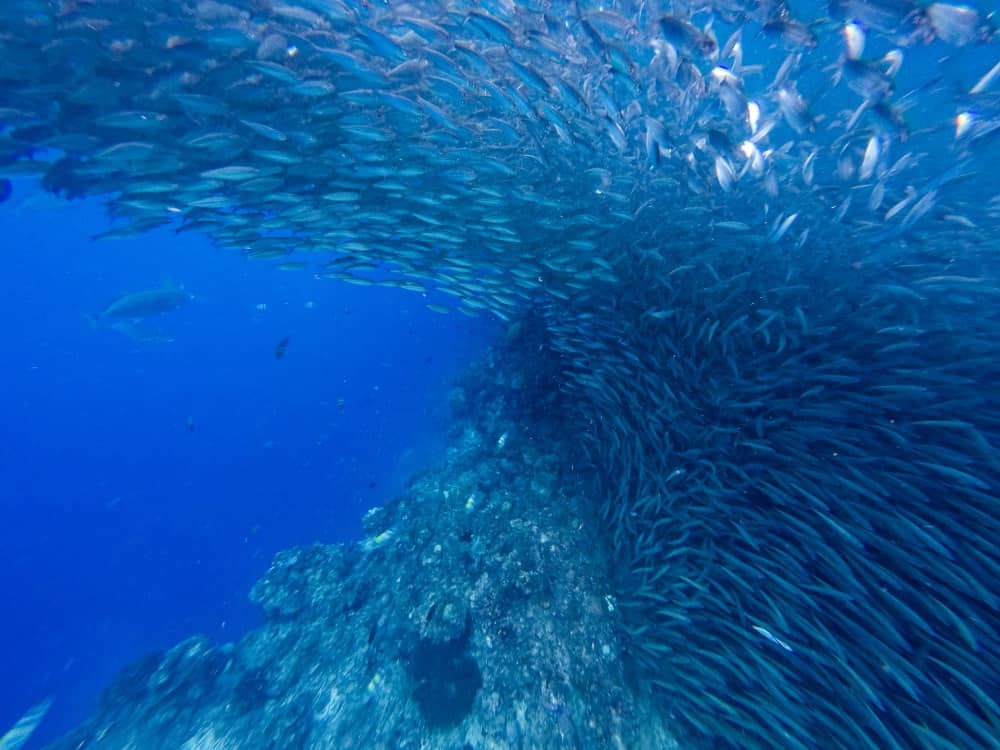
Here, if you are lucky, in addition to the usual colorful fish found throughout the Philippines, you will find a huge school of sardines forming a spectacular living wall. This school is usually accompanied by other species trying to hunt them for food, so if you come across it, you are guaranteed a show. The impressive whale shark has also been spotted here on occasion, but you would have to be incredibly lucky to encounter one. You can find out where to see the world’s largest fish here: Whale sharks in the Philippines.
Once you reach the Molave Cliff area, the process is a little confusing because you will be quoted a different price at each place. For example, at the Molave Cliff ticket booth itself, they are charging 300 pesos per person, but at the nearby café (Dominggo) you can enter for 200. On the other hand, travelers tell us there is a path on the left-hand side (where Google Maps shows Xander’s Place) that you can use for free. Whatever you do, we recommend going very early to avoid the large groups.
2026 update: because this is a completely natural phenomenon, the school of sardines comes and goes, and sometimes there are not as many of them. It is still a good snorkeling spot, but it is best to ask at the ticket booth before paying so you are not disappointed if the sardine school is not there.
Want to spend more time underwater? Don’t miss our article Snorkeling in Bohol and Panglao.
9. Escape to explore Bohol
As we mentioned at the beginning, the main reason most travelers come to Panglao, besides diving, is to use the island as a base for exploring Bohol. In Things to do in Bohol, we tell you in detail everything this island has to offer, including:
- Chocolate Hills: the Chocolate Hills are a classic Bohol attraction and feature on many trips to the Philippines. These geological formations are unique and offer a spectacular landscape that, during the dry season, looks like an endless sea of enormous chocolate truffles. You can find all the information on how to get there, as well as the legends behind them, here: Chocolate Hills, how to get there and what to do, as well as their legends.
- Loboc River: this river in Bohol offers plenty of possibilities. You can cruise along it on a small boat with live music and an all-you-can-eat buffet, kayak along it, or even cross it on a huge zip line. At night, it turns into a magical place filled with fireflies. If you want to explore this area in greater depth, take a look at Things to do in Loboc.
- Tarsiers: The tarsier is the smallest primate in the world (not the smallest monkey) and can be seen in different places in central Bohol. It is a tiny animal with bulging eyes that usually spends the day sleeping and is very easily frightened. Most so-called rescue centers and sanctuaries have been heavily criticized. The Philippine Tarsier Sanctuary in Corella is the only one we currently feel comfortable recommending. The one near the Chocolate Hills is an absolute circus and a hub of irresponsible tourism.
- Anda: The Anda area was largely unknown to most travelers a few years ago and is gradually opening up to tourism. Light-years away from the mass tourism of Alona Beach, the surrounding area offers large rice terraces, beautiful and peaceful beaches, huge waterfalls and the misleadingly named “cenotes.” Since it is quite far from Panglao, we only recommend exploring it if you have more than 4 days on the island and can stay there for 1 or 2 nights. Here is the complete guide to the area: Things to do in Anda.
- Abatan River: firefly-watching tours are offered on the Loboc River, but recently this activity has also become available on a huge river that runs close to Tagbilaran. This tour will pick you up from your hotel in Panglao or Tagbilaran so you can enjoy this nighttime spectacle.
Our favorite way to travel the Panglao – Bohol route (central area) is by riding our own rental motorbike, since this gives us complete freedom of movement at a much lower price. If riding a motorbike does not appeal to you, or if you are traveling with several people, you may be interested in this tour to explore Bohol from Panglao:
You can also hire a car with a driver or join a guided tour like this one.
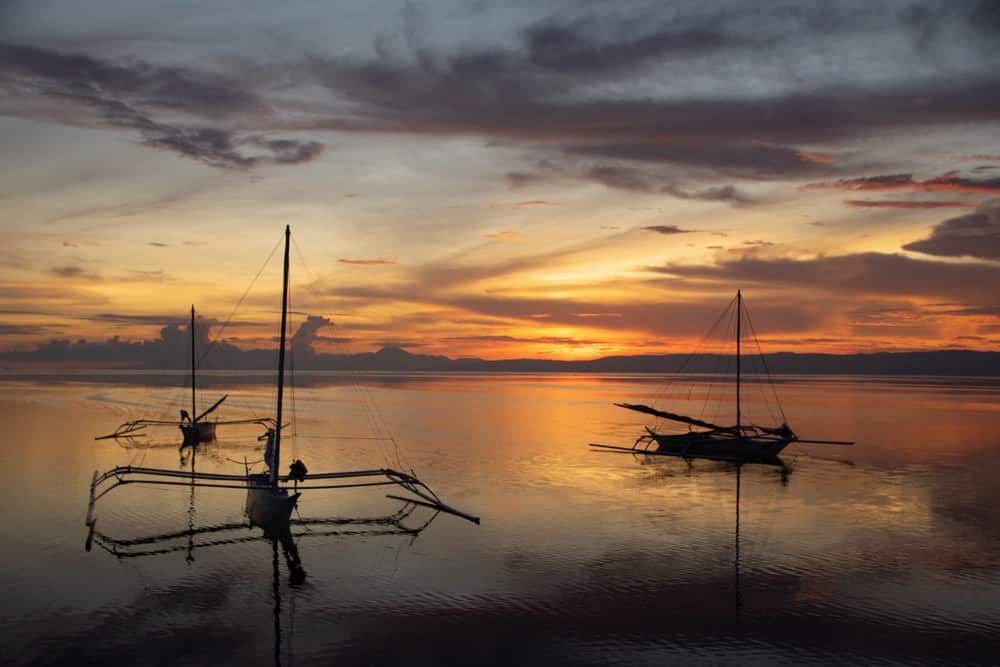
10. The best sunsets to see in Panglao
On your trip to the Philippines, you always have a date with the sunset. At around 5:30 p.m., get ready to enjoy a colorful spectacle that almost never disappoints. We love sitting down with a San Miguel in hand and simply watching the sky change, so during our most recent stay of almost 15 days in Panglao, we came to the conclusion that the best places to watch the sunset are:
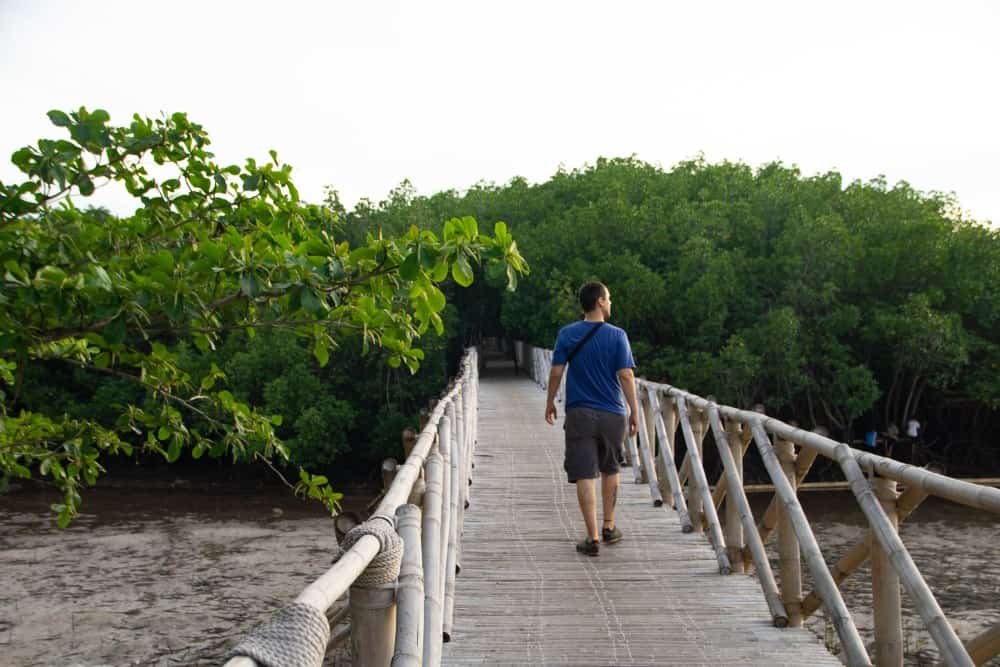
- North Zen Villas: we were literally blown away. This hotel is located beside a mangrove area, near Doljo. They have built a huge boardwalk leading all the way to Panglao Bay, a vast, peaceful bay from which you can see tiny Balicasag. At the end of the network of walkways is a chill-out area with beanbags, where we watched one of the best sunsets we have seen in all our years in the Philippines. If you are not staying at the hotel, you have to either order something to enter—and drinks are not exactly cheap (around 250 pesos)—or, sometimes, pay a kind of entrance fee (we have heard all kinds of different things, so we recommend booking here, since part of what you pay can be used toward food and drinks), but seriously, the place is 1000000% worth it.
- Danao Beach: as we mentioned above, the beach itself is not the prettiest because it is somewhat neglected, but because of its geographical location, you can watch the sun set behind Negros Island from here. We really enjoyed having a beer at Linaw Beach Resort, and the prices are not unreasonable at all.
Tips for visiting Panglao and practical information
As you can see, there is plenty to do in Panglao for every type of traveler. To make your visit easier, here are a few tips that are sure to help:
How to get to Panglao
The classic route to Panglao usually starts in Cebu. To do this, you need to take a ferry from Cebu Port to Tagbilaran Port in Bohol, which usually takes a couple of hours. Once in Bohol, you can get to the Alona Beach area by taxi, private transfer, tricycle or jeepney, the cheapest option.
Here we explain in detail how to get from Cebu to Panglao:
In 2018, Bohol – Panglao International Airport opened very close to Alona Beach. It receives flights from Manila, Clark, Davao and Cagayan de Oro operated by Cebu Pacific, Philippine Airlines and Air Asia, as well as AirSwift flights from El Nido. Once you land, taxis, shared vans and tricycles are available, and you can get to the Alona Beach area from 150 pesos.
If you prefer, you can book your transfer from the airport to your accommodation here:
If you are in Siquijor and want to travel to Panglao, you can take these boats:
- Oceanjet departs daily from Siquijor Port to Tagbilaran (Bohol) at 8:20 a.m. and 2:30 p.m. The journey takes around 1 hour and 40 minutes. You can book your tickets here.
- Apekoptravel departs daily at 1:00 p.m. from Larena Port (farther from the San Juan area). It takes a couple of hours, and you can book your ticket here.
- Lite Ferries departs from Larena Port to Tagbilaran on Tuesdays, Thursdays and Sundays at 7:00 p.m. It arrives in Bohol at 10:00 p.m. You can book here.
From the port to the Alona Beach area, the easiest option is to take a tricycle, which should cost around 300 pesos. You can also negotiate a taxi for around 500 pesos.
Where to stay in Panglao
There is a wide variety of accommodation on Panglao Island, with the vast majority located around Alona Beach. In our Where to stay in Panglao guide, you will find detailed information on the best areas, hotels, resorts and hostels, but here are a few ideas you may find useful:
- Mid-range accommodation in Alona
- Resort in Alona
- Mid-range accommodation in Panglao
- Resort in Panglao
- Backpacker hostel in Panglao
Renting a motorbike in Panglao and getting around the island
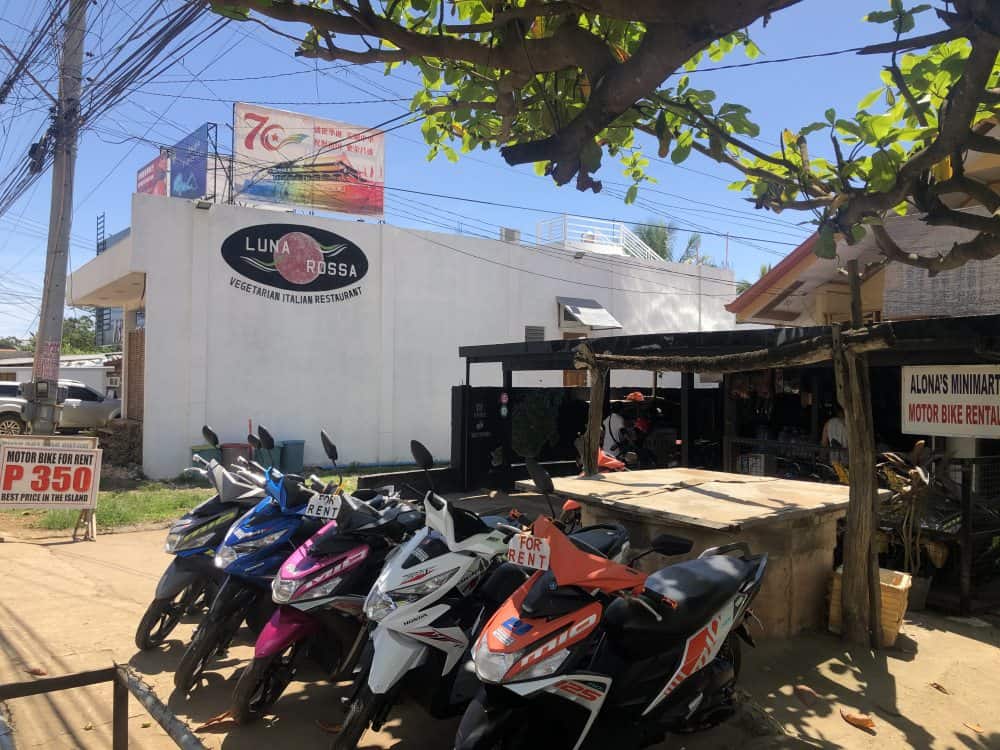
In Panglao, especially around Alona, it is very easy to find places to rent a motorbike. The daily price is usually around 350 pesos, but it can be reduced for rentals of several days. Our favorite is the small sari-sari (shop) next to Luna Rossa restaurant: Alona’s Minimart.
Panglao has three main roads (north, central and south), which together with other secondary roads cover practically every corner of the island.
If you have never ridden a motorbike before, we recommend trying it first in your own country before doing it in the Philippines. The Philippines certainly does not have the worst roads in Southeast Asia, far from it, but given the different animals that may cross the road (dogs, cats, chickens, carabaos…), the condition of some roads and the lack of lighting at night, it is highly advisable to arrive here with at least some experience.
In this article, we tell you everything you need to know about the subject: Renting and riding a motorbike in the Philippines.
If you do not feel like driving or cannot do so, don’t worry: you will find tricycles and habal-habal (motorbikes with drivers) for any journey around the island. Of course, you will have to negotiate with them. There is a tricycle stand near Banana Leafs restaurant and a habal-habal stand next to Twin Tides hotel. As a rough guide, a trip between Alona and Dumaluan should cost 100 pesos either way. Next to McDonald’s, there is a sign with a price list that you can take a photo of and show to drivers so they do not try to overcharge you.
Drones in Panglao
As we explain in the article Flying a drone in the Philippines, the country’s regulations clearly state that it is completely forbidden to fly a drone within 10 kilometers of any airport. Considering that the island is 16 kilometers long and has an international airport on its western side, the restricted radius means that it is not legal to fly your drone on this island. You will probably see other travelers doing it and read on some forum or website that “if you fly carefully, nothing will happen,” but if you do it and end up having an accident or getting a huge fine… you have been warned!
When to travel to Panglao
The weather in the Philippines is not an exact science, but November to May is usually the best time to visit a destination like Panglao – Bohol. If you are not planning to travel to the Philippines during this period, don’t worry: because of its geographical location, the weather in Bohol tends to be fairly good throughout the year.
Where to eat in Panglao
You will have no shortage of restaurants in Panglao. Since it is a very touristy place, the selection is enormous. Here are some of the most recommended:
- Trudi’s Place: part of a resort right on Alona Beach, with Filipino dishes and international food at good prices.
- Shaka: a chain serving shakes, smoothie bowls and spectacular vegan burgers. They also have locations in Siargao, Moalboal and El Nido.
- The Buzzz Café: for hearty breakfasts with sea views.
- Carinderias (local eateries): Naty & Henry and Andrea’s Mango Rest Hauz.
You can find everything explained in detail and much more information in Where to eat in Bohol: Panglao, Loboc and Anda.
Responsible tourism
At Travel Around the Philippines, we try to raise awareness and actively promote responsible tourism. Please avoid actions such as touching starfish, taking part in dolphin chases, feeding marine life (some agencies throw food into the water at Balicasag to attract more fish), harassing turtles by failing to keep a safe distance, stepping on coral, or visiting fake tarsier or snake sanctuaries that encourage mistreatment.
On the other hand, around Alona Beach you will see lots of people offering tours to see whale sharks. Please, do not book these excursions, because all they will do is take you to Oslob or Lila (the latest atrocity, which has been going on since 2019), places where a real crime is being committed against this endangered species by feeding them every day.
Panglao map
To make it easier for you to locate each of the places we have told you about, here is a map of Panglao where you can easily see them all.
Do you have any questions? We’ll be happy to answer them in the comments.