Looking for the best things to do in Siquijor, Philippines? This small island in the Visayas is one of the most complete stops you can add to a Philippines itinerary: waterfalls, beaches, snorkeling spots, caves, sunsets, traditional healers, historic churches and easy motorbike routes all fit into just a few days.
In this guide, we’ll show you our favourite Siquijor attractions, how many days you need, a practical 2- or 3-day itinerary, useful entrance fees, safety tips, where to stay, how to get around and a map with all the places mentioned. We’ve visited Siquijor several times and keep updating this guide with the practical details travellers actually need once they’re on the island.
Siquijor quick guide
- Best things to do in Siquijor: Cambugahay Falls, Paliton Beach, Tubod Marine Sanctuary, Cantabon Cave, Salagdoong Beach, Lazi Convent, traditional hilots and the island’s sunset spots.
- How many days in Siquijor: at least 2 full days, although 3 days is much better if you want to visit Apo Island or explore hidden beaches and waterfalls.
- Best area to stay: San Juan, especially if you want restaurants, sunsets, beaches and easy access to most attractions.
- Best way to get around: motorbike if you have experience, or a tricycle/private driver if you don’t want to drive.
- Best months: December to May for generally drier weather, although Siquijor can be visited year-round.
How many days to stay in Siquijor
Located in the heart of the Visayas, getting to Siquijor is fairly straightforward. Even if you know there are other nearby places you want to visit, don’t cut your time on the island too short. It’s very easy to fall in love with it and end up adding an extra day.
We’d recommend spending at least two full days in Siquijor. Bear in mind that these days shouldn’t include travel days; they should be full days to make the most of the island. With two days in Siquijor, you’ll be able to drive the coastal road around the island, but if you’re after something a bit more adventurous, add at least one more day.
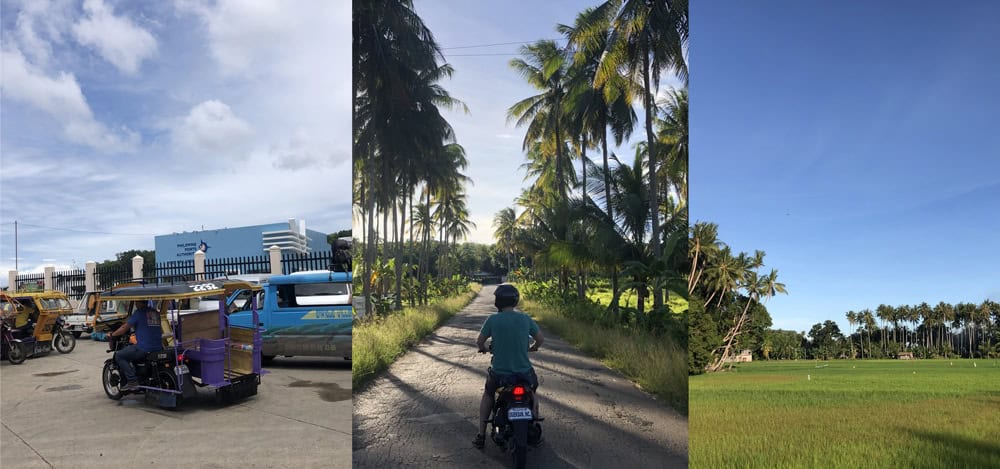
By the way, we’ve always rented a motorbike to get around Siquijor. Although most of the road is usually in good condition, please don’t risk driving if you don’t have much practice. In that case, you can always hire a tricycle driver for a day and let them show you some of this enchanted island’s hidden corners. You can also rent a car if that suits you better. We can give you contacts for both options if you leave us a comment.
Also, if you’re thinking about snorkeling at Apo Island from Siquijor – one of the best places to snorkel in the Philippines – plan on adding at least one more day. On the day you arrive, head to Coco Grove hotel and ask which days the trip is running. It’s not daily, so you’ll have to coordinate.
For example, a great way to make the most of Siquijor could be:
-
Day 1: Century-old Balete Tree, Cambugahay Falls, Lazi Convent, Monkey Beach/Secret Beach, Maria Church, Salagdoong Beach and snorkeling and sunset at Tubod. If you’re visiting during the windiest months around Tubod, you can swap Tubod for snorkeling at Paliton.
-
Day 2: Lugnason Falls, San Antonio (hilots), Cantabon Cave, Siquijor Town and nearby beaches, Paliton Beach and sunset at Solangon Beach or one of the mountain cafés.
-
Day 3: a trip to Apo Island + sunset at Paliton Beach.
As you’ll see below, these are just the basics. There are many more things to do in Siquijor and, most importantly, it’s an island where you can truly relax—so make the most of it!
Keep in mind that Siquijor flew under the radar until fairly recently, as Filipinos considered the island enchanted and were afraid of it. However, its popularity has soared on social media, so some places now get packed on holidays and weekends. So our advice is that, if you can, avoid visiting at weekends; you’ll enjoy it more.
Best things to do in Siquijor, Philippines
What we enjoy most in Siquijor is simply getting lost on its roads by motorbike. The scenery really does make you fall in love with the island. Still, here’s our roundup of the things to do in Siquijor that we think you shouldn’t miss. At the end of this article you’ll find some “extras” for those who have more time or are more adventurous.
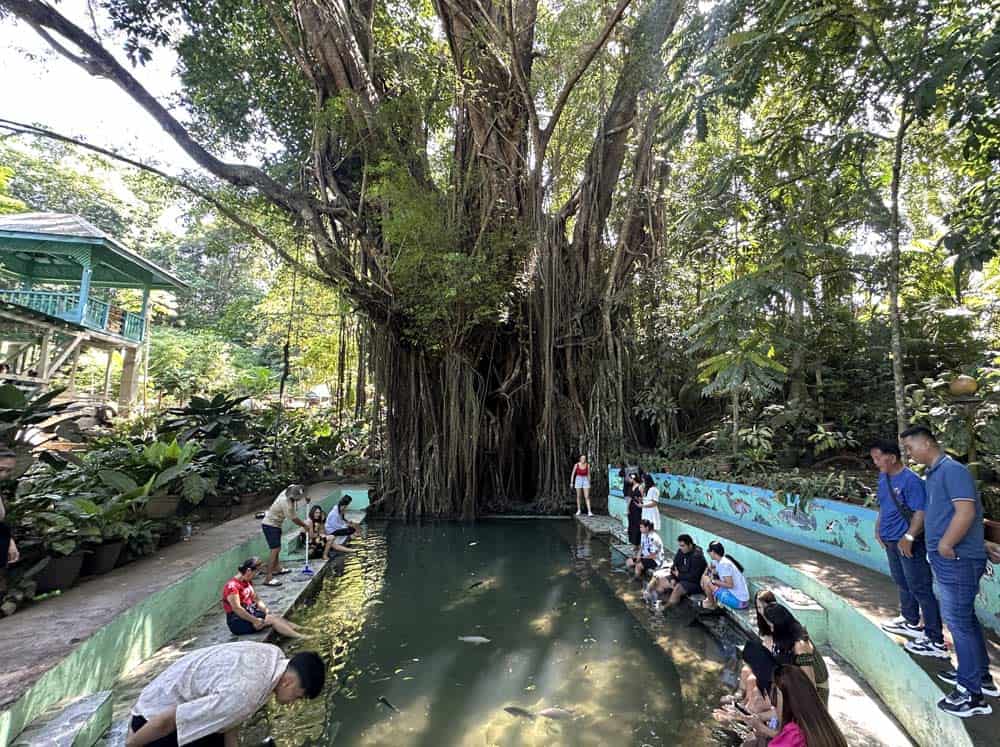
1. The Century-Old Magic Tree (Old Enchanted Balete Tree)
You might be thinking “did I really come all the way to the Philippines to see a tree?” We thought the same. But when we passed by it – it’s on the island’s main road – we got off the bike to see it and we loved it.
The Old Enchanted Balete Tree is over 400 years old and belongs to the banyan family. Its branches, over the centuries, have spread across the ground, making it grow in all directions. They say that the water in the small pond at its base has healing properties and many Filipinos go there to try their luck. It’s also very common to take your shoes off, put your feet in the water and let the fish nibble away at the dead skin on your feet. Be careful though: there’s a big fish that might give you a good nip.
As a fun little detail, you’ll probably see a lady selling “potions” and medicinal herbs. Many Filipinos believe in Siquijor’s magic and healing powers (you’ll see more about this later when we talk about the hilots), so these kinds of products are very popular. They also sell huge coconuts here for only ₱30, which will help you stay hydrated.
The entrance fee is nothing to worry about; it’s only ₱20. You have to pay ₱5 to park the motorbike. It’s a quick stop and on the route to other attractions on the island, so we recommend you don’t skip it.
2. Cambugahay Falls
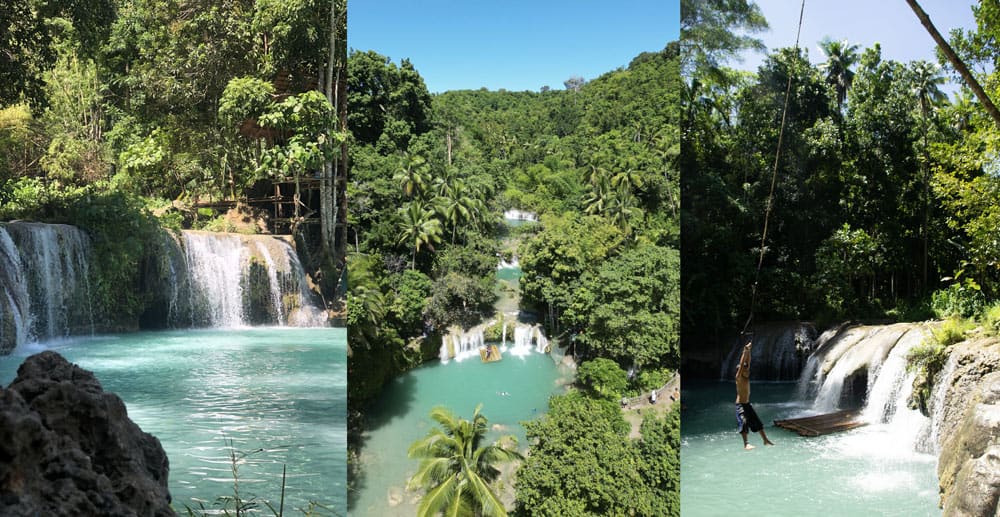
Cambugahay Falls are undoubtedly one of the must-sees on the island of Siquijor. Once you park your motorbike and, as you head down the steps and catch sight of the turquoise water of this beautiful waterfall, you’ll understand why. This beautiful spot is made up of three swimming areas.
-
The first is the most famous and the prettiest of the three. It’s a large swimming area surrounded by palms and lush vegetation, with a waterfall about seven metres high crashing down into it. You can dive in by jumping from the top of the waterfall or by launching yourself from the huge rope swing hanging from a nearby tree. Note: jumping costs ₱50 and you can do it as many times as you like.
-
The next level of Cambugahay Falls has a few small natural pools where you can sit for a while to relax.
-
The third level is made up of a small waterfall that feeds a pool smaller than the previous one. If you have to choose, the first level is the most beautiful and comfortable, although the second is where there are usually fewer people.
Weekends usually bring a big influx of Filipino visitors and it’s very normal to see them doing somersaults to get into the water – quite a show! If you want to have the falls to yourself, get up early and be there at 7 a.m. By about 9:00 they’re already crowded. Even so, to catch the light at its best and see the turquoise colour of the water, we recommend going at around 11:30–12:00.
The entrance costs ₱50 and there is no parking fee, although you can give a donation.
You can find much more information in our dedicated article: Cambugahay Falls guide.
⭐ Note: there are many waterfalls in Siquijor. These are just the most popular (but also some of the prettiest). Take the chance to explore others like Lagaan Falls, Kawasan Falls, Locong Falls or Cabugsayan Falls (these are the least known).
If you’re adventurous, you can also go, like us, to the Cangbangag Falls, the highest on the island. Because of how much effort it takes to get there (trust only the Maps.me map because Google Maps doesn’t give the correct location – at some point you’ll have to start walking and cross a river), we’d only recommend them if you have four or five days in Siquijor. They’re nice and you’ll probably have them all to yourself, but we think there are better ones elsewhere in the Philippines and even on Siquijor.
DO YOU LIKE OUR CONTENT? Help us keep this website going.
Keeping this site up to date —from researching routes, testing accommodations, and writing each guide
to answering hundreds of your questions every day— takes time, energy, and more coffee than we’d like to admit.
If any of our tips have been useful and you’re thinking of buying discounted travel insurance,
booking a hotel, booking your flights, using Remitly, and more… we’d be grateful if you did it through our links.
- You pay exactly the same (sometimes even less thanks to our discounts).
- We receive a small commission, which we reinvest into researching, writing and publishing free guides.
- You get the same price, we can continue creating independent content, and everyone wins.
Thank you for supporting this project and for joining us in every corner of the Philippines.
3. Salagdoong Beach
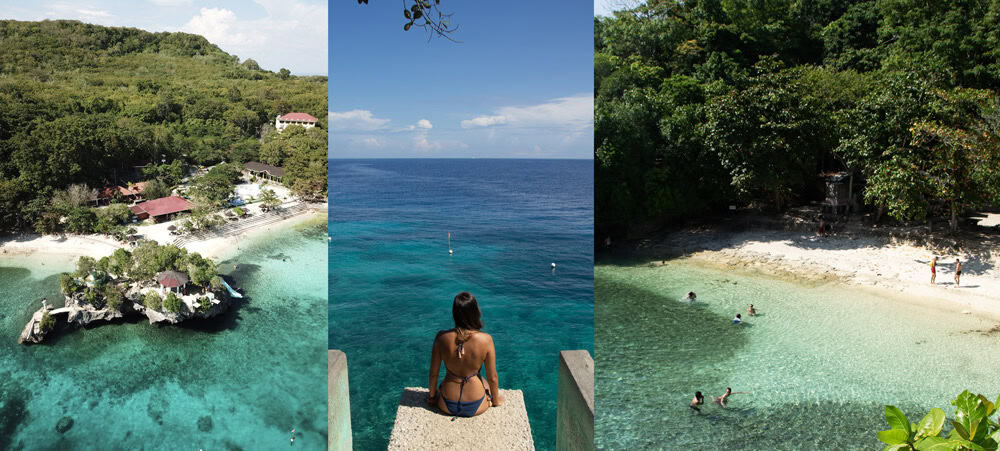
Salagdoong Beach is one of the most popular beaches in Siquijor and tends to divide opinion. It’s made up of two small coves bathed in beautiful turquoise waters where, if you take your snorkeling mask with you, you’ll be able to enjoy its colourful biodiversity. Last time we even saw a couple of turtles.
The reason some people dislike this spot is the concrete terraces that have been built here, which take away some of its charm and attract hundreds of local tourists to enjoy big barbecues and the restaurant, especially on weekends. Some say this beach has become a kind of small theme park and they’re not entirely wrong.
Be that as it may, Salagdoong Beach is an ideal place to stop off during your motorbike tour of Siquijor. It’s also one of the few beaches in Siquijor with enough depth for a proper swim at both low and high tide.
If you’re feeling brave, you can climb to the top of its cliff and jump from the diving board. Heads up: from below it looks much lower than it does when you’re about to jump; you might think twice when it’s your turn.
To enter this beach you have to pay a fee of ₱50 per person plus a small supplement that will vary depending on the vehicle you arrive with (₱30 for motorbikes). The restaurant is decent if you fancy a bite to eat, unless a Filipino family invites you to share their barbecue.
4. Best beaches in Siquijor
If you’re looking for beaches in Siquijor with a bit more of an “authentic Filipino feel”, let us tell you which are our favourite beaches.
You can find all the information on these and other beaches in our article Best beaches in Siquijor.
Just 15 kilometres south of Salagdoong Beach is Kagusuan Beach. When you arrive you’ll see that it’s totally different to the previous one, as you can often have the place almost to yourself and not feel surrounded by cement constructions. One of the things we recommend most in Siquijor is exploring beyond the main stretch and wandering along the paths around it. If you do this from Kagusuan Beach and go one kilometre further, you’ll reach a path that leads to the little-known Monkey Beach. Here, you can easily have the place almost to yourself and enjoy the curious rock formations on the shore.
At the time of our last visit, there was no formal entrance fee for Monkey Beach, although access can change depending on the trail or the route you take from Kagusuan Beach. The easiest way is usually to ask locally before going, as paths can be confusing and not always well marked.
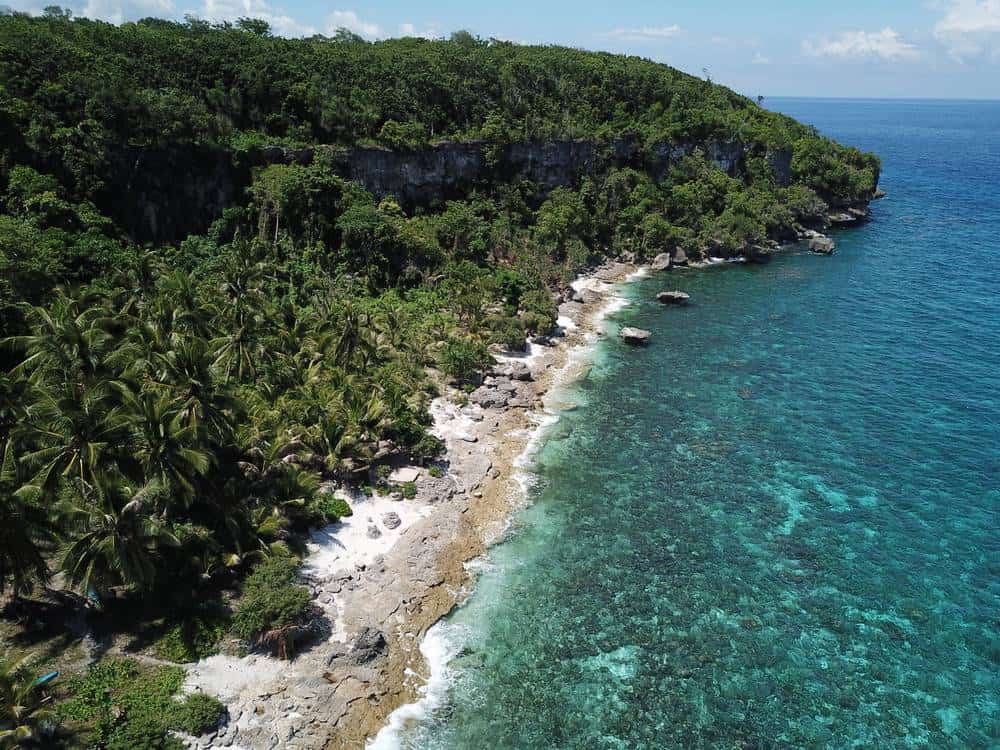
There are also more beaches to the north, even less well known, where you’ll hardly see anyone. Secret Beach (in the photo below, also called Bacong Beach, a bit rocky but with a spot where you can lie down) and Umpas Beach (note that you have to go down quite a bit to reach this one) are perfect if you want that Robinson Crusoe feeling. Keep in mind that the motorbike access is pretty rough, so we only advise you to go if you’re very skilled or don’t mind walking for 20–30 minutes.
PRECAUTION: Monkey Beach, Kagusuan Beach and nearby hidden beaches are quiet and isolated, so don’t leave valuables unattended while swimming. Several travellers have reported opportunistic thefts in this area. Although nothing similar has ever happened to us and we consider the Philippines a very safe country, only bring what you really need and keep your belongings in sight.
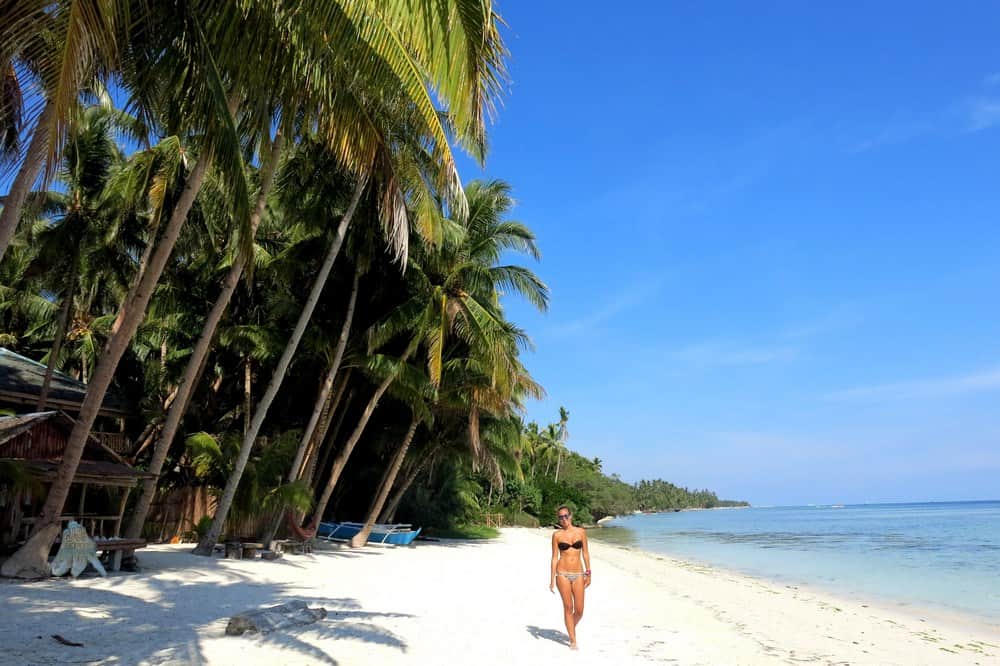
Another beach worth visiting in Siquijor, much more popular but very pretty, is Paliton Beach. Surrounded by palm trees and with white sand, it’s an ideal place to enjoy the best sunset on the island. In fact, Paliton is divided into two parts: Paliton (the larger one) and Cangbusyo Beach (as it appears on Google Maps, the smallest). You can reach both on foot, so don’t hesitate to explore them. The entrance fee is ₱20.
Now both have stalls selling drinks and food. It’s easy to walk between the two. Although you can swim at low tide, it will be more comfortable and they’re also at their prettiest at high tide. You can get there via two different roads; you can see it on the map we’ve left below.
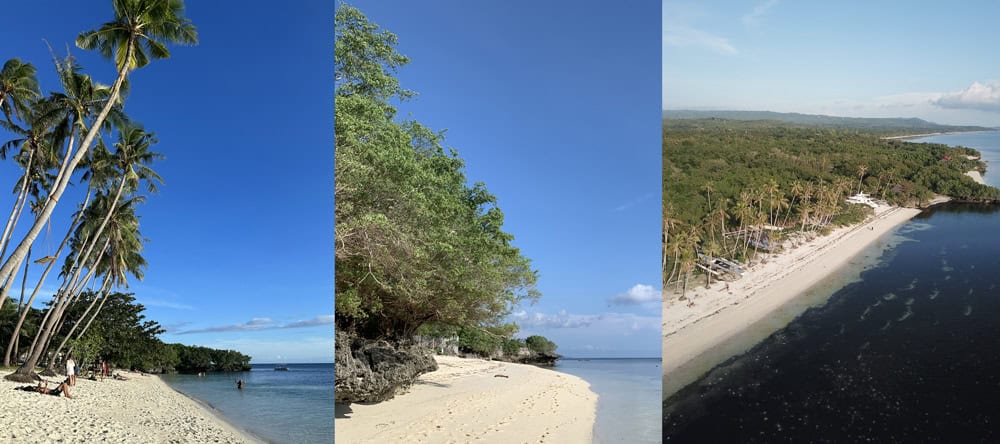
Don’t overlook Solangon/San Juan Beach either, where a couple of bars serve reasonably priced beers that are perfect for sunset. Our favourite is the one at the Coral Cay hotel. Even so, the part with the best swimming conditions (even at low tide) is the one opposite Shaka, where they also serve great shakes and smoothie bowls.
The beach at Coco Grove hotel, where the Tubod marine sanctuary is located, is also lovely. If you’re not a guest at the hotel you can’t use the loungers and umbrellas, but the beach is public, so you can stay there. However, they charge an access fee of ₱50 and ₱100 if you plan to snorkel.
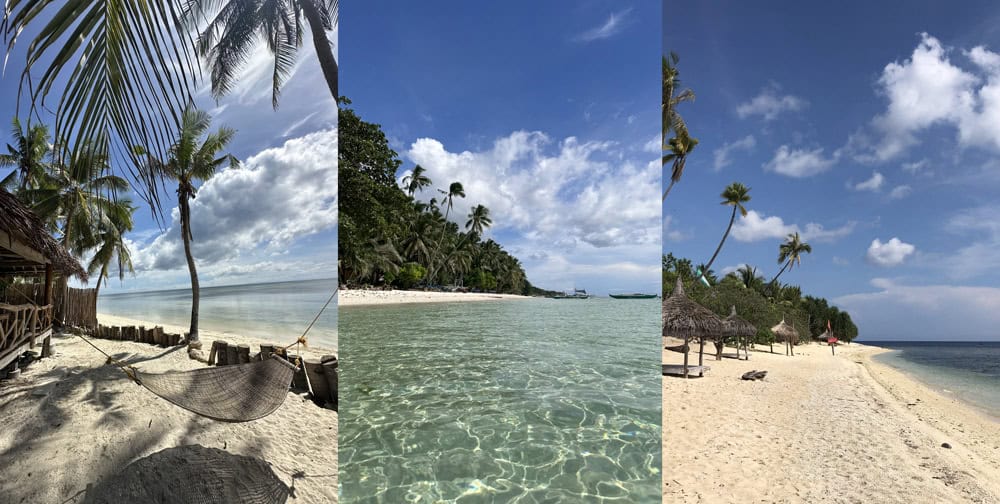
Coral Cay – Shaka – Tubod.
Another of our favourite beaches is Dapdap Beach, in Siquijor town itself. Hardly anyone goes here and it’s very photogenic. On the way to Larena you also have Caleeia Beach, where there’s a little bar perfect for relaxing.
Depending on the time of year you visit Siquijor, the wind shifts from one side of the island to the other, and this affects the state of the beaches. Thus, when the Habagat (south-west monsoon, roughly from June to November) blows, the beaches on the east side (Monkey Beach, Kagusuan…) tend to have calmer water, while those on the west (the whole Paliton side) can look a little less inviting. If you go to Siquijor between December and May, you’ll probably find a calm Paliton Beach.
Keep in mind that, except for Salagdoong Beach, most of Siquijor’s beaches are very shallow, so you’ll have to walk or swim quite a bit to enjoy a proper swim. We still like them just as much, but it’s advisable to check the tide table to try to coincide your visit with a period of high tide, as otherwise they may not look their best.
5. Cantabon Caves
Besides swimming at beautiful beaches or jumping from waterfalls, another of the most interesting things to do in Siquijor is to head underground. In the heart of the island the Cantabon Caves await you – a network of tunnels almost a kilometre long that you can visit with the help of a guide. The current route covers 600 metres and we promise it will be one of the most special activities you do during your tour of Siquijor.
The ticket office is in the village of Cantabon. Here you have to pay the entrance fee, which includes a guide, helmet and torch. The guide fee is ₱500 for up to three people, after which you have to add ₱50 per person. The last entry is usually at 17:00.
After a short walk with your guide to the cave, and once you’re inside, the adventure begins. You’ll make your way across slippery ground, stalactites, stalagmites, columns and other rock formations (the cauliflower, the waterfall, Harry Potter’s hat…) and even a natural underground pool ideal for taking a dip. The tour lasts between 45 minutes and an hour and a half, depending on the stops you make and your agility.
From one traveller to another: do this visit with non-slip footwear suitable for water and wear a swimsuit, and we recommend you leave your electronic devices in the locker so you don’t have to worry about them. You can take your phone and during the tour the guides can carry it for you, but it’s better if you also have a dry bag.
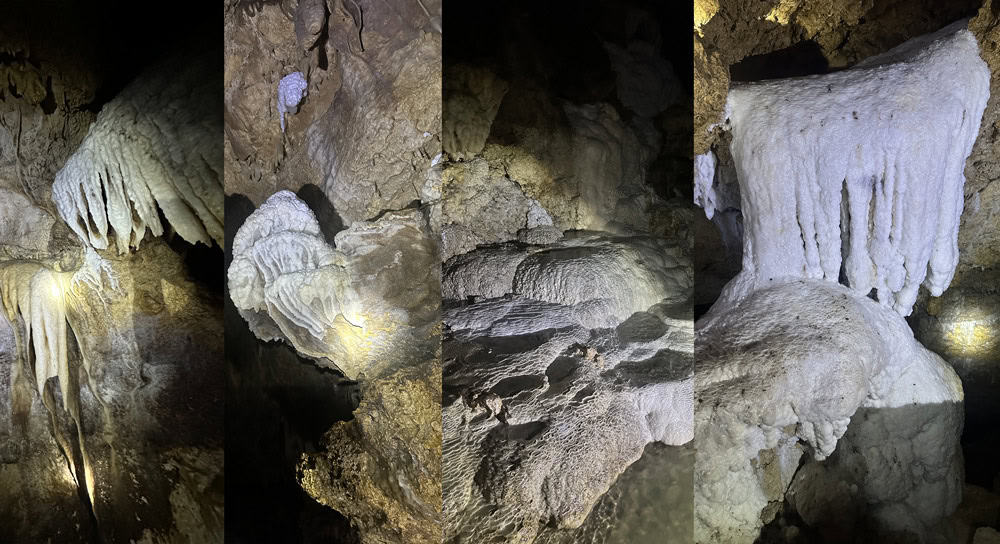
Cantabon Caves
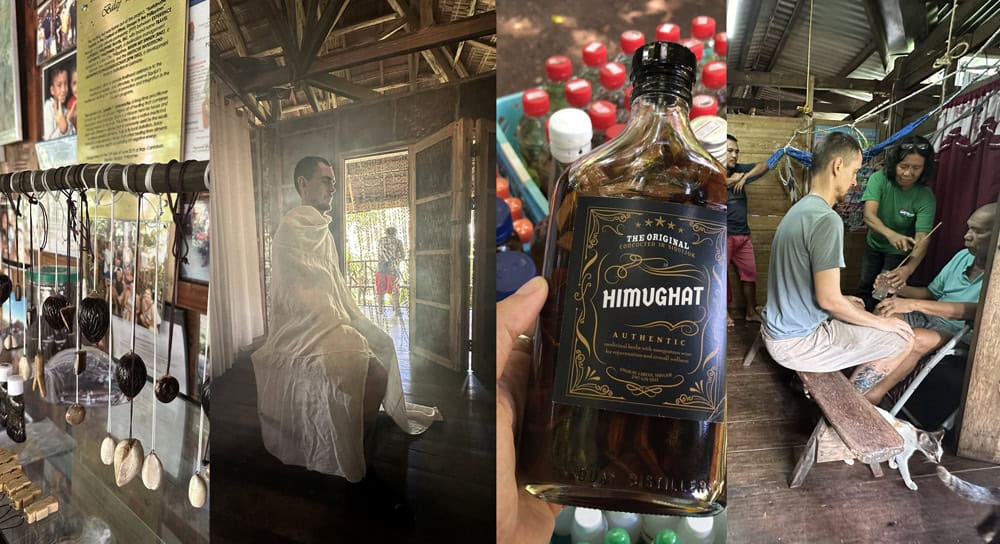
6. The Hilots and healers of Siquijor
A lot is said about Siquijor’s magic and mysticism, but very few travellers actually set out to discover that side of it. Part of that reputation comes from the hilots. Hilot is a traditional Filipino therapy based on massage and the manipulation of bones and muscles, which also uses different sacred rituals and medicinal plants. Although by law it is now necessary to have a diploma to practise as a hilot, the true practitioners (mostly women) acquire this knowledge from their mothers or grandmothers.
You may see in different hotels in Siquijor that a “Hilot massage” is on offer, but this is more like a classic relaxing massage. If you want the real experience, drive your motorbike to the central town of San Antonio and once there ask the locals where to find your hilot. The experience is absolutely worth it and after your session you’ll feel like a new person.
In our case, we’ve had the opportunity to be in the hands of three different healers in Siquijor, each with a different technique and every one of them has been fascinating. During our first few years on the island, we always visited a hilot who mainly practised traditional massage (applying different “potions” of natural herbs), but on our last visits we met new healers. One of them applies the Bulo Bulo technique to cleanse you from within; it’s amazing to watch the water clear at the same time. The other (well, actually they’re a couple) practise toob, a kind of cleansing of bad energies with smoke from different plants, and then usually finish with a small massage using natural oils.
If you want the contact details of some of our favourite hilots and healers in Siquijor, leave us a comment and we’ll send you all the information.
By the way, every Holy Week, Siquijor receives hundreds of visitors who come to the Healing Festival or Festival of Healers. It takes place in Cantabon Cave and not only do most of Siquijor’s hilots attend, but others from all over the Philippines.
7. Lazi Convent and Church of San Isidro Labrador
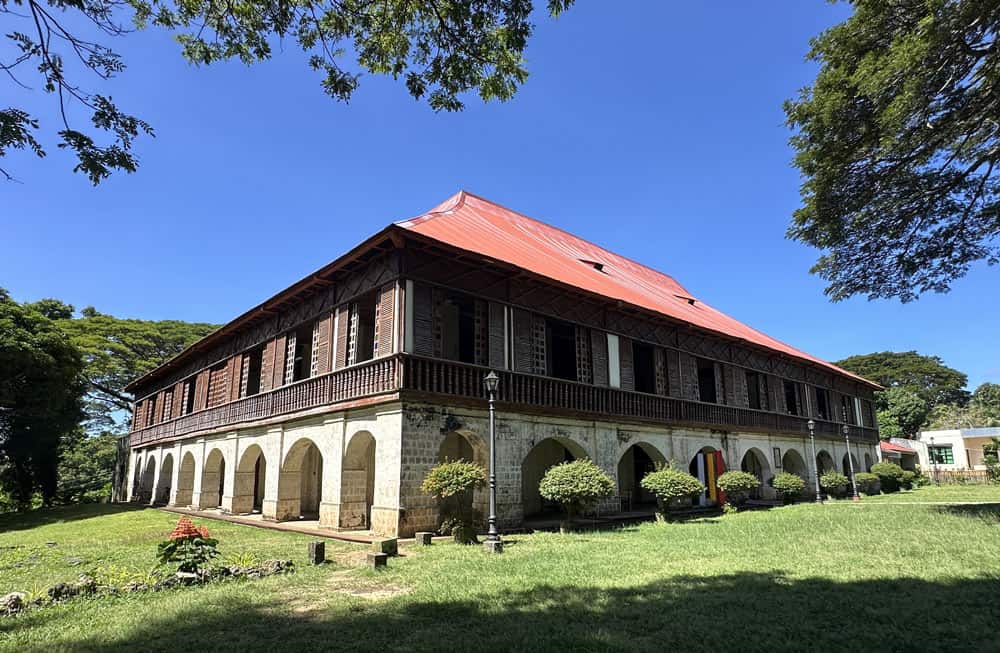
Another possible plan in Siquijor is to make a stop at two of its most important historical buildings, which offer a glimpse into the Spanish colonial past of the Philippines. The Church of San Isidro Labrador, packed to the brim during Sunday Mass, was proposed by UNESCO in 2006 as a World Heritage Site, but the poor state of its structure and the authorities’ lack of interest in its conservation have prevented it from achieving that distinction.
Right across the street you can visit the Lazi Convent, which boasts the record of being the oldest in all of Asia, built in 1887. Restored in 2019, it’s well worth a visit and feels like stepping back in time, surrounded by a very special atmosphere. Entry to the convent used to be completely free, but since March 2019, they charge an entry fee of ₱30 per person.
If you’re interested in this kind of historic building, don’t hesitate to head to Siquijor town. Here you’ll find the Church of San Francisco de Asís, built with coral between 1795 and 1831, and the attached bell tower, which is being rehabilitated.
On the other hand, in the town of María is the Church of Nuestra Señora de Providencia, built in 1880. Inside you’ll see a statue of Santa Rita de Cascia holding a skull and an inverted crucifix. As a fun little detail, the inhabitants of Siquijor say she walks around at night…
8. Lugnason Falls (Zodiac Falls)
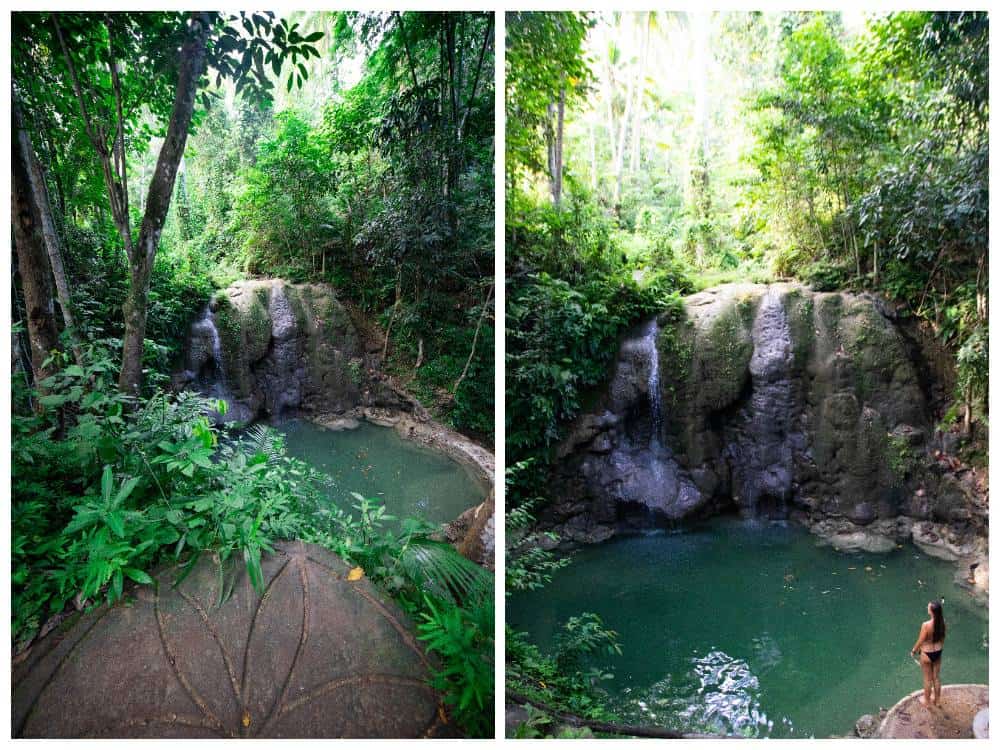
Another of Siquijor’s waterfalls that deserves a visit is Lugnason Falls, near the San Juan area on the southwest of the island. What will instantly catch your eye is the spectacular colour of its waters, somewhat different from Cambugahay Falls. The swimming area is smaller than the ones at Cambugahay, but the height of the jump from the waterfall is greater.
The entry costs ₱20 and you’ll see some guides who will take you to the best spots. They’ll also make the experience even more fun with their typical show of incredible jumps from the top of the waterfall.
Lugnason Falls have up to 12 levels and you can climb up the river to discover them, but the first one is the level most worth visiting. If you want to explore them all, it’s best to hire a guide.
Note: the waterfalls are at their best during the rainy season. During the driest months (February to May) they sometimes carry very little water.
9. Best snorkeling spots in Siquijor: Tubod Marine Sanctuary, Tulapos and Caticugan
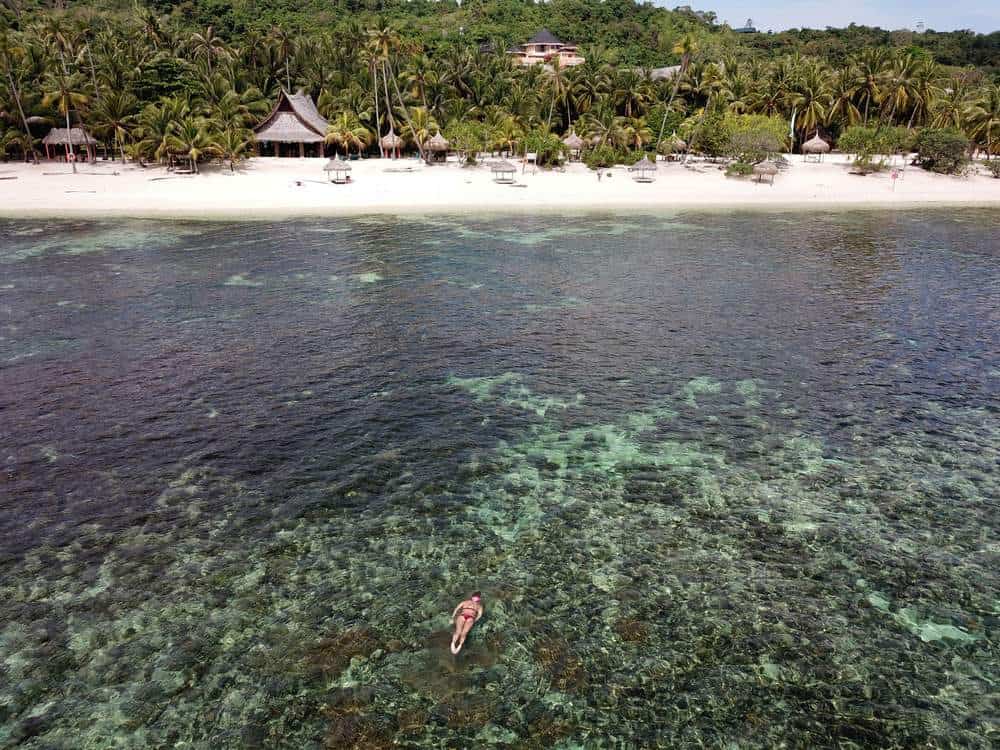
If you love snorkeling, one of the best things you can do in Siquijor is visit the Tubod Marine Sanctuary. It’s located within the beach of one of our favourite hotels in Siquijor, Coco Grove Beach Resort.
If you’re not staying there, you can access its beach and sanctuary by paying the ₱100 fee. If you want, you can also rent the snorkeling equipment for ₱50 extra. Once inside, you can head straight into the water to explore the incredible seabed of the Tubod Marine Sanctuary. Fish of all colours, wonderful coral and, if you’re lucky, even a turtle or two await you.
As we told you when talking about the beaches, it’s better to snorkel in the Tubod Sanctuary during the months when the Amihan wind blows, that is, from December to May. This way the water is calmer and clearer.
In the area near Tubod there are a couple more marine sanctuaries that may interest you: Maite (₱100 fee) and the one in Paradise Bay, accessible from Emocion Guesthouse. From the first it’s quite common to spot a turtle or two there. In Paliton there’s also one, but we didn’t find it very interesting.
On the other side of the island is the Tulapos Marine Sanctuary, where it’s common to see turtles, barracudas and reef sharks. Hiring a guide is mandatory. The price is ₱250 for two people. You also have to pay ₱100 per person. If you want, you can rent snorkeling equipment for ₱50 and fins for ₱100.
To enjoy the Tulapos sanctuary it’s much better to go between June and November, when there’s less wind in this area of the island and therefore the water is less choppy.
Finally, the Caticugan Sanctuary, halfway between San Juan and Siquijor town, is also great for snorkeling and doesn’t require a long swim offshore. Entry costs ₱50 per person; you need to hire a guide (₱200 per group) and you can also rent snorkel gear there (mask and fins for ₱200). It’s also a good place to go from June to November, when the water here is calm.
IMPORTANT: throughout the municipality of San Juan (which affects the area from Caticugan to Tubod, but not Tulapos) snorkeling and diving are not allowed (as well as, of course, fishing) on new-moon days. You can still swim near the shore, but snorkeling and diving are not allowed. For the rest of 2025, these days are 26–28 June, 26–28 July, 24–26 August, 23–25 September, 22–24 October, 21–23 November and 21–23 December. Dive centres, when this happens, continue diving in other spots outside San Juan and also run trips to Apo Island.
10. Sambulawan Underground River
Discovered only in 2017, we think this river is incredible. Don’t expect anything similar to the Puerto Princesa Subterranean River; this is a much more immersive experience. It’s a guided tour through a cave with a real underground river running through it. So much so that it’s amazing to hear the sound of the river running.
You’ll be amazed as you swim through the depths of the cave and enjoy absolute tranquillity. The route is out and back and lasts about 20 minutes in each direction. In the last part there is a chamber where you can find some stalactites and stalagmites. Honestly, words don’t really do it justice.
We went in wearing swimsuits and with the GoPro, although you can also bring your phone without any issues, being careful not to get it wet. It’s not that you have to submerge yourself completely if you don’t want to; you’ll float with the life jacket they’ll give you. As for footwear, you can go in flip-flops and then leave them before you start swimming through the river.
Entry is ₱250 per person (includes life jacket and headlamp) and then you pay the guide what you think appropriate for the whole group. They usually do a good job, so we advise you to leave at least ₱100 per person.
Really, it’s highly recommended. It’s another must on any list of things to do in Siquijor. If you have to choose between Sambulawan and Cantabon, Cantabon is probably the more impressive of the two, but it’s also more demanding and requires more time.
11. Diving in Siquijor
On our last visit to Siquijor (we’ve lost count of how long we’ve spent on this island), we were lucky enough to discover its seabed – something we’d been meaning to do for a long time.
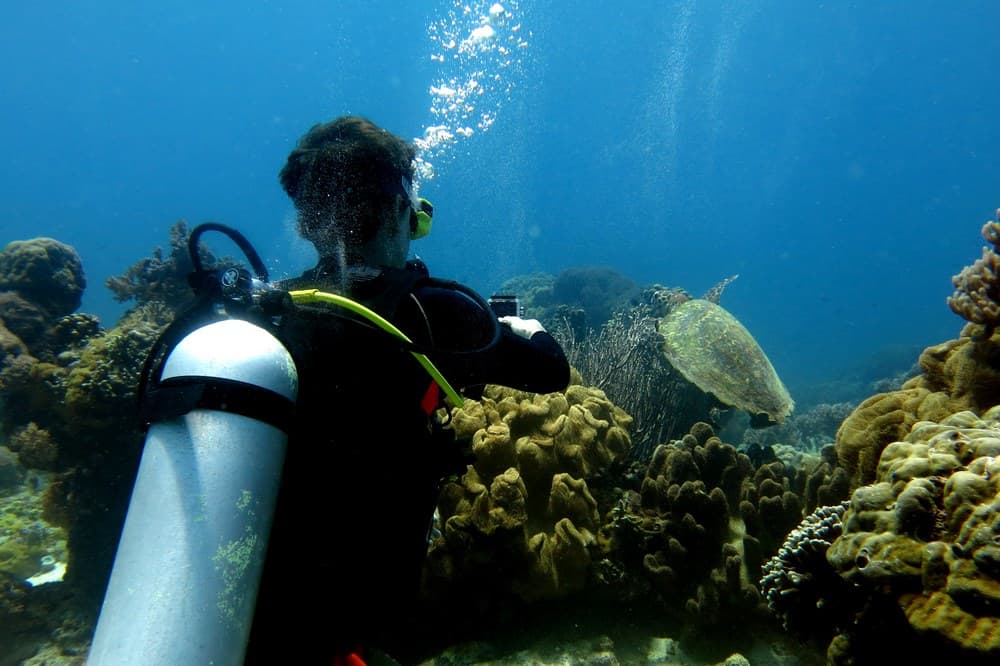
Despite not being one of the most well-known places for diving in the Philippines, we came away absolutely delighted and we think it’s a great place whether you’re a beginner or have experience, especially if you like the small things, because, while it’s not quite on the level of Dauin, macro lovers will still really enjoy it. In the couple of dives we did along the coast near San Juan, we saw 10–11 turtles, so it’s a great spot to see them if that’s your kind of thing, without paying the prices of the Apo Island trip, which we’ll talk about next.
The price of fun dives is around ₱1,400–₱1,600, depending on the number of dives you do. In addition, you have to pay a fee of ₱150 per day of diving.
Recently, a Spanish couple took over a dive centre on the island and we decided to dive with them. We had a great time and, besides being good professionals, they’re very nice and will help you enjoy a fuller experience of the island. If you fancy having their contact, leave us a comment and we’ll be happy to send it to you.
Bear in mind as well what we mentioned earlier about the diving ban around the new moon. Although the dive centres will advise you of this.
12. Apo Island
A visit to Siquijor wouldn’t be complete without a trip to the fabulous Apo Island. This is one of the best places in the Philippines for both diving in the Philippines and snorkeling in the Philippines, as you can find yourself surrounded by turtles. The marine sanctuary has coral in excellent condition and is teeming with life, so you shouldn’t leave it out of your trip around the country.
You have two ways to get to Apo Island from Siquijor:
-
The cheapest but also the most complicated way is to go to Dumaguete (1 hour by boat, about ₱350), take a bus to Malatapay (20 minutes, approximately ₱50) and then a boat to Apo Island (40 minutes, ₱300). If you choose this option, the best thing is to stay at least one night on the island and enjoy its relaxed atmosphere. We’ve stayed a couple of times at Liberty’s Lodge (rooms from ₱500), which has a dive centre.
-
The easiest and quickest way to get to Apo is by joining a tour from Siquijor. The trip takes 90 minutes (one way) and you’ll spend a few hours on the island snorkeling. Trips are organised by Coco Grove hotel and the Island Vibes Explorers dive centre. They usually depart when they have a minimum group of travellers, normally 15 people. It costs ₱2,750 per person (₱1,525 for children) including food, fees and snorkeling equipment. If you want to dive, you’ll have to pay ₱4,700/₱6,350 for 1/2 dives. Island Vibes charges ₱2,450 (₱1,500 for under-12s) for snorkeling and ₱4,300/₱5,900 for 1/2 dives.
You can read much more about this island to see if you want to do the excursion or stay there in our Apo Island guide.
NOTE: excursions to Apo are not daily and need a minimum group of 15 people to depart. Therefore, it’s important to head to one of these two places as soon as you arrive on the island to sign up and ask them to let you know if enough people sign up. If you’re really keen to go to Apo and tours don’t run, you’d have to make the full trip to Dumaguete and Malatapay that we mentioned at How to get to Apo Island.
13. Best sunset spots in Siquijor
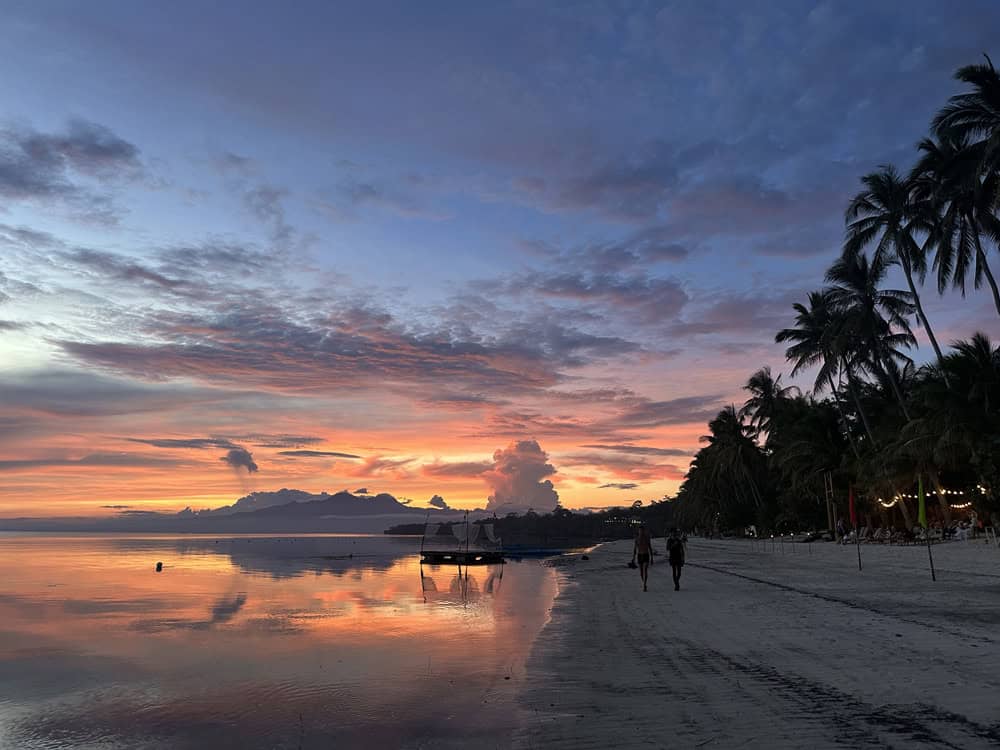
We always recommend San Juan as the area to stay in Siquijor because, besides having the best range of restaurants and hotels, beautiful beaches and easy access from the ports, its westward orientation means you can enjoy the beautiful sunsets the island is known for. From all this coast, which faces the island of Negros and its impressive volcanoes, between 17:30 and 18:00 you’ll be able to see the sky turn first orange and red and then pink and purple.
Where to see the sunset in Siquijor? You have many options, but basically they’re divided into two types.
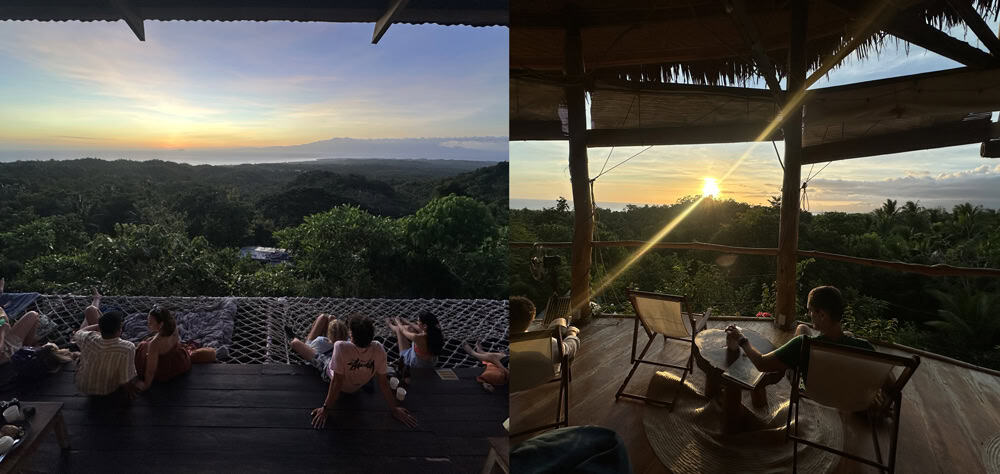
1. From the heights: Siquijor is a mountainous island and it’s very quick to get up into the hills from the coast of San Juan. That’s why several little cafés and restaurants have sprung up there, all easy to reach and with fabulous views over the island as well as a great sunset. In this sense, the one with the best views is Bucafe (photo on the left), which is also the most popular and photogenic, thanks to the net you can lie on. The best thing is to arrive about 45 minutes before sunset to get a spot. They serve cocktails, shakes/juices and beers, in addition to food. Another great place is the bar of Jungle KingDomes (photo on the right). It’s smaller and lower, so the vegetation blocks the view of the sunset, although you will see the sky change colours.
2. From the beach/coast: of course, from all along the coast of San Juan you have many opportunities to watch the sunset. Here are some of the ones we’ve tried and would recommend:
-
Paliton Beach: the liveliest area, especially at this time, as more people come and take the opportunity to buy a drink at its little stalls.
-
Coral Cay, The Bruce, White Villas (or similar): at this end of San Juan there’s always tranquillity and the bars of these two hotels are ideal. The photo below is from this point.
-
Don Juan Bar, RumBar (or similar): all along the coast south of Siquijor town, you’ll find little bars like the ones we’ve mentioned, with tables on the beach.
-
Belle’s Beach Bar: one of our favourite places to eat in Siquijor; it’s on a small cliff and the cocktails are tasty, in addition to having good Wi-Fi.
-
Tubod Beach: in our opinion, the prettiest beach in the area, and you already know it has a good reef.
Don’t worry; we mark them all on the Siquijor map at the end of this guide so you don’t get lost.
14. Holy Mountain Siquijor
Another place that is becoming more popular among travelers is Holy Mountain Siquijor, a viewpoint area in the interior of the island with beautiful views, especially at sunrise or late afternoon. It’s not one of the classic Siquijor attractions yet, but if you enjoy scenic drives and quiet spots, it can be a nice extra stop.
If you’re wondering how to get to Holy Mountain Siquijor, the road can be confusing and, depending on the route Google Maps suggests, not always ideal for a motorbike. If you’re not fully confident driving uphill or on rough roads, it’s better to park before the steepest section and walk the final part. This is one of those places where asking locals before heading up can save you a lot of trouble.
We’d only add Holy Mountain to your Siquijor itinerary if you have at least three days on the island or if you’re already exploring the inland area around San Antonio, Cantabon Cave or Mt. Bandilaan.
More Siquijor attractions and hidden gems
Here are a few extra places to add to your Siquijor itinerary:
· Simply touring the island: the scenery here is genuinely beautiful, with rice paddies in the interior, mountains and viewpoints.
· If you’re going to visit the Cantabon Caves, we recommend you continue along the same road and you’ll reach Mt. Bandilan National Park. There are lots of hikes to do there, but unfortunately the information office is usually closed. Even so, you’ll find the highest mountain in Siquijor, where a viewpoint offers 360-degree views.
· Speaking of viewpoints, from Kamp Aninipot, a hotel that imitates the hobbit houses from The Lord of the Rings, you also get amazing views. You’ll have to pay ₱10.
· If you want one with an infinity pool, there are two great ones where, for an entrance fee, you can use the pool without being a guest: Nakabalo Guesthouse (₱1,000 to enter, ₱600 is consumable in the restaurant) and Infinity Heights Resort.
· In the town of San Juan there’s a kind of municipal pool called Capilay Spring Park where you can go for a swim. They’re free and the water is cold.
· If your visit to Siquijor coincides with a Friday or Saturday, don’t forget to stop by JJ’s Backpackers, which gets packed at night and has a great atmosphere. It’s the meeting point for visitors and island residents who are looking for a bit of a party and, moreover, it’s right on the beach.
· Although from any point in the San Juan area you can see cool sunsets, you have Pitogo Cliff, a very picturesque cliff area. The entrance costs ₱30. But avoid the weekend because Filipinos love to go there to take photos and it’s honestly the only place in Siquijor that gets really crowded.
· If you’ve read about the Blue Lagoon or Secret Lagoon somewhere, forget about it. It really isn’t worth it at all and you’ll get muddy. It’s really run-down and not worth the detour.
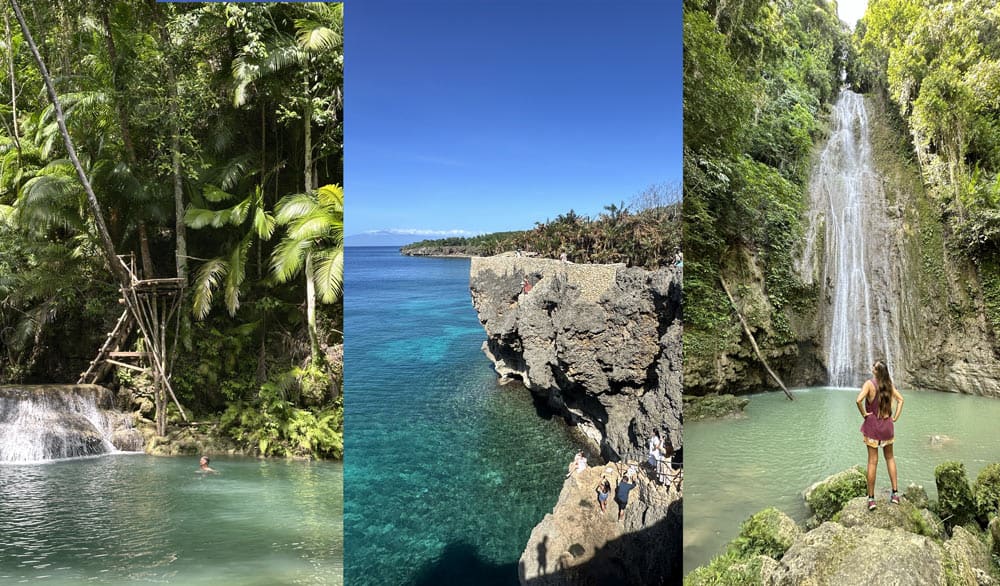
Cabugsayan Falls – Pitogo Cliff – Cangbangag Falls
Practical Siquijor travel tips
Keep enjoying the magic of this island with these extra tips we’ve picked up from our own experience.
Tips for enjoying Siquijor
These are the tips we wish we’d had on our first visit and that we’ve been gathering over the years and our many trips there:
-
In Siquijor you eat really well and at very decent prices, compared to other places in the Philippines. That’s why we always make the most of it—and why we put together this guide to Best restaurants in Siquijor.
-
The best time to visit Siquijor is from December to May, when it’s the dry season. However, that doesn’t mean it won’t rain or that the weather will be bad in the rainy season. We encourage you to visit at any time.
-
If you can, avoid weekends and local holidays. It has become one of the best-known destinations among Filipinos and the island gets crowded.
-
Although the Philippines is safe, some travellers have warned us about thefts on beaches. Please be very careful with your things if you’re going to swim or snorkel.
-
Euronet ATMs are popping up everywhere, but we recommend you be very careful with them because they often use poor exchange rates so that you end up paying a lot more money. We advise you to go with cash or use Remitly in the Philippines, which is a great way to save on fees. There are pawnshops in Siquijor town and in San Juan.
-
Please be very careful when driving in Siquijor because many stretches of road are under construction and there are many accidents, especially at night.
-
Power cuts are very common on the island due to the demand for electricity with a growing population and tourism. It’s essential to choose accommodation in Siquijor with a generator.
-
From experience, the hospitals in Siquijor are quite limited. If you need medical assistance, it’s better that you go to Dumaguete or Cebu. Remember to travel with travel insurance like the one we use. Here’s a 5% discount for booking through us.
Where to stay in Siquijor
If you’re already dreaming of heading to the island, take a look at these hotels we recommend:
-
Tropical Fun Ta Sea Rentals: this is our favourite because of its location (by the sea) and because the rooms are so spacious and clean.
-
White Villas Resort: this is where we stayed for more than 10 days on our second-to-last visit to Siquijor and we fell in love. It’s in the Solangon area, right on the beachfront, and even has a small pool. We loved it. Find out all about our stay in: Stay at White Villas Resort, Siquijor.
-
Tagbalayon Lodging House: if you’re looking for somewhere simple, well located and reasonably priced, this is your place. It also has shared dormitories.
It’s very important to make sure your accommodation has a generator (the ones above do). Unfortunately, with the increase in tourism on the island, power cuts happen almost every day, especially when the sun goes down and you really don’t want to be in your room sweltering without even being able to use the fan.
If you want to know the best area to stay and some more recommendations, take a look at Best hotels to stay in Siquijor and don’t leave booking it too late.
How to get to Siquijor
Find out in our guide how to get to Siquijor from other points in the Philippines such as Bohol, Manila or Dumaguete. We can already tell you that the island still doesn’t have airports with commercial flights, so you’ll have to arrive by ferry from Dumaguete, Bohol or Cebu. If you want to start looking at the routes, you can check schedules and book through this platform.
How to get around Siquijor
Most travellers tour Siquijor on a rented motorbike. Although most of the road is in good condition (except for the last two years, when there have been endless roadworks, leaving huge potholes behind), we only advise doing it if you have a licence, experience and if you’re going to drive very carefully, as fatal accidents have occurred. Remember to always wear your helmet. Motorbike rental costs around ₱300–₱400 a day, depending on the number of days you’re going to take it.
If you need a good contact to rent a motorbike (trustworthy and with bikes that are in good condition), we can give it to you if you leave us a comment.
You’ll find petrol stations dotted around the island, but you’ll also see that in the little shops (the sari-sari) they sell petrol in reused Coca-Cola bottles.
On the other hand, if you don’t drive, don’t worry. There are a lot of tricycles that will take you from one point to another on the island. Most tricycles run fixed routes between towns and pick up passengers along the way. Therefore, they’ll charge you the standard fare per person. To find out the current fare, we recommend you ask at your hotel.
For example, the normal fare from Siquijor port to San Juan is ₱40 per person (about ₱100 for the whole tricycle). From Larena port to San Juan it’s ₱50 per person.
If you want to make the most of the day, the best thing is to hire the services of a tricycle for the whole day. They’ll then charge you a special rate depending on how far you want to go and how many hours you want to hire them for. A fairly common price is ₱1,200 per day. We can also share a contact if you leave us a comment.
Finally, it’s also possible to rent a car in Siquijor. It’s not the most common option and there aren’t many places offering it, but it’s perfectly doable. Prices are around ₱2,000 per day, with discounts if you rent it for longer. If you need references, you can also leave us a comment and we’ll send you the details.
Map of Siquijor
This map of Siquijor will help you easily spot where each place on this list is located.
Have we missed anything on this list of things to do in Siquijor? Feel free to leave us any questions or suggestions in the comments.