Is it safe to travel to the Philippines? Many travelers ask themselves this question after seeing or hearing news about the situation on the islands. Even some Filipinos living abroad recommend travelers exercise caution when visiting their country soon. However, how dangerous is traveling to the Philippines in 2025 really? Are there any precautions you need to take?
Here at Travel Around the Philippines, where we’ve been roaming around these parts since way back in 2010, we are going to provide you with all the information and, above all, the experience so you can travel the country 100% safely. And, if you have any doubts, we’ll be happy to answer them in the comments.
Updated November 2025
By the way, if you landed here scared by the typhoons of November 2025, you should know that all tourist spots in the Philippines are operating completely normally. It is true that images of floods went viral around the world, but they did not occur in tourist destinations. Everything is working fine; travelers are going on excursions, diving, meeting up, and essentially enjoying the Philippines as usual.
What does the Spanish Ministry of Foreign Affairs say about safety in the Philippines?
We’re warning you now: if you go to the Ministry of Foreign Affairs (MAEC) page on the Philippines, you might get a bit of a fright.
The MAEC starts by stating that “it is recommended to travel with caution and refrain from doing so in certain areas.” From there, it lists risks related to weather, crime, health, and, above all, safety in specific zones of the country.
The Ministry is categorical and very exhaustive when discussing terrorism in the Philippines. It points out that there is a threat of terrorist attacks and kidnappings in the country, especially in the Mindanao region. It declares the central and southwestern parts of Mindanao as high-risk zones (to be avoided), specifically the provinces of Maguindanao, Lanao del Sur, the islands of Basilan, Sulu, and Tawi-Tawi, Cotabato City, and the provinces of South Cotabato, North Cotabato, Sultan Kudarat, Lanao del Norte, Saranggani, Zamboanga del Norte, Zamboanga del Sur, and Zamboanga Sibugay.
Although we will talk more about this below, we can already tell you that these are NOT tourist areas of the country and 99.9% of travelers don’t even get close to them. In fact, the Ministry itself notes: “The most tourist-heavy destinations in the Philippines tend to be safe, although not exempt from common crime.”
As it does for many other countries, it recommends not participating in mass events and staying alert in large crowds. To be honest, it is unlikely you will find yourself in a situation like this during a trip through the Philippines.
Of course, the Ministry also draws attention to natural disasters. It highlights that it is necessary to stay informed to see if it is safe to travel to certain areas of the Philippines at that time and recommends registering with the Travelers Registry. It also calls for following the instructions of local authorities.
Within the crime section, it calls for caution when moving around Manila, especially at night, and not to flash expensive items or large amounts of cash in “more depressed areas.” It also advises not accepting food or drink from strangers, as there have been some cases of tourists being drugged and robbed this way, especially solo travelers in Manila. Although we’re sure you already do this, since there have been cases of bag snatching from motorcycles, try to keep your bags/backpacks held tight if walking near the road. Apart from this, having lived in the Philippine capital, we can tell you that it is a calm city, much more so than the vast majority of cities in Latin America and even Europe.
In the subtitle regarding health (and in several other parts of their website), it is blunt: “it is strongly advised to take out the most comprehensive travel medical insurance possible, including medical repatriation, given the difficulties that may arise in case of serious health problems in places without health infrastructure or the need for urgent transfer out of the country.” It adds: “the Spanish Social Security health system is not applicable in the Philippines and the Consulate does not cover the payment of medical bills.”
The fact is that private medical care in large cities (Mainly Manila and Cebu) is of good quality, but in rural areas, it is more complicated to find adequate infrastructure and personnel in case of an accident, so you would need an emergency transfer. We talk about this at length in our article on Philippines Travel Insurance.
Not only that, although it might seem otherwise, as the Ministry says, “hospitalization or medical evacuation to Spain can cost tens of thousands of euros. Most hospitals request a cash payment upon admission equivalent to the estimated expenses that may be incurred. In some cases, both public and private hospitals have failed to supply treatments or medications, even in serious cases, due to lack of payment. Hospitals also usually deny discharge to patients and withhold their medical documents until they have paid the bills.”
We, having spent a lot of years here, can tell you that this is true. We have had to go to doctors all over the country for various things and even received a bill of over $25,000 from Makati Med, one of the best hospitals in the country, for a multi-day hospitalization and surgery. Fortunately, our insurance covered everything (including repatriation), and that is why we very strongly advise you not to travel without travel insurance and, even more so, with one you know works well—we don’t mess around with this. This is the one we have been using for over a decade and don’t hesitate to recommend.
Travel insurance with a 5% discount

Coron-El Nido Expedition
But is it actually safe to travel to the Philippines?
After hearing all that, maybe you’re a little scared. We aren’t going to contradict the Ministry, far from it, nor ignore what they say, but from our experience traveling to the country since 2010 and even having lived in Manila itself for several years, we can tell you that it is totally safe to travel to the Philippines. Of course, always with caution, as on any trip.
For some reason we don’t know, there are people spreading rumors on social media that the Philippines is dangerous, and we still don’t understand why. The Philippines is a very safe country, vastly more so than any country in Latin America and, in fact, more so than some cities/countries in Europe. In none of our trips (which have been many, since we spend several months here every year) has anything happened to make us think it is unsafe, even traveling solo (and as a woman). Not only that, we consider it one of the safest countries out of the more than 70 countries we have explored in the last 11 years traveling as a way of life.
Even so, let’s dive into different aspects that always come up when people ask us if it is safe to travel to the Philippines.
Healthcare in the Philippines
Regarding health issues, the risk of dengue is real, especially in the rainy season, when stagnant water causes mosquitoes to appear. Although outbreaks are sometimes declared, right now infection numbers are just like in any other Southeast Asian country, so there’s no need to panic. Use mosquito repellent at sunrise and sunset.
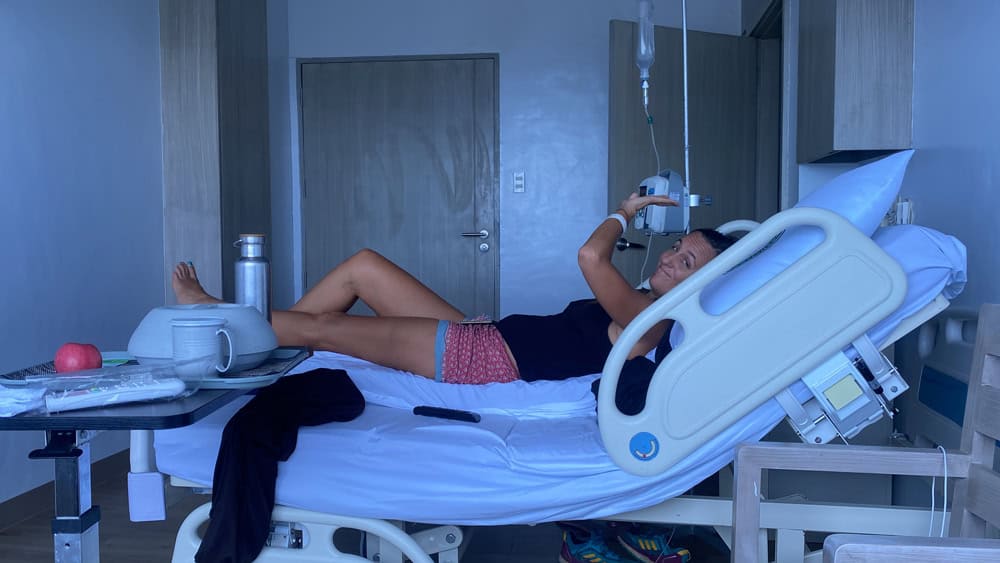
Without downplaying its importance, dengue is not a fatal disease for adults. For us, having both gone through it (one in the Philippines and another in Myanmar), it was like a pretty nasty flu. In Claudia’s case, contracting it in Bohol, she was hospitalized for 5 days to monitor her blood platelets, but afterwards, we were able to continue the trip. Obviously, the insurance covered the bill, which came to just over $900.
Regarding the risk of malaria, as we tell you in Vaccines for the Philippines, it is only a medium risk in certain areas of Palawan that are not touristy (this is not the case for El Nido or Port Barton). Even so, if your doctor prescribes a treatment against malaria, it never hurts to carry it and, of course, throw a mosquito repellent in your backpack for the Philippines.
There is a risk of contracting typhoid fever from water and food. In this regard, besides getting the relevant vaccine, you should know that tap water is not potable in the Philippines and Filipinos themselves do not drink it. What they do drink is purified water sold in large jugs that usually have a dispenser. In restaurants, they serve what is known as “service water,” which you can drink safely. It is a way to save money and plastic. We only recommend being careful in El Nido, which has been famous for decades for food poisoning due to problems with septic tanks.
Aside from that, it is normal to suffer some minor stomach issues or other mild problems that might make you visit a clinic. Medical infrastructure in the Philippines, except in big cities, is not the best, we won’t lie. That is why a good insurance for traveling to the Philippines is essential for us. Although a consultation usually doesn’t cost more than 1,500 pesos (approximately $30), having to be transferred and hospitalized in a quality facility can result in a huge bill that isn’t worth saving the cost of travel insurance. Likewise, most travel medical insurances include the cost of medications and, believe it or not, despite being such an affordable country, the price of antibiotics in the Philippines is not low… For a simple infection treated for a week, we could be talking about 3,000 pesos ($57).
Seriously, don’t risk it. Between February and March 2019, as we mentioned above, Jairo had to be hospitalized in Manila for pneumonia for 3 weeks. The bill, paid by the insurance, amounted to $25,000. Added to this, they also paid for his mother to come to the Philippines and her accommodation for all the days she was here, as well as our repatriation to Spain in business class.
With all that said, we can only recommend that, please, you don’t gamble with your health and always travel with insurance. Contracting the one we have been using for over 10 years with THIS LINK, you also get a 5% DISCOUNT.
In short, we can tell you that, in our experience, it is safe to travel to the Philippines, provided it is done with caution and while staying informed. If you are nervous, you will see that upon arrival all those doubts dissipate and you will end up falling in love with these beautiful islands.
Natural disasters in the Philippines (typhoons, earthquakes, etc.)
Of course, you must exercise caution in the event of a natural disaster. Such is the case of a volcano eruption in the Philippines, like Mayon in 2018 or the near-eruption (but terrifying) of Taal in early 2020. In this sense, respecting the established safety perimeters is more than enough.
What about typhoons in the Philippines? We won’t lie to you, they exist and, unfortunately, some powerful ones have occurred lately, but, WATCH OUT, what appears in the news should always be taken with a grain of salt. First, a typhoon doesn’t pass through the entire country, and its passage really lasts 2-3 days at most. Second, a typhoon’s trajectory is known at least 5 or 6 days in advance, and it would be extremely rare for you not to find out about it because everyone starts talking about it.
On the other hand, typhoons don’t happen every week and in most cases, they are not destructive. In the case of the typhoons of November 2025, most travelers were completely calm (even partying in places like Siargao or Bohol) while the eye passed through northern Luzon (Baler). During these days we answered an average of 100 emails about the status of tourist destinations from people who believed everything was devastated, when the reality is not at all like that. Life goes on and, except for specific areas of the country (non-tourist), everything is operating normally.
Does this mean you should stop worrying? Certainly not. It is essential to check weather forecasts to stay safe in case of a typhoon and always do so on the PAGASA website, the Philippine meteorological agency, to avoid falling for fake news. We ourselves warn on our social networks and assess the situation so you can be at ease.
Do you want to avoid the typhoon season? Find out when the best time to travel to the Philippines is. In any case, the vast majority of travelers visit the country between July and August, when there are also areas where the dry season reigns.
On the other hand, even if we sound repetitive, the issue of having insurance that responds well is fundamental. Not just for huge disasters, but to get your money back in case of missed connections or flight cancellations/delays. You have to read the fine print of the policies well, but travel insurance covers beyond just medical issues and provides compensation or support for living expenses. As we told you, this is the one that has worked well for us here for many years and the one we recommend (besides giving you a discount).
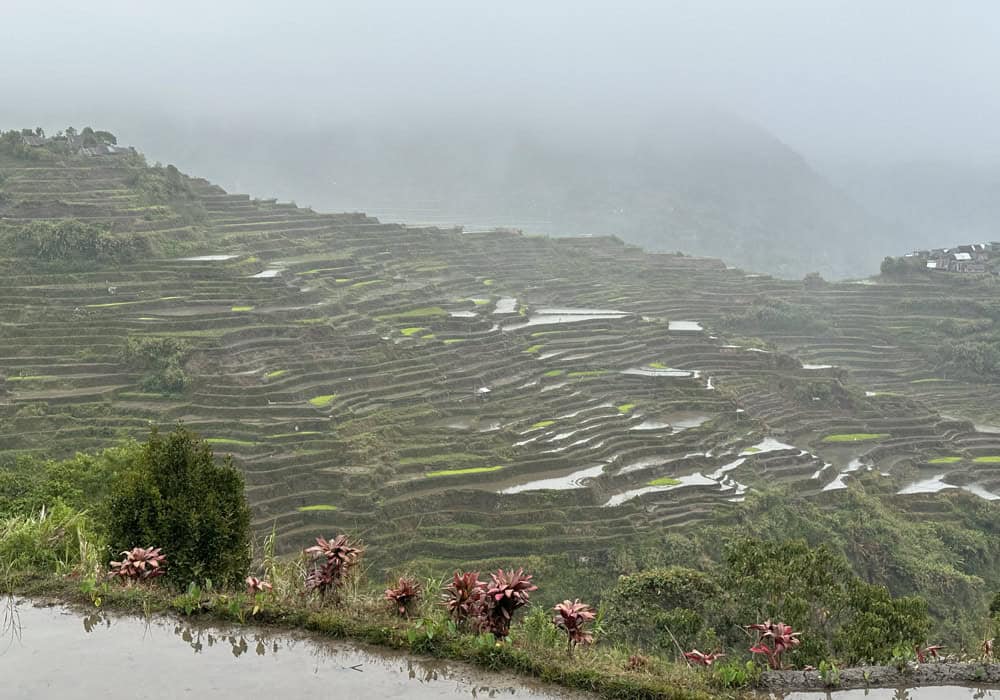
Rice terraces of Maligcong (Bontoc)
Is Manila dangerous?
On the other hand, as in all cities in the world, there are neighborhoods that are not recommended in Manila or Cebu. Theft by carelessness happens in places where there are many people or tourist sites like Intramuros. Even so, these are rare and cases of violent robbery are even rarer.
As we tell you in Things to do in Manila, the capital of the Philippines is not a dangerous city. We have lived here for years and have also toured it as tourists on many occasions and have never had any problems, even walking alone at night. You can experience the nightlife of Makati or Malate, discover Intramuros, Chinatown, or Quiapo without problems, as long as you keep an eye on your wallet, as you would in any country. That said, you can perfectly go with your mobile or camera in hand; it would be extremely rare for someone to do anything to you, believe us.
In places with many people (like a market or if you take the metro), it doesn’t hurt to keep a closer eye on your backpack or wear it on your front, but without falling into paranoia. Honestly, Manila is not a dangerous place, you just have to use common sense.
The most annoying thing about Manila, besides its hellish traffic, are the taxi drivers of the regular or white taxis, especially those at the airport or during rush hour (which is usually between 4:00 PM and 8:00 PM Monday to Friday). We have had hundreds of arguments with them because they don’t want to turn on the meter, they want to charge you a fortune, or they want you to give them a “plus” because “there is a lot of traffic, sir/ma’am”. In some cases, we’ve had to get out even with our suitcases, after the corresponding anger. That’s why we now opt to use the Grab app (the Uber of Southeast Asia) when we are at the airport or know that traffic jams are going to complicate things.
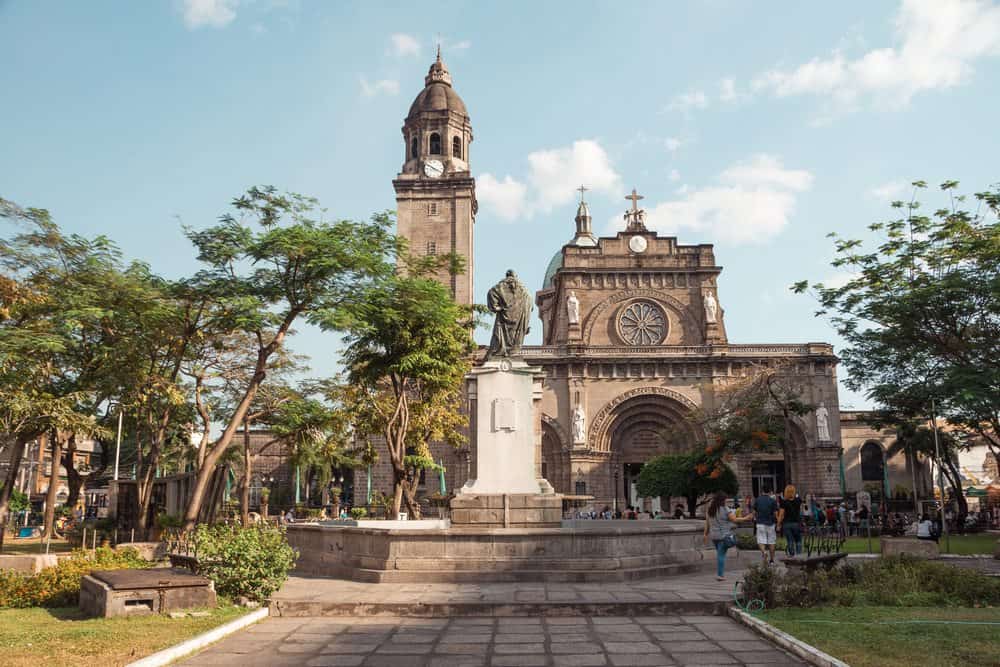
Manila Cathedral in Intramuros
We haven’t even mentioned it, but in the rest of the country, robberies or violent incidents against tourists are rare. Occasionally, a theft may occur in a hotel room, but honestly, you can come with peace of mind. And if you’ve read that Balabac is dangerous, we recommend you stop reading the site where you read that because it is totally outdated. It is a safe area and completely trendy right now.
Terrorism in the Philippines
Clashes between the so-called Moro Islamic Liberation Front and the Government of the Philippines have been happening for decades. Although there is currently a ceasefire, it is true that it is advisable to avoid certain areas or exercise caution within them.
We already told you in our Philippines travel guide that it is advisable to avoid the western part of Mindanao: Cotabato, Tawi-Tawi, Basilan, Sulu… These are places that, for decades, have been little or not at all visited by tourists. However, you are surely wondering what is happening with the rest of the island and its most famous spots. Traveling to Camiguin, Dinagat and Siargao (islands belonging to the Mindanao region) is totally safe, just like visiting cities such as Surigao, Davao, or Cagayan de Oro. We didn’t hesitate for a moment to do so, and you can see that geographically they are quite far from the first ones we mentioned.
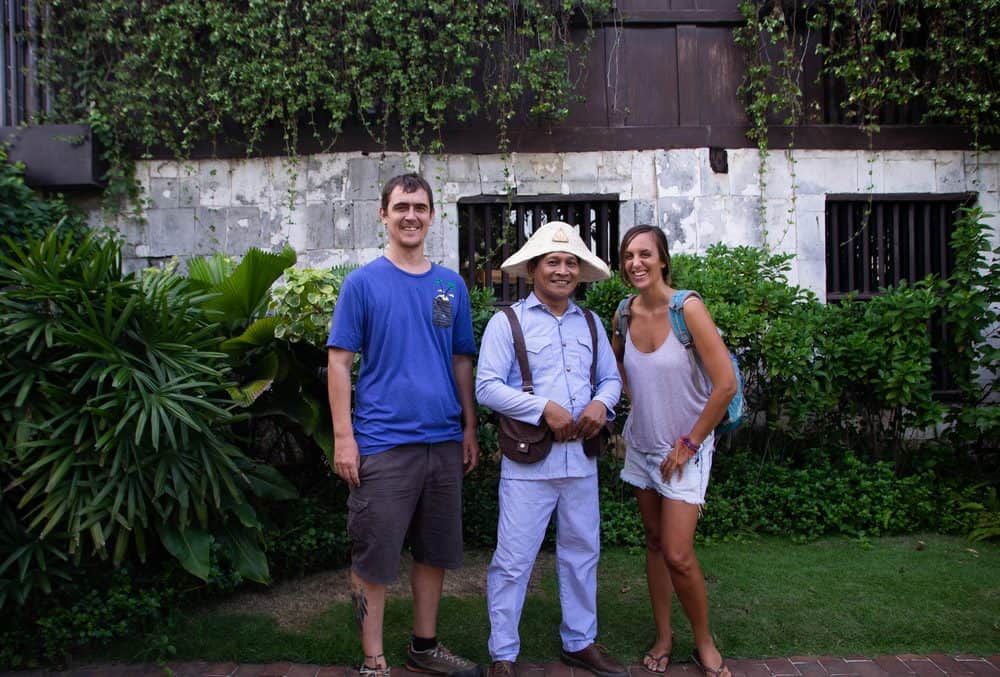
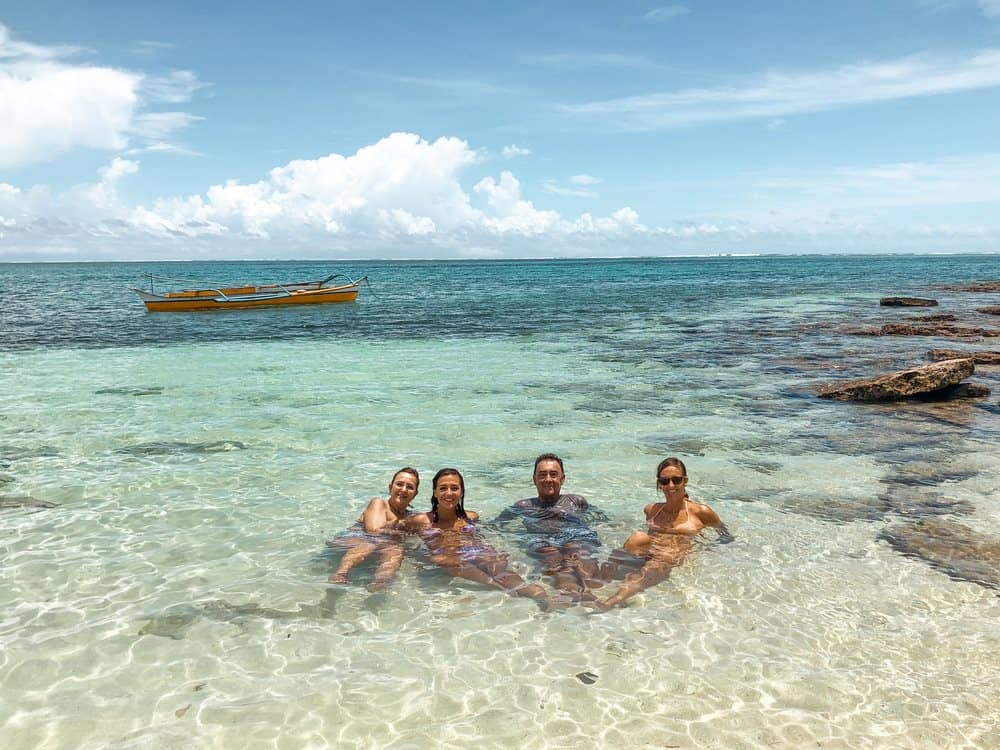
Outside of these places, traveling to the Philippines is totally safe, just like any other country in Southeast Asia. The archipelago receives more than 8 million tourists a year and when you arrive you will see that the situation is one of absolute tranquility. And if you don’t believe us, look at this photo with our family in Siargao, we couldn’t be more relaxed!
Solo Female Travel in the Philippines
Unfortunately, women still have to face dangers while traveling, and we receive many questions about whether the Philippines is safe for solo female travel. From the perspective of the one writing to you (a woman who has lived here and traveled extensively alone as a backpacker both through the archipelago and many countries), I can tell you that I have always felt comfortable traveling alone in the Philippines and have never had any problems.
I can warn you that Filipinos (and Filipinas) will speak openly with you and ask you, occasionally, why you are alone. This has no bad intention, quite the opposite! They are naturally curious and, whether you are alone or accompanied, they always greet you and want to strike up a conversation. Don’t worry, it’s completely normal. If you feel uncomfortable, simply move somewhere else and, of course, always use your common sense. Anywhere in the world, no matter how kind and respectful people are, there is always someone who is the exception.
Since we don’t want to drag on too long here, if you want to know more about this topic and get tips, don’t miss Solo Female Travel in the Philippines.
Recommendations for safe travel in the Philippines
We hope that by now you are more than convinced that it is safe to travel to the Philippines, but it never hurts to give you some tips that will help you be more at ease:
- Get good travel insurance for the Philippines. Seriously, it is essential not just to avoid spending a fortune if something happens, but for peace of mind. As we told you in Philippines Travel Insurance, we use the IATI Backpacker because it covers activities like diving or hiking. From this link you can get a 5% discount.
- Do not drink tap water. Drinking the purified water that Filipinos drink from tanks is totally safe. It is not necessary (nor good for the environment) for you to be constantly buying plastic bottles.
- If your stomach isn’t very used to it, avoid eating raw products unless they have been washed with purified water. The ice used for shakes or other cold drinks is usually made from good quality water. Keep in mind that Filipinos don’t drink tap water either, so don’t overthink it. Not eating mango in the Philippines would be a sin.
- Pay attention to what you eat in El Nido, because, as we mentioned, there have been cases of food poisoning there for a few years now. The same goes for brushing your teeth; use bottled water.
- We love animals, but be very careful when touching them. Rabies exists in the Philippines, so in case of a bite, go automatically to a health center. Being vaccinated against this disease, from our perspective, never hurts.
- Use mosquito repellent, especially in the rainy season and at sunrise and sunset.
- Consult your doctor (in advance) about the recommended vaccines for the Philippines.
- Bring a basic first aid kit, but don’t obsess; you will find everything here. We delve into this in Backpack for the Philippines.
- In Manila or Cebu, in places where there are quite a few people, always watch your belongings. Cases of violent robbery are very rare, but, like everywhere, theft happens.
- Use Grab or Joyride in Manila. It is the safest way, and you have less risk of being scammed. In Cebu, you can take normal taxis because there aren’t as many problems in this regard.
- Watch out for coconuts! It may seem silly, but a coconut falling from the top of a palm tree can be more than just a scare. Try to avoid standing underneath, especially if it’s windy.
- Don’t even think about taking corals, shells, or conch shells from the Philippines. It is not allowed, and it is almost certain they will take them from you at the airport. Besides, if the beaches are so beautiful, it’s because these things exist, and it’s better to leave them where they are, like the responsible traveler you surely are.
- If you rent a motorbike or car, drive with great caution, complying with traffic laws and equipped with a helmet. Although it may seem that the roads are in good condition, it is normal for all kinds of animals to cross the road, especially at night. Serious accidents are, unfortunately, common. On the other hand, as we mention in Renting and driving a car and motorbike in the Philippines, if you only have a type B license, even though everyone does it, you are not authorized to drive scooters.
- Read our article on Scams in the Philippines to be warned about possible shady dealings you might fall for. The Philippines is safe, but there can always be an opportunist lurking.
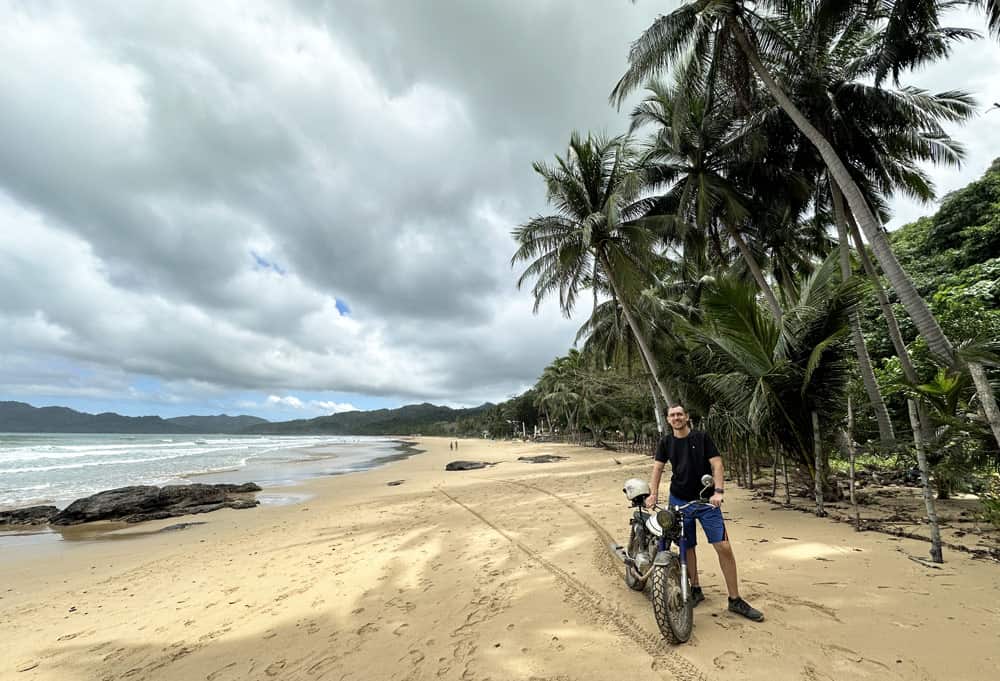
Duli Beach (El Nido)
More safety recommendations for the Philippines
- Distribute your money in the Philippines in different parts of your luggage. Don’t carry it all in the same place. If possible, don’t carry large amounts, and for that, what we do is use Remitly frequently.
- We can tell you that for us it is totally safe to travel to the Philippines, but we know of several cases of travelers having their rooms broken into at night (especially in Port Barton and Siargao). Therefore, it is advisable to book hotels that have some security. Always lock the door and try to put something against it.
- Filipinos are usually very honest people, but it never hurts to know beforehand the normal price of transfers or excursions, as tricycle drivers tend to overcharge. You can ask at your hotel to get an idea, but you will also have this information in the different destination guides at Travel Around the Philippines.
- Although it is the coast guard that cancels boat trips when the sea advises against it, inform yourself on your own and don’t risk it if they offer you “pirate” trips. Seriously, we have received feedback from travelers with sunken bangkas and all their luggage at the bottom of the sea. You can check pages like PAGASA.
- Monitor the weather during your trip, especially at the end. In case a typhoon or a major tropical depression is coming, move close to Manila or Cebu so you don’t miss your flight home.
- Avoid traveling through mountainous areas, especially in the Cordillera, if it has rained a lot in the previous days. Landslides sometimes occur.
- It is safe to travel to the Philippines, but don’t even think about buying or consuming drugs. The penalties for simple possession are very high and the current president maintains a crusade without measure against it.
- Do not touch anything in the sea. Not only to be a responsible traveler, but because there are a lot of poisonous things. Animals won’t approach you, but don’t approach them either because then they might attack to defend themselves.
- Watch out when snorkeling. Don’t go far from the coast and keep in mind that there can always be currents. This doesn’t apply if you are on an island hopping tour and have a boat nearby.
- The Philippines is safe, but if you are going diving, please do so with a reliable company because there are many centers with very low safety standards, equipment in poor condition, and dive masters who are tired of their job. We can give you contacts of reference centers that we have tried and know work well.
- On certain Philippine beaches, there are what are called sandflies, nik nik, or sand fleas. Although they aren’t dangerous, certain people (like us) are very prone to their bites (in most cases without realizing it) and, hours later, start with a terrible itch that can last for days and, if there were many bites, can even cause an allergic reaction. Although not 100% effective, putting natural coconut oil on your skin usually works.
- Protect yourself well from the sun. It sounds like very “dad advice,” but many people don’t realize that the sun burns much more here than in Europe and end up with burns that ruin their trip. Be careful with creams sold in tourist spots in the country because in many cases they refill them with body lotion (without protection). That’s why it’s better to bring it from home and use shirts with sun protection.
- If you have a burn or significant wound, it is better to spend a few days without swimming. Keep in mind that the sea water in the Philippines is around 28-29ºC, so it has many bacteria that like these types of wounds, so the risk of infection multiplies.
- Practicing topless sunbathing or nudity is prohibited and can lead to fines or even prison.
- In case of accident or serious illness, imprisonment, theft, or loss of passport, contact the consulate by phone (+63) 9178266046 (this is the consular emergency number) or email (con.manila@maec.es).
- Please, be respectful to people. You will quickly realize upon arriving in the Philippines that the people here are extremely kind and hospitable. They will help you in every way possible and more and will make you feel at home, but, no matter how much you travel, we are still visitors. In some difficult occasions, if they arise (which is usually very rare), it is better to leave your pride aside and swallow it because, although they seem calm, the concept of “losing face” is very deeply rooted. It is better to avoid confrontation, without that meaning letting yourself be ripped off.
- And, although it is also common sense, avoid getting involved in conversations or activities where you see many drunk people. Unfortunately, alcohol consumption is very high.
- Always use common sense and intuition. In the Philippines, you will always feel very safe, but, like on any trip, be cautious without stopping to enjoy yourself to the fullest.

Frequently asked questions about safety in the Philippines
To finish up, we answer the most common questions you usually ask us about whether the Philippines is safe or not:
Which part of the Philippines is the safest?
Really, all tourist areas of the Philippines are safe and, after many years here, we don’t see why you would have to avoid any. You would only have to exercise caution in certain zones of the Mindanao region, but the islands of Siargao and Camiguin (belonging to this part of the country) are completely safe, just like cities and tourist destinations such as Cagayan de Oro, Surigao, Bukidnon, or Davao.
Are there dangerous areas in the Philippines?
There are non-tourist areas that are not recommended in the central and southwestern parts of Mindanao. Specifically, the provinces of Maguindanao, Lanao del Sur, the islands of Basilan, Sulu, and Tawi-Tawi, Cotabato City, and the provinces of South Cotabato, North Cotabato, Sultan Kudarat, Lanao del Norte, Saranggani, Zamboanga del Norte, Zamboanga del Sur, and Zamboanga Sibugay. It would be very rare for you to have any interest in going there.
Is Manila safe?
As in any city on the planet, there are neighborhoods we wouldn’t go to, but, as residents of the Philippine capital, we can tell you that it is not an unsafe city. Simply be careful with your wallet in areas with high concentrations of people and act with common sense, especially if you travel alone, by not accepting food or drink from strangers. Aside from this, nothing has ever happened to us in Manila in the more than 15 years we have known it.
Is traveling to the Philippines dangerous?
Not at all. We are not just saying it; we have been roaming around here for many years and in all ways (as a couple, solo, with friends, with family…) and nothing has ever happened to us. Not only that, we receive feedback from travelers every day (we opened this website in 2018) and they have never told us “weird” things beyond gastroenteritis, occasional thefts, or motorbike accidents—things that, as you can see, could happen to you in any city in the world. Being cautious and using common sense is usually more than enough.
Are there forbidden things in the Philippines?
Yes, but logical things. Drug consumption (including marijuana), taking animals, shells or conch shells, and, among other things, practicing nudity or topless sunbathing are prohibited in the Philippines.
Do you have any doubts about safety in the Philippines? We would love to answer you in the comments, likewise if you want to tell us about your experience. Also, throughout our entire website, you will find tons of tips to enjoy your experience and avoid unnecessary problems.