
Manila Guide
Manila, the capital of the Philippines, is the entry point to the country for a large number of travelers. Then, from here, whether by domestic flights or boats, the great Philippine adventure usually begins. But, if you give it a chance, you will see that Manila has its own charm and that it awaits you with many more plans than you expected. In this Manila Guide we tell you what to do, where to sleep, and many more things to help you love it as much as we do.

While it cannot be classified as a beautiful city, Manila is an interesting point to get an idea of the true character of the Philippines. Important historical sites, museums, and markets remain within it. In addition, it is here where you will find the most modern corners of the country, design restaurants and bars where new trends are cooking up among young people. Visiting it gives a different perspective to your trip and, therefore, in this Manila Guide, you will be able to get the most out of it.
THINGS TO DO IN MANILA
Touring Chinatown, visiting the historic area of Intramuros, going shopping at the best malls, museums, dark tourism… Here are the most interesting activities if you don’t have much time:
- Intramuros: the most important historical district of Manila.
- Rizal Park: it honors the figure of José Rizal and, in addition, you can find several interesting museums nearby.
- Manila Bay: going at sunset guarantees finding a great atmosphere on what is the “boardwalk” of Manila.
- Chinatown: the oldest Chinatown in the world (outside of China).
- Quiapo: one of the most interesting neighborhoods in Manila, highlighted by the Minor Basilica of the Black Nazarene, featuring a highly venerated 17th-century statue from Mexico.
- Makati: the financial district, full of huge skyscrapers, restaurants, and trendy shops.
- Markets and Malls: Manila is the best place for shopping.
- Cemeteries: although it sounds strange, there are many interesting graveyards, such as the Chinese Cemetery.
- Party time! It is in Manila where you have the best clubs and pubs, including dizzying rooftops.
In this Manila Guide we only give you a taste. The city hides hundreds of plans like these and here we show you the best ones:
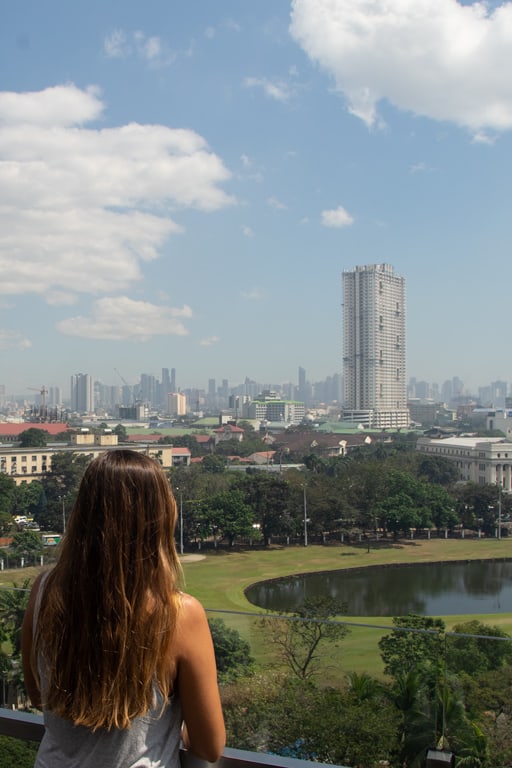
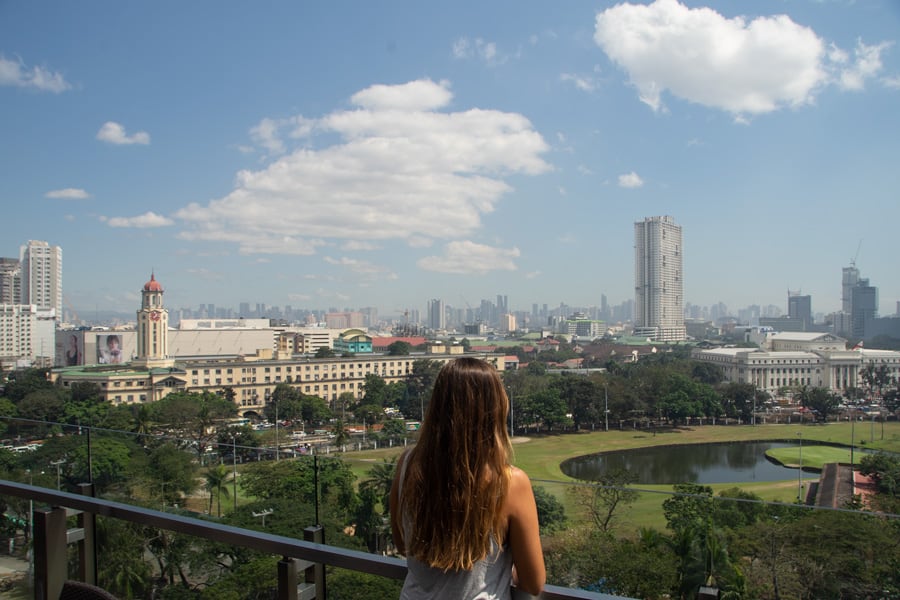
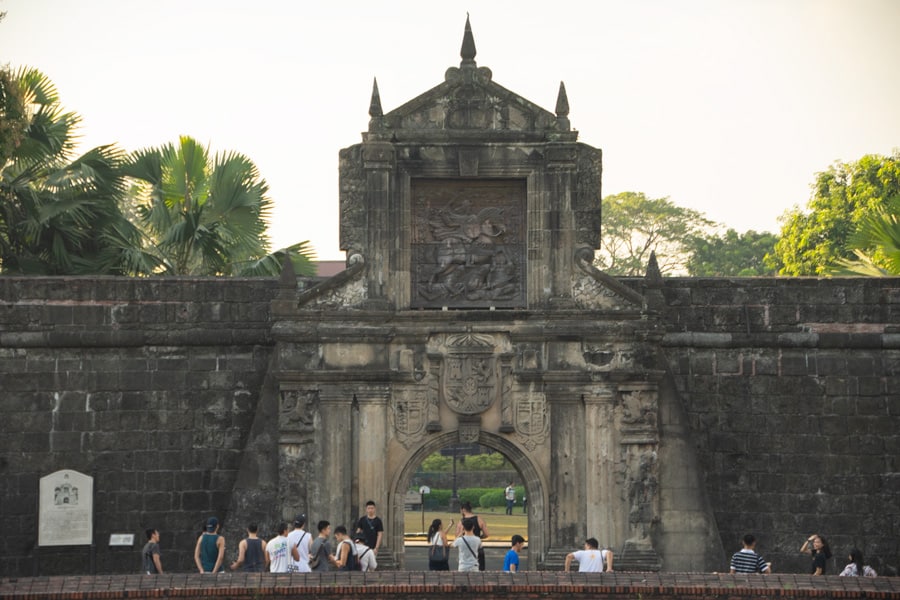
THINGS TO DO IN INTRAMUROS
Manila was known as “The Pearl of the Orient” and you can notice that in Intramuros. Intramuros was the center of political, military, and religious government of the so-called Spanish Philippines. Despite being almost destroyed in 1945, during the Battle of Manila, the most important remains of the city’s colonial past remain in this small walled neighborhood. Therefore, we have decided to dedicate an exclusive section to it in this Manila Guide and encourage you to take a walk of several hours discovering the key places: Fort Santiago, Casa Manila, San Agustin Church, and the Manila Cathedral. In this article, you will find more information and a detailed walking route:
HOW MANY DAYS TO SPEND IN MANILA
We encourage you to spend at least one full day in Manila. This will depend a lot on what you want to do and, most importantly, on the duration of your trip to the Philippines. We totally understand travelers who decide to go directly to other islands because what they want is to enjoy the nature of the archipelago. However, as we tell you, Manila will help give you a global vision of what the country is.
A good idea is to dedicate a day or a few hours at the end of your tour of the Philippines. This way, you ensure that you have arrived in time to catch your international flight. Because delays and cancellations of domestic flights are quite frequent, it is better to sleep the night before in Manila.
Even so, if you are curious and are attracted by some of the excursions that can be done from there, you could easily spend 2 or 3 days in Manila.
DAY TRIPS FROM MANILA
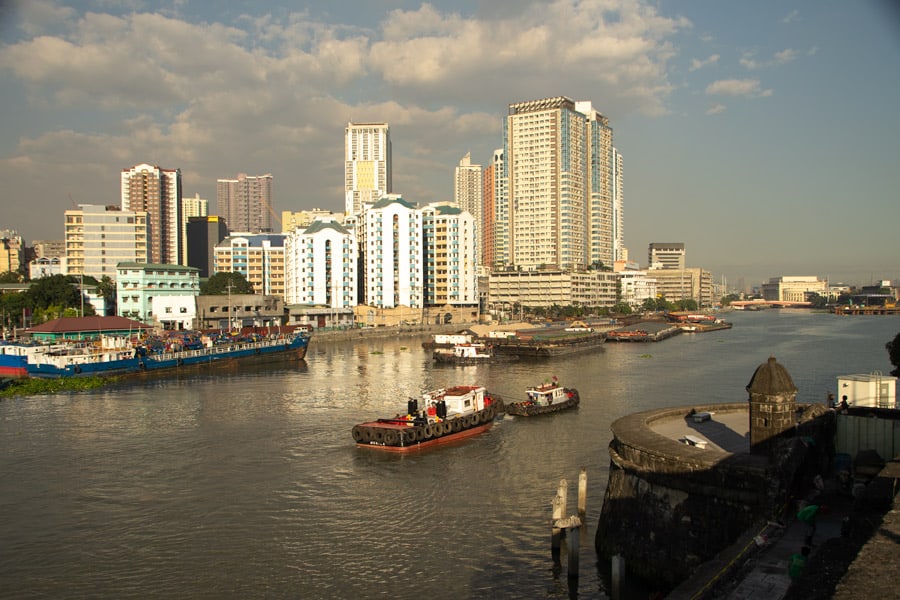
While the most important parts of Manila can be seen in a day or two, there are several interesting excursions for those who have more time. From here you can visit two incredible volcanoes (Taal and Pinatubo), the historic island of Corregidor, or imposing waterfalls like Pagsanjan Falls, in Laguna. We tell you everything here:
HOW TO GET TO MANILA
The possibilities of getting to Manila are almost endless. Manila has an international airport with 4 terminals that receive flights from almost any city in the world. On the other hand, you can also arrive from other points in the Philippines both by plane and by boat and bus. Since putting it all in this Manila Guide would be impossible, we recommend reading our very detailed article, where we explain how to arrive from abroad and other corners of the archipelago:
HOW TO GET FROM MANILA AIRPORT TO THE CITY CENTER
Many trips to the Philippines start in its capital and, after getting your flights and accommodation, the same question always arises: How do I get from Manila airport to my hotel? In this article of the Manila Guide, we tell you in detail everything you need to know so you don’t get lost or pay more than necessary. Click here: How to get from Manila International Airport to the city center.
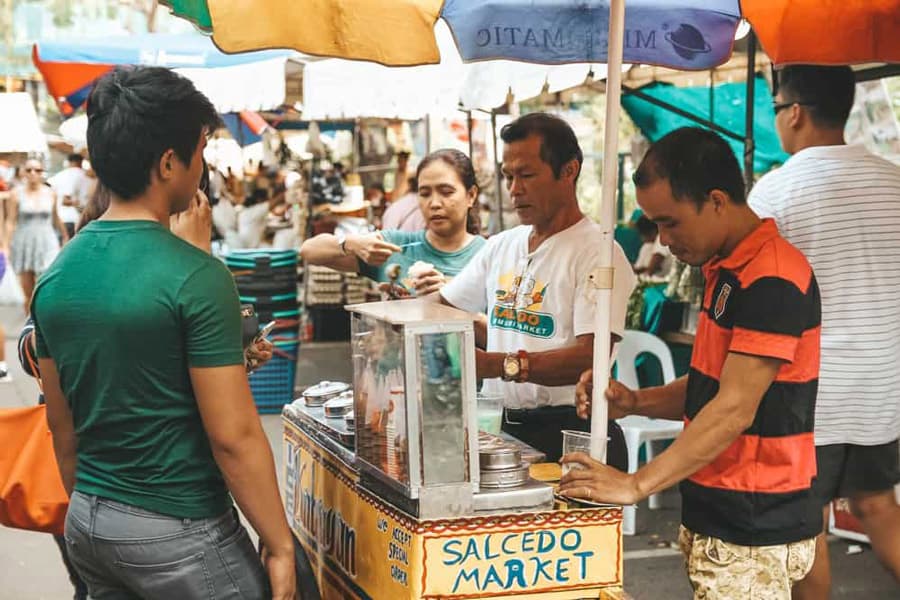
WHERE TO EAT IN MANILA
Manila is a true gastronomic paradise and you can eat, literally, everything. If you are looking for the most typical dishes of Filipino gastronomy or classic international dishes, this Manila guide will serve to make you lick your fingers at whatever price you like. In addition, we share those corners that we hold especially dear from our days living there.
WHERE TO STAY IN MANILA
Being a mega-city, you won’t lack accommodation options for all types of budgets. Even so, the most important thing is that you choose well in which area to sleep. Traffic in Manila is true chaos, so you don’t want to spend literally hours stuck in a taxi.
Depending on what you want to do, it suits you to stay in one place or another. Thus, if you want to make a stop for one or two nights and visit some of Manila, you might be interested in staying in Makati or Malate. If what you want is to party, it can be great to stay in the Poblacion neighborhood, you choose! We detail everything and give you accommodation recommendations here:
HOTELS IN MANILA NEAR THE AIRPORT
If you are just passing through Manila and have a flight first thing in the morning, without a doubt, the best option is to stay near one of the terminals of Ninoy Aquino International Airport. This way you will erase the stress of being stuck in a traffic jam and the possibility of being late for your flight. Since we consider this aspect very important, we have written an article detailing different options considering the terminal that interests you most:
TIPS FOR VISITING MANILA
- WHEN TO VISIT MANILA: we don’t think this is really important, since you aren’t going to do much nature-related tourism, but you will be interested to know that the rainy season runs roughly from May to November. At these times there may be more risk of a typhoon or cyclone passing through the area, causing several days of rain or wind. You also have to consider that April and May are the hottest months, so it might be harder for you to be walking around.
- GETTING AROUND MANILA: it is not as easy as in other cities in Southeast Asia, but it is not impossible. In Manila, you have a couple of train lines (the so-called MRT and LRT), which may interest you depending on where you are. As they do not cover a large area, it is likely that you will have to ride a jeepney and that’s where things get more difficult, as orienting yourself can be confusing. Our advice is to ask people, although there is also an app called Sakay, which can be useful. To make matters more confusing, there are also buses from private companies and also a boat that goes along the Pasig River. If you don’t want to complicate things, the best thing is to use Grab, the Uber of the Philippines. Despite being a little more expensive, we recommend it because Manila taxi drivers are quite “tricky” and often don’t want to use the meter or try to scam you.
- MONEY IN MANILA: the city is one of the few places where card payment is widespread and no surcharge is charged. In addition, you will find plenty of ATMs, including those of HSBC, which are the only ones that do not charge a withdrawal fee. We tell you more in Money in the Philippines.
- HEALTH IN MANILA: Makati Med and St. Luke’s Medical Center are the best hospitals in the country, but also the most expensive. Unfortunately, we have a lot of experience with them and we have even had a bill of €22,000 in our hands. Please, do not travel without insurance. In Insurance for the Philippines we tell you our experiences and give you a 5% discount on your policy.