Surfing in the Philippines? You’ve come to the right place. With the Pacific Ocean to the east and the South China Sea to the west, the archipelago offers an almost endless variety of waves. From internationally renowned reef breaks to mellow beach breaks for beginners, there are surf spots for every level, although the best conditions depend heavily on the destination and time of year.
Depending on when you visit and the kind of traveler you are—whether you prefer somewhere quieter or are looking for a livelier atmosphere—you’ll need to choose one destination or another. To help you decide, we’ve put together this guide to surfing in the Philippines. Here, you’ll find information about famous surf destinations such as Siargao and Baler, as well as hidden gems like Eastern Samar that are still largely under the radar. We’ll also explain the best time to surf in each place, the level each destination is best suited to and what kind of atmosphere you can expect. So grab your board and get ready to discover some of the best waves in the Philippines.
When to surf in the Philippines: the best time
As in any other part of the world, there are certain times of year that are ideal for surfing in the Philippines. In Best time to travel to the Philippines, we talked about the different winds that hit the archipelago’s coastline, but, as a general guide, the country’s surf seasons can be broadly divided between its west- and east-facing coasts:
- West coast: in December, January and the first half of February, the monsoon sends the swell toward the southern part of the South China Sea, creating better surfing conditions along western Luzon and western Palawan.
- East coast: waves tend to be better from August to March, with October and November being the most suitable months. For Siargao, the best time tends to be from mid-September to mid-October, which is also when its most important surfing championship is held.
In any case, bear in mind that the same island may have different spots that work best at certain times of year. Throughout this guide, we’ll recommend the best months for surfing at each one.
| Surf destination | Best time to surf | Recommended level | Best for |
|---|---|---|---|
| Siargao | June to November, with the main Cloud 9 season from September to November | All levels | The widest variety of breaks and the liveliest surf scene |
| La Union | October to March, especially December and January | Beginners and intermediate surfers | Lessons, easy access from Manila and a lively atmosphere |
| Baler | October to March or April | All levels | Surf culture, beach breaks and trips from Manila |
| Palawan | November to March | All levels | Peaceful beaches and mellow waves |
| Eastern Samar | Conditions vary by break; August to October brings the strongest waves at ABCD Beach | Intermediate and advanced surfers | Powerful waves and a quieter, less commercial experience |
| Dahican | September to March, with the biggest waves from December to February | All levels | Surfing and skimboarding in a quieter part of Mindanao |
| Zambales | April to September | Beginners and intermediate surfers | Easy surf trips from Manila |
| Real, Quezon | August to March, especially October to February | All levels | Undeveloped beaches within reach of Manila |
| Puraran, Catanduanes | November to February | Beginners and intermediate surfers | Hollow waves and spectacular island scenery |
| Bagasbas Beach | July to January, especially August to November | Beginners and intermediate surfers | A long, uncrowded beach break |
| Lanuza Bay | November to March | All levels | Remote waves, long right-handers and reef breaks |
| Pagudpud | August to October | Beginners | Gentler waves and beautiful beaches |
The best surf spots in the Philippines
If you can’t wait to grab your board and ride the waves in the Philippines, here you’ll find a summary of the best destinations for doing so. You’ll see that there are internationally renowned places that are easy to reach, such as Siargao, where you’ll also find a fantastic surf scene. If you’re looking for somewhere more remote, you’ll find plenty of opportunities throughout the archipelago. That said, getting there will require more effort and the tourist infrastructure will be less developed. The choice is yours!
Surfing in Siargao
A list of the best places to surf in the Philippines couldn’t begin anywhere else. Known as the Surfing Capital of the Philippines, this small island in the southern part of the archipelago attracts lovers of the sport from all over the world.
With 27 kilometers of coastline fringed mainly by reefs and direct exposure to the Pacific Ocean, Siargao offers a wide variety of surf spots and conditions throughout much of the year.
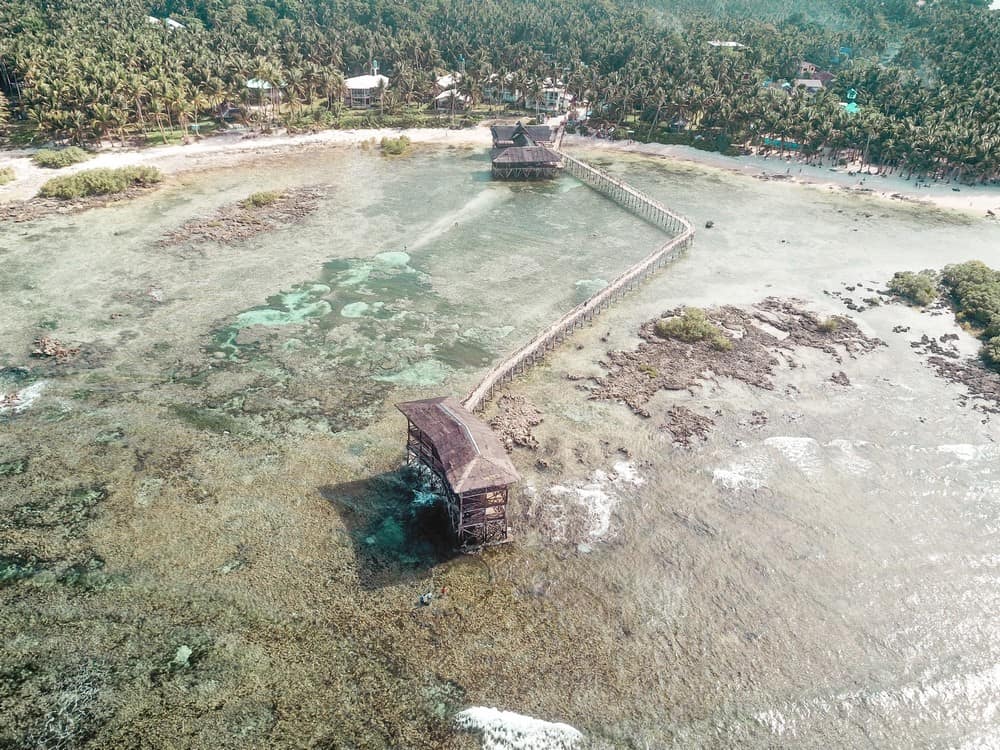
Cloud 9 is one of Asia’s best-known reef breaks and the most iconic wave in the Philippines. It’s a fast, hollow wave that breaks over a reef and can be accessed via the photogenic Boardwalk, where the judges and press are stationed during the most important surfing competitions in the Philippines.
The waves in Siargao are usually around 2.5 meters high, but during peak season they can exceed 4 meters. During the main swell season, Cloud 9 and several nearby reef breaks can produce powerful, hollow barrels. Along the coast, you’ll usually find a mixture of reef and point breaks, as well as a few beach breaks. Almost all the beaches in Siargao have fine white sand and are protected by a reef visible in the distance.
Here are some of the best surf spots in Siargao:
- For beginners: Guiuan, Jacking Horse, Little Pony.
- For intermediate surfers: Bumee, Cemetery, Daku Reef, Pansukian Reef, Pilar, Salvacion, Stimpy’s.
- For advanced surfers: Cloud 9, Rock Island, Pacifico, Tuason’s Point, Quicksilver.
You’ll find more detailed information in this overview of Siargao’s surf spots.
When choosing a surf spot in Siargao, you’ll also need to consider the tides, as surfing at very low tide can be dangerous. That’s why it’s best to ask local surfers.
What’s more, even if the sea is completely flat (which is rare), you’ll never run out of things to do in Siargao. In fact, it’s one of the trendiest places in the Philippines, and many travelers who visit the island these days don’t even touch a surfboard. This also means you’ll have no shortage of opportunities to eat well, party or find some truly luxurious resorts. It may be becoming a little commercial, but if you spend some time there, you’re sure to find your place.
Whether you’re a beginner or an advanced surfer, remember how essential it is to have travel insurance that covers surfing.
In this article, we explain which is the best travel insurance for the Philippines and give you a 5% discount:

If your goal is to make the most of surfing in the Philippines, our advice is to split your stay between Cloud 9/General Luna and Pacifico. Around Cloud 9 and General Luna, you’ll find plenty of interesting places, but it’s also true that this is the most developed tourist area, which comes with both advantages and disadvantages. The Pacifico/Burgos area is still light-years behind Cloud 9 and General Luna in terms of hotels, restaurants and other tourist services and reminds us of the Siargao we discovered the first time we visited.
🏄 Recommended for: all levels.
🌊 Best time to surf in Siargao: generally, June to November are the best months. If you’re an intermediate surfer, September, October, March and May are good times. More advanced surfers will enjoy the swell season between November and February. The best time for Cloud 9 is from September to November, when waves can reach 4 meters.
🏨 Recommended hotels for surfers in Siargao: around Cloud 9: Harana Surf Resort, Amihan Bungalows, Hiraya Surf Hostel and Lampara Siargao Boutique Hostel / in Pacifico: Pacifico Huna Surf House, Pacifico 501 Backpackers & Budget Accommodation and Pacifico Bigwish Beach Resort. More options in Where to stay in Siargao and Best resorts in Siargao.
👩💻 You can discover everything about this island in our incredible Siargao Guide.
Surfing in La Union
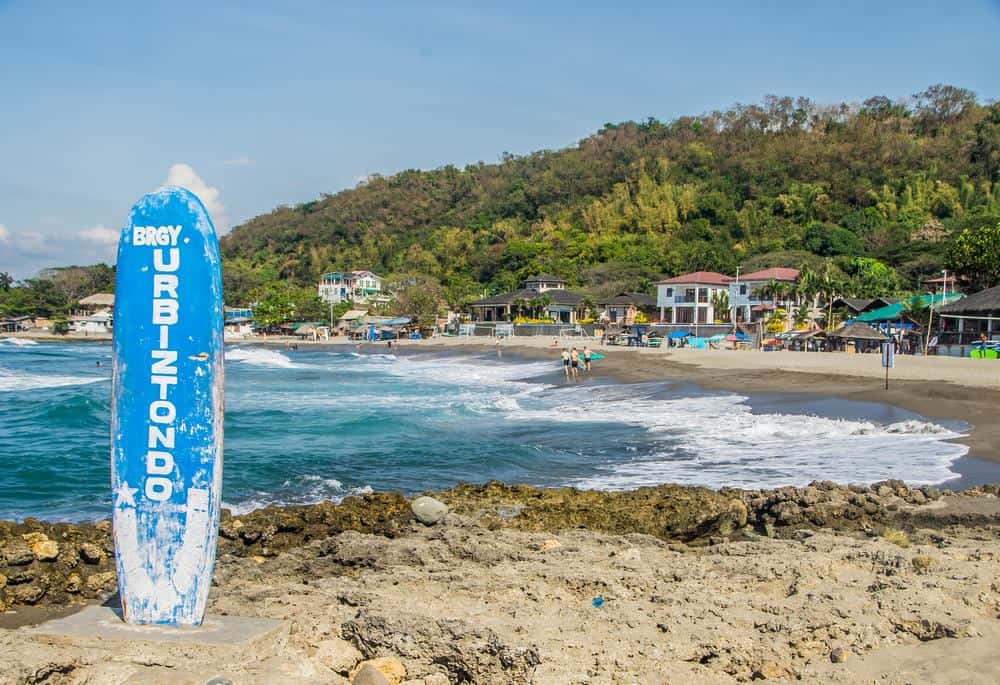
If there’s another well-known place to surf in the Philippines, it’s La Union. Located north of Manila on the west coast, it’s becoming increasingly developed and lively, as it has become a popular weekend getaway for people from the capital. It’s no surprise that it is now known as the Surfing Capital of the Northern Philippines.
During the season, the waves in La Union can reach 3 meters. The best-known breaks are in San Juan: The Point (for experts), The Bowl (experts), The Beach Break (beginners) and Monaliza’s Point (a wave breaking over a rocky bottom that can offer rides of around 150 meters). This is also where you’ll find the largest number of hotels and restaurants.
Other places to surf not far from San Juan, La Union, include Darigayos (May to September), Bacnotan (October to April), Car-rille (November to March) and Sunset.
🏄 Recommended for: beginner and intermediate surfers
🌊 Best time: almost all year round, but the best period is from October to March (known as the North swell season), with December and January offering the best conditions.
🏨 Recommended hotels for surfers in La Union: Rada Hostel LU, Monaliza Surf Resort and Flotsam & Jetsam. More information in Where to stay in La Union.
👩💻 You’ll find everything you need to enjoy these waves in our La Union Guide.
Surfing in Baler
Baler is said to be the birthplace of surfing in the Philippines. Its long black-sand beach is one of the most popular destinations among surfers, and it may look familiar to you, as several scenes from Francis Ford Coppola’s film Apocalypse Now were shot along this stretch of Luzon’s coastline. In fact, it is believed that the film crew began surfing in this area in the 1970s. Locals took notice and started surfing on their own with the boards that had been left behind.
In Baler, you’ll find waves breaking both right and left, but the best-known spot is a right-hand reef break for more experienced surfers. Here are the main surf spots in Baler that we recommend:
- Charlie’s Point: this is where the legendary surfing scene from Apocalypse Now was filmed. You’ll usually find medium-sized waves here with a sandy bottom, making it perfect for beginners.
- Cemento: the best break, with a fast right-hand wave where competitions are often held. During typhoon season, conditions can be quite rough, so the spot is only recommended for more advanced surfers.
As it’s relatively close to Manila and well known for surfing, you’ll have no shortage of places to stay and eat, while it is still far from overcrowded. Avoid weekends and you’ll enjoy it even more.
🏄 Recommended for: all levels.
🌊 Best time: you can surf all year round, but the best time is from October to March/April.
🏨 Recommended hotels for surfers in Baler: Lotus Sun & Waves Beach Resort, Ver Amare Place Baler by Zen Rooms, Chamies Transient House and Surf & Chill Inn.
🚍 How to get to Baler: unless you have a car or rent one, the easiest way to get there is to take one of the buses from Manila to Baler operated by Genesis Transport Bus. They depart from the company’s terminals in Pasay and Cubao. The journey takes around 6 hours and tickets cost approximately 500-750 pesos, depending on the type of bus. The Joy Bus is the most expensive, but it runs nonstop and even has Wi-Fi. If you’d rather sleep through most of the journey, you can travel overnight. Another option is to take a bus from Manila to Cabanatuan with Victory Liner (3 hours/250 pesos) and then a van to Baler (3 hours/250 pesos).
Surfing in Palawan
If you thought Palawan was all about island hopping, think again. Although it isn’t the best-known place to surf in the Philippines, you’ll find some interesting spots where you can catch a few waves in season. Don’t expect huge waves, but you can look forward to peaceful beaches and mellow barrels.
Near El Nido, there’s Calaan Beach, which offers some interesting waves between October and January thanks to its reef break. You can also find waves at Nacpan Beach and Duli Beach, north of El Nido. You can rent boards on the beach at both spots, but Duli Beach tends to have better conditions and a sandy bottom that is ideal for beginners. If you’re interested, you can contact Mike or North Swell El Nido for more information.
Meanwhile, north of Puerto Princesa, the capital of Palawan, you’ll find the beautiful Nagtabon Beach. Surf-related businesses are gradually opening up, such as Surf Surf Café, where you can rent boards. There is even a surfing festival in December.
🏄 Recommended for: all levels.
🌊 Best time: from November to March.
🏨 Recommended hotels for surfers in Palawan: Where2Next Nacpan, Duli Beach Resort, Bucana beachfront guesthouse, Garden House Nagtabon Beach and B&R Hostel Nagtabon. You’ll find more options in Where to stay in El Nido and Where to stay in Puerto Princesa.
👩💻 Discover everything about this island in our Palawan Guide.
Surfing in Eastern Samar
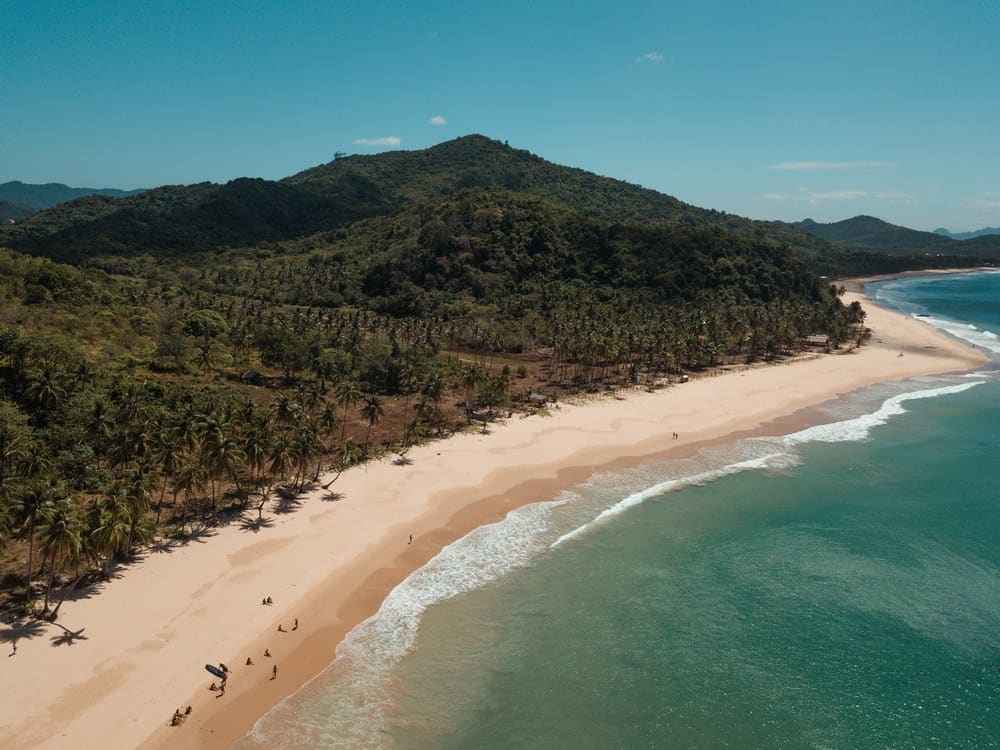
All the surfing destinations in the Philippines are more or less well known, but if you’re looking for somewhere with a more local, intimate and less commercial feel, you need to discover the province of Eastern Samar. This is the best place in the Visayas for surfing and, thanks to its location, a true paradise, with a wild coastline that remains a diamond in the rough. Here, you’ll find powerful hollow waves at the following spots:
- Guiuan: the surfing capital of Eastern Samar. In addition to white-sand beaches, you’ll be able to enjoy fantastic waves breaking over the reefs.
- Calicoan Island: a nearby island (around 30 minutes from Guiuan via a bridge) that is extremely laid-back but has surf breaks. The best waves are usually found at ABCD Beach, but watch out for the strong currents. You’ll also find plenty of interesting caves to visit there, such as Linao Cave.
Both places were severely affected by Typhoon Yolanda in 2013, but they are now almost fully recovered and ready to welcome those who want to surf in the Philippines somewhere special. Interestingly, Guiuan was the place where Ferdinand Magellan first set foot in the archipelago on March 16, 1521.
Other interesting places to surf in Eastern Samar include Hernani, Llorente and Maydolong.
🏄 Recommended for: intermediate or advanced surfers.
🌊 Best time: there are two seasons, the Northeast Monsoon season (between October and April) and the Southeast Monsoon season (from April to November). If you’re an advanced surfer, the best waves at ABCD Beach occur from August to October.
🏨 Recommended hotels for surfers in Eastern Samar: ABCD Surf Camp, La Luna, Calicoan Villa and AdBern.
🚍 How to get to Guiuan: take a flight to Tacloban and then a van to Guiuan from Van Van’s Terminal or Duptours (3 hours/approximately 170 pesos). If you’re going to Calicoan, you can take a jeepney to Sulangan (50 pesos), which will drop you directly at ABCD Beach in around 30 minutes.
Surfing in Dahican, Mati (Davao Oriental, Mindanao)
Besides Siargao, Mindanao has a handful of lesser-known places to surf in the Philippines. Perhaps the most interesting is Dahican Beach, just a short distance from Mati City in Davao Oriental.
This beautiful, 7-kilometer-long, crescent-shaped, white-sand beach is not only a fantastic place to surf, but also a great place to spend a few relaxing days and, with a little luck, watch turtles hatch. In fact, it gets its name from the word “dahik,” which locals use to refer to the tracks turtles leave in the sand on their way up the beach to lay their eggs.
The waves can be a little challenging for beginners during the main season, although there are also some gentler swells suitable for beginners.
Dahican is also a popular place for skimboarding. On the opposite coast lies Pujada Bay, home to 15,700 marine species, including dugongs or sea cows. The Mount Hamiguitan Range Wildlife Sanctuary, declared a UNESCO World Heritage Site, is also relatively close. It provides a refuge for species such as the Philippine eagle.
🏄 Recommended for: all levels.
🌊 Best time: you can surf almost all year round, but the best period is from September to March. The biggest waves arrive between December and February.
🏨 Recommended hotels for surfers in Dahican: Destino Dahican, Haven Hearth, Sheepy’s Surfside Beach Resort, Dahican Surf Resort, Botona Dahican Beach Resort, Kubo sa Dahican, Amihan sa Dahican, La-ne’s Kalapyahan, Tropical Kanakbai…
🚍 How to get to Dahican: fly to Davao and then take a Bachelor Express bus to Mati (4-5 hours, 250 pesos) from outside the airport or from Ecoland Transport Terminal. For a faster journey, vans depart from Gaisano Mall or Victoria Plaza (3-4 hours, 220 pesos). At Mati City Bus Terminal, take a tricycle or a habal-habal to Dahican (15-20 minutes, 40 pesos).
Other places to surf in the Philippines
We’ve already told you about the best-known places to surf in the Philippines, but there are several others that may interest you. Here’s a summary:
Surfing in Zambales
Located just three hours by car from Manila, it is one of the most popular surfing areas and has a lively atmosphere. You’ll find 3 ideal places to surf: San Antonio, San Narciso and San Felipe. More specifically, Crystal Beach Break (San Antonio) and Pundaquit Beach (San Antonio) are the best known among beginners. If you’re more experienced, High 5 Lahar (Liwliwa, San Felipe) will suit you better. There are waves for all levels, especially beginners and intermediate surfers. The best time is from April to September.
Surfing in Pagudpud
At the northwestern tip of Luzon lies this little-known surfing destination, but Blue Lagoon usually has waves suitable for beginners between August and October. You’ll also find some of the best beaches in the Philippines here.
Surfing in Real
On Luzon’s east coast, 3-4 hours by car from Manila, this destination is attracting more and more surfers. In addition to its dark-sand beaches, which are still relatively undeveloped for tourism, it usually offers waves for all levels. The season runs from August to March, with the best waves occurring between October and February.
Surfing in Puraran, Catanduanes
The island of Catanduanes is known as the “Happy Island” and boasts spectacular scenery, secret lagoons, waterfalls, natural pools, hidden beaches and wonderful rock formations. Beginner and intermediate surfers will enjoy the hollow waves of Puraran Beach, known as “The Majestic,” in Baras. The best time is between November and February. The Puraran Surfing Cup is held in October.
Surfing in Daet, Camarines Norte
The Pacific coast is a treasure trove of waves, and Bagasbas Beach is one of its most interesting spots. This is a little-known area, and you’ll rarely see anyone other than surfers on this long grayish-sand beach. The best season runs from July to January, with the best waves occurring from August to November. Even so, there can be good conditions for surfers who are still learning almost all year round. While you’re here, don’t miss the opportunity to visit the wonderful Calaguas Island.
Surfing in Lanuza Bay, Surigao del Sur
South of Surigao, you’ll find several interesting places to surf in the Philippines. With waves for all levels, the best time is from November to March, when long right-hand waves can reach 4.5 meters in height. You’ll also find barreling reef breaks that are ideal for advanced surfers. It is a very peaceful and undeveloped place. That said, the atmosphere becomes much livelier in November, when the Lanuza Surfing Festival is held. Other interesting spots in the area include Doot Poktoy, Punta and Sitio Badiang.
Surfing competitions
Although, as we mentioned, the most important surfing competition in the Philippines is held in Siargao, here is a selection of other interesting competitions:
- Single and Unattached, San Juan La Union: February
- Siargao National Surfing Cup, Siargao: September
- Guiuan Odyssey Waves, Guiuan (Samar): October
- PSCT La Union Pro, La Union: November
- Lanuza Surfing Cup, Lanuza Bay: November
- Ilocos SurF Surfing Championship, Cabugao (Ilocos Sur): December
- Surf in the city, Borongan: December
You can find more information on the Philippine Surfing Championship Tour (PSCT) website.
Recommendations and tips for surfing in the Philippines
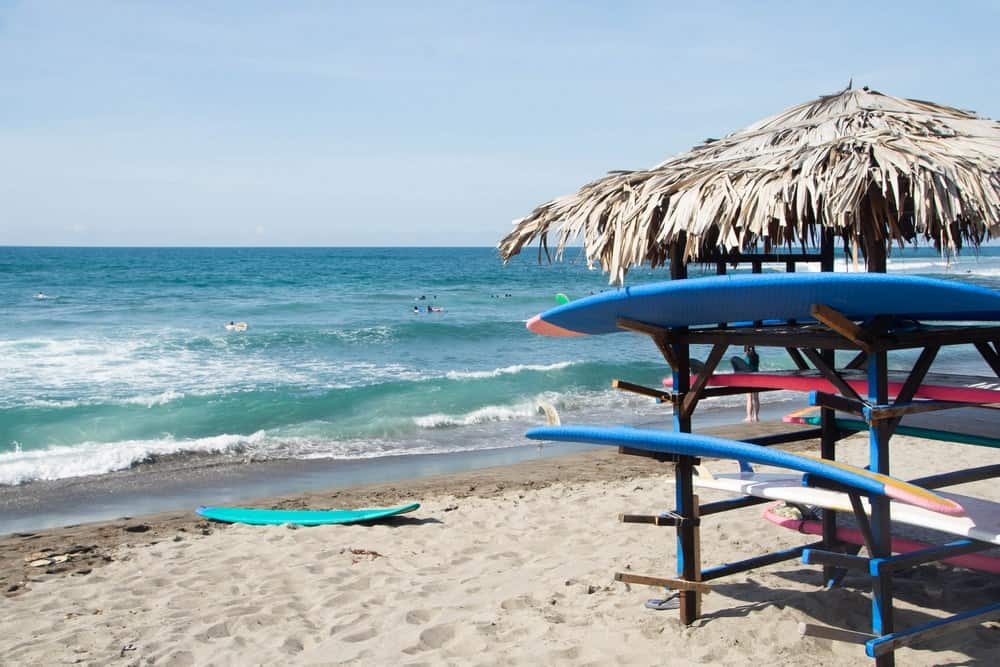
- At almost all the surfing destinations in the Philippines that we’ve mentioned, you’ll find somewhere to rent a board. Rental shops usually have boards for both beginners and experienced surfers. As a general rule, rentals cost around 200 Philippine pesos per hour.
- Are you planning to bring your own surfboard to the Philippines? That’s completely doable too. Many airlines accept surfboards as sports equipment, although fees, size limits and conditions vary, so check the airline’s policy before booking.
- If you’ve never stood on a surfboard in your life or need to improve your surfing skills while in the Philippines, don’t worry—you’ll find instructors almost anywhere there are waves. They usually charge around 300 pesos per hour.
- Of course, you’ll also find surf camps in the Philippines and surf-oriented hostels, where you’ll have no trouble finding instructors and other surfers like you. If you’re looking for a livelier atmosphere, we recommend Siargao.
- How do you transport your surfboard? In most places where surfing is popular in the Philippines, you’ll find rental motorcycles fitted with surfboard racks so you can carry your board. Tricycle drivers are also used to carrying surfboards on their roofs.
- You probably already know this, but there are websites like this one where you can check the surf forecast.
- Surfing is considered an adventure sport by most insurers, so a standard policy won’t cover you if you have an accident while surfing. We therefore recommend checking this carefully when taking out your travel insurance for the Philippines. Our advice is to choose Heymondo Top so you can travel with peace of mind. By taking out the policy through this link, you’ll get a 5% discount.
Map of the best places to surf in the Philippines
Ready for your surfing trip around the Philippines? We hope this guide has helped you. If you have any questions or suggestions, we’d love to hear from you in the comments.