Apo Reef is one of those destinations that usually doesn’t appear on the usual Philippines itineraries. Only those travelers who hear in passing that it’s a spectacular place for diving or who like to get away from the most touristy spots end up in this corner of Occidental Mindoro.
Divers will be interested to know that Apo Reef Natural Park covers 34 km², making it the world’s 2nd longest contiguous coral reef system and the longest in the Philippines. And, while numbers always look good, what you’ll like to know is that there are many chances of seeing sharks (sometimes even hammerheads), manta rays and giant Napoleon wrasse.
If you don’t dive, you can still visit Apo Reef for snorkeling and get to know a remote place. Apo Island, its main island, has pretty white-sand beaches, a lagoon and, most importantly, “nothingness.” In other words, it’s ideal to feel like a castaway. Plus, since you’re here, you’ll surely love spending a couple of nights at one of the main attractions on Mindoro’s west coast: Pandan Island. Besides being a haven of peace, it’s usually surrounded by turtles that you can easily see with your mask and snorkel.
Does all this sound good? Then keep reading because we’re going to tell you everything in this guide to Apo Reef, Philippines.
Note: Apo Reef has nothing to do with the Apo Island near Negros and Siquijor. They’re more than 1,000 kilometers apart.
Where is Apo Reef located?
Apo Reef lies about 28 kilometers west of the Mindoro coast. It is separated from it by the so‑called Apo East Pass and belongs to the province of Occidental Mindoro, specifically the municipality of Sablayan. This is the starting point for reaching Apo Reef and from there it takes approximately 3 hours by boat, depending on sea conditions.
Within the natural park you can find 3 uninhabited islands: Apo Island (not to be confused with the one near Negros), Apo Menor (also called Binangaan) and Cayos del Bajo (locally known as Tinangkapan). On the first there’s a park ranger station, and it’s also where you spend the night if you do a 2‑day excursion or an overnight trip.
If you look closely at a map, Apo Reef sits roughly halfway between Mindoro and Busuanga (Coron). Therefore, there are multi‑day live‑aboard cruises or live aboard that go from Coron to this reef.
Why is visiting Apo Reef so interesting? What can you see?
Declared a “Protected Natural Park” in 1996, in Apo Reef you’ll find more than 400 varieties of coral and almost 500 marine species, including sharks, turtles and manta rays. Around 385 fish species have been identified in the area, among them giant Napoleon wrasse, schools of jacks, damselfish, butterflyfish, groupers and triggerfish. Nudibranchs, octopus, giant clams and squid are also common on these reefs.
The reef is almost triangular in shape and is split by a deep channel in which reef sharks are usually found. In deeper waters it’s not uncommon to see whitetip and blacktip sharks and, occasionally, gray reef sharks and hammerheads.
How to get to Apo Reef
The only way to reach Apo Reef is on an organized trip; in other words, you won’t find public transport to the island. That said, there are also 2 options:
- Go on a live‑aboard cruise from Coron or another point in the Philippines—an alternative we’ll talk about below.
- Go on a one‑, two‑ or three‑day excursion from Sablayan. This is what we’ll focus on in this guide to Apo Reef, as it’s the option most travelers use.
Sablayan is a small municipality on the western coast of Mindanao, located about 80 kilometers from San José, the most important city in the area.
Because of the above, we first need to figure out how to get to Sablayan, and here we have several starting points: Manila, Coron and Puerto Galera.
How to get to Sablayan
a) How to get to Sablayan from Manila
If you’re in Manila, you have 3 alternatives to get to Sablayan:
- By air: take a flight from Manila to San José (1 hour, operated by CebGo, from €27), a tricycle from the airport to the van terminal (tell them you’re going to Sablayan so they drop you at the right one) and then take a van to Sablayan (1.5–2 hours/approx. 150 pesos). There are also buses, but they’re considerably slower.
- By land – slightly pricier option: you can take a bus from Manila to San José (they depart from a terminal near the airport) and then go to Sablayan by van. Even so, you can tell them you’re going to Sablayan and they’ll know where to drop you. The company is RO RO Bus and it takes 12 hours to do the route. The ticket is around 1,200 pesos and can be reserved from this link.
- By land – cheaper option: bus from Manila to Batangas (you can go from Buendía or Cubao, 90–120 minutes/about 100 pesos), take a ferry from Batangas to Abra de Ilog (various companies, 3–4 hours/500 pesos) and then a bus or van to Sablayan (2–3 hours/about 250 pesos).
b) How to get to Sablayan from Coron
This is exactly the route we took to dive Apo Reef. The first thing you need to do is take one of the boats from Coron to San José. They are operated by Bunso Transport and, as of today, they only depart on Mondays and Fridays at 8:00. It’s best to check their Facebook page to see the schedules. The ticket is around 1,400 pesos and the journey takes about 6–7 hours.
Once in San José, take a tricycle to the van terminal (about 50 pesos) and from there one of them to Sablayan.
c) How to get to Sablayan from Puerto Galera
Have you spent a few days in Puerto Galera? In that case, the best thing is to take one of the ferries from Puerto Galera (Balatero Port) to Abra de Ilog and then a van or bus to Sablayan. The journey takes a couple of hours and costs about 300 pesos.
They’re building a road that will connect Puerto Galera and Abra de Ilog in under an hour, but we still have no confirmation that it’s finished.
How to go from Sablayan to Apo Reef
Once in Sablayan, there are, again, 2 alternatives:
- Join a scuba diving excursion with a dive center. We’ll delve into this in the next section.
- Go to the Sablayan Tourism Office and hire a boat to visit Apo Reef. You can also ask them on Facebook.
In both cases, it will take you approximately 3 hours to reach the reef. We advise that if you’re prone to seasickness, you take a Biodramina.
This second alternative is the most advisable if you’re a large group or if you contact in advance to see if there’s an organized trip you can join. In this case, you’ll only be able to snorkel. Prices vary depending on whether it’s a boat for 1 to 10 people, 11 to 15 or 16 to 20, and whether you decide to spend the night on the island or not. If you’re thinking about snorkeling in Apo Reef, you have a section dedicated to it further below.
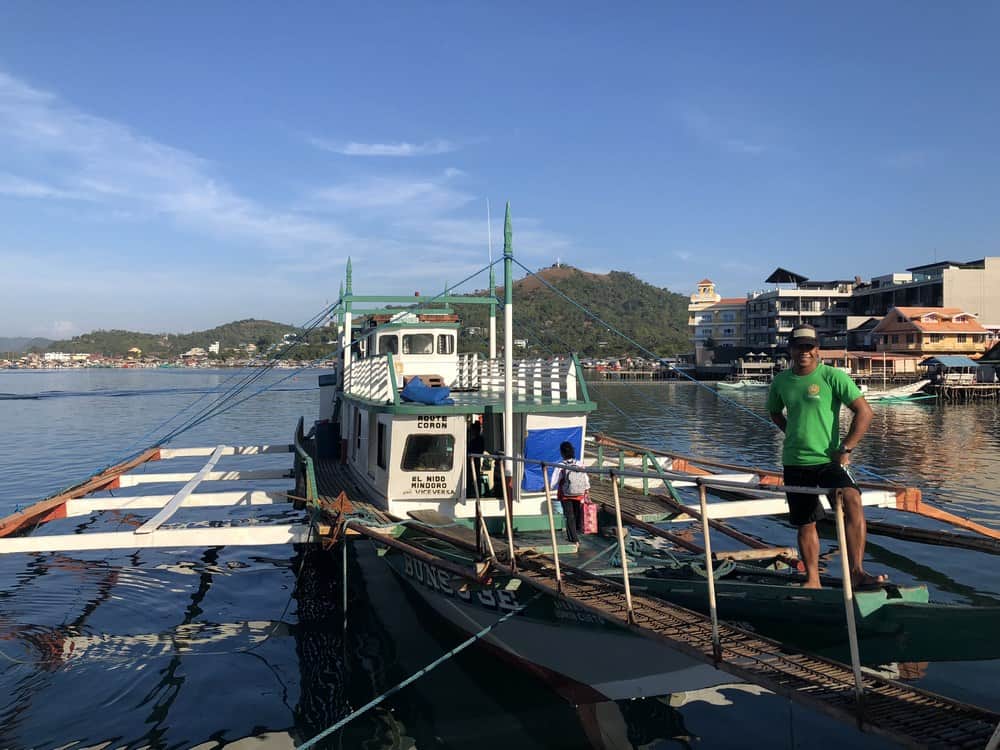
Bangka from Coron to San José Mindoro
Diving in Apo Reef
Most travelers who make it to Apo Reef do so because they know it’s one of the most important places for diving in the Philippines. Possibly the most famous after Tubbataha Reef.
Even so, you should be aware that part of Apo Reef’s coral is damaged and bleached due to rising water temperatures. The seascapes aren’t comparable to those of places like Anilao or Cabilao, but it’s true that at Apo you can see large schools of both big and small fish, creating an aquarium‑like feeling that will delight both novice and experienced divers. Add to this the chance to see reef sharks and the odd oceanic manta.
Is Apo Reef worth it? In our opinion, yes, though with caveats. That is, if it’s your first trip to the Philippines and you prioritize diving, we might start by diving in the Visayas: Malapascua, Bohol, Moalboal… If you’ve been before, don’t mind sacrificing time in transport and like to visit more remote places, you’ll enjoy diving Apo Reef.
The Viajar por Filipinas tip: the best thing is to combine Apo Reef with a couple of nights in Sablayan/Pandan Island and, before or after, dive in Anilao and Coron. If you look at the map, these are places that are fairly close to each other and will make your trip complete.
Another thing to consider is that most dive centers go to Apo Reef between October and July, when it’s the dry season and, therefore, sea conditions are more stable. At other times of the year you can also dive in Apo Reef, but keep in mind that there will be fewer divers to form a group, so it’s likely there won’t be daily excursions.
The water temperature at Apo Reef is around 26–30ºC, so a 3 mm wetsuit is usually enough. Visibility can reach 50 meters.
Dive sites in Apo Reef
There are 19 dive sites in Apo Reef. The ones you visit will depend on sea conditions and your buddies’ dive level, since there are spots on the reef that are quite deep and even have currents. You don’t need to be an experienced diver, but it’s highly advisable if you want to see what makes this reef special: the “big stuff.”
Here are the best‑known dive sites in Apo Reef:
- Shark Airport 3-30 m): on this slope it’s—just as you might guess from its name—common to spot whitetip sharks. Eagle rays are also frequent.
- Ego Wall (5-40 m): one of the most famous Apo Reef dive sites. A gorgeous vertical wall with plenty of marine life, but don’t forget to look into the blue in search of pelagics.
- Southeast Corner (5-40 m): a very diverse dive site, as you have wall as well as sandy slopes. As in the previous case, look into the blue because it’s a passageway for mantas and hammerheads.
- Shark Ridge (10-35 m): known for its coral formations, including small caverns. There are some gorgonians, so look closely and search for one of our favorites, the longnose hawkfish. Here you can see whitetip sharks and schools of jacks and tuna.
- Aladin (5-40 m): a wall dive north of Apo Island. It’s known for a group of bumphead parrotfish.
- Mabuti (6-35 m): a pretty dive thanks to its soft corals. Here you can see blacktip sharks and titan triggerfish.
- Apo 29 (30-40 m): only visited by advanced divers when doing the 2‑day excursion because it’s a fairly deep dive, starting at 30 meters. Being so deep, the chances of seeing schools of barracuda and sharks increase.
You can see more dive sites in Apo Reef here.
Dive centers for Apo Reef
Right now the 4 main dive centers for diving in Apo Reef are:
- Apo Reef Club: opened in 2007, it’s the most renowned dive center with nice facilities. They have seafront bungalows, but also backpacker rooms. Being one of the best known, they usually have many expedition dates to Apo Reef. Unfortunately, as of today (2024), the center is for sale and they are not operating dive trips.
- Sablayan Divers: a dive center located in the town of Sablayan itself; it’s the cheapest of all.
- Gustav’s Place: this was our choice mainly because they had scheduled trips to Apo Reef and because they have very cheap (also very basic) seafront bungalows, from 1.000 pesos per night. We actually found the place gorgeous, although since it’s isolated the food is a bit pricey. The dive gear was fine, although we didn’t have much luck with the dive master (dive guide), who was a bit lazy.
- Pandan Island Resort: this island located opposite Sablayan (you can get there on your own by bangka for 50 pesos) has a charming hotel where you can spend the night and a dive center. It’s quite a bit more expensive than the previous ones, but it’s also a good option if you want to spend more days diving, as the reef around it is also interesting and they offer packages. You can visit for the day as a guest, but you have to pay 300 pesos in fees.
How much does it cost to dive in Apo Reef?
Diving in Apo Reef isn’t cheap for 2 reasons: you need at least 3 hours by boat to get there and the environmental fees aren’t inexpensive (almost 3.530 pesos for foreigners).
Comparing the different dive schools, the usual is to pay about 10.000–11.000 Philippine pesos for 3 dives or 15.000–17.000 for 6 dives. This second option includes spending the night on the boat or on the island and, of course, all meals. Some centers (such as Gustav’s Place) even offer 2 nights/9 dives and the price is around 20.000–23.000 pesos. Prices include the fees and the equipment rental, so if you have your own it will be cheaper.
Live-aboard cruises in Apo Reef
If what you want is to dive, dive and dive—and do it with the comfort of a large boat—then what you should do is book a live-aboard cruise around Apo Reef.
- Discovery Palawan: runs routes between Apo Reef and Coron. One of the highest‑rated boats in the country.
- Atlantis Azores: departs from Puerto Galera, goes to Apo Reef and then to Coron. In Coron you dive wrecks—perhaps the most complete option.
- Resolute: they depart from Anilao, dive Apo Reef and make a nice circuit around the islands near Busuanga before returning to Anilao.
- Agos: the backpacker option, on a traditional Filipino bangka. It has one route that goes from Coron to Apo Reef and another more interesting one that, besides Apo Reef, includes some wreck dives, another to see dugongs and the lovely Black Island.
- Azalea: does routes similar to Agos, but the boat offers a bit more comfort.
Snorkeling in Apo Reef
If you don’t dive, it’s also possible to go snorkeling in Apo Reef. It’s very likely it won’t be as interesting as scuba, but you’ll still enjoy the local marine life. In this case, our advice is to join an excursion that spends the night on Apo Island, as you’ll have a more complete experience. Truly, spending the night on a deserted island is unforgettable.
The island also has pretty white‑sand beaches where, of course, there’s no one and, since you’ll have time to spare, don’t miss the chance to climb the lighthouse, located just 10 minutes from the camping area, where the park ranger also lives. It will give you a 360‑degree view of the reef and the island’s lagoon, surrounded by mangroves.
Being an uninhabited island, there aren’t many things to do other than enjoy nature, the stars and a good chat with your adventure companions. With a bit of luck, you may see a turtle hatch, as it’s a nesting area.
If you join the dive centers’ scuba excursions, it’s very likely you’ll have to jump in to snorkel at the same dive sites they’re going to. Since the reef can sometimes be a little deep, our advice is to ask the company carefully and make sure they’ll take you to spots that are really worth it.
How much does snorkeling in Apo Reef cost?
If you do it from Pandan Island or from another dive center, you’ll have to check with the different companies, but you should know that prices are around 6.000–7.000 pesos for the day trip or 8.000–9.000 for the one that spends the night on Apo Reef.
If you do it through the Sablayan Tourism Office, as we told you above, this depends on the size of the group and on whether you’re going to stay overnight on Apo Island or not. The cost of hiring the boat is:
- From 1 to 10 people: 8.000 pesos (return in the same day) or 8.500 pesos (overnight there).
- From 11 to 15 people: 9.000 pesos (day trip) or 10.000 pesos (overnight).
- From 16 to 20 people: 12.000 pesos (overnight).
To this cost you need to add a guide, if you want to hire one: 1.320 pesos per group. Also the entrance and environmental fees: 940 pesos for foreigners. Finally, food and drinks, which you’ll have to buy together or each person their share, depending on how you arrange it.
At the tourism office they rent tents (300 pesos, good for 3 people) and snorkel sets (150 pesos).
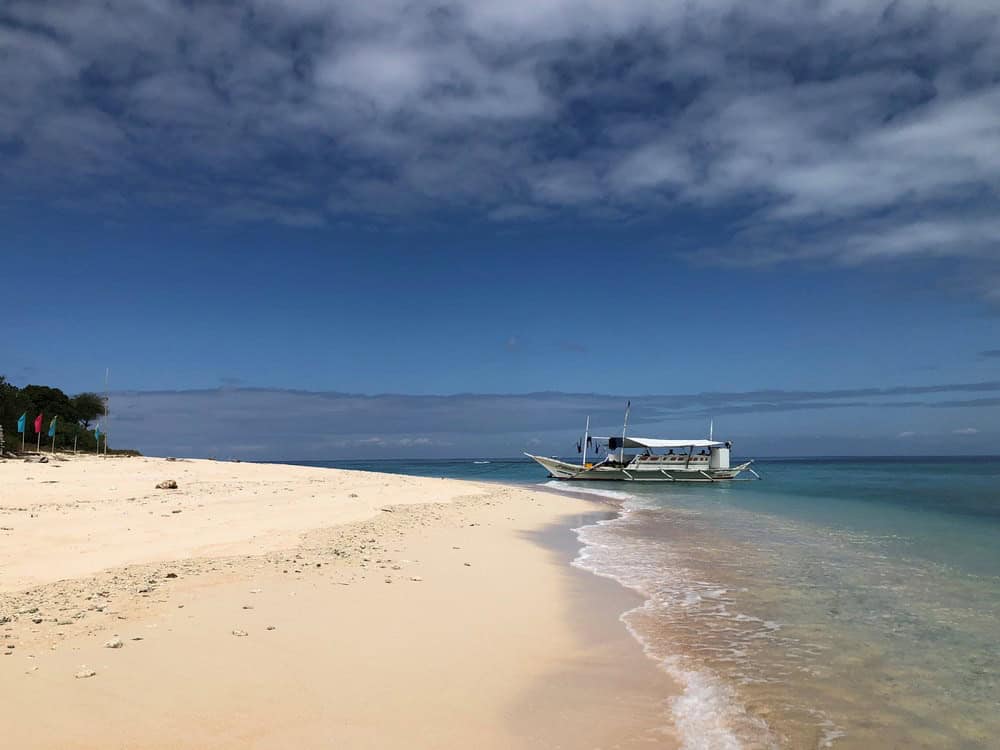
Apo Reef Beach
Where to stay to visit Apo Reef
The most convenient thing is to stay overnight in Sablayan. Here you can choose between staying in the “town” itself (don’t expect more than basic guesthouses) or in a resort in the northern area, which has a beautiful and very quiet black‑sand beach. Keep in mind that in the 2nd case you’ll be more limited when it comes to meals, since getting to the center is more of a hassle.
- Gustav’s Place: this is where we stayed. The cheapest huts are basic, but they’re right on the sea and the resort is super pleasant. Sunsets are magical. They have a dive center to go to Apo Reef.
- Sablayan Paraiso Beach Resort: located a few steps from the previous one, also on the beach and with super‑cheap seafront huts. They have dorms for backpackers. Staying here is like going back to that little‑known 90s Philippines.
- Seasons Hotel Sablayan: the hotel with the most services in Sablayan. Rooms with little decoration and functional, but comfortable.
- Wency Amor Hotel: basic guesthouse located in the heart of Sablayan. Rooms with and without air‑conditioning from 800 pesos.
- Emily Hotel: an institution in Sablayan. It’s a guesthouse with lots of rooms with/without air‑conditioning and with/without bathroom. From 200 pesos per person. It can’t get any cheaper, but you should also be aware there’s no luxury. The good thing is that since it’s such a popular place, you’ll very likely find more people to share the trip to Apo Reef.
- Pandan Island Resort: this is the best option if what you want is to be on a white‑sand beach and have a wonderful place to snorkel (it’s full of turtles!). It’s on the island of the same name, just 5 minutes by boat from Sablayan. Although it has the word “resort,” the lodging is very basic and, in our opinion, a bit expensive for what’s offered, but that’s the price of being in such an ideal spot. The nightly rate obligatorily includes the buffet dinner and you can pay a supplement for full board. They have a dive center that runs trips to Apo. Heads up: this place fills up months in advance, especially in high season. Booking is necessary.
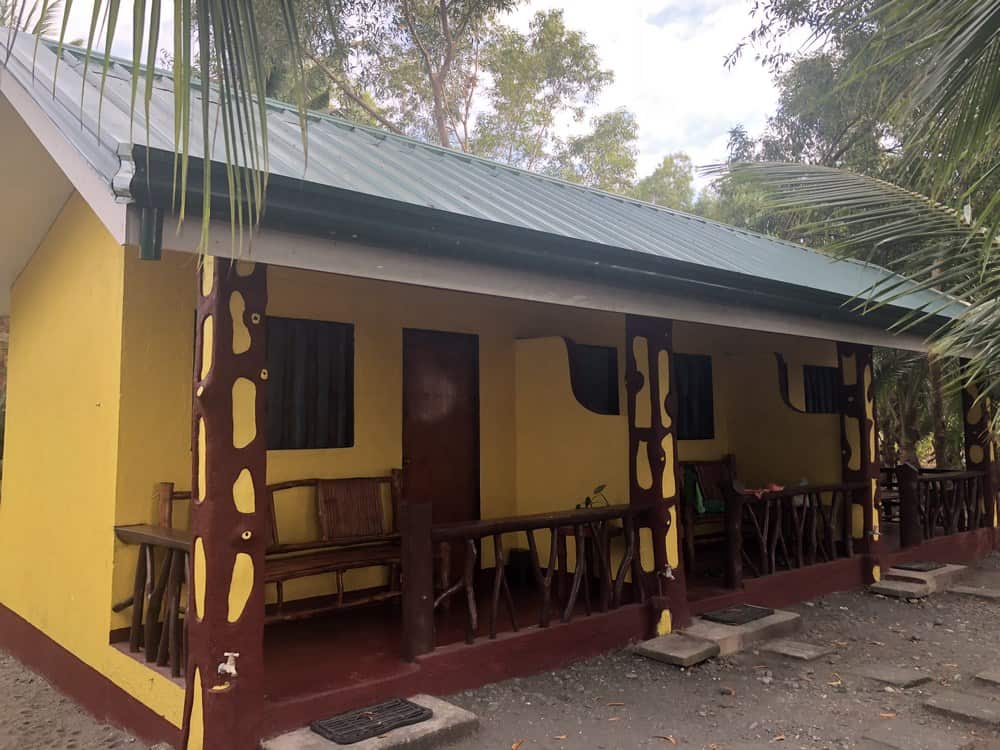
Rooms at Gustav’s Place
Sleeping at Apo Reef (on the island)
As we mentioned earlier, another possibility is to sleep on Apo Island itself. If you go with a dive center, it’s usual that you sleep on the boat, as they usually have cabins for divers. In contrast, if you arrange the excursion with the Sablayan Tourism Office, you’ll go on a bangka that isn’t equipped for overnighting. In this case, you have the option to rent a tent (300 pesos) or one of the rooms on the island (1.500 pesos for 4 people, with a fan).
In any of the options, you should keep in mind that you’ll only have electricity at night and that, although there’s a toilet and shower, they only run with salt water. There’s usually no phone signal either.
Tips for visiting Apo Reef
Maybe we’ve already overwhelmed you with so much information for visiting Apo Reef, but we want to give you a few more tips so you don’t miss a thing:
- Don’t be guided by price alone and book only with authorized dive centers. Seriously, Apo is far and some dives can be more or less demanding, so it’s better to go with a center with professional instructors and good equipment.
- The best time to go to Apo Reef is from January to April, as it’s the dry season and you have fewer chances of rough water. Water temperature ranges between 26ºC and 30ºC and visibility in the dry season can reach up to 40 meters. Even so, dive centers do organize trips to Apo in the rainy season, depending on the weather. Not as many, but there are opportunities.
- Bring cash with you. It’s rare for cards to be accepted—even at resorts—or, if they are, you’ll be charged a fee. There are a couple of ATMs in Sablayan, but they may not accept foreign cards, so better to be prepared.
- If you’re only going to snorkel, at the Sablayan Tourism Office you can rent the gear for 150 pesos. Even so, our advice is to bring your own, one like this one, so you don’t “suck” other people’s drool.
- Heads up: Apo Reef is quite far from land, so if, like us, you’re prone to seasickness, don’t forget Biodramina or the generic (better if it’s with caffeine). In the Philippines they sell “meclizine” or “dizitab” in almost any pharmacy, but they make you quite sleepy—consider yourself warned!
- It’s advisable to bring a dry bag like this one to protect valuables and electronics.
- If you plan to sleep on Apo, bring insect repellent, as it’s quite common to find sandflies or nik nik on the sand. Also, don’t forget a good power bank.
- Don’t forget to take out good travel insurance like the one we use. With IATI Mochilero you’ll be covered even if you have an accident or while snorkeling up to 40 meters. By booking through this link you get 5% off and you help us keep the site running. Learn more here about the best travel insurance for the Philippines.

We hope this guide to Apo Reef, Philippines, has convinced you to visit this remote reef that not many people know about. As you can see, it requires logistical and financial effort, but it’s worth it if you love diving as much as we do. Plus, it gives you the chance to discover other destinations off the usual path such as Occidental Mindoro.
If you have any questions, we’ll be more than happy to read you in the comments below this article.